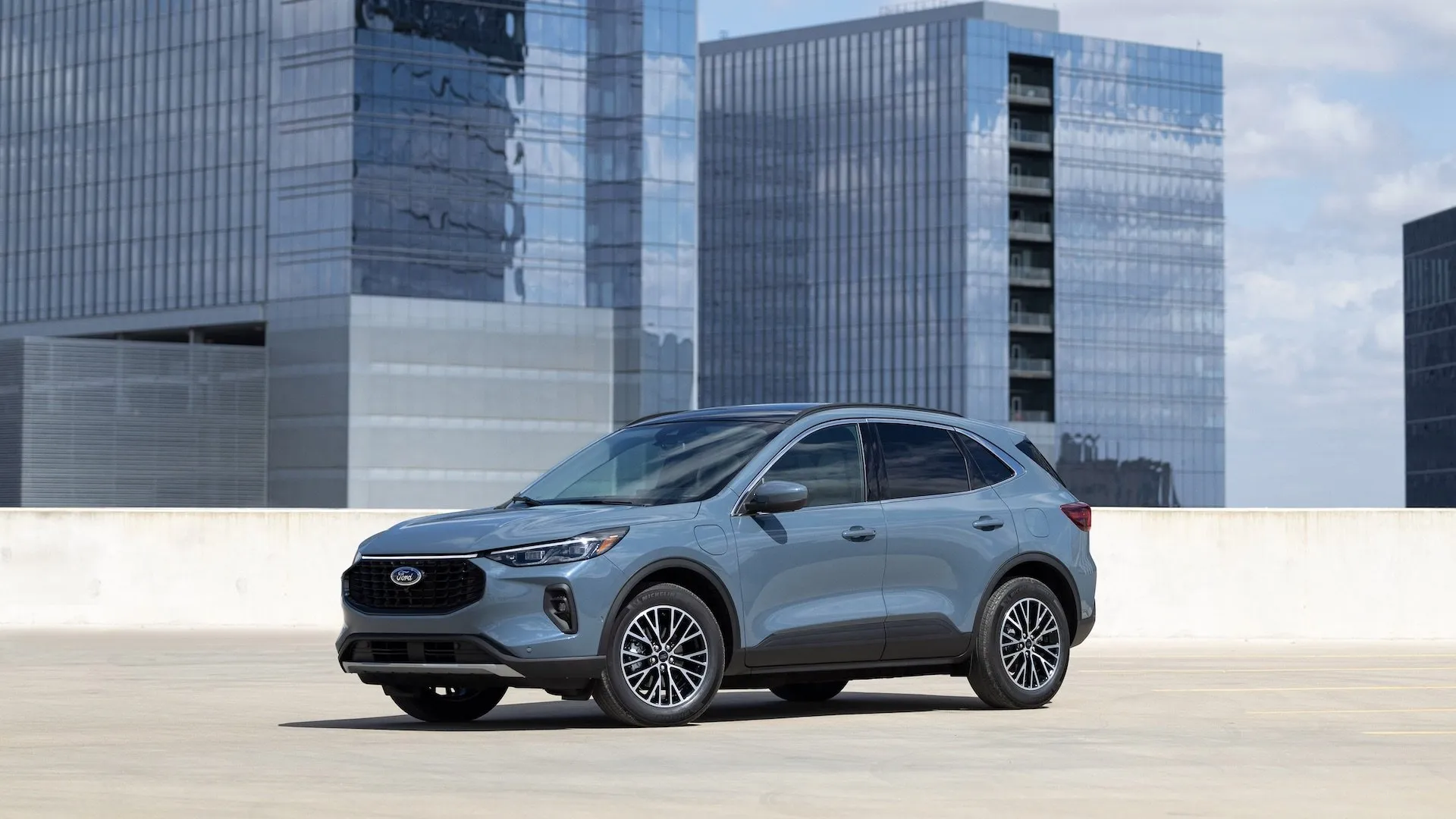
Ford must recall its Escape PHEV and Lincoln Corsair PHEV models for the second time, as their high-voltage batteries could still catch fire.Ford has already conducted over 135 recalls this yearSeven fires reported with the Ford Kuga PHEV (Europe)In Canada, 8,751 vehicles are affected by this campaign
What’s frustrating is that the initial temporary solution applied by Ford doesn’t appear to have resolved the problem, as the models remain at risk. What’s even more embarrassing is that the company still hasn’t found a solution to this issue.
For a company on track to reach 150 recalls this year, an absolute record, this is hardly reassuring.
Ford is attempting to be, though :
“The remedy is currently under development. Owners are advised only to use ‘Auto EV’ mode and will be instructed by mail to limit the maximum charge of the battery until the remedy has been completed.”
According to the American NHTSA (National Highway Traffic Safety Administration), the equivalent of Transport Canada, 20,558 plug-in hybrid vehicles are affected. It includes 4,015 Lincoln Corsair SUVs built between October 24, 2019, and April 16, 2024, plus 16,543 Ford Escapes assembled between July 10, 2019, and April 17, 2024.
In Canada, 8,751 models are affected by the campaign. For the Ford Escape PHEV, this covers model years 2020-2024. For the Lincoln Corsair PHEV, it’s 2021-2023.
The models are equipped with high-voltage batteries that are susceptible to internal short circuits, which can obviously lead to a fire. And if the battery fails while the vehicle is in motion, the propulsion system also shuts down. Fortunately, steering, braking, and lighting are not affected.
Ford Issues Seven Recalls Simultaneously
At the end of 2024, dealers performed a software update to the battery energy control module, which should have enabled the detection of cell anomalies and prompted a driver warning to park safely in the event of a problem. The software was also designed to stop battery charging, thereby reducing the risk of a short circuit.
The monitoring software works, but Ford discovered it doesn’t detect all battery defects in time. In Europe, with the Ford Kuga PHEV (same mode), seven battery fires have already been reported on already recalled vehicles.
According to the NHTSA, all defective cells were manufactured by Samsung SDI in Hungary.
A permanent solution is still under study. Until then, the company advises owners to limit the maximum state of charge when charging their vehicle from a Level 1 or Level 2 charger. Owners must also use only the “Auto EV” driving mode.

Available early 2023. Preproduction model shown. Optional equipment shown.

Available early 2023. Preproduction model shown. Optional equipment shown.

Available early 2023. Preproduction model shown. Optional equipment shown.


All-new Corsair Grand Touring pairs advanced hybrid technology with Lincoln-first electric all-wheel drive to deliver a powerful, confident and nimble SUV that builds on the brand’s commitment to electric propulsion

All-new Corsair Grand Touring pairs advanced hybrid technology with Lincoln-first electric all-wheel drive to deliver a powerful, confident and nimble SUV that builds on the brand’s commitment to electric propulsion

All-new Corsair Grand Touring pairs advanced hybrid technology with Lincoln-first electric all-wheel drive to deliver a powerful, confident and nimble SUV that builds on the brand’s commitment to electric propulsion

All-new Corsair Grand Touring pairs advanced hybrid technology with Lincoln-first electric all-wheel drive to deliver a powerful, confident and nimble SUV that builds on the brand’s commitment to electric propulsion