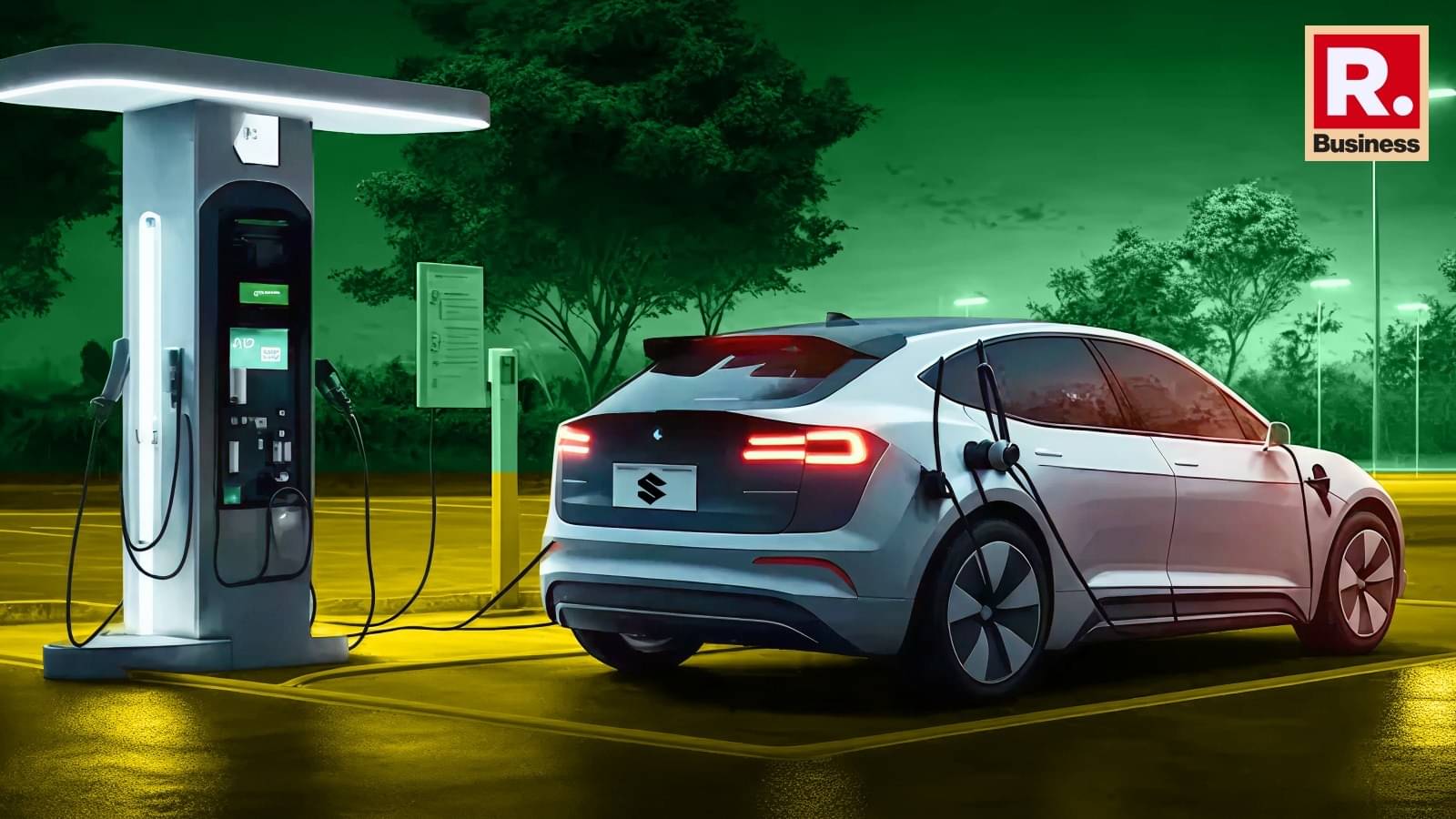

Maruti Suzuki is accelerating its EV strategy with plans for up to six models by FY2030, led by the e-Vitara in 2025. | Image:
Republic
Maruti Suzuki is pushing ahead with its long-term electric vehicle strategy despite a global slowdown in EV demand, reaffirming plans to introduce up to six battery-powered models in India by FY2030, according to sources. The company’s latest ‘Mid-term Management Plan’ confirms six BEVs for the domestic market—including the soon-to-launch e-Vitara—while positioning India as a central hub for Suzuki Motor’s global EV ambitions.
Volume Targets trimmed, but EV commitment stands
The company has revised its overall India volume projection for FY31 to 2.54 million units from its earlier 3 million estimate. With electric vehicles still expected to account for 15% of its sales mix, the projected EV volume now stands at about 400,000 units, down from 450,000. Despite these adjustments, Maruti Suzuki is firm about its electrification push.
“We are committed to roll out six electric vehicles in the Indian market by 2030. We have presented the first product and will be making further announcements about our upcoming models,” said Partho Banerjee, senior executive officer (marketing & sales) at Maruti Suzuki India, at the Bharat Mobility Expo 2025.
Late entry, but aggressive EV ambitions
While Tata Motors and Mahindra have capitalised on early-mover advantage, Maruti Suzuki—traditionally conservative on electrification—has set its sights on becoming India’s largest EV manufacturer in its first year of launch.
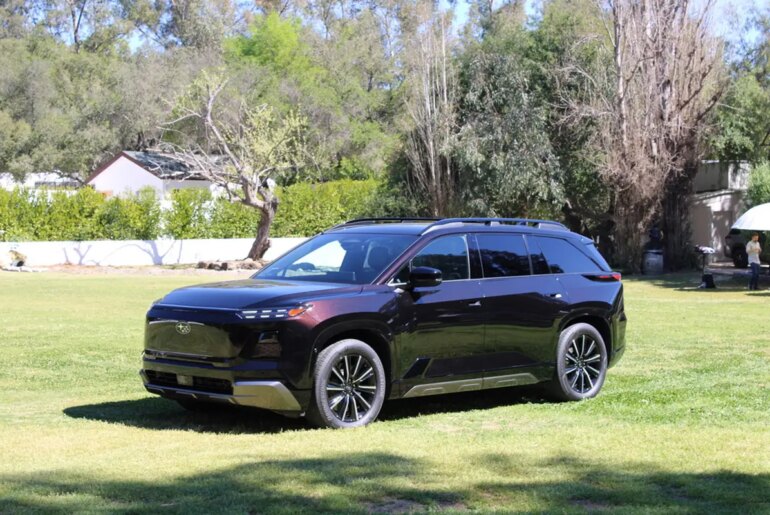
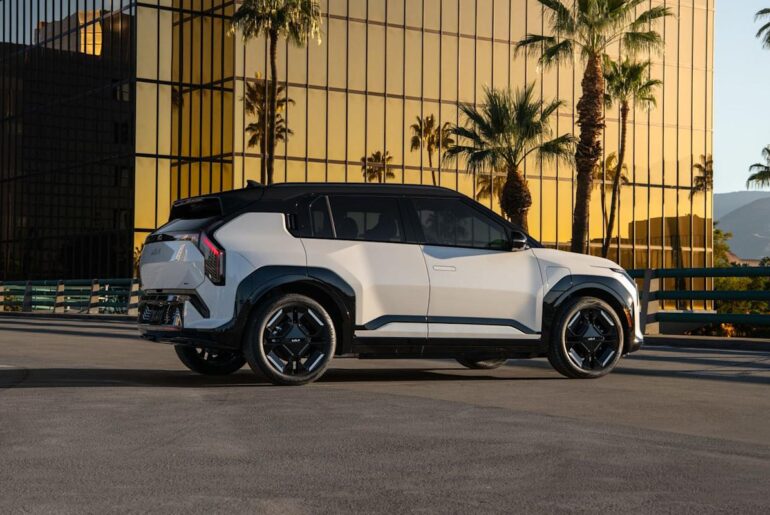
The e-Vitara, scheduled to be rolled out on 2nd December 2025, will lead this transition with two battery options (49 kWh and 61 kWh) and a claimed range of more than 500 km. An electric Fronx is expected to follow, while speculative models include an Ertiga EV and a compact entry-level EV positioned below the e-Vitara, according to well-informed sources.
Industry chatter suggests Maruti is studying a sub-Rs 10 lakh mass-market EV designed for urban commuting with a 200–250 km range. A source familiar with the plan said the model would focus on “reliability, ease of maintenance, and a strong charging network,” though the company denied any immediate launch plans.
A diversified powertrain strategy
At a time when several global automakers are scaling back EV targets due to high costs and charging gaps, Suzuki Motor is sticking to a multi-fuel approach for India. By FY31, CNG and compressed biogas vehicles are expected to form 35% of its powertrain mix, while ICE and hybrid models are likely to contribute 25% each.
This approach reflects the company’s belief that India will remain a diversified market for longer, with electric adoption growing alongside other fuel technologies.
Massive capacity expansion to support growth
Suzuki Motor has committed ¥1,200 billion (around Rs 70,000 crore) in India through FY2030-31 to expand its annual production capacity to 4 million units. Its Gujarat and Khodiyar facilities will play a key role, alongside a target to export 7.5–8 lakh units annually.
With nearly every major OEM preparing mass-market EVs, analysts believe Maruti Suzuki’s aggressive EV roadmap—especially if it cracks the affordability barrier—could reshape India’s EV landscape. If the company succeeds, analysts claim, it could set a global benchmark for accessible electric mobility and reclaim its dominant position in the Indian passenger vehicle market.