
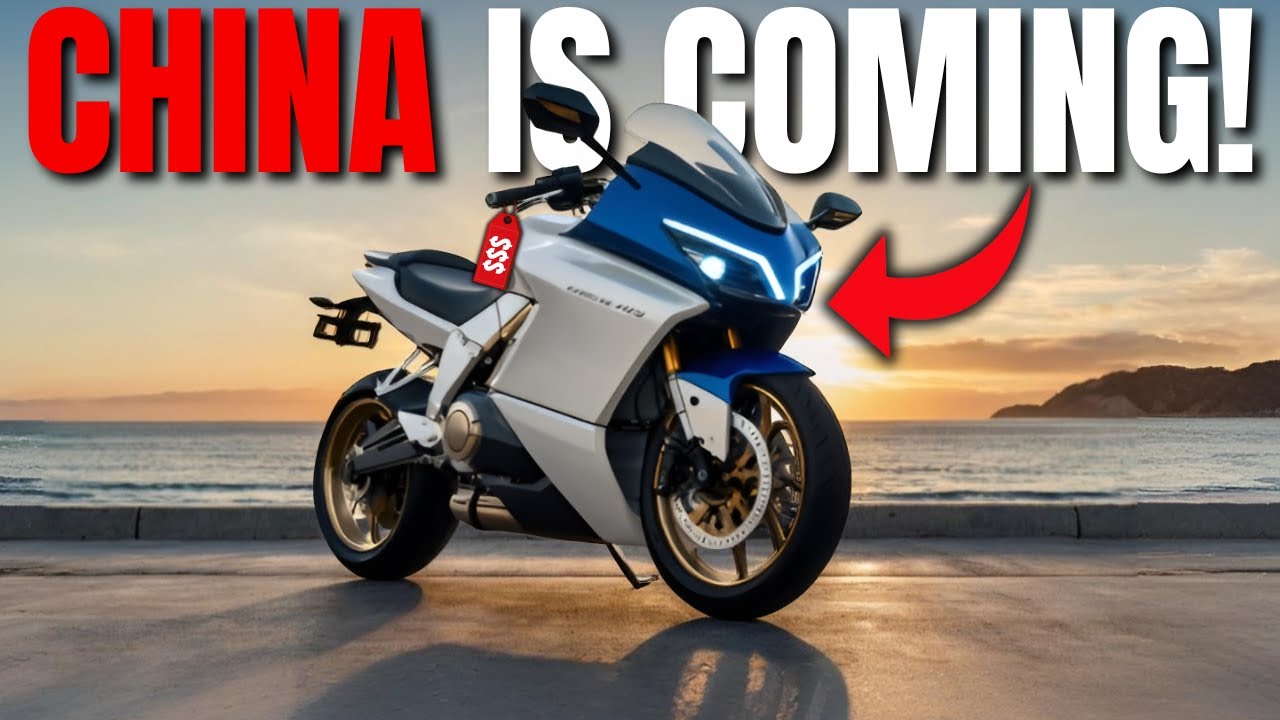
Top 5 Touring Electric MOTORCYCLES Coming to AMERICA in 2025
Buckle up because what I’m about to show you is going to completely change how you think about motorcycles. Right now, there are electric motorcycles hitting American streets that accelerate to 60 mph in under 3 seconds, deliver over 100 m of range, cost less than a used Honda Civic, and require almost zero maintenance, no oil changes, no valve adjustments, no clutch replacements, nothing. Just charge and ride. I’m talking about the top five touring electric motorcycles coming to America in 2025. And these machines are proving that the electric motorcycle revolution isn’t coming someday. It’s already here. Major manufacturers are going allin. Harley-Davidson spun off an entire company just to build electric bikes. Can-Am is back in the two wheel game after 50 years with nothing but electric. And companies like Zero and Energica are delivering performance that rivals or beats gas bikes costing twice as much. From a $14,000 touring commuter that’ll smoke sports cars off the line to a $21,000 sport tourer with 116 mi of range, these bikes are rewriting the rules. Stick around because by the end of this video, you’re going to be questioning why anyone would deal with gas, gears, and clutches when instant torque and silent power are available right now. Let’s dive in. But before we count down these game-changing electric motorcycles, do me a huge favor. Smash that subscribe button right now because Charged Wheels is where we expose the machines that are changing motorsports forever. Hit that like button if you’re curious about electric motorcycles. And drop a comment telling me, would you actually trade your gas bike for an electric? Let’s get into it. Number five, Inurgica Xeria, the electric touring monster. Coming in at number five, we’ve got the bike that’s solving electric motorcycles biggest problem, range, the Enerica Xperia. And this Italian electric touring machine is unlike anything else on this list because it’s built for one thing, going the distance. Inurgica is an Italian company that’s been building high-performance electric motorcycles since 2014. They supply all the race bikes for Moto E, the electric support series for Moto GP. So, these guys know performance. The Xperia is their first touring bike, and they went allin on range. At the heart of the Xperia is a permanent magnet synchronous motor that produces 102 horsepower and 85 lb feet of torque. Now, that might not sound crazy compared to Energica’s sport bikes that make 170 horsepower. But here’s the thing. The Xperia was specifically tuned for efficiency and range, not outright speed. 0 to 60 happens in 3.5 seconds. Top speed is 112 mph. That’s plenty fast for touring. And the instant electric torque means passing power is always available. The battery is where things get wild. 22.5 kW hours. That’s the largest battery in any production electric motorcycle on the market. For comparison, a Zero SRF has 17.3 kwatt hours. The Harley-Davidson Livewire has 15.4. The Energica Xperia has more battery capacity than any of them. What does that massive battery get you? 261 mi of city range, 176 mi combined city and highway, 134 mi of pure highway riding. Let that sink in. 134 mi of highway range. That’s enough to do real touring. You can actually ride this thing from city to city without range anxiety. Charging is handled by a 6.6 6 kW onboard charger that supports level one, level two, and DC fast charging. That’s a big deal. Most electric motorcycles don’t support DC fast charging. The Xeria does. Using a DC fast charger, you can go from 20% to 80% in 40 minutes. That’s a lunch break. You stop, grab food, and your bike is charged. The frame is a tubular steel trellis design with a cast aluminum swing arm. Suspension is fully adjustable. ZF sacks front and rear with 150 mm of travel. Braking is handled by Brembo with dual discs up front. The Xeria comes with a full touring package, hard side paniers, and a top case with 112 L of total storage. That’s 29.5 g, adjustable windscreen, heated grips, cruise control, two USB ports on the dash, and two more in a waterproof storage compartment. This thing is built for serious touring. The electronics are extensive. Four factory riding modes, plus three custom programmable modes, traction control with cornering ABS, three levels of regenerative braking, a 5-in color TFT display with all the info you need. The Xperia weighs 573 lb wet. That’s heavy, but it’s a touring bike with a massive battery and full luggage. The weight is well balanced with a low center of gravity. Now, here’s the situation. The Inurgica Xperia has a base price of $23,750. That’s expensive, but you need to know something important. Energ filed for bankruptcy in October 2024. The company is currently in liquidation. So, while you might find remaining inventory at dealers, warranty support and parts availability are major concerns. If you’re considering an Experia, understand the risks involved with buying from a company in bankruptcy proceedings. Despite the company’s situation, the experience specs are legitimate. It proves that electric motorcycles can do long distance. It’s the bike that showed electric was ready for real touring. Number four, Can-Am Origin, the electric adventure bike. At number four, we’ve got something completely different, an electric dual sport, the Can-Am Origin. And this bike is important because Can-Am is making a major comeback to two wheels after 50 years away from motorcycles. They’re back and they’re going all electric. Can-Am is owned by BRP, the same company that makes Skoo snowmobiles, Sidu Watercraft, and Can-Am 3-wheelers. They know powers sports. The Origin and its street bike sibling, the Pulse, mark Can-Am’s return to motorcycles, and they’re built around Rotax electric technology developed for Can-Am snowmobiles. The Origin is designed as a dual sport adventure bike. It’s got the styling of an adventure bike with tall suspension, spoked wheels, and dual sport tires, but it’s really built for riders who want something that can handle both touring duties and light off-road duty. The motor is an 11 kW Rotax e- power unit that produces 47 horsepower and 53 lb feet of torque. Now, 47 horsepower might not sound like much, but Can-Am says this feels similar to a 700cc gas bike because of the instant electric torque. 0 to 60 happens in 4.3 seconds. Top speed is 80 mph. The lower power output compared to other bikes on this list is intentional. Canm focused on range and efficiency. The battery is 8.9 kwatt hours. Range is 90 mi in the city and 71 mi combined. That’s not huge, but it’s realistic for a bike in this price range. Charging uses a liquid cooled 6.6 kW onboard charger. This is unique. Most electric motorcycles use air cooling. Canm liquid cools the entire powertrain, including the charger. This allows faster, more consistent charging, even in hot weather. Using level two charging, you can go from 20 to 80% in 50 minutes. From 0 to 100% takes 90 minutes. Using a regular wall outlet, 0 to 100% takes 5 hours and 15 minutes. The frame uses the battery and motor as a stressed member. The swing arm mounts directly to the motor housing. This saves weight and creates a rigid chassis. Suspension is KYB inverted fork up front with 10 in of travel. The rear shock is fully adjustable for preload, compression, and rebound. Also with 10 in of travel. That’s serious suspension travel for an electric bike. The wheels are 21 in front and 18 in rear with spoked rims and dual sport tires. This gives the Origin legitimate off-road capability for fire roads and dirt trails. Braking is handled by Juan with a single 320 mm disc up front and 240 mm in the rear. ABS and traction control are standard, and you can adjust or turn them off in the off-road modes. The Origin has six riding modes: normal, eco, rain, sport plus, off-road, and off-road plus. The off-road modes let you customize traction control and ABS for dirt riding. The electronics are impressive. A 10.25 25 in touchscreen display with Apple CarPlay, overthe-air software updates, a companion app that shows battery level, range, and vehicle location, USB port in a glove box where the fuel tank would be. The Origin also has regenerative braking with an active mode. You can twist the throttle backwards to apply maximum regen and slow down while putting energy back in the battery. It’s like engine braking, but it’s adding range. There’s even a reverse mode, which is incredibly handy for tight parking situations or maneuvering the bike around. The Origin weighs 414 lbs. That’s light for an adventure bike, and the low center of gravity makes it feel nimble. Seat height is 34 in, which is manageable for most riders. The riding position is upright and comfortable for all day riding. The Can-Am Origin has a base price of $14,499 for an electric dual sport from a major manufacturer with liquid cooling, 10 in of suspension travel, and Apple CarPlay. That’s solid value in the electric motorcycle market. The Origin proves that electric adventure bikes are viable. It’s the bike for riders who want versatility, modern tech, and the ability to occasionally venture off pavement. Number three, Zero SRS. the electric sport Tourer. Coming in at number three, we’ve got the bike from the company that basically invented performance electric motorcycles, the Zero SRS. And this machine is what happens when you take a decade of electric motorcycle development and wrap it in a full sport touring fairing. Zero Motorcycles is an American company based in California. They’ve been building electric motorcycles since 2006. They’re the most established electric motorcycle manufacturer in the world. The SRS is their flagship sport tourer and it’s the benchmark that everyone else is chasing. The SRS is mechanically identical to Zero’s naked SRF sport bike just with different ergonomics and a full fairing. At its heart is Zero’s ZForce 75 Tundra 10 interior permanent magnet motor. This thing produces 111 horsepower at 5,600 RPM and 140 lb feet of torque. 140 lb feet of torque. That’s more than most VWIN cruisers. That’s more than a Ducati Panagal V2 and it’s available instantly from zero RPM. 0 to 60 happens in the low 3second range. Top speed is 124 mph. The SRS will run with sport bikes and acceleration and has enough top end for any highway riding. The battery is 17.3 kW hours. Range is 116 mi combined city and highway. In pure city riding with regenerative braking, you can push that higher. On the highway at 70 mph, expect closer to 80 miles. Charging uses a 6.6 kW integrated charger. Zero offers an optional fast charging module that ups the onboard charging to 12.6 kW. With fast charging, you can get from 20 to 95% in just over an hour using a level two station. The frame is a lightweight steel trellis with a custom aluminum swing arm. Suspension is fully adjustable. Show a front and rear. 43mm inverted fork up front and a piggyback shock in the rear. Both offer full adjustment for preload, compression, and rebound damping. Braking is handled by Juan four piston calipers and 320 mm discs up front with a single piston caliper and 240 mm disc in the rear. The brakes are excellent with good feel and massive stopping power. The fairing on the SRS is inspired by aerospace design. It’s sleek, aerodynamic, and provides real wind protection. Zero claims the fairing improves highway range by 13% compared to the naked SRF. The riding position is more upright and comfortable than the SRF. The handlebars are wider and pulled closer to the rider. The foot pegs are lower. This makes the SRS genuinely comfortable for all day riding. The electronics run on Zero Cipher 3 Plus operating system. You get five riding modes: rain, eco, standard, sport, and canyon. Canyon mode is specifically tuned for aggressive mountain riding with higher levels of regenerative braking. Regenerative braking is adjustable with four levels plus off. You can tune how much engine braking you want. In high region mode, you can ride around town using minimal actual brakes. The dashboard is a fullcolor TFT display that shows all your riding data, battery status, and settings. It’s clear, intuitive, and easy to read. The SRS weighs 518 lb. That’s heavier than a gas sport bike, but reasonable for an electric bike with this much battery capacity. The Zeros SRS has a base price of $20,995. You’re getting the most refined, most developed electric motorcycle platform on the market. Zero has been iterating on this design for years, and it shows in the riding experience. The SRS is for riders who want genuine sport touring performance in an electric package. It’s fast, comfortable, handles beautifully, and has enough range for serious day trips. This is the electric motorcycle for enthusiasts who refuse to compromise on performance. Number two, Livewire S2 Delmare, the affordable street tracker. At number two, we’ve got the bike that brought the price of premium electric motorcycles down to earth, the Livewire S2 Delmare. And this machine is important because it proves that great electric motorcycles don’t have to cost 25 grand. Livewire started as Harley-Davidson’s electric motorcycle division. The original LiveWire 1 was excellent, but expensive at over $22,000. Harley spun LiveWire off as a separate brand, and the S2 Delmare is their affordable model built on an all-new platform. The S2 Delmare has a flat tracker inspired design, 19-in wheels front and rear, minimalist bodywork, low and aggressive stance. It looks nothing like a traditional Harley, and that’s the point. This is designed to attract younger riders. The motor is a permanent magnet synchronous unit that produces 84 horsepower and 194 lb feet of torque. Wait, 194 pound- feet of torque. That’s more than a Triumph Rocket 3 with its 2.5 L 3-cylinder engine. The Delvar makes superbike level torque. 0 to 60 happens in 3 seconds flat. Top speed is electronically limited to 110 mph. The acceleration is brutal. LiveWire says it rivals superbikes off the line. And that’s not marketing speak. The instant torque will snap your head back. The battery is 10.5 kwatt hours. That’s smaller than the bikes we’ve talked about so far. But the Delmare is positioned as a versatile bike with realorld touring capability. Range is 113 mi in the city, 86 mi combined, 70 mi at a sustained 70 mph. For touring and commuting, that’s plenty. Charging uses an onboard charger that supports level one and level two. No DC fast charging like the Enurgica, but level two charging gets you from 20 to 80 percent in 78 minutes. From empty to full takes 2 and 1/2 hours. The Delmare uses LiveWire’s S2 Arrow architecture. This is a modular platform where the battery, motor, inverter, and charging system are integrated into a single unit that serves as the main structural element. This reduces parts, cuts assembly time, and allows LiveWire to build different bikes on the same platform. The frame is minimal because the powertrain is structural. The swing arm mounts directly to the motor housing. This saves weight and creates a very compact package. Suspension is Showa front and rear. Fully adjustable inverted fork up front and a fully adjustable rear monoshock. The suspension is excellent tuned for aggressive street riding. Braking uses a single Juan disc up front. Yes, just one disc positioned on the left side for that flat tracker look. Don’t worry, the single disc has plenty of stopping power thanks to a four piston caliper. The rear uses a single disc as well. The wheels are 19 in at both ends wrapped in Dunlop DT1 tires. These are street oriented but with enough tread pattern to give the bike a dirt tracker vibe. The Delmare is packed with electronics, sixaxis IMU, Bosch cornering ABS, cornering, traction control, drag torque slip control, four riding modes that adjust power delivery and traction control. The bike supports overthe-air updates, so LiveWire can add features and improvements remotely. The companion app lets you track rides, view battery status, check tire pressure, and even navigate using your phone. The display is a compact unit that shows essential info without clutter. Clean, simple, functional. The Delmare weighs 440 lb. That’s light. Combined with the low center of gravity and 19-in wheels, the bike feels incredibly nimble and flickable. The seat height is low at 30.9 in. This makes the Delmare accessible for shorter riders. The LiveWire S2 Delmare has a base price of $16,249. for an electric motorcycle from Harley-Davidson’s electric brand with 3-second 0 to 60 over-the-air updates and Bosch electronics. That’s competitive pricing in the premium electric motorcycle segment. To put that in perspective, a Harley-Davidson Street Rod costs over $9,000 and has less power, worse electronics, and requires all the maintenance of a gas bike. The LiveWire S2 Delmare offers significantly more performance and technology. The S2 Delmare is the electric motorcycle for riders who want instant performance, modern tech, and head turning style without breaking the bank. This is the bike that’s going to bring electric motorcycles to the masses. Number one, Can Pulse. The electric motorcycle for everyone. And here we are. Number one, the bike that’s going to shock you with what it offers for the money. The Can-Am Pulse. And this versatile commuter is the electric motorcycle that’s redefining value in 2025. The Can-Am Pulse shares its Rotax e- power platform with the origin we talked about at number four. Same motor, same battery, same liquid cooled system, but the Pulse is optimized for everyday riding with shorter suspension, smaller wheels, and a more aggressive riding position. The motor produces 47 horsepower and 53 lb feet of torque, same as the Origin. But here’s where it gets interesting. The pulse is lighter and more aerodynamic than the Origin, so it’s quicker. 0 to 60 happens in 3.8 seconds. That’s faster than the Origin’s 4.3 seconds. That’s faster than most gas powered naked bikes. The Pulse will embarrass sport bikes at stoplights. Top speed is 80 mph, same as the Origin. That’s plenty for everyday riding and short highway stints. The battery is the same 8.9 kwatt hours, but the Pulse gets better range because of its lighter weight and better aerodynamics. 100 m in the city, 80 mi combined. That’s 10 mi more city range than the Origin. Charging is identical to the Origin. Liquid cooled 6.6 kW system. 20 to 80% in 50 minutes with level two. Zero to full in 90 minutes. The Pulse has the same innovative features as the Origin. Active regenerative braking where you twist the throttle backwards. Reverse mode for tight maneuvers. Silent chain drive in an oil-filled enclosure for near zero maintenance. The frame is the same stressed member design with the battery and motor as structural elements, but the Pulse is lower and more compact. Suspension is KYB but with less travel than the Origin. 5.5 in front and rear. That’s enough for everyday riding while keeping the bike lower and more nimble. The wheels are 17 in at both ends with cast aluminum rims and sporty street tires. This makes the Pulse feel quick and agile in traffic. Braking is identical to the Origin. Juan with 320 mm up front and 240 in the rear. ABS and traction control are standard. The Pulse has four riding modes, normal, eco, rain, and sport plus. You can tune power delivery and traction control for the conditions. The electronics are identical to the Origin. 10.25 in touchscreen with Apple CarPlay. Overtheair updates. Companion app with battery status and vehicle location. USB charging port. The Pulse weighs 390 lb. That’s 24 lb lighter than the Origin. The lower weight makes the Pulse feel incredibly nimble. The seat height is 30.9 in. That’s 3 in lower than the Origin, making the Pulse more accessible for new riders or shorter riders. The Pulse has a small glove box where the fuel tank would be. It’s not huge, but it’s enough for your wallet, keys, and phone. The Can Pulse has a base price of $13,999 for a liquid cooled electric motorcycle from a major manufacturer with 100 mi of city range, 3.8 seconds 0 to 60, Apple CarPlay, overtheair updates, and a 50minute fast charge. That’s exceptional value. You’re getting a bike that costs less than a used Honda Civic, but accelerates faster than most sports cars. Compare that to a gas bike. A Kawasaki Z650 costs $8,500. It makes less power than the Pulse. It requires constant maintenance. It gets maybe 40 m per gallon. It’s loud. The Can-Am Pulse is faster, cheaper to operate, requires almost no maintenance, and costs just $1,500 more. Or look at it this way. A Honda CB500X costs $7,000. Add in the cost of 2 years of gas, oil changes, valve adjustments, and clutch maintenance, and you’re easily over $10,000. The Pulse costs 14 grand upfront and costs pennies to charge. The Can-Am Pulse is the electric motorcycle for everyone. New riders who want something easy and accessible. Experienced riders who are tired of maintenance. Commuters who are sick of gas prices. Riders who want instant performance. Canam has built an electric motorcycle that’s genuinely affordable, genuinely good, and genuinely ready for prime time. This is the bike that’s going to convert millions of riders to electric. So, there you have it, folks. The top five touring electric motorcycles coming to America in 2025. From the $14,000 Can-Am Pulse that offers supercar acceleration to the Enerica Xperia that finally makes electric touring viable, these bikes prove the electric revolution is here. Drop a comment with which one you’d buy. Subscribe to Charged Wheels and hit that bell. I’ll catch you in the next one. Stay charged.
Top 5 Touring Electric MOTORCYCLES Coming to AMERICA in 2025
Discover the electric touring motorcycles proving that long-distance riding doesn’t require gasoline anymore. These aren’t city commuters or short-range toys—they’re production touring bikes designed for multi-day trips with ranges exceeding 200 miles, comfortable ergonomics for all-day riding, and luggage capacity matching traditional touring motorcycles. From bikes offering adjustable windscreens and heated grips to models with integrated panniers and smartphone navigation, electric touring is finally viable for riders who measure trips in hundreds of miles, not blocks.
The touring bikes available in 2025 feature ranges between 150-250 miles on highway speeds with conservative riding, DC fast charging adding 80% capacity in under an hour at compatible stations, comfortable upright seating positions with adjustable handlebars and windscreens, and integrated luggage systems or mounting points for panniers and top cases. Power delivery from electric motors provides smooth, vibration-free cruising that reduces rider fatigue on long days, while instant torque makes passing maneuvers effortless without downshifting. Advanced features include cruise control, heated grips and seats, smartphone connectivity with turn-by-turn navigation, and traction control systems that adapt to weather conditions.
The charging infrastructure continues expanding with networks like Electrify America, EVgo, and ChargePoint adding locations specifically along popular motorcycle routes. Range anxiety is fading as batteries improve and riders learn that 200-mile legs with hour-long charging breaks actually match comfortable touring pace better than gas-and-go stops. Maintenance drops to tires and brake pads with no oil changes, valve adjustments, or clutch replacements. Whether you’re planning cross-country adventures or weekend touring, these five electric motorcycles prove the future of long-distance riding is silent, smooth, and surprisingly practical.
#ElectricTouring #TouringMotorcycles #ElectricMotorcycles #LongDistance #EVBikes #MotorcycleTouring #ElectricAdventure #RoadTrip #ElectricTravel #BikeTouring #ZeroEmissions