The 280-horsepower GMC Typhoon, released in 1992 for the 1993 model year with a turbocharged 4.3-liter V6, is widely considered the first performance SUV. The Typhoon was based on the GMC S-15 Jimmy and lasted only a single model year, with 4,697 units built, but it kicked off a whole new way of thinking about the sports utility vehicle. In the 1990s, SUVs were the new station wagons, functioning as family cars that were roomy, comfortable, and capable, but not exactly sporty. The Typhoon was a real have-your-cake-and-eat-it-too moment, with its 5.3-second 0-60 time proving that these big, bulky rigs didn’t need to be a chore to drive.
Today, you’ve got your pick of performance SUVs, and even the standard entry-level models are much quicker now than they were back then. The 2025 Ford Explorer, for instance, can easily hit 60 miles per hour in under six seconds. At the very top of the mountain, there are offerings such as the Tesla Model X Plaid that can get to that speed in under three seconds. Here are the performance models that helped to redefine SUVs as performance vehicles.
Rivian R1S Tri-Motor
2.9 Seconds
Engine
Tri-Electric Motor
Horsepower
850 hp
Torque
1,103 lb-ft
Top Speed
130 mph (launch mode)
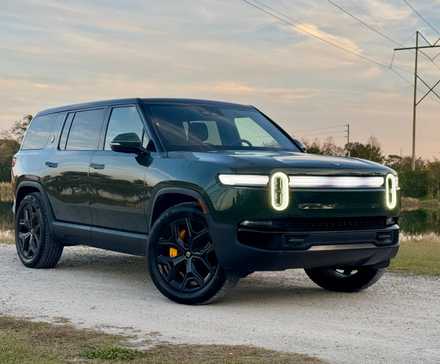
The Rivian R1S lands on this list twice, for both the three-motor and four-motor variants. The Tri-Motor Max Pack model starts at $106,990 for the 2026 model year, and it may be the most functional, practical model here if you’re looking for a family SUV that just happens to be shockingly quick in a straight line. It’s more affordable than the quad-motor model, tows up to 7,700 pounds, all-wheel drive, comfortably seats seven people, and offers 17.7 cubic feet of cargo space in the back. Add to that, you’ve got up to 14.9 inches of adjustable ground clearance, making this one the obvious choice for all-terrain adventures.
A neat thing about electric off-roaders, if you’ve never driven one, is how they allow you to really take in the sounds of nature without the persistent rumble of a V8 scaring the wildlife away. There’s no reason to worry about drowning out the sounds of creeks, waterfalls, and crickets. The sensation is actually a bit eerie the first time you take an electric SUV out into the wild, but once you get used to the feeling, it’s hard to imagine going back to loud Jeeps and Fords.
When we last reviewed the Rivian R1S, we were impressed with the high-end interior, with wood trim accents available in various walnut and driftwood styles. We dug the heated and ventilated vegan leather seats, the 15.6-inch central touchscreen, and the premium audio. There’s even a 6.8-inch screen for the second row, and dual-zone climate control comes standard. This is not just a big SUV that happens to be incredibly quick off the starting line, it’s something you’d expect to see George Jetson driving, as a true family car for the future.
Related
If you want a new electric SUV, there are now many enticing models to choose from.
Porsche Cayenne GT Turbo Coupe
2.8 Seconds
Engine
4.0-Liter Twin-Turbo 8-Cylinder
Horsepower
650 hp
Torque
626 lb-ft
Top Speed
191 mph
Porsche lists the Cayenne Turbo GT Coupe with a 0-60 time of 3.1 seconds, but unofficially, takeoffs have been reported at just under three seconds. @HermansCarReviews on YouTube posted a video of a European model in action, reaching 100 km/h, or about 62 mph, in roughly three seconds (we counted the frames).
The Turbo GT achieves its incredible 0-60s by way of a twin-turbo V8, which the automaker claims is the most powerful V8 Porsche has ever built. This is paired with an 8-speed automatic transmission, with power sent to all four wheels. This is technically a family car, but it’s also a Porsche, which means that it’s driver-first, so you’ve got rear-axle steering, sport exhaust, ceramic composite brakes, and Porsche Dynamic Chassis Control, all making for one of the best-handling cars in the segment.
What may be most impressive about the Turbo GT Coupe is that, despite the name, it really is an SUV, and it doesn’t sacrifice much in the way of usability for its incredible performance specs. The four-seater comes up one seat shy of what you might expect in this size class, but nobody likes the middle seat anyway, and the Turbo GT can actually tow a full three tons, which is more than enough to bring a small travel trailer or a fishing boat with you to the lake.
Hyundai Ioniq 5 N
2.8 Seconds
Engine
Dual-Electric Motor
Horsepower
601 hp
Torque
545 lb-ft
Top Speed
162 mph
The really wild thing is about the 2025 Hyundai Ioniq 5 N is not so much the 0-60 time, which is impressive, but it’s the price. The Ioniq 5 N starts at $66,100 for the base all-wheel drive model. For an SUV that’s delivering supercar-like performance specs, that’s unheard of. The Hyundai is by far the most affordable model on this list, as every other model we’re covering here would cost you a bare minimum of $100,000 after you factor in taxes and delivery costs.
The output jumps to 641 hp for those lightning-quick takeoffs when you push the N Grin Boost button, achieving an official 0-60 time of 3.2 seconds, but it’s been clocked getting up to speed in 2.8 seconds by sources like Motor Trend. So, we had no choice but to name the Ioniq 5 N our favorite EV for 2025. However, there’s more than just for its incredible 0-60 time because the vehicle is also a thrill to drive. It’s quick to charge, too, with an 800-volt architecture that goes from 10% to 80% in just 18 minutes. As we described it in our initial impressions, the Ioniq 5 N is living in the future while other performance EVs are stuck in the past.
Rivian R1S Quad-Motor
2.6 Seconds
Engine
Quad-Electric Motor
Horsepower
1,025 hp
Torque
1,198 lb-ft
Top Speed
130 mph (launch mode)
Everything we just said about the Rivian R1S Tri-Motor applies to the Quad-Motor variant. The interior is roomy and upscale, it’s fun to drive, has impressive range, and boasts the same 7,700-pound maximum towing capacity. The R1S Quad-Motor is quite literally the same SUV as the Tri-Motor model in almost every single way. The difference is that this variant has an extra electric motor, bringing the total power rating up to 1,025 hp, and the 0-60 time down to 2.6 seconds.
The Rivian R1S Tri-Motor features one motor up front and two on the rear axle. For the Quad-Motor R1S, Rivian gives each wheel its own motor, adjusting independently, on the fly, to whatever the adventure demands. As Rivian puts it on the website “4X motors, 4X the fun.” We wouldn’t be surprised to see quad-motors become the norm as the electric off-roader segment continues to grow. The result is a remarkably smooth and easy-going all-terrain driving experience, with all that instant torque and supercar-tier horsepower allowing you to glide over all but the most treacherous surfaces with relative ease.
On the track, the Rivian’s massive weight means that you’re going to have more fun on the drag strip than taking corners. Quad-motors or no, it’s a three-row electric SUV that tips the scales at around 7,000 lbs. Electric vehicles are inherently bottom-heavy, but not all can achieve a perfect rollover rating like the Model X. The Rivian R1S offers excellent traction. Still, it should come as no surprise to learn that it’s not the most nimble thing on the market.
Related
Tesla Performance Models Ranked By Quarter-Mile Time
Planning an all-Tesla drag race? Here’s what you can expect.
Tesla Model X Plaid
2.5 Seconds
Engine
Tri-Electric Motor
Horsepower
1,020 hp
Torque
1,050 lb-ft
Top Speed
163 mph
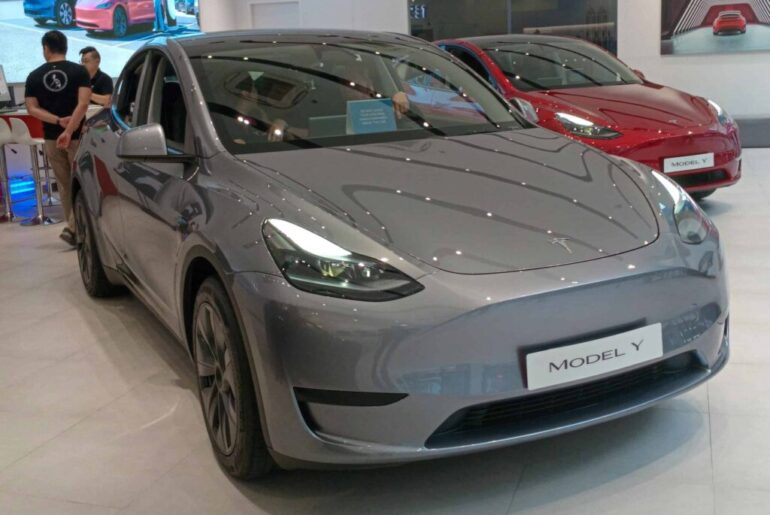
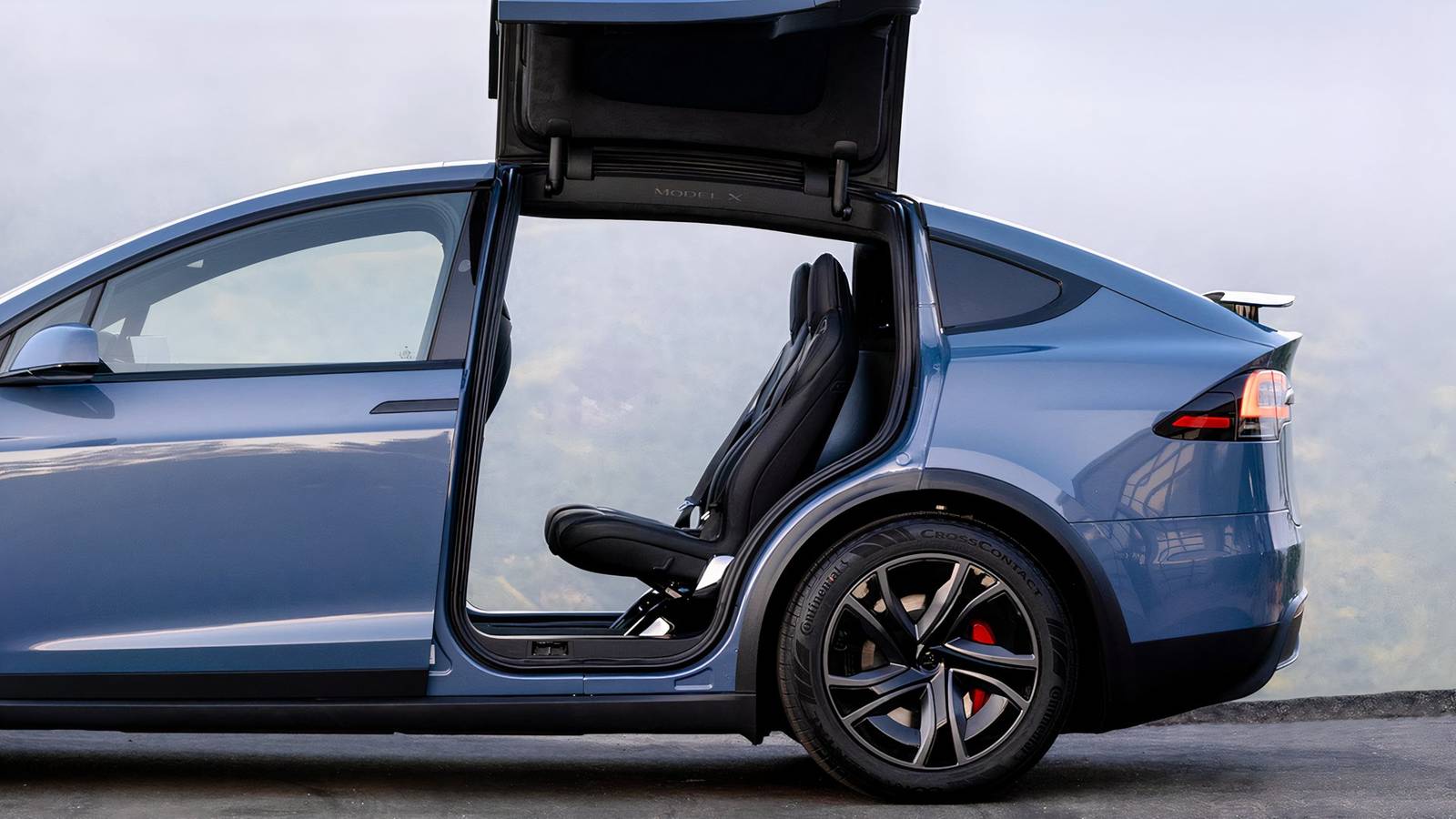
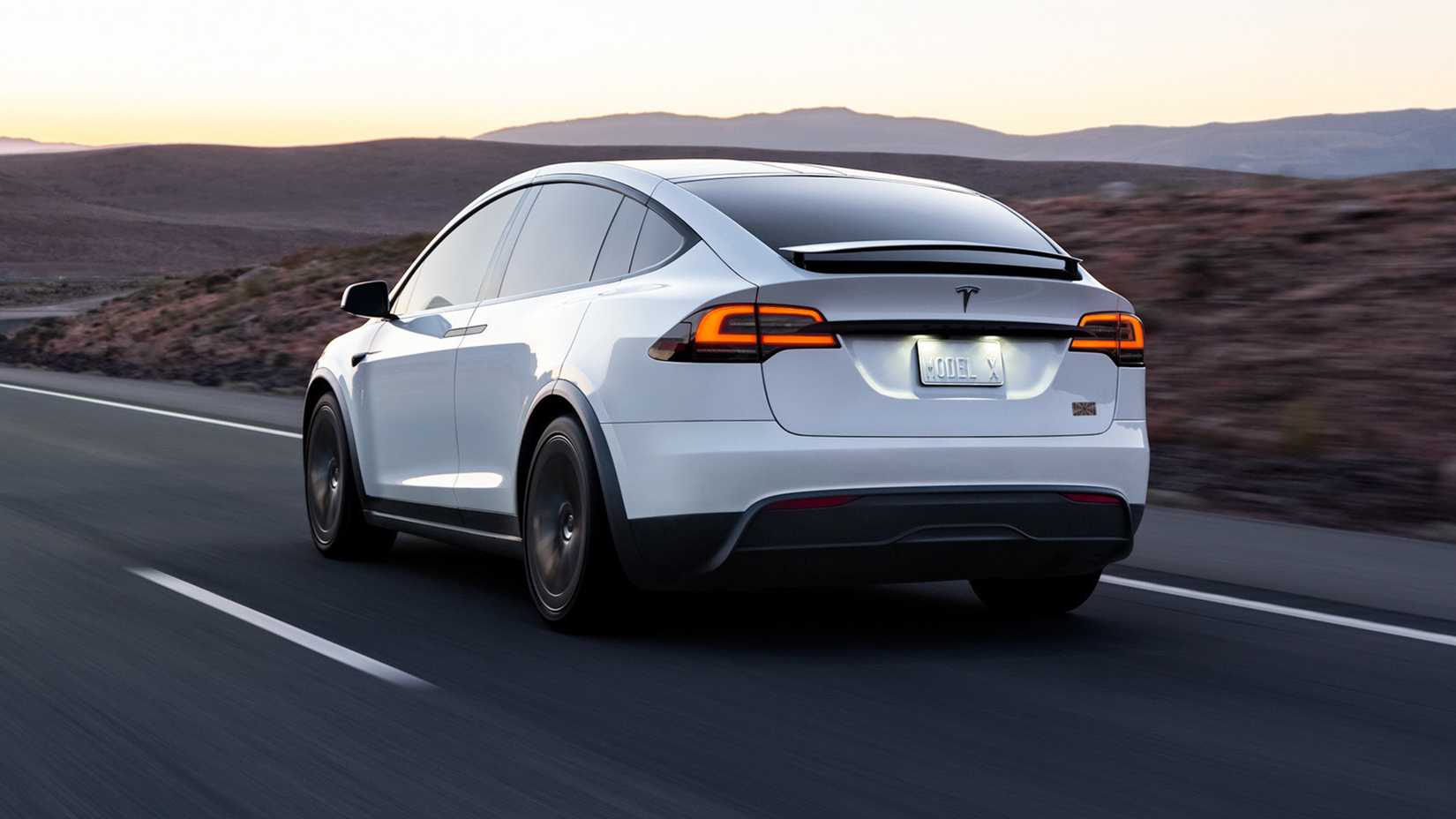
When bad news comes Tesla’s way, it tends to be very bad news. The Cybertruck isn’t selling, stocks were down early this year, and there are embarrassing recalls for the brand. It’s easy to forget that Tesla is legitimately one of the most cutting-edge automakers on the planet. The Model X has made history more than a few times now. The model was the first SUV to achieve a perfect rollover rating from the NHTSA, owing to its bottom-heavy EV design. The SUV also earned credit for helping to carve out a niche for superpowered family SUVs.
The Model X is classified as a mid-size luxury crossover SUV, and its vital stats as a functional SUV reflect that. It’s a six-seater that can tow up to 5,000 lbs. That’s the same maximum towing capacity you’ll get out of an entry-level Ford Explorer, so the Model X Plaid is in good company. Add to that, a Plaid with 20-inch wheels should get around 314 miles of range on a full charge, according to the EPA, so you shouldn’t have any trouble with range anxiety. Unless, of course, you want to keep showing off that lightning-quick acceleration every time a light turns green.
The Tesla Model X Plaid started at an MSRP of $119,990 for the 2021 model year, but the 2025 model is considerably more affordable at $99,990. That’s still a premium price, but at least it’s under six figures before taxes, making it a more attractive purchase than ever.
Related
Best 7-Seater Electric SUVs Of 2025
As manufacturers start releasing larger EVs, this category is starting to flourish.
Expect The Next Version Of This List To Be Considerably Longer
2025 Tesla Model X Plaid White Rear Angle Driving in Desert SettingTesla
SUVs with supercar-like performance have been around since the 1990s, but the industry has kept raising the bar for their performance. To say that the introduction of electric powertrains has been a game-changer would be the understatement of the century. SUVs that would have been considered record-breakers just 15 years ago wouldn’t even make a top 20 list in 2025. Horsepower has been, if not exactly trivialized, then at least democratized. Where it used to be impossible to achieve certain power ratings without a high-displacement motor packing turbos and superchargers, you can now get there by simply adding a second electric motor to the rear axle.
As technology becomes more affordable and accessible, we will no doubt see more family cars available in superpowered variants that clear 60 mph in three seconds or less. We should also expect existing performance SUVs, like, potentially, the BMW iX, to shave time off of its 0-60 until it can ride shoulder to shoulder with everything on this list.
Of course, this begs the question of just how much demand there really is for supercar-like SUVs. These models are typically produced in far lower numbers than their mid-market siblings, for the simple fact that not everyone who serves as the family chauffeur is interested in pushing the kids back into their seats with jet-engine-like acceleration, or in watching the dog scramble to regain his balance. At the same time, the car takes off like a space shuttle. As much as we like the idea of a family car that takes off like a McLaren, we can concede that it’s not for everyone.
Sources: Tesla, Rivian, Porsche, Hyundai.