
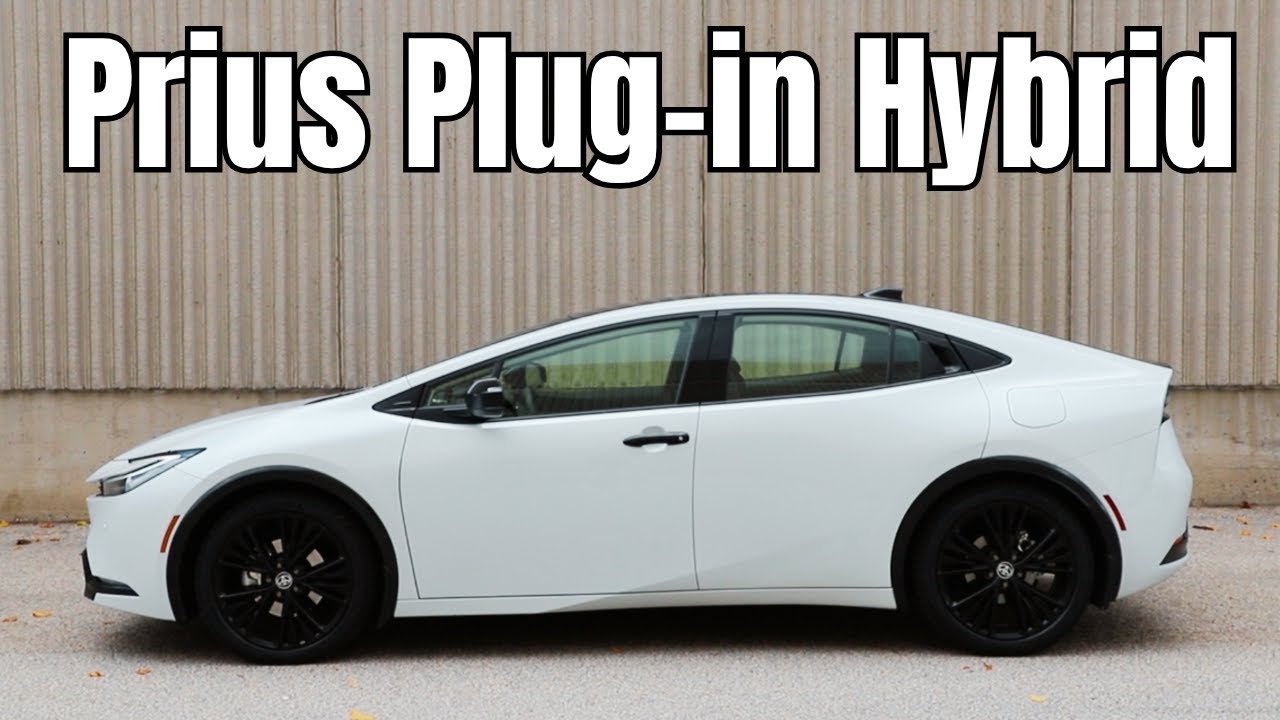
2026 Toyota Prius Plug-in Hybrid – What’s in a name?
Welcome to Modern Motoring. I’m Jay and with the 2026 Toyota Prius plug-in hybrid. It’s no longer called the Prime. That was a 2025 thing, but it’s 2026 and there is a new Nightshade package. So, we’ll go through what that is along with the perks, quirks, and pricing and see if there is a competitor Nero or far from the Prius Plug-in Hybrid. Let’s start off with our baseline numbers as usual for the 2026 Toyota Prius plug-in hybrid. 2 L 4-cylinder engine still under the hood, 220 horsepower. Now, the fully electric range has two figures. If you go with the base SE trim, it’s 72, sorry, up to 72 km. And if you go with the XSSE or the XSSE premium, because there’s more weight, that brings it down to 64 km. still a pretty respectable number overall whether you’re looking at the 72 or 64 and it’s a 13.6 kW per hour battery. Still has the 40 liter fuel tank and the SE gets 4.5 L per 100 km combined meaning you can go almost 900 km on a full tank on a full charge. The XSE bumps up a touch to 4.9 bringing your total potential distance traveled to 820. The one new thing for 2026 is the nightshade package option. And most vehicles have a blackout nightshade dark edition, midnight edition, and they have an off-royesque edition, which is just all-terrain tires and a bit of badging. So, for $895 Canadian, at least for 2026, your Nightshade edition gets you black badging. It gets you black door handles. only two though because the rear door handles are put way up at the top of the door and you get a black grill. On the perk side, whether it’s 64 or 72 km of range, it’s still a pretty healthy number. And if you are living in more of an urbanized zone, you might be able to squeeze out only electric mileage for daily driving. So, there’s a higher chance of that tank of fuel lasting a lot longer. And I think with a plug-in hybrid, chances are most people will plug in every night so they have that full battery charge when they get going. Well, in the morning or whenever it is that your day starts. Toyota Safety Sense 3.0 is here. So, there is a ton of standard safety and the essentials are covered. Your front, your sides, your rear. And I’m happy to see as an industry that standard safety is really being paid attention to when there’s a lot more nowadays than there was even maybe 3, four, 5, 6 years ago. Pretty good list of standard features and they include the wireless Apple CarPlay, wireless Android Auto, heated steering wheel, uh front to heated seats, and a lot of physical buttons. And I know that’s not a standard feature, but it’s still a big perk here. All your HVAC are run through physical buttons. And strangely for something that’s so high-tech with a nice large infotainment screen and a very interestingly designed really recessed instrument cluster to reset the odometer. There is a physical button behind the steering wheel and the same thing for the brightness or dimness of said instrument cluster. So I like that Toyota’s found a good balance between the two. And finally on the perk side is the Prius, not Prime, sorry, the Pus Prius, Prius plug-in hybrid. Maybe I do want the word Prime back. It drives very well. It’s extremely aerodynamic and I think I saw something when the Prime at the time came out. The angle of the windshield, I think, is 31 32°. So, it’s really, really steep, but again, helping with the aerodynamics, but it’s comfortable to drive, and you still get decent sight lines. Really, really big windows here. And there’s that little um which is bigger than most. Uh little piece of glass here just connecting the regular glass that goes down to the A-pillar. And it’s a pretty quiet drive as well. And everything’s within reach. Everything’s well designed. There’s no stretching and reaching for things. It’s not extremely fast, but well, it can be when you’re using the battery, but when you’re in gasoline mode, um, respectively quick. Again, 220 horsepower for a smaller vehicle. And given its small footprint, it’s extremely maneuverable. So, all three types of parking are done with ease. Uh, whether you’re on narrower roads, you have no problems in in just getting the Prius plug-in hybrid to do what you want it to do. And right now it’s the best in class for driving dynamics. And it’s not necessarily quick, but there’s no issues getting on to highway speeds. If you got to stomp down on the accelerator to get a burst of power for whatever it is, the Prius plug-in hybrid delivers quite nicely. On the quirk side, I’ve already touched on it, but I will just say it. So, it’s in the official quirk pile. It’s the change of name from prime to plug-in hybrid. Now, the weird thing is on the key fob, it still says prime. So, I think they’re just going to run through as many key fobs as they have left that say prime and then they’ll change the wording on the back of that key fob to plug-in hybrid. Uh, next up on the quirk side of things is there’s a digital rear view mirror on the XSSE Premium. It’s a small little car. I don’t think it really needs it. Um, I’ve always thought it to be a little quirky when smaller vehicles have digital rearview mirror available at all. The shape of the steering wheel will always be quirky to me because, well, it’s round, but within that round, you have a squareish rectangle boxy kind of shape and you have all your physical buttons bookending them. just a bunch of different shapes crammed into a traditional circular steering wheel. And the final quirk is with a push of a button, the top left one on the steering wheel, the instrument cluster moves like the old Lexus is used to where the whole main speedometer shifts all the way to the right. You get some extra instrument extra instrumentation, also known as extra information on the left side. I think it’s a cool little nod to Lexus and uh definite quirk there. On the irk side, there’s really not much. First one being that there’s no rear wiper. And some may say it doesn’t need it. And sure, Rainexing it once a month or once every whenever will do it for you. But it’s not only rain that’s going to fall down, at least here in Canada. So, I would really like to have seen a rear wiper. I thought they may have squeezed one in with a midseler refresh, but Toyota’s believing that the angle again is so steep and it doesn’t need one, so it doesn’t have one. And maybe it’s an aesthetic one, but I remember that old Scion sedan had a rear wiper plunked on it. And did it look funny? Sure. Was it practical? Absolutely. For something with so much technology, the backup camera is not the greatest and it’s pretty low res considering how high- res the instrument cluster is and how high- res the infotainment system is and even how high res the available digital rear view mirror is. It’s just a pretty big miss there. And I know you shouldn’t be depending on a backup camera. it’s there as an aid and an extra set of eyes, but if it’s dark or draining or whatever it is, it takes something that’s lower quality and just reduces it even further. The last irk is on pricing, so let’s just use that as a segue to get into pricing. It’s not a deterrent because they’re clearly selling, but it’s a little on the higher side. So, for Canadian MSRP figures, the SE, which is the entry level, comes in at $40,50. Mid-trim XSE comes in at 44785. And the fully loaded XSSE Premium rings in at 48535. And if you’re saying, “Well, Jay, it’s not that expensive. It’s Toyota. It’s got the longevity. It’s got all sorts of awards. and you know it’s going to last much longer than a lot of the competition. Sure. But not everybody has that long-term keep a car for as long as you can mentality or lifestyle. Some people just want something for 3, four, 5 years. And that’s a great segue into the competition. And I only count one real one as far as size and class go and that’s the Kia Nero PV. you get up to 55 kilometers, which I know isn’t 64 and it’s definitely not 72, but if you’re doing 40, 45, even 50 km on average per day, yeah, that extra Prius plug-in hybrid EV range is great, but if you don’t need it, you know, maybe take a look at the Nero. And pricing on the Nurero’s top trim EX premium is 41545 which is just a touch more than the base SE Prius plugin. So take from that what you will. And if I was consistently doing under 50 km a day, I would give a lot of attention to that Kira Kuro Kia. That’s three mess ups today. I’ll keep them all in. I would take a serious look at the Kia Nurero plug-in hybrid. Maybe it’s a budget thing for you. you want a plug-in hybrid, but you know that extra $7,000 is just a little much. But I realize not every lifestyle is the same and everyone has different driving needs and they live in different areas and whatever it happens to be. But if budget is a key factor for you, as is driving a plug-in hybrid, yes, the Prius is quite good, but so is the Narrow. And I think because the Narrow is not as popular as the Prius, it often gets overlooked. That’s going to wrap it up for the 2026 Toyota Prius plug-in hybrid. Let me know if you have any questions of what you’ve seen. and I’m happy to get you answers as soon as possible and I’m always happy to engage in respectful conversations online. I invite you to join the modern motoring social media platforms be on all of the major ones and you know the next part without you there is no modern motoring. So I thank you, I appreciate you and I look forward to seeing you in the next video.
The 2026 Toyota Prius Plug-in Hybrid no longer uses the name Prime and for this model year, they introduce a cosmetic Nightshade edition.
With up to 72 km of electric range, would this be enough for your lifestyle?
0:00 Intro & numbers
1:50 Perks
5:05 Quiks
6:29 Irks
7:48 Pricing & competition
Join our community!
https://www.facebook.com/modernmotoring
https://www.instagram.com/modern.motoring/
@modernmotoring
https://www.threads.com/@modern.motoring
#toyota #phev #carreview