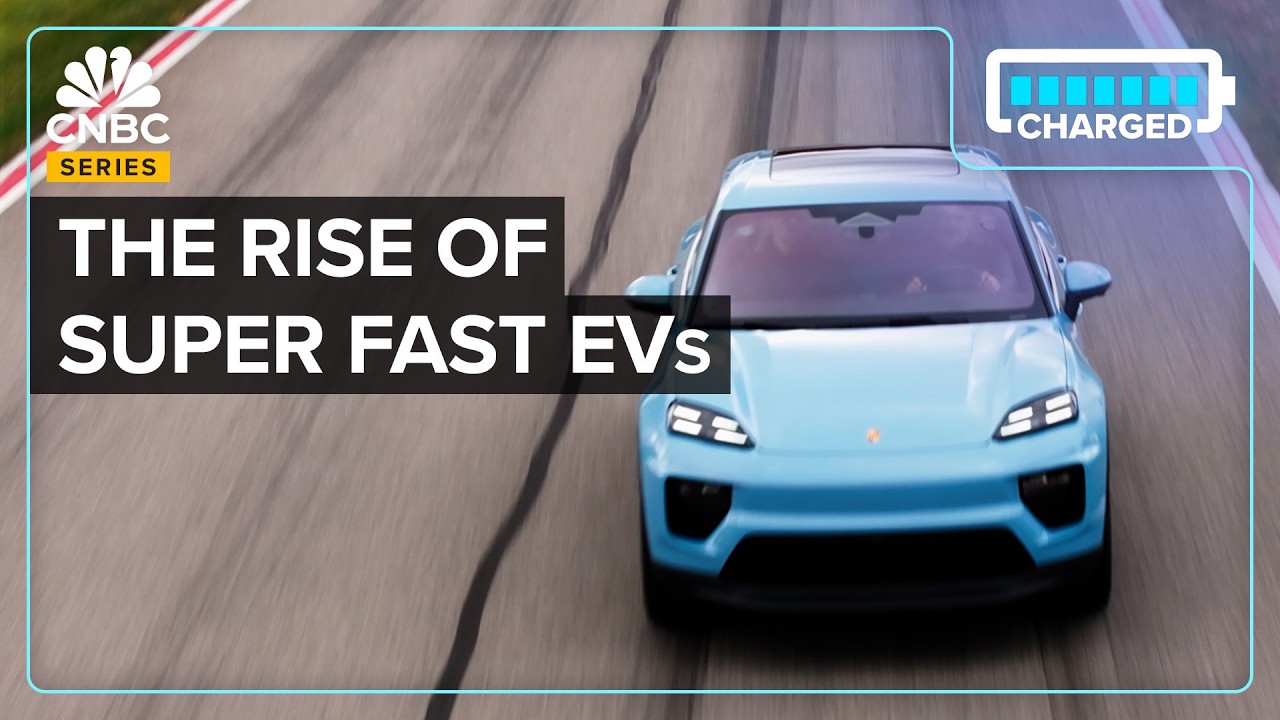
Why Impressive Speed Won’t Be Enough To Sell EVs In The U.S.
You ready? Yeah. Let’s do it. About 120 miles an hour. Quicker than a Ferrari. Smoother and quieter than
the Cushiest sedans. When it comes to
performance, today’s EVs embarrass gas
burning cars. They have instant torque,
a low center of gravity and unbelievable traction. I am worried about what my
face is going to look like when I see the footage on
this. High performance was crucial
to selling EVs to the public. It helped legitimize the
idea of an EV as, like I said, something more
than just a glorified golf cart. But even though EVs surpass
fuel burning cars in power and speed, even though many
proponents say they are better vehicles with a
better driving experience, they’re not selling anywhere
nearly as well in the U.S. as they are around the
globe. After the federal credits
ended, experts forecast struggle
ahead. The point has been made. Yes, EVs can be really,
really fast. Now let’s go back and think
about okay, what do we actually need. CNBC drove three of them to
see why and how EVs got so powerful, and what insiders
say they need to do to keep attracting customers. I’m here at M1 Concourse in
Pontiac, Michigan. I’ve been hearing
a lot about how powerful EVs have become and some of the
benefits and drawbacks of that. I wanted to look into
it, so I talked to Sam
Abuelsamid. He’s an industry analyst,
driver and car guy that I speak to often. Here we’ve
got the Kia EV6 GT-Mine, the Porsche Macan 4S
electric and the Audi RS e-tron GT. Three very
different cars with very different prices and
performance specs, but all of them are compared
with gas cars, significantly more powerful. In the early days,
the EV was seen as the green choice. Save fuel,
save the planet. Everybody knew that EVs were
green, but nobody thought they were
very exciting. The EVs that we had prior to that were
kind of boring, really. But along came Tesla,
which, as Consumer Reports once put
it, turned EVs from the
vegetables you should eat to the dessert you desire. Performance was crucial to
that pitch. When Tesla brought out the
Roadster. The reason why they did a
sports car first was they wanted to demonstrate that
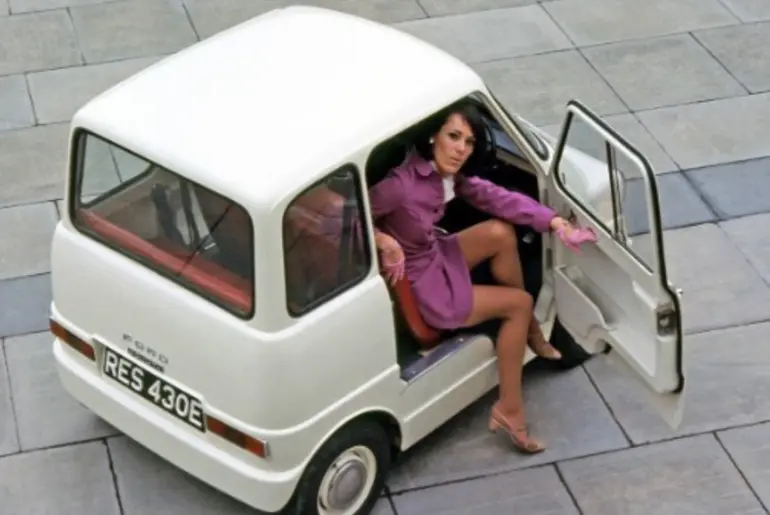
an EV could be something far more than a glorified golf
cart. Alex Roy is a venture
capitalist, racing driver and writer,
who has driven across the country at high speed
several times to break a record called The Cannonball
Run. The first was in a BMW M5. Then he switched to EVs,
doing three record-setting runs in Teslas,
two in a Model S, one in a Model 3. Then he set the first record
for a run using Tesla’s full self-driving system. For Roy, the Model S is the
car that really changed the EV landscape,
and in some ways, Tesla is still unmatched. There is no question that
Tesla has, like, what I call total
narrative command of electric vehicles. They created the seminal
product. Following the Model S,
many automakers came out with fast, luxurious
electric vehicles, many of which,
on paper, looked like high-tech muscle cars. Some have even argued that
too many of them were basically toys for the rich. There is something that’s
quite important, um, to the future of
sustainable energy, which is that,
uh, we’ve got to show that an electric car is the best
car, hands down. The initial part of any
product is always the luxury product, right? Because
there’s a cost to develop the new technology. EVs have certainly suffered
with that. So the models that have come
out have been marketed to the affluent,
and the feature that they want is speed and,
you know, design and style and all
that stuff. Automakers added EVs to
their high performance lines. There are EV
supercars and hypercars. There’s an EV racing series
in the style of Formula One. But mainstream EVs also have
performance that could easily beat sports cars from
a decade or two ago even, pick up trucks,
crossovers and family SUVs, some of which are huge,
can accelerate at scorching speeds. The 9000-plus-pound
GMC Hummer EV does 0 to 60 in 2.8 seconds. This Porsche Macan 4S
electric is a four door crossover, and yet it goes 0
to 60 in under four seconds, which is as quick as a 911
Carrera and quicker than three other 911 versions. About a third of Macan
sales, so far, since the new
generation Macan launched with the EV, are electric. It’s got a pretty high
penetration of EV buyers. For someone who’s a little
bit more affluent, can afford something a
little more than a Kia, and wants a little more
performance and wants some of that Porsche character. Go a bit further down market
and you can still find a pretty capable electric
vehicle. This Kia starts at about
$59,000, roughly nine grand more than
the average car price in the US. The base model is a bit
cheaper, just under 43k. It’s the least expensive EV
here, but still, car and driver
got this to 60mph in about 4.5 seconds. So out of all
the cars today, this would be the most
mainstream vehicle. Yeah, absolutely. This is
the kind of car that most people buy. If you look at
the U.S. Market, the two biggest
segments are these kinds of compact mid-size crossovers
and full size trucks. Okay. And in terms of
performance and drive, how does it compare with its
closest gas counterpart? Uh, it’s substantially
faster. Whether or not cars like the EV6 have been successful
depends on how you measure it. Kia’s electric vehicle
sales have fallen through the third quarter compared
with 2024. The Hyundai Ioniq 5,
which shares this car’s underpinnings, is so far
selling more than three times as many in the U.S. But again, if you lump all
of Hyundai Motor Group’s EVs together, it would be the
third best selling EV portfolio in the country. It has been said that when
EVs were just entering the marketplace in meaningful
numbers, improvements to internal
combustion engines were already ushering in a new
golden age of performance. But electric power brought a
mind boggling jump 0 to 60 times, well below two
seconds, quicker than the quickest
gas cars, top speeds of more than
300mph. Even the low end of EVs will
perform as good as the high end of gas cars,
without the need to spend more money on making it
happen. And then with a little bit
of upgrade, you get a very,
very fast acceleration. It’s a nice sales pitch. This is thanks to a few
inherent advantages. With an engine when you step
on the accelerator pedal, you’ve got to wait for the
engine to rev up, and you know,
to start building some torque and power,
before you start to get some acceleration. So when you’re
sitting at a red light or a stop sign, and then you go
to step on the accelerator to go, you feel a little bit
of lag. But an electric motor,
the maximum torque is there from rest. The response when
you press on the throttle is like, whoa! And that’s fun. This is where you start
getting these 0 to 60 acceleration times. Model S Plaid,
Lucid Air Sapphire, Rimac Nevera and the
McMurtry Spéirling. Or this car, the Audi RS
e-tron GT, built on the same platform
as the Porsche Taycan. This is Audi’s quickest
production model ever. Here we go. Buckle up. Let’s get into RS mode here. I’m almost nervous. Is that quick enough for
you? Oh, wow. So EVs can outrun a gas car
and they are quicker off the line. In addition,
they usually have lower maintenance costs,
and charging them can be a lot cheaper than filling a
tank, especially if you do it at
home. What the industry has proved
so far is that absolutely, an EV can be as good or
better than anything else on the road. Certainly,
compared to a combustion vehicle. It’s just a superior
technology. But sales tell a different
story. Only about a month after the
federal credits were rolled back, EV sales data show a
sharp decline, and automakers that once
promised all electric futures are pulling back on
EV production and ramping up gas and hybrids. To really move the needle
now, to really grow the appeal of
EVs, you need to start
addressing, okay, what are the other issues that,
especially for the mainstream market. Surveys say the same thing,
charger availability, charging time,
range and price. And these are pricey
vehicles, and it’s not just six figure
Audi’s and Porsche’s. On average, EVs already sell
for about $9,000, more than the already high
overall new car price. The average age of a car on
the road continues to go up now. It’s like around 12
years. You’re seeing these loans
that are $1,000 a month to pay in are ten years. It feels not sustainable. I think that the concept for
the American automakers was trickle down. They looked at
what Tesla did and they’re like, okay, rich people will
buy these, right? So we’ll make these luxury vehicles
on the high end. They pay a little extra. Relying on higher end
vehicles to carry EV portfolios has its limits. I love that instant torque,
but the minute you hit a corner, it’s like an
American muscle car. It just does not corner the
way that it should. The Taycan got off to a good
start, but then dropped off pretty
rapidly. This has been one of the
challenges, especially in the high end EV market. Customers buying some of
these cars actually decided they liked the feel of the
gas engines better. With traditional performance
cars, you have the sound,
you have the vibration of the engine, and that’s part
of what gives a performance car its character. If you’ve ever been in a
911, you know that flat six
cylinder engine in the back, you know that has a very
unique sound that is quite unlike anything else out
there. This obviously does not have
that. Attempts to simulate this
haven’t landed all that well. That’s not going to work
because everyone knows it’s fake. Therefore you’re
making the owner of the electric sports car look
even more pathetic. There are other downsides. Gas cars, for now at least,
are better at maintaining high speeds over longer
distances. EVs have less stamina. Because they are heavier,
they also wear out their tires faster. But the
biggest obstacles to EV adoption are still charger
availability, charging time,
and range anxiety. Americans die for our 2% use
case. Maybe we only take two road
trips a year, but what we buy has to be
able to go on those road trips. Roy’s cannonball runs are
extreme examples of this, high speed across extremely
long distances. The thing about an internal
combustion record is your cruising speeds are between
100 and 2150 miles an hour for more than 24 hours,
and that is challenging. And, you know,
it’s scary because at those speeds, if you pop a tire,
people can get hurt. In an electric car,
your average cruising speeds are in the 70s. You’re often driving slower
than the traffic. So it’s not scary at all. What is really scary is
spending a day and a half in a car and having a software
problem at the charger, and you’ve lost,
you know, four days of your life planning and driving
and having to go back and do it all over again. And
unfortunately, that happens all the time. Unless you’re using Tesla
Superchargers. Charging infrastructure is
improving, and there are signs that the
technology exists to charge EVs in as little as five
minutes. Electric cars have a long
way to go before they start being competitive with gas
cars, but the rate of improvement
of electric vehicles and the charging networks is
incredible. There is one key difference
between legacy automakers and pure EV companies like
Tesla, Rivian, Lucid,
as well as the increasingly dominant Chinese automakers. The latter have been able to
design EVs from a blank sheet and have built them to
be rolling computers with centralized hardware and
constantly updated software. That’s going to be the next
battleground for EV domination, on the
consumer-side. And with sales struggling,
insiders say most of the challenges EVs face can be
overcome with innovation. For some companies,
the stakes are just too high. It’s existential for them,
like for a company like Rivian or even Tesla. That’s all they know,
and that’s all they need to do. And they are the ones
who are going to push the boundaries of innovation and
keep going down that cost curve. And the ones that are
going to fight it are doing it to maybe protect their
cash flows in the short term. You know,
with their gasoline portfolio. At the same time,
even diehard drivers and car enthusiasts like Abuelsamid
say EVs have taken straight-line performance
about as far as it needs to go. Where do we stop? Certainly
some people want that performance and that’s fine. Do we need that? Probably not,
especially given the state of driver training,
especially in the United States. If I get my kid an EV that’s
affordable, we don’t have to pay for
gas. It’s fine. But the reality
is, kids can’t handle that type
of instant torque, particularly in a vehicle
that will not corner well. Indeed, the Insurance
Institute for Highway Safety, a driving safety and
crash testing group funded by the insurance industry,
has warned about the risks posed by the heavier weight
and quick acceleration of EVs. To be fair,
lots of gas burning cars accelerate quickly enough to
be plenty dangerous and large heavy vehicles are
quite popular with Americans, regardless of
what they run on. But heavier weight and
quicker acceleration pose greater danger to
pedestrians, bicyclists and people in
lighter cars. This isn’t exhaustive,
but some data indicates insurance losses are not
necessarily any greater for EVs than for gas cars. The damage losses per claim
are just a bit worse, but there are fewer claims. EVs overall perform well in
the group’s crash tests, and several earned its
coveted IIHS Top Safety Pick designations. Roy argues
that the real opportunity is to leverage all the tech in
EVs to make them safer for people outside the vehicle. The optimal solution would
be to build driver education into the car,
which is it won’t accelerate as much as it can until
you’ve demonstrated that you know how to drive. All of the sensor hardware
increasingly on EVs, camera, radar and other
tech, can see things drivers might
not notice. The car can ultimately judge
whether or not the driver is reacting to things like
strollers and kids. And if you are,
then the car should unlock the extra acceleration. But if you’re not,
it should reduce it. And this is such an obvious
feature that no one is deploying, that it makes me
weak for the future of automotive innovation. We’ve proven that EVs can do
the job, and now we just have to keep
making it better and more affordable so that more
people will be inclined to adopt them. The next leg of the
electrification race make EVs easy enough to live
with, affordable to own,
and smart enough to manage their immense power
responsibly.
EV’s have quicker acceleration than gas cars and reaching higher top speeds. Once the “green choice,” they have now put a tremendous amount of power at the feet of even ordinary car owners. CNBC drove three of them at M1 Concourse in Pontiac, Michigan – a Kia EV6 GT-Line, a Porsche Macan 4S Electric and an Audi RS e-tron GT. The experience proved what insiders say – EVs, in many ways, are superior machines. Yet, with the disappearance of federal support for them, automakers are pulling back on production. U.S. sales lag the rest of the world, and they may fall further now that incentives have dried up. Here’s why EV’s are more powerful than their gas counterparts, why automakers have still struggled to replicate Tesla’s success and what is needed to sell them now.
Chapters:
0:00 Introduction
1:28 Chapter 1: From green to mean
5:15 Chapter 2: How we got here
8:12 Chapter 3: Declining sales
12:05 Chapter 4: What’s next
Producer: Robert Ferris
Editor: Nic Golden Henry
Camera: Sean Baldwin, Graham Merwin
Animation: Emily Park, Jason Reginato, Mallory Brangan
Senior Managing Producer: Tala Hadavi
Additional footage: Alex Roy, Audi, BMW, Ford, Getty Images, GM, Hyundai Motor Group, Nissan, Rimac, Rivian, Stellantis, Tesla, Toyota
» Subscribe to CNBC TV: https://cnb.cx/SubscribeCNBCtelevision
» Watch CNBC on the go with CNBC+: https://www.cnbc.com/WatchCNBCPlus
About CNBC: From ‘Wall Street’ to ‘Main Street’ to award winning original documentaries and Reality TV series, CNBC has you covered. Experience special sneak peeks of your favorite shows, exclusive video and more.
Want to level up your AI skills? Sign up for Smarter by CNBC Make It’s new online course, How To Use AI To Communicate Better At Work. Get specific prompts to optimize emails, memos and presentations for tone, context and audience. Sign up today: https://cnb.cx/47ELu8O
Connect with CNBC News Online
Get the latest news: https://www.cnbc.com/
Follow CNBC on LinkedIn: https://cnb.cx/LinkedInCNBC
Follow CNBC News on Instagram: https://cnb.cx/InstagramCNBC
Follow CNBC News on Facebook: https://cnb.cx/LikeCNBC
Follow CNBC on Threads: https://cnb.cx/threads
Follow CNBC News on X: https://cnb.cx/FollowCNBC
Follow CNBC on WhatsApp: https://cnb.cx/WhatsAppCNBC
#cnbc
Why Impressive Speed Won’t Be Enough To Sell EVs In The U.S.