Yadea: This New Energy Bike Will Destroy The Entire Electric Motorcycle Indsutry!
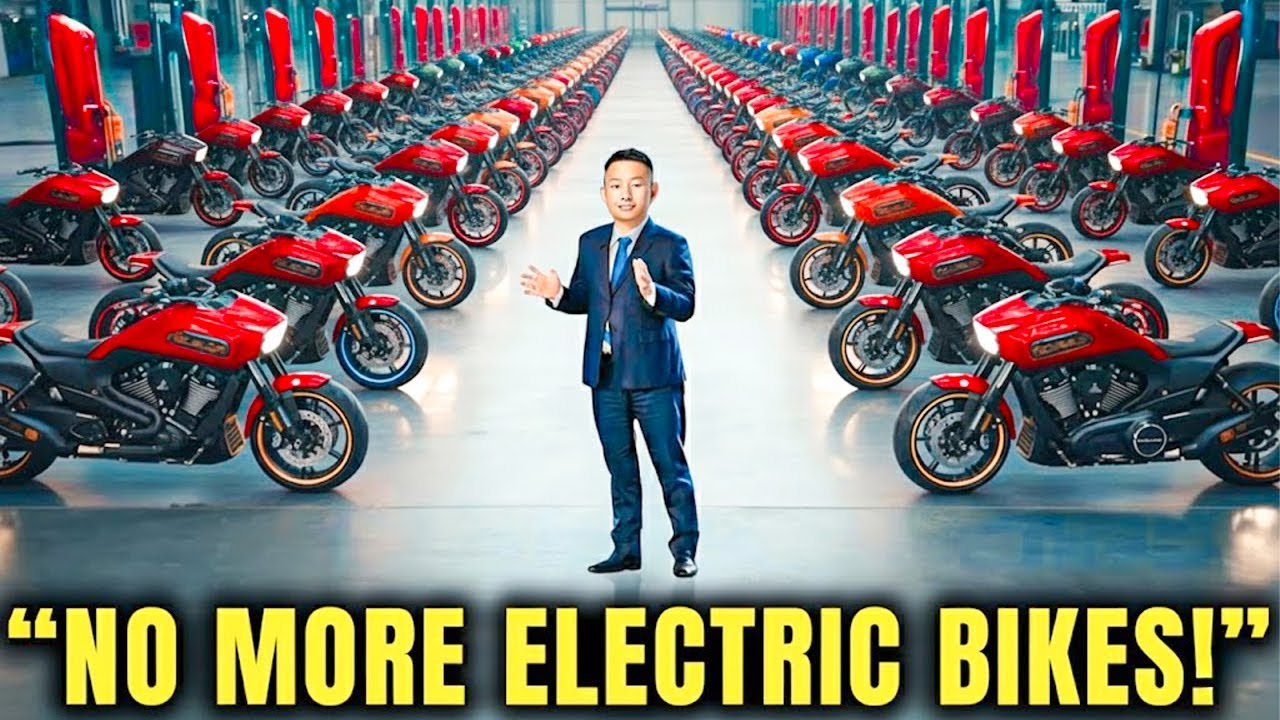
The electric motorcycle world just took a hit nobody saw coming. And it came from China, not Milwaukee. Yadia, once laughed off as a scooter brand, just rolled out a full-size bike that sells for under 10 grand. Harley, Zero, BMW. They’re all staring down a storm they can’t outmarket. Stay with me to the end because once you see the numbers and the fallout, you’ll know why this bike could wreck the entire electric industry. And you might even want one. A bike nobody saw coming. For years, they were dismissed as the scooter brand for students and delivery riders. But in late 2025, that changed overnight. Out of the blue, Yadia unveiled a full-size energy bike that looked ordinary until you saw what was under the frame. It wasn’t another electric commuter. It was a purpose-built weapon aimed directly at Harley’s Livewire Zeros SR and F and BMW’s CE04. What caught everyone off guard wasn’t the look, it was the numbers. Instant torque, a 160 mi realworld range, and a top speed over 85 mph. All from a sodium ion battery that costs half of lithium. And the price, a whisper under $10,000. That made the entire industry gasp. Writers who could never justify the leap to electric suddenly had a reason. Yadia’s reveal came quietly. No fireworks, no slogans, just one line. We built the motorcycle. The market refused to build. That calm confidence flipped the switch. Overnight, Yadia went from overlooked brand to threat level red. Dealers called it the Suron moment on steroids. Fast, affordable, street legal, and practical. It’s not just another ebike. It’s the most disruptive launch the motorcycle world has seen in 20 years. From scooters to Threat Level Red. Here’s the twist most riders still don’t believe. Yadia isn’t a startup. They’re already the largest electric two-wheeler manufacturer on Earth, moving more than 15 million units a year, mostly unnoticed by Western media. While Harley struggled to sell a few thousand live wires, Yadia was quietly perfecting mass production, battery chemistry, and controller tech at a scale no rival could match. They built an empire by treating electrics like appliances cheap, durable, and repairable. Their logistics web stretches from Asia to Europe and now into the United States through direct to consumer channels. That means fewer middlemen, faster shipping, and prices legacy brands can’t touch. Their factories run like clockwork. Each one vertically integrated. Batteries, frames, software, all built under one roof. No outsourcing, no supplier bottlenecks, no waiting on chips from across the world. Yadia’s control breeds speed software updates roll from Jang Su to Vietnam in hours. While rivals plan yearly, YADA innovates weekly. Harley, Honda, and Zero watch in disbelief as a budget commuter becomes an industry disruptor, a machine built not to compete, but conquer. If you’re into real motorcycle talk, not marketing spin, hit that like button and subscribe. We break down the truth behind every brand move, every recall, every market shift. Tell us what you think. Your insight fuels this channel. The battery that broke the rules. Most writers didn’t pay attention when Yadia mentioned sodium ion. It sounded like another lab project that would never see daylight. But when independent testers verified its performance, the silence turned into alarm. Unlike lithium packs, sodium cells don’t depend on expensive cobalt or nickel, meaning they’re safer, cheaper, and less likely to overheat. And because sodium is one of the most abundant elements on Earth, supply chains can’t choke it. Here’s the kicker. These batteries charge from 20% to 80% in under 20 minutes on a standard level two charger. No rare earth dependencies, no complicated cooling loops, just consistent output and thermal stability proven over hundreds of thousands of cycles. One engineer described it best. It’s like the lithium pack grew up. For riders, it means longer range, faster charging, and no range anxiety. Yadia’s in-house sodium battery redefes safety, price, and trust. You can fake design, but not chemistry. The dream finally meets reality, but power means nothing if you can’t afford it. By the way, I’ve dropped my go-to riding setup in the description. The same gear that’s kept me rolling through every test. Sticker shock in reverse. Electric motorcycles have always carried one fatal flaw. Price. For years, every eco revolution came with a five figure buyin that left working riders cold. Yadia flipped that script overnight. Their flagship energy bike launches below $10,000. Thousands less than a LiveWire, a Zero, or even a mid-tier Honda Rebel. And that’s before subsidies or tax incentives. Here’s what that means in real terms. For the cost of a used Sportster, riders can buy a brand new electric machine with a 160 mi range, full warranty, and near zero maintenance costs. No oil changes, no valve checks, no belts to replace, just charge, ride, repeat. Western manufacturers call it unsustainable. But Yadia’s scale rewrites the rules. Owning factories and software, it slashes costs others can’t. $10,000 performance rivals $20,000 electrics. Affordability meets power. Loyalty cracks. and riders listen while dealers panic quietly, quickly, and without apology. How they beat the system. Every major manufacturer loves to claim control over its supply chain. In reality, most of them depend on third party contracts and external vendors for the parts that make their machines run. Batteries from one company, controllers from another, software tuned somewhere else. That patchwork system slows innovation and drives cost through the roof. Yaya saw that weakness and built its empire around fixing it. Instead of outsourcing, it brought every crucial component under one roof. Battery production, motor winding, controller programming, and even the tiny sensors that track throttle response, all handled in-house. That kind of vertical integration used to be a fantasy outside of Japan’s golden manufacturing age. But Yadia has done it. They started years ago by investing in their own cathode and anode facilities, cutting dependency on volatile lithium imports. They built foundaries and electronic assembly lines in the same complexes where frames and swing arms are welded. That means if one process changes, the rest adjust instantly. A controller update can be flashed through the entire production line in real time. There are no middleman delays, no supplier excuses, and no shipping bottlenecks. In practical terms, it’s the same kind of advantage Toyota gained in the 1970s when it introduced lean manufacturing, continuous flow, low waste, total control. The payoff is ruthless efficiency. Production cycles that once took weeks now finish in days. and supply costs sit over 20% lower than competitors relying on outsourced parts. Every component test feeds directly into design, cutting delays and miscommunication. Controlling everything from raw material to final frame doesn’t just make bikes cheaper, it makes them smarter. Analysts tracking Yadia’s yearover-year data confirm consistent quality and surging output that legacy builders can’t touch. This isn’t corner cutting. It’s precision. By mastering its own ecosystem, Yadia pivots instantly with each tech shift. That agility, not just cost, makes it lethal to traditional brands. Others simply can’t keep up. The numbers don’t lie. Performance figures tell the story. The flagship of this new energy line claims acceleration from 0 to 60 mph in roughly 5 seconds and a top speed near 85 mph. Range tests verified by thirdparty labs put it around 160 m per charge under mixed conditions. The sodium ion pack recharges from 20% to 80% in under 30 minutes using a standard fast charge station. For context, that’s faster than many existing electric motorcycles that cost twice as much. These are not promotional guesses. Independent testers in China and Europe confirmed them under realworld conditions. Let’s translate that into perspective. Harley’s Levire 1, still considered the benchmark among American electrics, offers a comparable top speed, but only about 146 mi of urban range. Charging to 80% can take around 45 minutes with DC fast charge. Meanwhile, Zer’s SRF, another respected electric sport model, lists similar acceleration, yet retails near $23,000 before dealer fees. Yadia’s machine, by comparison, has been announced at less than half that figure. The ratio of cost to capability doesn’t just bend expectations, it breaks them. Test riders report instant, smooth torque, none of the jerkiness of early electrics. Regenerative braking recovers up to 12% of lost energy tuned from millions of commuter models scaled into a full motorcycle. Refinement through repetition. The data checks out. Test logs, supplier records, and manufacturing reports all align. The shock isn’t an exaggeration. It’s in accuracy. The numbers hold. The math works. And the realization hits hard. If those figures are real, imagine what they’re doing to dealerships. Dealers on the edge. Walk into a traditional motorcycle dealership right now and you can sense the tension. Rows of high-end electrics collecting dust. Sales teams struggling to explain why an entry from overseas can outperform their flagship by nearly every measurable standard. Dealers rely on margin spread, not volume. And Yadia’s pricing erases that comfort zone. When a customer can buy a new full-size electric bike for less than half the price of a Western counterpart, showroom confidence collapses. Reports from European and Southeast Asian distributors show shrinking markups and excess inventory across multiple brands. Some stores have resorted to bundling accessories or offering service credits just to move older stock. Others have quietly reduced orders for next year, waiting to see how the market stabilizes. The reaction is predictable but painful. Dealers have weathered recessions and recalls, but few have faced a competitor who undercuts cost and overdelivers performance simultaneously. Inside dealerships, identity is shifting. Salesmen raised on torque and displacement now explained kilowatts and charge times. Mechanics trade carb tuning for software diagnostics. Some adapt, others wait for the fad to fade, but it isn’t fading. Yadia’s shipments climb as legacy sales stall. Veterans have seen this before. The 1980s all over again, only digital instead of mechanical. Loyalty still lingers, but the cost gap widens. The truth stands on the showroom floor. Buyers chase value, not heritage. And while dealerships scramble, riders in their garages stand divided. The denial in the garage. Out in the garages, the debate runs hot. Some riders dismiss electrics as toys for commuters and teenagers. They swear nothing can replace the rumble of a V twin or the pulse of a carbureted four-stroke. To them, silence isn’t progress, it’s absence. Others, especially younger enthusiasts or tech-minded tinkerers, see opportunity. They like the torquy, the instant throttle, the lowmaintenance. They see electrics not as replacements, but as a new platform for expression. The split is real and emotional. At weekend meets, you can hear both sides. One crowd jokes that these new bikes sound like sewing machines. The other points out that their maintenance bills have dropped to almost nothing. Each side measures pride differently. For some, authenticity lives in the noise, in the ritual of warming up a machine built on explosions. For others, it’s about the ride itself, the wind, the pull, the freedom, regardless of what fuels it. Even skeptics pause when a Yadea glides silently past, keeping pace with a sport bike. Curiosity replaces defiance. They ask about charge time, pretending not to care. Denial fades as it always does. The same riders who swore off automatics now cruise on trikes. Change spreads like rust. Quiet. Unstoppable. Resistance once fueled innovation. Now it risks extinction. Acceptance isn’t surrender, it’s evolution. The faster garages adapt, the faster tradition breathes again. And that shift is already shaking factory floors. Factories fighting back. When a market shock hits, corporations react like engines under sudden load. Some sputter, others redline. Harley, Honda, and BMW each felt the jolt of Yadia’s surge and scrambled to steady their revs. Inside Harley’s Milwaukee headquarters, reports surfaced of emergency strategy sessions where executives debated how to reposition Livewire before the fiscal year closed. Rumors of quiet layoffs and secondary design teams began circulating around supplier circles. Honda, meanwhile, accelerated its own electric rollout, pulling forward timelines for mid-range models that had been shelved until 2027. BMW long invested in luxury electrics, cut back on experimental touring prototypes to focus on core commuter ranges. The reaction was survival, not innovation. They trimmed budgets, merged departments, and launched joint sourcing talks once thought impossible. Harley and Honda, competitors since the dawn of cross-pacific sales, suddenly found themselves discussing shared component procurement to cut costs on batteries. Behind closed doors, whispers of cooperation reached trade forums, hinting at a reality few imagined even 5 years ago. Legacy rivals joining forces to keep up with a Chinese manufacturer that barely existed in their playbooks a decade earlier. Under pressure, factories trade precision for speed. Insiders say new electric models were rushed without full endurance tests. They’re chasing shadows, one supplier warned. Marketing shouts heritage while engineers beg for time. It’s not betrayal, but it feels like it. Innovation born of panic never lasts. Outside, riders buy differently, think differently, and the old roar fades beneath a new hum. Even as factories fight back, something deeper is changing. The very sound of the road itself. The day the rumble went quiet. For generations, a motorcycle sound was its soul. The low thrum at idle. The mechanical heartbeat through your boots. The way a carbureade twin growled when you rolled on the throttle. Those sensations stitched riders to their machines. Silence feels like betrayal. The first time someone swings a leg over a yadilla. The absence of vibration hits like emptiness. There’s motion, there’s speed, but there’s no song. The pavement moves under you. Yet your senses are waiting for something that never comes. Older writers describe it as riding without heartbeat. They miss the feedback, the minor shake that told you everything about timing and tune. Electric bikes remove that intimacy. What’s left is wind noise, tire hum, and the eerie smoothness of pure current. Some call it peace. Others call it eraser. This is more than nostalgia. It’s identity. Entire decades of culture were built around sound. Exhaust notes, cam chatter, pipes tuned like instruments. Mechanics judged engines by ear. Now even the best technician needs a diagnostic tablet to listen. Silence has its beauty wind echoes and open fields. But many miss the rumble that once announced freedom and rebellion. Now bikes glide by unnoticed. Manufacturers test synthetic sound, mimicking vibration through speakers. Clever or blasphemous, it confirms every writer’s fear. The roar we loved may survive only as code. Yet, the garage isn’t dying, it’s evolving. A new kind of garage. Walk into the modern garage and you’ll see something unexpected. where oil pans and torque wrenches once lined the bench. You now find laptops, multimeters, and diagnostic cables. The ritual has changed, but the spirit hasn’t. The same hands that rebuilt carburetors are now reflashing firmware. The old-timers said tuning was an art. The new generation says coding is just another kind of art. Somewhere between those worlds, a quiet compromise is forming. Seasoned riders are adapting faster than anyone predicted. Many who mocked electrics now keep one in the corner for commuting. They talk range maps and charge cycles the way they used to debate jet sizes and compression ratios. There’s pride in learning new tricks, not because they want to abandon the past, but because they refuse to be left behind. You’ll still hear them complain about missing the smell of gas, but they’re also bragging about squeezing 10 extra miles of range out of a firmware tweak. Garages once filled with exhaust pipes now hum with battery mods and controller tuning. Old school mechanics turn hybrid tuners, rebuilding engines and electrics side by side. It’s not rebellion, it’s evolution. The instinct that once ported cylinders now perfect software. Tools may hum instead of clank, but craftsmanship endures. Riders still crave understanding, still take pride in fixing what’s theirs. The satisfaction hasn’t changed, only the sound has. As riders adapt, the brotherhood evolves stronger and more connected than ever. If you want the full story behind where the motorcycle world is heading next, make sure you’re subscribed. Every week, we dig into the facts others avoid. No fluff, no noise, just the truth riders deserve before the next big change hits. Brotherhood rewired. Riding has never just been about machines. It’s about the people who share the road. As electric bikes enter the mainstream, new groups form in online forums and charging networks instead of parking lots and diners. Riders trade data logs instead of spark plugs, sharing maps, firmware updates, and battery hacks. It’s a different kind of grease under the fingernails. Digital but still honest. The Brotherhood didn’t vanish, it migrated. Old school clubs are cautiously opening doors to these newcomers. A few chapters now host silent ride nights where electric and gas bikes run side by side out of respect for both eras. At first, the silence feels awkward, but soon it becomes another rhythm, the sound of inclusion instead of competition. Younger riders bring enthusiasm and tech literacy. Older ones bring discipline and road wisdom. The exchange makes both stronger. Riders now post electric cross-country trips, sharing charge stops and weather logs. Some veterans scoff. Others quietly respect the endurance it still takes to ride a thousand miles. Brotherhood was never about fuel. It was trust on the road. Today, old patches meet phone apps. Rallies host chargers beside pumps. The divide narrows mile by mile. The rebellion that once roared on gasoline now hums on electrons chasing the same truth. Freedom connection and the endless open road ahead. Capitol Hill catches up. When industry moves faster than lawmakers, chaos fills the space between. That’s exactly what’s happening now. Washington once saw motorcycles as an afterthought in transportation policy. Small, niche, and noisy. But Yaya’s rise and the flood of Chinese electric imports have changed that calculus. Congressional committees are scrambling to understand how a two- wheeled market suddenly became a trade weapon. Lobbyists representing legacy brands argue for tariffs, citing unfair state subsidies and environmental loopholes. Meanwhile, energy advocates push for leniency, claiming cheaper electrics will accelerate the national shift away from combustion. The debate has less to do with bikes and more to do with control. Subsidies, tax credits, and sourcing rules are being rewritten on the fly. The Inflation Reduction Act, which was designed to boost American EV manufacturing, now faces reinterpretation as officials realize imported components dominate supply chains. Every sodium ion cell produced by Yadia exposes a gap in US capacity. Policy papers flying around Capitol Hill talk about strategic vulnerabilities. The same phrase once used for oil dependency. In other words, the nation that once feared running out of gas now fears relying on foreign batteries. Trade officials are quietly discussing import limits to slow Yadia while American brands regroup. But bureaucracy moves slower than innovation. By the time rules appear, Yadia’s network will be entrenched. The irony stings. America, once the industrial leader, now relies on foreign batteries. Harley, Honda, and Polaris push for local incentives. Yet none match Yadia’s efficiency. For every dollar spent defending plants, Yadia builds 10 more abroad. Cynical or not, it’s winning. And when politics move, markets follow. Wall Street’s bet. Investors don’t care about nostalgia. They care about growth curves. Over the past 12 months, financial analysts have quietly shifted portfolios away from legacy motorcycle brands toward electric newcomers. Harley’s market capitalization has fluctuated like a tachometer under stress. While Yada’s valuation has tripled since early 2024, for the first time in decades, the most profitable motorcycle company on paper isn’t headquartered in Milwaukee, Tokyo, or Munich. It’s based in Djang Su. Funds that once parked billions in traditional automotive giants are now pouring cash into mobility startups with battery patents and AIdriven fleet software. Wall Street speaks a single language, returns, and the charts tell a simple story. Innovation pays faster than tradition. Even small traders can see it. Search trends for best electric motorcycle stocks have tripled since spring. Those numbers don’t lie. The emotional loyalty that kept old brands afloat can’t outpace cold arithmetic. For Harley, the shift cuts deep. The same banks that once fueled its rise now hedge against it. Analysts cite aging buyers and slow EV growth, while Honda and BMW face warnings for bloated costs and cautious cultures. Yadia, meanwhile, acts like a tech firm pouring 80% of profits into research and software. Investors follow momentum, not memory. Legacy names cling to faith that heritage can outlast innovation. But history shows no mercy. Kodak proved that. The warning lights are flashing now, and sentiment won’t save them. For riders, the question isn’t profit, it’s survival. What comes next? Your next ride. decision for riders. All this corporate noise boils down to one question. What does it mean for the next bike in your garage? The answer is practical, not political. Expect prices to drop as competition heats up. Yadia’s cost structure forces everyone else to rethink value. Within 2 years, mid-range electrics that once cost $20,000 could hover near 12. That changes who can buy, what they expect, and how long they keep it. Parts and maintenance will follow the same curve. Electric drivetrains need less routine service, but they rely on software updates and proprietary diagnostics. That means the next oil change might come as a firmware patch. Independent shops will either adapt or disappear. Riders who once stocked spark plugs and gaskets will start thinking about battery calibrations and controller versions. Resale value will shift from miles ridden to cycles charged. A new metric for a new age. Reliability is the new badge of honor measured in uptime, not horsepower. A bike that lasts 10,000 cycles earns more trust than a shiny logo. Data now defines discipline. Habits shape premiums more than engine size. Yet the instinct to ride endures. Freedom, motion, and control remain timeless. Learning the new systems isn’t surrender. It’s survival. Smart riders don’t ask if they’ll go electric. They ask when. Because the road ahead belongs to those willing to adapt. The spirit still stands. Strip away the logos, the politics, and the price tags, and what’s left is the same truth that’s guided riders since the first machine found balance on two wheels. It’s not about what turns the motor. It’s about what turns the soul. The ride has always been personal. The feeling when the horizon pulls you forward, when the wind fills your jacket, when miles under steel and rubber, that doesn’t vanish with technology. It evolves. Future riders will tell their own stories. They’ll talk about range instead of fuel stops, about firmware instead of jetting. But the spark behind it all remains the same urge that drove generations before them. To go farther than yesterday. The sound might fade, the tools might change, but the bond between human and machine stays unbroken. That connection is mechanical and spiritual all at once. A heartbeat made of motion in every generation. Purists mourn change while pioneers chase it. Both keep the ride alive. The man who once tuned carburetors now teaches his grandson how to balance a battery cell. The laughter sounds the same, echoing freedom’s truth. Motorcycles weren’t replaced. They were reborn. They can change the fuel, but never the fire. If you made it this far, you’re part of the few who see the road before it turns. Drop a comment below. Is Yadia leading the future or just shocking the system? Smash that like button if you still believe writers, not marketers, shape the next era. And subscribe because next week we’re pulling apart the real numbers behind this energy revolution. And trust me, you’ll want to see what’s
🏆 Our FREE ”Ride More. Spend Less” EBOOK Is Finally Here. Get Yours Now 👉 https://www.garageheadsebook.com/home
Yadea: This New Energy Bike Will Destroy The Entire Electric Motorcycle Indsutry!
The electric motorcycle world just took a hit nobody saw coming — and it came from China, not Milwaukee. Yadea, once laughed off as a scooter brand, just rolled out a full-size bike that sells for under ten grand. Harley, Zero, BMW — they’re all staring down a storm they can’t out-market. Stay with me to the end, because once you see the numbers and the fallout, you’ll know why this bike could wreck the entire electric industry. And you might even want one…
🔴Can We Hit 100K Subs Before 2025 Ends?🫡 Subscribe Here And Don’t Miss Anything👉https://www.youtube.com/@MotorcycleheadsML
⬇️ Our Top Must-Have Tools & Products for Every Rider
🔧 Maintenance & Cleaning
Top products to keep your motorcycle in perfect shape:
– Waterproof motorcycle cover (Protects bike from rain) → https://amzn.to/43s2DS6
– White chain spray (Smooths chain performance) → https://amzn.to/43ujrIb
– Bike cleaner spray (Removes grime and mud) → https://amzn.to/43g93T9
– Chain cleaning + lube kit (Cleans and oils chain) → https://amzn.to/4jR4Vjr
– WD-40 contact spray (Cleans electrical components) → https://amzn.to/43fI7CU
– Durable MoS2 grease (Lubricates metal parts) → https://amzn.to/3SoIaHP
– Fuel system cleaner (Improves engine fuel flow) → https://amzn.to/4madreZ
– Microfiber wash mitt (Scratch-free surface cleaning) → https://amzn.to/3YIF0lA
– Waterless bike wash (Clean without water) → https://amzn.to/4kiwLFe
– Full cleaning & drying kit (Complete bike cleaning set) → https://amzn.to/43sAI4q
– 8-in-1 cleaning kit (Multi-brush detailing tools) → https://amzn.to/42Y1zp5
– Maintenance-free motorcycle battery → https://amzn.to/4k5lFDC
🛠️ Tools
Essential gear for your garage:
– Motorcycle stand set (Lifts bike for work) → https://amzn.to/4mfnQ9l
– Electric bike pump (Quick tire inflation) → https://amzn.to/43b4sl6
– Pro garage tool kit (Complete workshop tools) → https://amzn.to/3ZfL2KA
– OBD2 scanner (Reads fault codes fast) → https://amzn.to/4kceWHO
– 2-ton garage jack (Lift cars/motorcycles safely) → https://amzn.to/4jXhLge
– 3-ton low-profile jack (Heavy-duty low jack) → https://amzn.to/3GRWcz3
🧰 Accessories & Gear
Ride smarter, safer, and more comfortably:
– Ultralight hydration pack (Water on long rides) → https://amzn.to/4j7MwxL
– Alarm disc lock (Anti-theft brake lock) → https://amzn.to/43ujG63
– Motorcycle tank pad (Protects tank from scratches) → https://amzn.to/3ES2u17
– Vibration damper for phone (Protects electronics from shaking) → https://amzn.to/45cOb1F
– Motorcycle gloves (Essential riding protection) → https://amzn.to/3YKIQdZ
– Balaclava for riders (Cold-weather face shield) → https://amzn.to/3F8onJq
– Cruiser saddlebags (Extra bike storage) → https://amzn.to/3GVBOgA
– Waterproof crash bar bag (Storage on crash bars) → https://amzn.to/43gUtLh
– Kevlar riding jeans (Protective motorcycle pants) → https://amzn.to/4dqXfSH
– Ventilated motorcycle boots (Cool, protective footwear) → https://amzn.to/437B6Wd
– Wall mount helmet holder (Organize gear at home) → https://amzn.to/44CcsxT
– Universal phone holder (Holds phone while riding) → https://amzn.to/4k5lI2g
– Trail hydration backpack (Hydration for off-road rides) → https://amzn.to/4dgSnPO
– Helmet lock with cable (Anti-theft gear lock) → https://amzn.to/42Y2Oof
– Wall-mounted helmet rack (Display or store helmet) → https://amzn.to/43w6qha
💊 Health for Riders 50+
Support your health on and off the bike:
– Daily multivitamin (Essential daily nutrient boost) → https://amzn.to/4jZ1LdC
– Vitamin D3 + K2 (Supports bones and immunity) → https://amzn.to/3FdmgE8
– Calcium, magnesium & zinc (Bone and muscle health) → https://amzn.to/3S1bSlZ
– Vitamin B12 (Supports energy and nerves) → https://amzn.to/44wEYky
– Omega 3 fish oil (Heart and brain support) → https://amzn.to/3ZiqwJj
– Magnesium combo (Muscle recovery and relaxation) → https://amzn.to/3F5YkTm
– Advanced probiotics (Gut health and digestion) → https://amzn.to/43vEQkg
– CoQ10 supplement (Supports energy and heart) → https://amzn.to/43u7ceE
– Marine collagen (Improves skin and joints) → https://amzn.to/43sDI0G
– Milk thistle capsules (Liver detox and protection) → https://amzn.to/4jX8uVw
🔴Can We Hit 100K Subs Before 2025 Ends?
Subscribe Here And Don’t Miss 👉https://www.youtube.com/@MotorcycleheadsML
🤝 For collaborations please contact: snftmedia@gmail.com
📩For Copyright matters please contact: snftmedia@gmail.com