
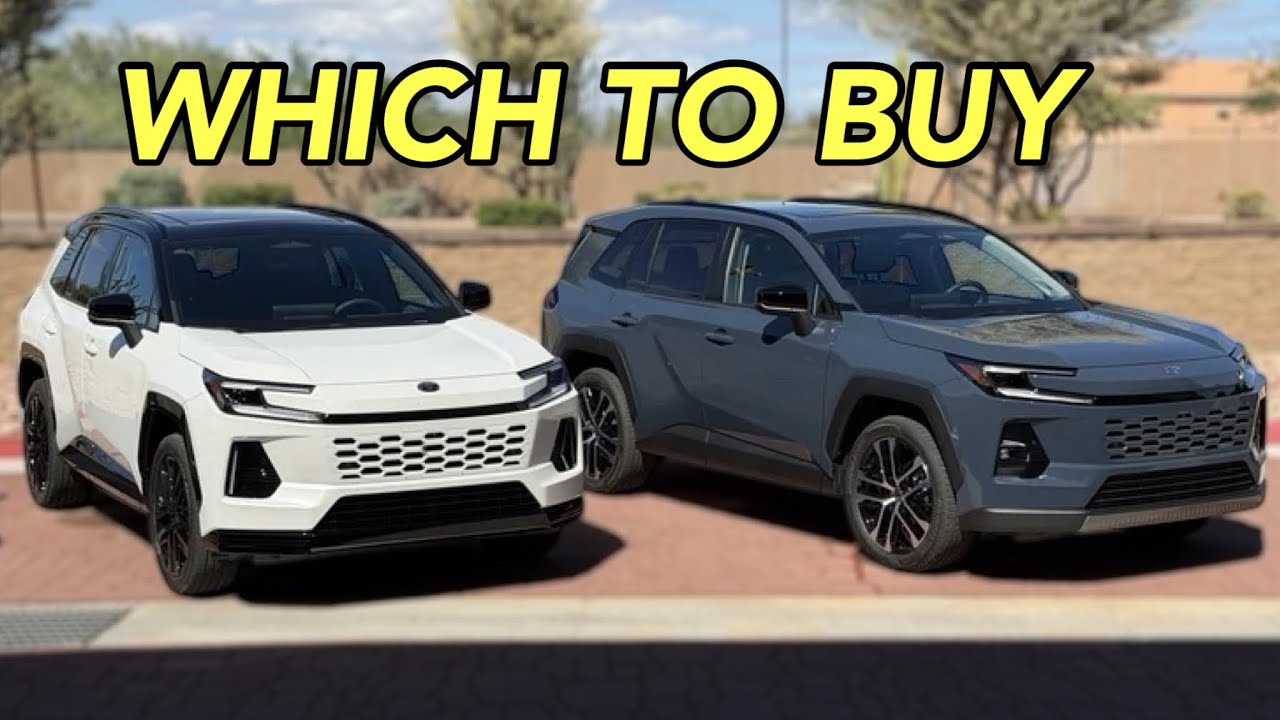
2026 Toyota RAV4 Hybrid VS Plug-In Hybrid! What Toyota Doesn’t Tell You!
I’m going to compare for you the two very different electrified powertrains for the 26 Toyota RAV 4, the HEV hybrid powertrain system and the plug-in hybrid powertrain system. We’re going to talk about the trade-offs, the pros, and the cons, and which one you should be going for. In reference to what Toyota doesn’t tell you, this actually applies to all brands, automakers, and manufacturers, and that is that weather drastically affects the way your electrified vehicle. In this case, the Toyota RAV 4 hybrid or plug-in hybrid performs. And when I’m talking about performance, I’m talking about fuel efficiency. That’s right. Hybrid powertrain systems, but more so, the plug-in hybrid powertrain systems are sensitive to climate. I’ll get to that a little bit later in this video. Make sure you stick around. Let’s get right into the hybrid version of the 26 Toyota RAV 4. Toyota is giving us the fifth generation of hybrid electrification when it comes to the powertrain itself. Now, it’s not completely new, but it is the newest grade of hybrid powertrain systems. It’s currently being used in the Toyota Camry since 2025. It is also currently being used in the Toyota Corolla Cross hybrid and now in the RAV 4 hybrid, giving you 226 horsepower standard with a front-wheel drive models and up to 236 horsepower with the all-wheel drive models. It goes without saying the all-wheel drive is going to burn a little bit more fuel, which will give you a combined city and highway average of right around 40 m per gallon. All trims and models for 26 RAV 4, they are going to be capable of towing up to 3,500 lb. regardless of the trim or the electrified powertrain. Starting with pro number one, the Toyota RAV 4 nonplugin hybrid is plugandplay, if that makes sense. What I mean by that is you can simply walk into the vehicle, start it, and get going. You don’t have to worry about if you’re driving on gasoline hybrid or plug-in hybrid complete EV. You don’t have to worry about any charging or any uh indication as to what your charging level is at for your high voltage traction battery of your plug-in hybrid vehicle with the hybrid powertrain system. And as you just learned from the numbers, the HEV 26 RAV 4 is still great for fuel efficiency, especially for those drivers who don’t have ready access to charging. The HEV version still gives you very low fuel consumption. One thing to keep in mind to help you decide between the plug-in hybrid and the regular hybrid is overall behavioral changes. You will have to change uh the way you drive and how you access your vehicle in terms of where you’re going to go, how long you’re going to be driving for. Uh and especially things like climate as well. I’ll get into that a little bit later in this video. Make sure you stick around. But there are fewer behavioral changes that are needed when you’re driving an HEV versus a plug-in hybrid. Just simply do what you normally do when you get into your vehicle. Now, now, if you’re concerned about the power, keep in mind you’re still getting a performance boost with the 26 Toyota RAV 4. With us here in Canada, the starting level of horsepower is 236. That’s a great improvement from, I believe, the 219 horsepower that comes standard on the 2025 models. So overall, you’re still getting a more responsive acceleration and better horsepower with the HEV versus what we currently have with the current generation Toyota RAV 4. Okay. What are the cons of going hybrid versus plug-in hybrid? Well, you’re still burning gasoline even though it’s less. So, if you wanted to maximize your electric only driving, then this isn’t it. You also won’t get any large EVO only range with the regular HEV Toyota RAV 4 versus something like the plug-in hybrid. the hybrid won’t function like an EV for longer drives. Another thing to keep in mind is in some markets, incentives, tax credits, or rebates may favor plug-in hybrid models, so the resale value or long-term cost benefit might tilt to PHEV depending on where you’re from and where you’re located. Another pro versus con to consider on something like the HEV versus the plug-in hybrid Toyota RAV 4 is if your driving pattern is short commutes and you can plug in at home, you might be leaving on the table the electric only potential of a plug-in hybrid vehicle. That’s right. Like I just said, if your regular commutes are not long distance, and when I say long distance, I mean going to and from different cities or towns on a regular basis, and you’re just driving within the vicinity of your home or current location, you definitely have the possibility to almost never have to put gas if you’re strict and diligent with your charging cycles. Okay, so I summarized the pros versus cons on something like the HEV 26 Toyota RAV 4. Now, let’s shift over to the pros and cons versus going plug-in hybrid for the 26 Toyota RAV 4, which is limited to certain models. These models are different from Canada and US. I’ll go over that in a second, but before I do, I just want to stop to say a big thank you to all of the new subscribers on this channel and even the existing and current and past subscribers. I’ve been doing some research for the past month or so on this channel and realize through the analytics that a lot of you are not subscribing or not subscribed to the channel, but keep coming back to watch videos like this. In case that’s one of you, please stop to take a moment to go down and hit the subscribe button. It would really mean a lot to me. The key specifications, features, and overall differences with the plug-in hybrid. The plug-in hybrid Toyota RAV 4 uses a 2.5 4 cylinder engine with two electric motors and one very large high-capacity traction battery. Toyota also uses silicone carbide semiconductors in the front axle for improved efficiency on these plug-in hybrid models. Horsepower probably one of the reasons you might be leaning towards the plug-in hybrid because it’s going to be the fastest Toyota RAV 4 ever in production. uh faster than the old V6 models we used to have a long time ago. You’re going to get 320 horsepower with any plug-in hybrid model or option you go with on 26 RAV 4. You do have the capability of going up to 50 mi or 80 km EV only. That’s full EV using no gas on a single charge, which is very impressive. The charging and how you can charge your plug-in hybrid powertrain system has been improved from what we currently have on the current generation or previous to the sixth generation plug-in hybrid powertrain systems with Toyota as well. Some trims of plug-in hybrid models will include a CCS port for DC fast charging and up to 11 kW AC onboard charger for quick home charging as well. Another thing to keep in mind with the plug-in hybrid powertrain system since the rear axle is electric driven. All plug-in hybrid powertrain systems for 26 RAV 4 are going to come standard with all-wheel drive. As you already know, all-wheel drive is inevitable in Canada, but for the US, we do have frontwheel drive models as well for 26 RAV 4, but not the plug-in hybrid. Massive pros and benefits to the plug-in hybrid powertrain system for 26 is the electric only driving possibility. If you do short trips and charge frequently, you might do much of your driving on electric only, which means very little to no gasoline consumed. An obvious benefit to the plug-in hybrid is the drastic increase in horsepower. You’re getting almost 100 horsepower more than the HEV powertrain system. Another pro to the plug-in hybrid is it’s not a full EV, but it can act as a full EV. For example, you’ve got some flexibility. You still have the gasoline engine when you’re out of battery or on a longer trip, which gives you more range than a pure EV model. Now, what are some of the obvious or not so obvious cons with going plug-in hybrid? Well, I’ll tell you off the bat. You’re going to want to expect or anticipate a higher upfront cost. What am I talking about? I’m talking about the pricing, guys. We don’t have pricing yet for 26 RAV 4. It’s going to come out soon, but do expect a few thousand at least price gap between something like an HEV and a PHEV. The plug-in hybrid variants currently for the current generation of Toyota RAV 4 are quite more than the nonplugin hybrid comparisons when you’re talking about the SE, XSSE, XSSE tech, etc. So, do expect a higher upfront cost uh if you’re going with a plug-in hybrid RAV 4 versus a similarly equipped nonplugin hybrid Toyota RAV 4. Another potential con of going plug-in hybrid versus regular hybrid for 26 RAV 4 is that you must charge or keep a regular charging routine or schedule to maximize the full benefit of getting a plug-in hybrid in the first place. Keep in mind, if you don’t have access to a charger at home or at work, you may not realize the electric only potential of your plug-in hybrid Toyota RAV 4 and you’ll essentially operate it as a regular hybrid, but with the higher cost and complexity. Maybe another potential con for you to keep in mind is that the plug-in hybrid Toyota RAV 4s will weigh in at more and be heavier than the regular hybrid powertrain system. And that is because the hybrid high voltage traction battery is larger and heavier in a plug-in hybrid versus a non-plugin hybrid Toyota RAV 4. Another potential con to keep in mind is overall weather and climate sensitivity. Especially on the plug-in hybrid powertrain systems in the cold or drastically cold temperatures, the overall electric only range will drop in these temperatures. So, hybrid versus plug-in hybrid. Which one is right for you? Let me break it down. A super large top factor if you should be going plug-in hybrid versus hybrid is if your daily commutes are not far. If you’re driving within the 30 to 50 mile or kilometer range on a daily basis without going to different cities, towns, etc., then the plug-in hybrid can definitely be a fantastic contender because you will have the very high possibility of being able to drive almost 90% of the time on electric only uh powertrain which means you’ll be driving an EV. You will not be using your combustion engine for the most part saving you tons of money on fuel. So, it goes without saying that the increased upfront cost for you may be justified by the fuel savings that you’ll have over the life of the ownership of this plug-in hybrid Toyota RAV 4. Though, you’ll want to calculate how many miles or kilometers you drive, how often you’ll need to plug in, and whether your local electricity versus gas cost is going to make sense. Okay, talking about the weather and climate sensitivity in the colder temperatures when you’re getting close to the freezing point or even below the freezing point, there is a chemical reaction that happens within the lithium ion battery and the electric components of your Toyota RAV 4 hybrid and plug-in hybrid for that matter. And when the weather is not favorable, so it’s very cold or extremely hot, that chemical reaction takes longer to happen, which actually uh in effect makes your uh system yield more to the gasoline combustion engine, which will in turn get you worse fuel economy. So, for example, in the cold winter months in Canada here on our hybrid powertrain systems and even plug-in hybrid powertrain systems, you will notice you’re burning uh and spending a bit more money on fuel. So, that is one thing to keep in mind. It is a bit more drastic with the plug-in hybrid powertrain systems. The EV only range is drastically dropped in the colder temperatures. Uh especially if you have a lot of cargo, if you have all the heat going. Uh these are all things to consider where you live, what’s the climate when you’re driving and owning your Toyota RAV 4. In case anybody was wondering, the ideal operating temperature for a Toyota hybrid or electrified RAV 4 to perform is 25° C. So, if it’s drastically colder or drastically warmer than that, it will affect your fuel efficiency. Here are my final recommendations to if you should be going regular hybrid or plug-in hybrid for your next Toyota RAV 4. Do you have convenient access to charging? How far or how long is your regular daily commute? Is it within 50 mi or 80 km or is it much less or is it much more? Do you live in a cold weather environment or a cold weather climate? For example, us here in Canada, it’s quite cold for 4 to 6 months out of the year and this will drastically affect your EV only range on something like a plug-in hybrid. Are you willing to pay more upfront to purchase and own or lease your 26 Toyota RAV 4? Uh the plug-in hybrids will have a higher ticketed price than the nonplugin hybrid Toyota RAV 4s. In my opinion, if you answered yes to those first two points, so for example, if you have access to convenient charging or if you have a short daily uh commute and you answered no to question number three, if you don’t live in a environment that has colder temperatures or colder climates for some part of the year, then you can probably enjoy and get great benefit from owning a plug-in hybrid option of a Toyota RAV 4. On the reverse side, if you answered um no to the first two questions and yes to the third, then you’ll probably enjoy and benefit more going a regular hybrid powertrain system. I hope this video was useful and helpful for some of my viewers. If you enjoyed it, smash a thumbs up and we’ll see you on the next video. Take care.
This video will help you understand the differences, including pros and cons when comparing the 2026 Toyota RAV4, hybrid versus plug-in hybrid.
This informative YouTube video will help you decide if the 2026 Toyota RAV4 hybrid or plug-in hybrid is the right choice for you.
Thanks for watching.
Subscribe!