13 Electric Bikes So Fast They’re Basically Motorcycles
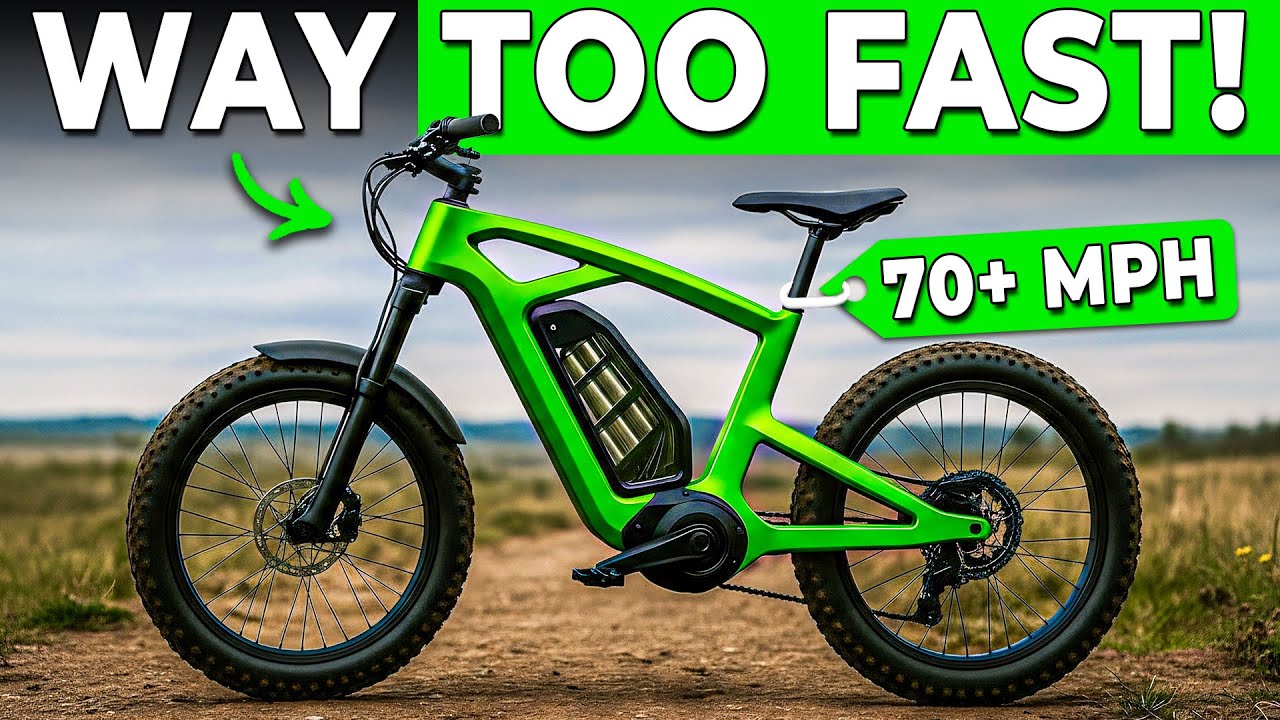
Most riders think any electric bike will get them from point A to point B without breaking a sweat. But what if I told you that some electric bikes are so powerful they’ll land you with a hefty fine, require a motorcycle license, and technically become illegal the moment you twist that throttle past 28 mph. Bikes marketed as simple commuters that secretly packed 9,000 watts of pure power, nearly 12 times the legal limit. In this video, we’re ranking 13 electric bikes so fast they’re basically motorcycles, going from number 13 all the way to number one based on power output, top speed, and how far they push beyond what’s legally considered a bicycle. And here’s the catch. Most of these machines come with a hidden unlimited mode that manufacturers quietly include, letting you unlock speeds that would make a Harley-Davidson jealous. From bikes that hit 38 mph to absolute monsters that reach 68 mph, we’re diving into the murky gray area where ebikes stop being bikes and start becoming unregistered motor vehicles. Stick around to the end because the number one bike on this list produces enough power to outrun small motorcycles and yet it’s still sold as an electric bicycle. Miss this and you might unknowingly buy a machine that’s illegal to ride on public roads. Number 13, Wired Freedom and Cruiser. Starting at number 13, we have the Wired Freedom and Cruiser models. These bikes might look casual, almost pedestrian compared to what’s coming, but don’t let the step- through frame fool you. The Freedom and Cruiser pack a 3,200 W peak geared motor paired with a 60V dual battery system. To put that in perspective, the legal limit for an electric bike in the United States is 750 W. These machines are pushing over four times that power. What makes the Wired Freedom interesting is that it represents the democratization of hyperformance. This isn’t some aggressive full suspension trail beast. It’s designed for everyday commuting and utility riding. The kind of bike you’d use for grocery runs or casual rides through the neighborhood. But underneath that friendly exterior is a motor system that guarantees speeds well into the 40 mph range. That’s faster than most mopeds, and it places these bikes firmly outside the legal classification of an electric bicycle. The dual battery setup is another key feature. With two batteries working in tandem, the Freedom and Cruiser offer extended range without sacrificing the power output needed to maintain those illegal speeds. This configuration also speaks to a broader trend in the industry. Consumers are demanding motorcycle level power, even for casual everyday use. The regulatory risk here is significant because these aren’t niche performance machines marketed to speed enthusiasts. They’re being sold as practical transportation, which means more riders are unknowingly crossing into motor vehicle territory without proper licensing, registration, or insurance. Number 12, Juggernaut FSXD by Bitrix. Moving up to number 12, we have the Juggernaut FSXD from Bitrix. This bike is a performance trail machine designed for aggressive off-road use, and it hits a top speed of approximately 38 mph. Priced around $5,499, the Juggernaut FSXD balances high speed with optimized maneuverability on challenging terrain. What sets this bike apart from the heavier velocity focused machines we’ll see later is its emphasis on suspension and handling. The full suspension system is built to absorb punishment on rough trails, while the powerful drive system ensures you can climb steep inclines and power through technical sections without losing momentum. But that same power also means this bike exceeds the 28 mph threshold that defines a legal class 3 ebike. The Juggernaut FSXD is marketed toward trail riders and outdoor enthusiasts who need serious torque and speed to tackle demanding terrain. The problem is that many riders use these bikes on mixeduse trails and fire roads that connect to public roadways. The moment you take this machine onto a public street at its full 38 mph capability, you’re riding an unlicensed motor vehicle. Bitrix has built a reputation for producing robust, high-performance ebikes, and the Juggernaut FSXD lives up to that legacy. The frame construction is solid, the components are high quality, and the overall engineering reflects a machine designed to handle stress far beyond typical bicycle use. But all of that engineering also confirms what this bike really is. A motor vehicle masquerading as a bicycle. The power, speed, and component quality all point to a machine that operates in the same realm as low displacement motorcycles, not pedal assist bicycles. Number 11, Nara Mega 1500. At number 11, we have the Nara Mega 1500. Reaching a top speed of approximately 38 mph. Powered by a 1,500 W motor, this bike stands out due to its advanced construction. Featuring a carbon frame with Kevlar side paneling, the approximate retail price is $3,299, making it one of the more affordable options in the high performance category. The use of carbon fiber in Kevlar is noteworthy because it highlights a critical trend in the industry. As manufacturers push motors beyond the 750 W legal limit and speeds beyond 28 mph, they’re forced to reinforce structurally weaker bicycle style frames to handle the increased power, weight, and speed induced stress. Traditional aluminum or steel frames designed for pedal assist bicycles simply can’t withstand the forces generated by a 1,500 W motor operating at 38 mph. Nara is using advanced materials typically found in high-end road bikes and motorsports to create a frame that can handle these extreme conditions. The Kevlar side paneling adds impact resistance and structural integrity, which is essential when you’re dealing with speeds that place this bike firmly in moped territory. The carbon construction also keeps the overall weight down, which is crucial for maintaining handling and maneuverability at high speeds. Number 10, QuietCat Lynx. Number 10 is the Quiet Cat Lynx. A bike specifically designed to blur the lines between ebike and motorbike. Quiet focuses on high torque utility bikes, particularly for hunting and off-road applications. To handle steep climbs and heavy hauling, the Lynx relies on power outputs significantly above the 750 W limit, often ranging from 1,00 to 1,500 W. This allows the bike to achieve speeds into the mid-30 mph range when unrestricted. The quiet cat links exemplifies the utility segment where high power is driven by the necessity for extreme torque rather than just top speed velocity. Hunters and outdoor enthusiasts need bikes that can carry heavy loads up steep, rugged terrain without struggling. The Lynx delivers on that promise, providing enough torque to haul gear, game, and equipment in conditions where traditional bicycles would fail completely. But that utility comes at a cost. The power output and speed capabilities place the links outside the legal definition of an electric bicycle. The mid30 mph speeds are well above the 28 mph threshold, and the 1,00 to 1,500 W motor exceeds a 750 W limit by a significant margin. For riders using the links on private hunting land or designated off-road trails, this isn’t an issue. But the moment this bike touches a public road, it becomes an unregistered motor vehicle. Number nine, Juiced Hypers Scrambler 2. At number nine, we have the Juiced Hypers Scrambler 2. This bike is a car replacement commuter with a vintage Scrambler aesthetic, featuring a dual battery system and the ability to exceed 35 mph when unlocked from its class 3 restrictions. The Hypers Scrambler 2 blends high capacity with retro styling, making it highly popular among riders seeking a practical long range commuter with serious speed. The dual battery configuration is one of the Hypers Scrambler 2’s standout features. With two batteries working in tandem, this bike offers extended range that can compete with many electric motorcycles. The vintage Scrambler styling adds to the appeal, giving the bike a classic look that stands out in a market dominated by aggressive, modern designs. But underneath that retro exterior is a machine capable of speeds that place it outside legal ebike classifications. The key word here is unlocked. Like many bikes on this list, the Hypers Scrambler 2 ships with software restrictions that limit its speed to comply with Class 3 eBike regulations. But those restrictions are easily removed either through a simple setting in the bike’s display or via a software update. Once unlocked, the Hypers Scrambler 2 can exceed 35 mph, placing it firmly in moped territory. Number eight, Happy Run G 100 Pro. Number eight is the Happy Run G 100 Pro, a bike that packs a massive 6,000 W motor. That’s 8 times the legal 750 W limit for class 3 ebikes. While specific top speed data isn’t widely published, a motor of this size typically pushes bikes well into the 40 to 50 mph range, depending on gearing and battery configuration. The G 100 Pro represents the growing trend of imported high-power ebikes flooding the market at competitive price points. These bikes are designed to appeal to consumers who want maximum power without the premium price tag of domestically produced or boutique brands. The 6,000 W motor is a massive selling point, offering acceleration and top speed that rivals many entry-level motorcycles. But that power comes with significant regulatory risk. A 6000 W motor is nearly impossible to justify under any legal ebike classification. The moment you power on this bike, you’re operating a motor vehicle. The component quality and build standards on imported high power bikes like the G100 Pro can vary significantly. While the motor output is impressive, the supporting components, brakes, suspension, frame integrity must be able to handle the stress generated by that power. Number seven, Sir Ron LightBX. At number seven, we have the Sirron LightBX. Arguably one of the most well-known bikes in the high-performance electric category, this machine can reach approximately 45 mph and features a 60V 31.9 ampour battery system delivering 1.9 kwatt hours of capacity. Priced around $4,600, the Surirron LightBX has become a favorite among off-road enthusiasts and urban riders looking for serious performance. The Surir Ron is interesting because it doesn’t pretend to be a traditional bicycle. The design is clearly motorcycle inspired with a frame geometry, suspension setup, and overall aesthetic that screams dirt bike. The LightBX uses a belt-driven motor system that provides smooth, quiet power delivery, and the overall build quality reflects a machine designed for serious off-road use. One of the reasons the Suron has gained such a cult following is its versatility. On private property and off-road trails, this bike excels. The suspension travel, ground clearance, and power delivery make it a capable machine for technical terrain. But that same capability also makes it a magnet for misuse. Many Sirron owners ride these bikes on public streets, often without proper licensing or registration because they don’t fully understand the legal implications. The 45 mph top speed places the LightBX well beyond the 28 mph ceiling for class 3 ebikes. The power output, while not officially published for all configurations, is clearly above the 750 W legal limit. In most jurisdictions, the sewer ron is classified as a moped or motorcycle requiring a license, registration, and insurance. Number six, Wired Warrior. At number six, we have the Wired Warrior, a bike that pushes serious power with a 5000 W motor and a 72vt dual battery system delivering 2.5 kwatt hours of capacity. The Warrior is capable of speeds exceeding 45 mph, and it weighs in at a substantial 145 lbs with batteries installed. This is not a lightweight commuter. This is a heavy, powerful machine built for riders who want motorcycle level performance. The 145 lb weight is significant because it underscores the engineering challenges these bikes face. At 45 mph, that weight generates enormous kinetic energy, which places extreme demands on the braking and suspension systems. The Wired Warrior uses hydraulic disc brakes and robust suspension components to manage those forces, but the sheer mass of the bike means stopping distances and handling characteristics are closer to a motorcycle than a bicycle. The dual 72V battery system provides serious range. But like all high performance ebikes, range is heavily dependent on riding style. Aggressive acceleration and sustained high speeds will drain the batteries quickly, while more moderate riding can extend range significantly. The 2.5 kWh capacity is respectable. But riders expecting 100 mi of range at full throttle will be disappointed. Number five, Delas Top 3.0i. At number five, we have the Delast Top 3.0i. A bike renowned for its extreme range capabilities. The Top 3.0i features a 6000W motor, a 72V 47 A battery delivering 3.4 kW hours of capacity, and a top speed of approximately 50 mph. Priced at 6,999 and up, the Delast Top 3.0 Zero is designed for riders who need serious distance without sacrificing performance. The 3.4 kWh battery is one of the largest in the consumer ebike market and it’s what enables the Delast legendary range claims under ideal conditions, moderate speeds, flat terrain, light rider. This bike can achieve distances exceeding 150 mi on a single charge. That kind of range is unheard of in the ebike world and competitive with many electric motorcycles. But here’s the catch. Those range claims are based on riding at moderate speeds, typically around 20 to 25 mph. The moment you start pushing the bike to its 50 mph top speed, that range drops dramatically. High-speed riding exponentially increases power consumption due to aerodynamic drag and increased motor load. Riders expecting 150 mi at full throttle will be sorely disappointed. The Delas Top 3.0i is built like a tank. The frame is robust, the components are high quality, and the overall engineering reflects a machine designed for serious use. The 6,000 W motor provides strong acceleration and the ability to maintain high speeds even on inclines. But that power also places the top 3.0i well beyond legal ebike classifications. Number four, Onyx RCR. Coming in at number four is the Onyx RCR. A bike that pushes a top speed of 60 mph using an 80 volt 45 A battery system. Priced between $4,999 and $5,792. The RCR is designed with a scrambler inspired aesthetic and is built for riders who want serious speed without breaking into five figure territory. The 60 mph top speed places the Onyx RCR in direct competition with small displacement gasoline motorcycles. At this velocity, the bike generates forces that require genuine motorcyclegrade components. The RCR uses hydraulic disc brakes, full suspension, and a reinforced frame to handle the stresses generated by high-speed riding. This isn’t a bicycle with an electric motor bolted on. This is a purpose-built electric motorcycle marketed as an ebike. The 80 volt battery system is noteworthy because it represents a shift toward higher voltage platforms. Higher voltage allows for more efficient power delivery and better performance under load. The 45 amp hour capacity provides decent range, but as with all high-speed ebikes, aggressive riding will drain the battery quickly. OnX markets the RCR toward urban riders and enthusiasts who want a machine that can keep up with traffic. The scrambler inspired design appeals to riders looking for a retro aesthetic, and the performance delivers on the promise, but the legal implications are unavoidable. At 60 mph, the RCR is faster than many mopeds and scooters, and it should be registered and insured accordingly. Number three, StealthB 52R, the Bomber. At number three, we have the Stealth B-52R, also known as the Bomber. This Australian designed machine is a beast. Featuring a peak power output of 8,500 watts and delivering a massive 230 newton meters of peak torque, the B-52R reaches a top speed of approximately 59 mph. Backed by a 2.5 kWh battery system. Priced at 12,800 and up, the Stealth B-52R is a premium machine built for serious performance. The 230 new m of torque is staggering. To put that in perspective, many small gasoline motorcycles produce less torque. That kind of rotational force provides brutal acceleration and the ability to climb steep grades without losing momentum. The B-52R is designed for aggressive off-road use where high torque is essential for technical terrain and challenging conditions. The safety equipment on the B-52R reflects its motorcycle level performance. The bike uses Italian-made four piston brake calipers clamping down on massive 250 mm rotors. This is the same type of braking system found on high performance motorcycles. And it’s necessary to safely stop a 145 lb bike traveling at 59 mph. The Stealth B-52R doesn’t pretend to be a bicycle. The frame geometry, component selection, and overall design are clearly inspired by motocross bikes. This is a purpose-built electric motorcycle that’s marketed as an ebike to avoid the complex and expensive homologation process required for street legal motorcycles. Number two, Halamot FC1. At number two, we have the Halamore FC1, a bike that pushes the absolute limits of speed. The FC1 is reported to reach a top speed of approximately 68 mph, making it one of the fastest electric bikes available. Priced at approximately $4,868, the FC1 delivers extreme velocity at a relatively aggressive price point compared to high-end competitors. The 68 mph top speed is faster than many highway legal motorcycles. At this velocity, the bike is operating in a realm that requires serious engineering and highquality components. The fact that the FC1 achieves this performance at under $5,000 raises questions about where compromises have been made. Extreme velocity at a low price point often implies potential trade-offs in non-driveetrain components such as suspension durability, frame integrity, and battery controller thermal management. The FC1 represents the budget velocity Challenger category. These are bikes designed to maximize top speed without the premium price tag of boutique brands. For riders who prioritize raw speed above all else and understand the risks, the FC1 delivers incredible performance. But the potential compromises in component quality mean this bike is best suited for experienced riders who can identify and address issues before they become dangerous. Number one, HPC Revolution X. And at number one, we have the HPC Revolution X and Revolution X9. The absolute pinnacle of high-speed electric bike performance. The top tier configurations boast peak power outputs of up to 9,000 watts, enabling reported top speeds that exceed 65 mph. The flagship X9 model features a massive 3,450Wh battery pack, and the price for the Revolution X9 exceeds $18,000. The 9,000 W peak power output is nearly 12 times the legal 750 W limit for class 3 ebikes. This level of power places the Revolution X in direct competition with midisplacement gasoline motorcycles. The ability to exceed 65 mph means this bike can keep up with highway traffic, making it functionally indistinguishable from a motorcycle in terms of performance. What separates the HPC Revolution X from competitors is the emphasis on premium engineering and domestic production. High power cycles emphasizes that development, welding, assembly, and testing are all completed in the USA. This focus on quality control and specialized component integration justifies the premium price over competitors that prioritize raw speed output alone. The Revolution X9 features high-end components throughout, including the Schlump drive system and carbon fiber structural elements. These components are designed for absolute durability and performance integrity under stress. The 3,450Wh battery pack is one of the largest in the consumer market, providing extended range even under aggressive riding conditions. But here’s the reality. The HPC Revolution X is a motorcycle. It has motorcycle level power, motorcycle level speed, and motorcycle level components. The only thing that separates it from a traditional motorcycle is the lack of gasoline engine and the manufacturer’s decision to market it as an electric bike. In every functional, legal, and practical sense, this is a motor vehicle. While these 13 machines push power and speed to the absolute limit, not every electric bike succeeds in the market. Some bikes promised the world but failed to deliver, leaving manufacturers and consumers disappointed. If you want to see which electric bikes crashed and burned, check out our video on the 12 worstselling electric bikes of all time. You’ll be surprised which brands made the list. [Music]
Most riders think any electric bike will get them from point A to point B without breaking a sweat. But what if I told you that some electric bikes are so powerful they’ll land you with a hefty fine, require a motorcycle license, and technically become illegal the moment you twist that throttle past 28 miles per hour? Bikes marketed as simple commuters that secretly pack 9,000 watts of pure power—nearly 12 times the legal limit.
▶️ Watch more videos from Tech Charge: 🔋
_____________________________________________
The UGLY Truth About Electric Cars…
_____________________________________________
When Will Electric Cars Become Affordable
_____________________________________________
The INSANE History of Electric Cars
_____________________________________________
This Tiny EV is a HUGE SUCCESS
_____________________________________________
First EV to Reach 1000 MILES Range
_____________________________________________
The First EV to Reach 1,000 km Range
_____________________________________________
🔔 Subscribe: https://bit.ly/30vR5eV