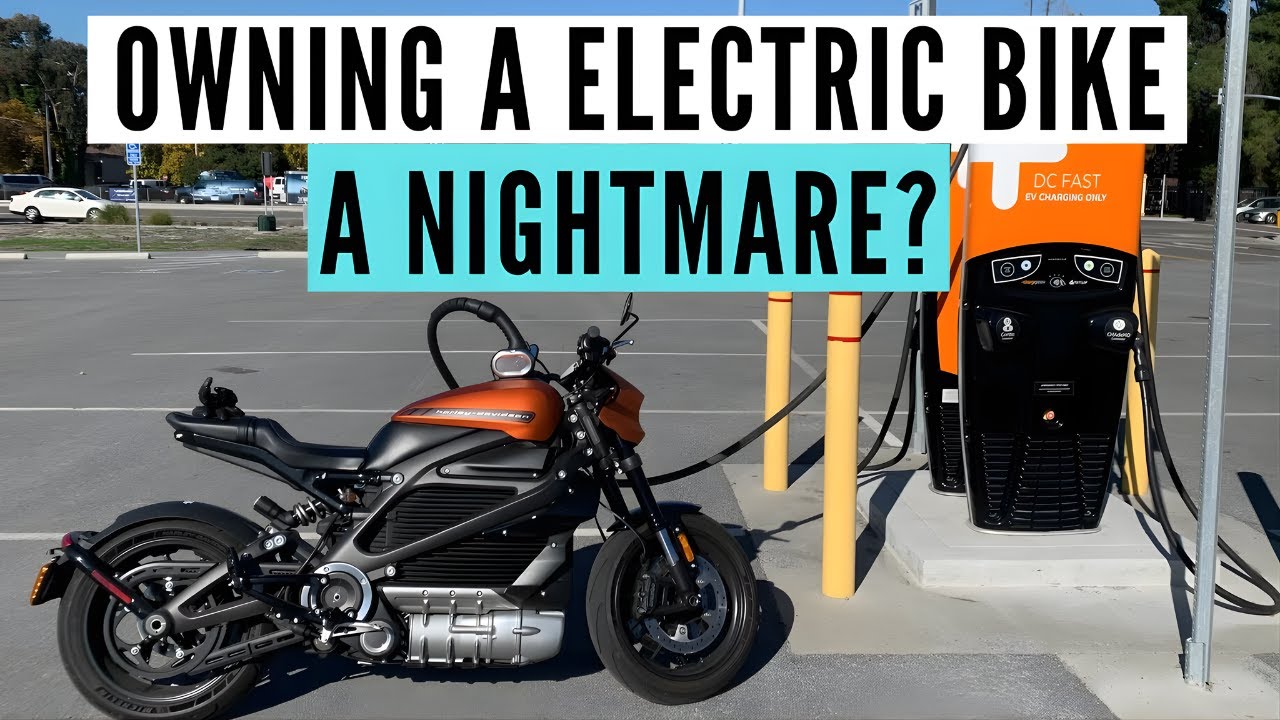
ELECTRIC Motorcycles are WORTHLESS! 7 SHOCKING PROBLEMS, You Must Know Before Buying One
What are the biggest problems with owning an electric motorcycle that manufacturers are desperately trying to hide from you? That’s what we’re going to expose today. Although more and more riders are becoming interested in electric motorcycles, there are catastrophic concerns with electric bike ownership that the industry doesn’t want you to know about. For this video, I’m revealing the seven most devastating issues and financial nightmares of electric motorcycle ownership that could cost you everything. Number seven, catastrophic range anxiety that kills. While car drivers worry about range anxiety, motorcycle riders face range terror that can be fatal. Electric motorcycles suffer from extreme range reduction that manufacturers deliberately hide in their marketing. The advertised ranges are based on ideal conditions that don’t exist in real world riding. Perfect weather, constant speed, no wind, no hills, and no accessories. A leaked engineering report from Zero Motorcycles revealed that realworld range can be up to 60% less than advertised, especially in cold weather or highway riding. The document obtained through a lawsuit, shows that company executives knew their range claims were marketing fiction, but decided that customer education after purchase is more cost-effective than honest advertising. One section specifically states that range anxiety becomes range panic for motorcycles, but panic sells fewer bikes. The consequences are deadly. Unlike cars that can coast to safety when they run out of power, motorcycles become unstable and dangerous when their batteries die. Multiple riders have been killed when their electric bikes suddenly lost power on highways, causing them to be rearended by cars traveling at highway speeds. A particularly horrific case in Arizona involved a rider whose Enerica ego died while passing a semitr. The sudden loss of power caused him to fall back into the truck’s path, resulting in a fatal collision. Electric motorcycle manufacturers deliberately programmed their battery management systems to show false range estimates to prevent panic. But this deception has killed riders who trusted their bike’s range display only to find themselves stranded in dangerous situations. Internal emails from Lightning Motorcycles show engineers arguing with marketing about optimistic range displays that executives insisted on despite safety concerns. Number six, battery fires that torch everything. Electric motorcycle batteries are ticking time bombs that can spontaneously combust, destroying not just the bike, but entire buildings and killing riders. Unlike electric car fires that are well documented, electric motorcycle fires are being systematically covered up by manufacturers and fire departments to protect the industry’s reputation. Internal documents from battery manufacturer Samsung SD1 leaked during a Korean government investigation revealed that motorcycle battery packs have a failure rate 400% higher than car batteries due to vibration impacts and thermal stress. The documents show that Samsung warned motorcycle manufacturers about fire risks in 2019, but companies continued using the defective cells to meet cost targets. The emails specifically state that motorcycle applications exceed safe operating parameters, but contracts require delivery regardless of safety concerns. One of the most horrific cases involved a rider in Florida whose SR/F caught fire while charging in his garage. The lithium fire burned at over 2,000° F, destroying his house and killing his two dogs. Zero initially denied any defect, claiming the fire was caused by improper charging procedures, but forensic investigation revealed that the battery management system had failed, allowing thermal runaway. Zero eventually settled the lawsuit with a gag order to prevent public disclosure of the defect. What makes motorcycle battery fires particularly dangerous is that riders often store bikes in garages attached to their homes. When these batteries fail, they burn so hot that fire departments can’t extinguish them, leading to total property loss. The toxic gases released can kill sleeping family members before they even know there’s a fire. Insurance companies are beginning to exclude electric motorcycle fires from coverage due to the extreme property damage they cause. Number five, software that spies and kills. Electric motorcycles are essentially smartphones on wheels collecting massive amounts of personal data that manufacturers sell to third parties without rider consent. But worse than privacy violations, the software in electric motorcycles has killed riders through deliberate programming designed to increase profits at the expense of safety. Leaked source code from Zero Motorcycles, obtained by a former employee, revealed that the bike’s computer systems are programmed to prioritize battery preservation over rider safety. The code includes functions that reduce power output without warning when batteries reach certain temperature or charge levels, even during emergency maneuvers, like escaping dangerous traffic situations. Comments in the code show programmers were ordered to protect warranty costs above all else, even if it compromises emergency performance. Multiple riders have been killed when their electric motorcycles suddenly lost power during critical moments. A rider in Michigan was attempting to escape a road rage incident when his Enerica Eva rebel suddenly reduced power to 30% causing him to be caught and beaten to death by the pursuing driver. The subsequent investigation revealed that the bike’s thermal management system had detected elevated battery temperatures and activated limp mode without any warning to the rider. The software also includes kill switches that manufacturers can activate remotely. Internal emails from Harley-Davidson’s LiveWire division show executives discussing customer compliance enforcement through remote power limitation. One email specifically states that riders who modify their bikes or use unauthorized charging equipment will have their motorcycles remotely disabled to protect brand integrity. Even more disturbing, the software collects location data, riding patterns, and speed information that shared with insurance companies without writer knowledge. This data is used to deny claims and increase premiums based on writing behavior that the insurance companies deem risky, even if it’s completely legal writing. Number four, maintenance scams that bankrupt riders. Despite marketing claims that electric motorcycles are maintenance-free, they actually require more expensive specialized maintenance than gasoline bikes, and manufacturers deliberately restrict who can service them to create maintenance monopolies that financially devastate riders. Internal training documents from Harley-Davidson leaked by a disgruntled dealer revealed that the company deliberately designs their electric motorcycles to require proprietary diagnostic equipment that costs dealers over $50,000. The documents show that this planned service dependency is designed to maximize revenue per customer over vehicle lifetime by preventing independent shops from servicing the bikes. Even simple software updates require dealer visits that cost hundreds of dollars. The maintenance costs are crushing riders financially. A simple software update on a Live Wire can cost $300. While replacing brake pads, a basic maintenance item requires re-calibrating the regenerative braking system at a cost of over $1,000. One owner in California documented spending $8,000 in maintenance costs during his first year of ownership on a bike that Harley claimed would cost pennies to maintain. Battery replacement costs are the ultimate financial devastation. When batteries fail outside warranty, replacement costs range from $15,000 to $25,000, often more than the entire motorcycle is worth. Manufacturers deliberately serialize batteries to prevent aftermarket alternatives, forcing owners to pay dealer prices or scrap otherwise functional motorcycles. The most predatory practice involves forced obsolescence through software updates. Manufacturers regularly release updates that deliberately reduce performance of older models to encourage new bike purchases. Zero motorcycles was caught reducing the top speed of older models through safety updates that were actually designed to make the bikes feel slow and outdated. Number three, dealer networks designed to fail riders. Electric motorcycle dealers are trained to deceive customers and provide inadequate service that maximizes manufacturer profits while leaving riders stranded and financially devastated. Unlike traditional motorcycle dealers who profit from service and parts, electric motorcycle dealers are designed to extract maximum money upfront then abandon customers. Leak dealer training materials from zero motorcycles obtained through a whistleblower revealed that dealers are explicitly trained to oversell range capabilities and downplay charging limitations. The training manual includes scripts for dealers to use when customers complain about range issues, including blaming rider technique and environmental factors rather than acknowledging design limitations. One section specifically instructs dealers to never admit range limitations and to redirect blame to customer behavior. The service training is even worse. Dealers are trained to diagnose software issues as hardware problems to maximize service revenue. Internal emails show zero executives encouraging dealers to recommend battery replacement for software issues that can be fixed with updates because battery sales generate higher margins than warranty repairs. A particularly damning case involved a dealer in Nevada who was caught selling used electric motorcycles as new. The investigation revealed that the dealer was taking tradeins, resetting the odometers through software manipulation, then selling them as new bikes with full warranties. When customers discovered the fraud ensued, Zero Motorcycles defended the dealer, claiming that software resets don’t constitute odometer tampering for electric vehicles. The dealer network shortage creates dangerous situations for riders. Many areas have zero certified service centers, forcing riders to travel hundreds of miles for basic maintenance. When bikes break down far from dealers, riders are often stranded for weeks waiting for qualified technicians and proprietary parts that manufacturers deliberately restrict. Number two, theft magnets with zero security. Electric motorcycles are being stolen at rates that exceed any other vehicle category, and manufacturers deliberately design them with minimal security to reduce costs, making them irresistible targets for thieves who know exactly how vulnerable they are. Internal security assessments from police departments in major cities show that electric motorcycles are stolen 800% more frequently than gasoline motorcycles. The leaked reports reveal that thieves specifically target electric bikes because they’re silent, making theft undetectable, and because manufacturers use cheap electronic locks that can be bypassed in seconds using readily available tools. The most shocking revelation came from a leaked FB1 investigation into motorcycle theft rings. The documents revealed that organized crime groups have reverse engineered the security systems of major electric motorcycle manufacturers and can steal any electric bike in under 60 seconds. The report specifically names Zero, Enerica, and Harley Livewire as having fundamentally broken security architecture that makes them preferred targets for professional theft operations. What makes this even worse is that manufacturers know about these vulnerabilities but refuse to fix them. Internal emails from Zero Motorcycles show security engineers warning executives about theft vulnerabilities as early as 2018, but being told that security improvements reduce profit margins and that insurance will cover customer losses. One email chain shows executives laughing about customers, learning expensive lessons about urban parking. The theft problem is so severe that many insurance companies now refuse to cover electric motorcycles in urban areas or charge premiums so high that they exceed the monthly payment on the bike itself. Riders who do get their bikes stolen often discover that their insurance policies exclude electric vehicles entirely, leaving them financially devastated with loan payments on stolen motorcycles they’ll never see again. Number one, the $50,000 lie that’s bankrupting families. And here it is, the most devastating problem with electric motorcycle ownership. The total cost of ownership lie that’s financially destroying families across America. Manufacturers market electric motorcycles as money-saving alternatives to gasoline bikes, but the reality is that they cost 300 to 400% more to own over 5 years. bankrupting families who believe the marketing lies. The purchase price deception starts immediately. Advertised prices exclude essential accessories like charging equipment, which can add $5,000 to $8,000 to the real purchase price. Insurance costs are typically 200 to 300% higher than gasoline motorcycles due to theft rates and repair costs. Financing rates are higher because banks consider electric motorcycles higher risk due to depreciation and unknown reliability. But the real financial devastation comes from hidden ongoing costs. Software subscription fees, mandatory dealer service, proprietary parts, and forced obsolescence create a financial trap that never ends. A leaked cost analysis from Harley-Davidson’s LiveWire division revealed that the company expects to extract over $50,000 from each customer over a 5-year ownership period through various fees and services. Double the bike’s purchase price. The most horrific case involved a family in Ohio who refinanced their home to buy two Livewire motorcycles, believing they would save money on commuting costs. Within 18 months, they had spent over $30,000 in additional costs, including charging equipment, insurance increases, maintenance, theft recovery services, and software updates. When both bikes became obsolete due to newer models, they couldn’t sell them for enough to pay off the loans. They lost their house and declared bankruptcy, destroyed by Harley-Davidson’s financial predation. Internal documents from major manufacturers reveal that customer financial destruction is intentional. Email chains show executives celebrating lifetime customer value extraction and discussing how to maximize revenue per customer before they realize the true costs. One particularly damning memo from Zero’s chief financial officer states that customer financial stress indicates successful profit optimization. The electric motorcycle industry isn’t selling transportation, they’re selling financial servitude. These companies have created the most predatory ownership model in automotive history. Designed to extract maximum money from customers while providing minimum value. The marketing promises of savings and environmental benefits are lies designed to hook customers into financial traps they may never escape.
What are the biggest problems with owning an electric motorcycle that manufacturers are desperately trying to hide from you? That’s what we’re going to expose today.Although more and more riders are becoming interested in electric motorcycles, there are catastrophic concerns with electric bike ownership that the industry doesn’t want you to know about. For this video, I’m revealing the 7 most devastating issues and financial nightmares of electric motorcycle ownership that could cost you everything.
Number 7, catastrophic range anxiety that kills. While car drivers worry about range anxiety, motorcycle riders face range terror that can be fatal. Electric motorcycles suffer from extreme range reduction that manufacturers deliberately hide in their marketing. The advertised ranges are based on ideal conditions that don’t exist in real-world riding – perfect weather, constant speed, no wind, no hills, and no accessories.
A leaked engineering report from Zero Motorcycles revealed that real-world range can be up to 60% less than advertised, especially in cold weather or highway riding. The document, obtained through a lawsuit, shows that company executives knew their range claims were “marketing fiction” but decided that “customer education after purchase is more cost-effective than honest advertising.” One section specifically states that “range anxiety becomes range panic for motorcycles, but panic sells fewer bikes.”
The consequences are deadly. Unlike cars that can coast to safety when they run out of power, motorcycles become unstable and dangerous when their batteries die. Multiple riders have been killed when their electric bikes suddenly lost power on highways, causing them to be rear-ended by cars traveling at highway speeds. A particularly horrific case in Arizona involved a rider whose Energica Ego died while passing a semi-truck. The sudden loss of power caused him to fall back into the truck’s path, resulting in a fatal collision.
Electric motorcycle manufacturers deliberately program their battery management systems to show false range estimates to prevent panic, but this deception has killed riders who trusted their bike’s range display only to find themselves stranded in dangerous situations. Internal emails from Lightning Motorcycles show engineers arguing with marketing about “optimistic range displays” that executives insisted on despite safety concerns.
Number 6, battery fires that torch everything. Electric motorcycle batteries are ticking time bombs that can spontaneously combust, destroying not just the bike but entire buildings and killing riders. Unlike electric car fires that are well-documented, electric motorcycle fires are being systematically covered up by manufacturers and fire departments to protect the industry’s reputation.
Internal documents from battery manufacturer Samsung SDI, leaked during a Korean government investigation, revealed that motorcycle battery packs have a failure rate 400% higher than car batteries due to vibration, impacts, and thermal stress. The documents show that Samsung warned motorcycle manufacturers about fire risks in 2019, but companies continued using the defective cells to meet cost targets. The emails specifically state that “motorcycle applications exceed safe operating parameters, but contracts require delivery regardless of safety concerns.”
#electricmotorcycles #electricvehicle #electriccar
Copyright Disclaimer: Under Section 107 of the Copyright Act 1976, allowance is made for “fair use” for purposes such as criticism, comment, news reporting, teaching, scholarship, and research. Fair use is a use permitted by copyright statute that might otherwise be infringing. Non-profit, educational or personal use tips the balance in favor of fair use. No copyright infringement intended. ALL RIGHTS BELONG TO THEIR RESPECTIVE OWNERS