
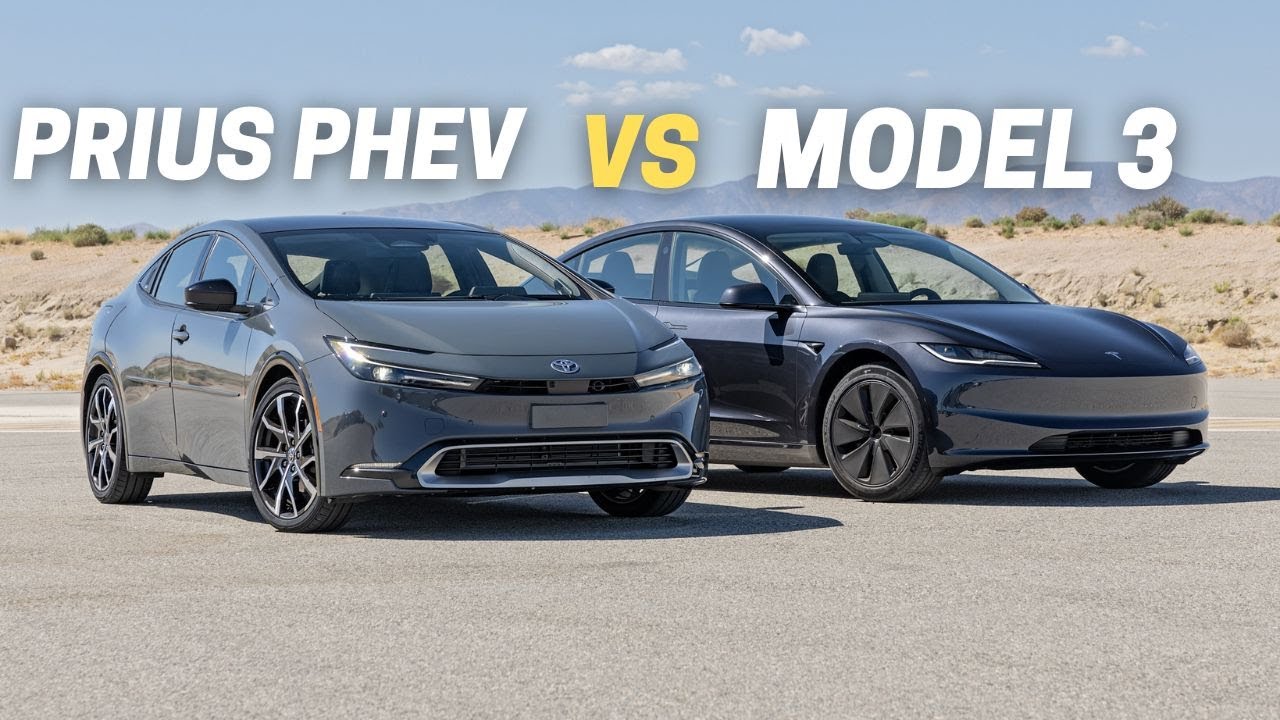
2026 Toyota Prius Plug-In Hybrid Vs. 2026 Tesla Model 3
[Music] The 2026 Toyota Prius plug-in hybrid versus the 2026 Tesla Model 3. As a plug-in hybrid vehicle, Prius combines a dedicated EVonly drive mode with the ability to operate as a standard hybrid vehicle. This flexibility can help eliminate range anxiety. Let’s see what happens when Prius plug-in hybrid goes against the Tesla Model 3, a dedicated battery electric vehicle without the versatility of a hybrid setup. With an EPA estimated EV-only driving range rating of up to 44 m and the convenience of being able to operate as a standard hybrid for longer trips, Prius Plug-in Hybrid dudes drivers a flexible and efficient drive. Prius Plug-in Hybrid has an available panoramic view monitor, while Tesla Model 3 does not. Prius Plug-in Hybrid’s wireless Apple CarPlay and wireless Android Auto compatibility give it the edge over Model 3 when it comes to connectivity. Additionally, Prius Plug-in Hybrid’s vehicle controls have a more traditional setup, which may add up to a greater comfort level for drivers, while Model 3 relies heavily on the center touchscreen. Now, let’s put Prius Plug-in Hybrid and Model 3 side by side. For 2026, Prius plug-in hybrid arrives in three sport oriented grades, SE, XSE, and XSSE Premium. Tesla Model 3 is also available in three grades: long range rear wheel drive, long range all-wheel drive, and performance all-wheel drive. Prius plug-in hybrids performance impresses. This starts with a 2 L plug-in hybrid system with 220 net combined horsepower. Together with its standard McFersonson front and multi-link rear suspension, Prius plug-in hybrid pairs sporty handling with a refined ride. Model 3 has up to 510 total system horsepower. It also comes with standard McFersonson front and multi-link rear suspension, while the performance all-wheel drive model adds an adaptive damping system. Plus, an EPA estimated EV driving range rating of up to 44 m and up to an EPA estimated 52 MPG combined rating allow Prius plug-in hybrid to deliver an impressive total range. Model 3 has an EPA estimated total driving range rating of up to 363 mi. With its striking silhouette, Prius Plug-in Hybrid’s design really impresses. Its available 19in alloy wheels are complemented by other perks like an available power liftback, an available fixed glass roof, and an available solar charging roof. Tesla Model 3 offers 19 and 20-in alloy wheels on select models, a standard power trunk, and a standard fixed glass roof. However, Model 3 doesn’t have an answer to Prius Plug-in Hybrid’s solar charging roof. Step inside Prius Plug-in Hybrid’s interior with its standard smart key system. There’s also available digital key capability with an active remote connect trial or subscription on XSE and XSSE premium grades. Other touch points include a standard heated steering wheel, available heated and ventilated front seats, and available heated outboard rear seats that bring the comfort. There’s even an availableQI compatible wireless charger to help keep smartphones topped up on the road. Tesla Model 3 has similar features across its lineup. Finally, the standard 7-in top mount digital gauge cluster is designed to put key information front and center. On the other hand, the Tesla Model 3 does not have a traditional gauge cluster. Instead, all the key info that drivers need can only be accessed through the center touchscreen. The Prius Plug-in Hybrid comes packed with tech thanks to the Toyota audio multimedia platform, which features a standard 8 in or available 12.3 in touchscreen. On the other hand, Model 3 comes standard with a 15.4 4in touchscreen. The Toyota interface includes standard wireless compatibility for Apple CarPlay, which connects drivers to the apps on their iPhone, including maps, messages, podcasts, and separate music subscriptions. In addition, wireless Android Auto compatibility makes it easy to stay connected to Android devices and access various apps and services from Google, including YouTube Music and Google Maps. On the other hand, Model 3 does not have wireless compatibility for Apple CarPlay and Android Auto. All crates include trials for Toyota’s line of connected services, including Safety Connect, Service Connect, Remote Connect, Wi-Fi Connect, and Drive Connect, while the Tesla Model 3 only includes a 30-day premium connectivity trial. Plus, there’s a three-month Sirius XM trial, which includes over 165 channels available in cabin and even more on the Sirius XM app, making it easier than ever to enjoy not just adree music, but also sports, comedy, and more. Model 3 also has a Sirius XM trial. Finally, Prius plug-in hybrid also has an available 8 speakeraker JBL premium audio system for a highfidelity listening experience. The Tesla Model 3 also comes with a premium audio system, but it is exclusive to long range all-wheel drive and performance all-wheel drive models. Prius plug-in hybrid comes with Toyota Safety Sense 3.0. This high-tech suite includes pre-colision system with pedestrian detection, lane departure alert with steering assist, automatic highbeams, full-speed range dynamic radar cruise control, lane tracing assist, road sign assist, and proactive driving assist. Model 3’s autopilot system has similar features like automatic emergency braking, forward collision warning, lane departure avoidance, and adaptive cruise control. Blind spot monitor with rear cross traffic alert also comes standard on all Prius plug-in hybrid grades as well as on Model 3. Prius plug-in hybrids available front and rear parking assist with automatic braking and panoramic view monitor are designed to help drivers maneuver through tight spaces. The latter of which Model 3 does not have an answer to. Prius plug-in hybrid also brings added convenience in the form of its available front cross traffic alert and available lane change assist and available advanced park. Model 3 does have available traffic and stop signal control, auto park and auto lane change features. Meanwhile, Prius Plug-in Hybrid’s available traffic jam assist with an active drive connect trial or subscription is designed to make driving through congestion in controlled access freeways easier. Model 3 offers something similar with its available full self-driving supervised feature. When you consider its strong track record of excellent resale, Prius plug-in hybrid’s value becomes clear. This innovative sedan received the KBB best new model award for 2024 on the strength of its efficiency, advanced technologies, and strong resale value. Plus, every Prius plug-in hybrid also comes with Toyota Care, which includes 2 years or 25,000 mi of scheduled maintenance, whichever comes first, and 3 years unlimited mileage, 24-hour roadside assistance. Meanwhile, the Tesla Model 3 includes a 4year or 50,000 mi basic warranty, whichever comes first, and 5 years or 60,000 mi of roadside assistance, whichever comes first. Prius plug-in hybrid also includes a hybrid system warranty that covers select components for 8 years or 100,000 mi, whichever comes first, and a 10year or 150,000 mi hybrid battery warranty, whichever comes first. Model 3’s battery and drive unit limited warranty coverage only lasts 8 years or 120,000 mi, whichever comes first.
Curious which direction to go in 2026? On one side, the 2026 Toyota Prius Plug‑in Hybrid blends plug-in electrification with a gas engine, offering about 44 miles of EV range and 220 hp.
On the other, the 2026 Tesla Model 3 delivers pure electric driving, over 300 miles of range and performance you feel from the start.
Let’s dive into how they compare.