
Why Are EV Charging Costs So High in 2025? Is the UK Government about to make matters worse?
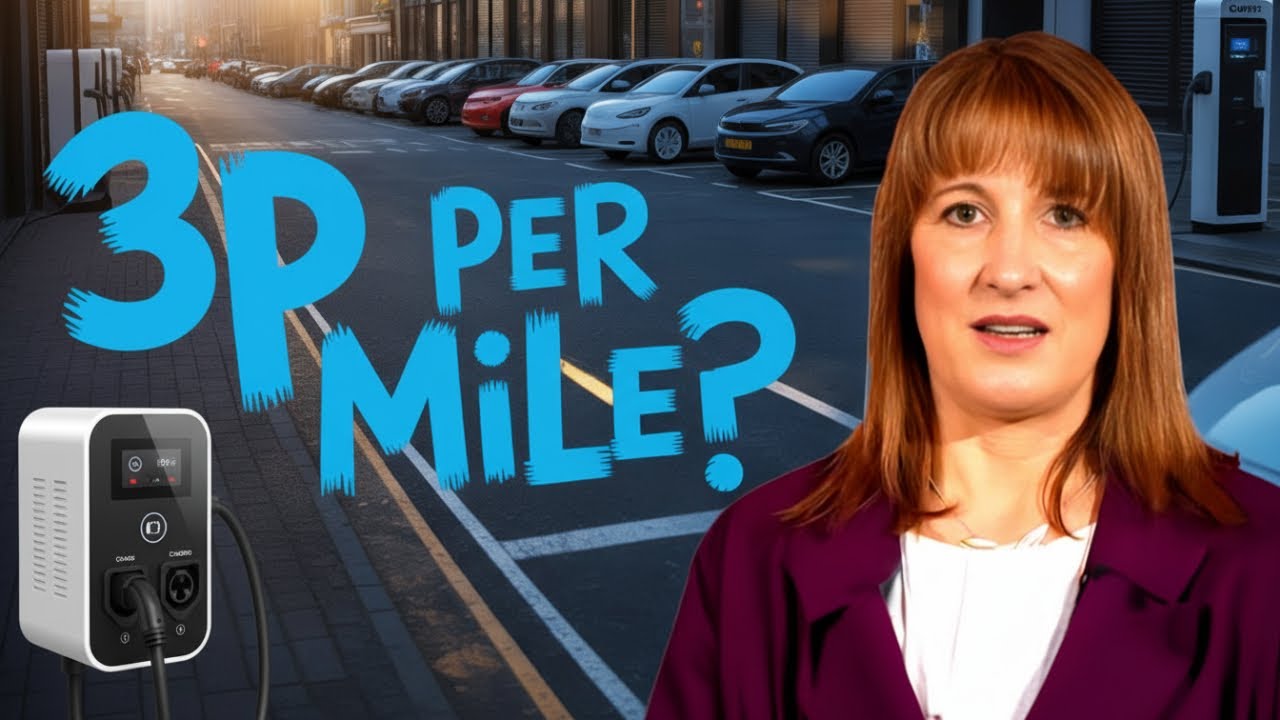
Hi there. Are you an EV driver? Not necessarily a Scoda driver, but an EV driver concerned about the cost of public charging. Maybe you’re thinking about buying an EV and you cannot actually fit a charger at home. So, you’re worried that you’ll be reliant on public chargers and my goodness, the cost of those has gone up recently. Well, there was a story in the news yesterday that got lots of attention. Frankly, I don’t think it’s really going to come to anything. But the story was that the chancellor is considering in the upcoming budget charging EV drivers 3 p per mile to drive their cars. That’s not instead of the vehicle excess duty that we already well that was introduced last year. And if you drive a car that’s worth more than £40,000 at list price, then you get the expensive car supplement on top, the so-called luxury car tax. So you might already be paying many hundreds of pounds a year to tax your car. Well, the story says you’re going to have to predict in advance how many miles you’ll drive over the course of a year, tell the government, pay them three pile, and then at the end of the year, you’ll have to tell them how many miles you have driven, and you’ll either get a refund or an extra bill, a top up charge. Can anyone see the problem with that system? Can anyone see why it might not happen? Yeah, it’s totally relying on you being honest and telling the government how many miles you’ve driven. I simply can’t see it happening. And the alternative way where they monitor everything we’re doing with lots of new technology, that would be way way too expensive and it would cost them more than it would raise. So personally, I can’t see that happening. However, there is another proposal which I think is likely to come and that is largely unnoticed at the moment. So business rates, all businesses pay them. Well, all big businesses pay them and it really depends where you are and the size of your business, how much you pay, but most businesses pay for business rates and it it goes into central government and then they distribute it out to local government. That’s the theory. So, at the moment, charging bays are not specifically rated. The petrol stations where they’re cited will be rated. Maybe if they’re in a motorway service area, that will certainly be rated and we’ll pay rates. But the Treasury have hit on the idea of actually charging the charging base separately. And Charge UK, which is the body representing charge point operators, yesterday launched a campaign. Yes. At the very same time, everyone was frothing at the mouth about this rather unbelievable story about 3 per mile. They were actually launching a campaign about something which really is going to come unless someone does something about it. and they reckon that the incoming bill for charging bays and business rates will be around 100 million pounds. And they average that out. And again, this will be averaged between those who do very little public charging and those who do a lot. But they think on average that will increase our costs as a driver by up to £315 a year. Clearly that’s very very bad news and probably for most people it’s more than would be raised or more would be cost by a 3 p per mile charge. So if you see anybody frothing at the mouth about 3 p per mile, can I ask point them at actually this and if they want to get excited about anything and get active about anything and lobby the government, then they should be lobbying, getting behind charge point UK or charge UK and lobbying the government about this business rates extension to charging base. If the government seriously wants us to move to electric vehicles and away from fossil fuels for all the benefits and air quality and all that good stuff, then really this is not a helpful move. This is like trying to drive your car with the handbrake on. It’s really not helpful. Other things that Charge UK are lobbying on at the same time. They’ve got three points. One, the business rates. Two, standing charges. This is something that really ought to be looked at by the regulator. But the standing charges, which charge points are levied in the last four years, have gone up 462%. So if you’re wondering why it costs so much to plug into an Ionity charger or whatever else on the motorway network or any public charger, frankly, have a look at that. The costs just of the keeping the power connected have gone up 462%. I spoke to a friend of mine about a year ago who works for a local authority and looks after their charging network. He said 12 months ago that it was now over £1,000 per year per charger just to keep the power connected. So that clearly is going to have an effect on the price which we pay. And then finally the last point or the third point in charge UK’s uh campaign which they launched yesterday is VAT. This is a straightforward government tax. Now, when we charge at home using electricity, the very same electricity that comes out of the public chargers, we pay 5% tax to the government. When you do it on a public charger is 20%. Again, this is not helpful if the government is really serious about hitting its public uh policy objective of getting everyone to switch from fossil fuels to electric vehicles. Why? Why? Why is it four times as expensive in tax for one lot of electricity than it is for the others? So rather than being tempted to join in the feeding frenzy about 3 p per mile, which frankly I don’t think is going to happen because it would simply be pretty unworkable and wide open to abuse and dishonesty. Why not actually get involved in campaigning and lobbying your MP, lobbying politicians generally or commenting on media stories about these three things that do matter. Business rates, VAT, and standing charges. Those three things make public charging really expensive. Yes, the wholesale cost of energy has gone up. It’s come down again a little bit. Yes, the cost of paying for staff and so on that the charge point operators employ that will have gone up. But by far the biggest changes that could be made are these three changes. Stop business rates, cut VAT and regulate those standing charges and bring them more in line with what is the sort of thing that we pay at home. Anyway, bit different. Not go to specific. apologize if it’s too political or if it gets anybody upset, but I think it’s important that in this time when there’s a lot of disinformation around our misinformation, it’s important that we focus on the right topics, not on things that frankly are a bit of a nonsense story. Anyway, I’ll see you in another video very
The news yesterday was all about secret plans by the Government to bring in a pay per mile charge for EV drivers. Is that a serious possibility though? Most people have no idea why **ev charging cost** on public **ev charging stations** is so high.
There are a number of reasons for the steep rise in charging prices and the Government really is about to make matters worse, but not in the way most people think.
For more details see the Charge UK website https://www.chargeuk.org/post/open-letter-to-the-chancellor-promoting-the-growth-and-affordability-of-ev-charging-in-the-budget
I’m also on an **ev tariff** to keep my **home charging** costs low, I charge at home using Intelligent Octopus Go, this EV tarriff gives me off peak energy at 7p per kWh for the car and the whole house. It makes charging the Enyaq really cheap. If you’re not already a customer sign up using this link for a £50 credit on your next bill https://share.octopus.energy/aglow-prawn-796
and will be sharing my electricity tariff to show how much it saves on **ev charging**.
For charging away from home I use the Octopus Electroverse charging card. Sign up via this link for a free £5 credit on charging https://electroverse.octopus.energy/sign-up/magic?referralCode=aglow-prawn-796
And finally the most asked question on this channel – the phone holder in the car is this one https://amzn.to/4aqWac0