
Jeep’s Plug-In Hybrid Nightmare: 300,000 Cars Recalled for Fire Risk
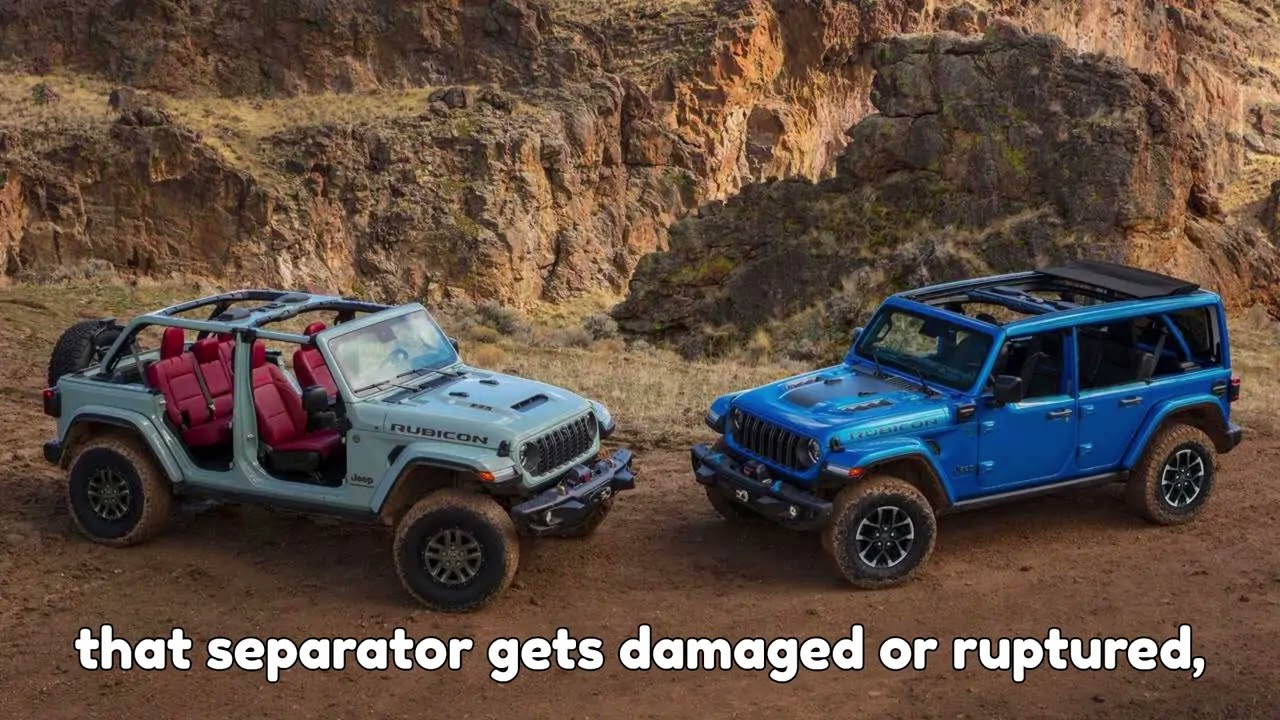
Jeep’s plug-in hybrid nightmare. 300,000 cars recall for fire risk. Hey EV fans, this is Hussein, your host, and welcome back to EVPedia, your ultimate pit stop for everything electric on four wheels. Before we dive in, a quick copyright disclaimer. This video is made purely for educational and commentary purposes with all rights belonging to their respective owners. Now, let’s start with thoughtprovoking question. What would you do if your car parked safely in your driveway suddenly had the potential to catch fire even when it’s turned off? Stick around till the end because today we’re exploring a shocking recall involving more than 300,000 Jeep plug-in hybrids that could pose a serious fire risk. And trust me, you’ll want to hear how this all happened. Let’s get right into it. Stalantis, the parent company of Jeep, has issued a major recall affecting two of its most popular plug-in hybrid models. the Jeep Wrangler 4XE and the Jeep Grand Cherokee 4XE. The recall stems from a potential fire hazard linked to the vehicle’s high voltage battery packs. According to the National Highway Traffic Safety Administration or Nitsa, the danger lies within a component of the lithium-ion cells that could be defective. This small flaw could lead to catastrophic results, a vehicle catching fire while parked or even while being driven. The scale of this recall is enormous. Stalantis is pulling back over 300,000 plug-in hybrid Jeeps across the US and Canada. To break it down, around 228,000 Wrangler 4XE units from model years 2020 to 2025 are affected alongside nearly 92,000 Grand Cherokee 4X SUVs from model years 2022 to 2026. For owners, Nitsa has issued a clear warning. Park your vehicles outdoors away from garages, houses, or any other structures until recall repairs are complete. And if that wasn’t concerning enough, the agency also urged drivers not to plug these vehicles in for charging, as the risk of fire appears higher when the battery is charged. Now, before we jump to conclusions, let’s put this into perspective. Electric vehicle fires make headlines easily, but statistically EVs catch fire far less frequently than traditional gasoline cars. However, when an EV fire does occur, it’s an entirely different challenge. That’s because these fires are driven by what’s called thermal runaway, a self-sustaining chain reaction where one overheated battery cell triggers the next, creating an intense fire that’s incredibly difficult to extinguish. In this particular case, the issue seems to stem from something called separator damage within the battery cells. If you’re wondering what that means, here’s a quick explanation. Inside every lithium-ion cell, there are two main electrodes, the anode and the cathode. A thin layer known as a separator keeps these two parts apart, preventing direct contact while still allowing ions to move back and forth during charging and discharging. If that separator gets damaged or ruptured, the anode and cathode can touch, causing a dangerous short circuit. When that happens, immense current flows uncontrollably, leading to extreme heat and in worst cases, triggering a thermal runaway event. This isn’t just theoretical. According to Nitsa, Stalantis is aware of one injury and at least 19 fires related to this defect. And here’s the kicker. There’s currently no permanent fix available. Nitsa mentioned that this issue might be connected to a previous recall from September where Santis tried to address the problem using a software update or in more severe cases by replacing the entire battery pack. Unfortunately, that earlier solution doesn’t seem to be working as intended as it failed to detect the deeper structural defects within the battery. Both affected Jeep models use the same 17.3 kWh high voltage battery pack on the Wrangler 4XC. This pack delivers around 21 miles of pure electric range, while the Grand Cherokee 4xe stretches it to about 26 miles. Stalantis hasn’t disclosed who manufactures these battery packs, but reports from the Korea Herald suggest that Samsung SDI, a major South Korean battery supplier, provides a units for Jeep’s plug-in hybrid sold in the US. Interestingly, despite the setback, Stalantis has been doing quite well in terms of sales. In the third quarter, the company sales climbed 6% year-over-year. Even as the US political climate shifted away from proEV policies under the Trump administration, the Jeep Wrangler 4X was even crowned the bestselling plug-in hybrid in America during that period. But this new recall might throw a wrench into that momentum. After years of struggling with profitability and production challenges, this fire risk issue could once again hurt Stellantis’ reputation just as it was beginning to rebuild consumer confidence. It’s worth noting that Stellantis isn’t alone here. Several automakers, including Hyundai, General Motors, and even Tesla have faced similar recalls in the past for battery defects that led to fires or charging restrictions. The difference, however, lies in how quickly and transparently these companies respond. Jeep’s recall, especially without a clear remedy, raises concerns about how automakers balance rapid electrification with rigorous quality control. At the same time, this incident also highlights a bigger point in the EV industry. Battery technology, while improving, is still an evolving field. Manufacturers are pushing for higher energy density, faster charging, and longer lifespans. But even the smallest flaw in production or design can have massive safety implications. That’s why agencies like Nitsa are doubling down on testing, reporting, and enforcing recalls before these issues turn tragic. So, what’s next for Jeep owners? If you’re driving a Wrangler 4XE or a Grand Cherokee 4XE, check your VIN number through Nitsa’s website or contact your local dealer immediately. Stalantis says it’s working on identifying a root cause and developing a proper fix, whether that a more advanced software patch or full battery replacement. In the meantime, parking outdoors and avoiding charging are the best precautions you can take. Now, circling back to our opening question, what would you do if your vehicle carried a hidden fire risk even when turned off? For many Jeep owners, that question isn’t hypothetical anymore. It’s their reality. From Aedia’s point of view, this recall underscores the growing pains of electrification. Jeep’s plug-in hybrids are important stepping stones toward cleaner mobility, but quality and safety must evolve just as fast as innovation does. Our take? Transparency and accountability will determine which automakers truly earn consumer trust in the EV age. We’d love to hear your take. Would you still buy a Jeep 4xe after this recall, or would this news push you toward a different brand altogether? Drop your thoughts in the comments. We’ll be reading every one of them. Before we wrap up, here’s a fun fact. The Jeep Wrangler 4xe actually outsold the Toyota Prius Prime in 2023, marking the first time an off-road oriented vehicle topped the plug-in hybrid charts. It’s proof that the world of EVs is evolving faster than anyone expected. If you found this story insightful, help keep EVPedia charged up. Let’s aim for 10,000 likes and 1,000 comments on this video. Hit the hype button to boost us up the YouTube leaderboard and show the power of our EV community. Don’t forget to subscribe if you haven’t yet. Your support drives us forward and helps us bring you the stories that truly matter in the EV world. This is Usain signing off. Stay safe, stay electric, and I’ll see you in the next
A shocking recall has rocked the hybrid world! Jeep’s plug-in hybrids — including the Wrangler 4xe and Grand Cherokee 4xe — are being recalled due to a serious fire risk linked to their high-voltage battery packs. Over 300,000 vehicles across the U.S. and Canada are affected, with owners being warned by the NHTSA to park their vehicles outdoors and avoid charging until repairs are complete. Stellantis, Jeep’s parent company, has yet to announce a permanent fix, making this one of the most concerning recalls in plug-in hybrid history.
In this video, we break down exactly what went wrong, why lithium-ion battery fires are so dangerous, and what Jeep owners need to do right now. You’ll also learn how this recall compares to past EV fire cases involving Tesla, GM, and Hyundai — and what it says about the current state of EV safety.
Stay tuned till the end for EVPedia’s expert take on what this means for Jeep’s future, and whether plug-in hybrids like the 4xe can still be trusted.
If you found this story eye-opening, help keep EVPedia charged up! Smash that like button, drop your thoughts in the comments, and subscribe for more deep dives into the world of electric vehicles. Let’s hit 10,000 likes and 1,000 comments to boost this video on the leaderboard!
#JeepRecall #JeepWrangler4xe #GrandCherokee4xe #EVNews #EVFireRisk #EVPedia #ElectricVehicles #Stellantis #HybridRecall #EVSafety #LithiumIonBattery
Join this channel help us to improve:
https://www.youtube.com/channel/UCDLCUoNT_y-CCgiBAHNNuRg/join
For business inquiry kingly reach out – hsranguni@gmail.com
Copyright Disclaimer
This video is made available under the doctrine of Fair Use as outlined in Section 107 of the Copyright Act of 1976. The use of copyrighted material in this video, including but not limited to music, video clips, and images, is for educational, commentary, or transformative purposes and does not infringe on the original copyright holder’s rights.
All Rights Reserved:
All trademarks, logos, and content featured in this video are the property of their respective owners. No claim of ownership is made over third-party content.
Attribution:
Where applicable, credit for third-party content has been given in accordance with applicable laws, including licenses under Creative Commons or other licensing agreements.
Music & Media Usage:
All music, video clips, or images used in this video are either licensed, fall under public domain, or are used with permission. If you hold the copyright to any material featured in this video and believe that your rights have been violated, please contact us at [your email/contact information], and we will promptly address the issue.
Legal Notice:
The opinions expressed in this video are those of the creator and do not necessarily reflect the views of any affiliated entity. This video is not intended to harm, defame, or infringe upon the rights of any individual or organization.
credits to – insideevs.com and motor1.com also rideapart.com