“Tacoma H2-Overlander Concept”: SEMA Build Episode 3 | Toyota
We’re back at TRD Salisbury again. We’re here in the final stages
of getting this project finished. We’re coming down to the wire. We’ve only got a few days left before it’s got to get on a
truck and get shipped out. So, I’m hoping that we can
get everything finished up and this thing will drive on. It’s all hands on deck. So, it’s been a lot of working
with our fab technicians here and being able to just get
everything installed and mounted. The hydrogen tank showed up from Japan and made it through customs. So, we’ve got everything here. It’s all ready to go and get a final assembly. So, these last few days, we’ve
been buttoning up the stack. I think a big challenge for us has been wiring. I mean, we have a whole new ECU system. We have the controls are completely different. We’ve got a battery pack that didn’t exist before. And wires take up a lot of room
that sometimes you don’t account for and they have large bend radiuses. Things always take longer than you estimate. Doing a lot of the wiring.
There’s a lot of connections and if you just want to do
a quick hazardous job of it, you can knock those out quickly. But if you want to do it right,
make sure they’re weatherproof, make sure they’re documented,
make sure they’re labeled, probably takes two to five times
longer than to just get it done. The vision for our H2 Overlander Tacoma was a vehicle that had high capability off-road, being able to traverse any terrain, but then also be able to power
your site and do it quietly and harmoniously with the
environment that you’re in. What’s nice about the hydrogen fuel cell vehicle Is that the hydrogen in the tanks
will continue to charge up battery. So, you can power lights at your campsite
so you’re not left in the dark overland. You can power your friend’s BEV if they’re running low and they
don’t think they can get back. If your vehicle has this type of powertrain and with this type of off-board power, now you can power your house in case of a a power outage or natural disaster. I think it opens a lot of doors and avenues to be able to bring power to where
it’s needed when it’s needed. So, we’re get a lot of big components on today. So, it’s going to feel like a really big day. We’re going to get the body on. We’re going to get the bed on. The camper shell is going to go on and we’re going to get
everything mated to make sure that everything that we’ve worked
on over the last few months in the computer and fitting things here and there that once it all comes together, it all lines up. Yeah. So, putting the body back on the frame, we have to make sure that all the hoses line up cuz there’s components that are
on the body like the radiator, the radiator expansion tanks, all those hoses that need to go to the fuel cell and all these electrical components
that need cooling systems. All that has to line up and merge together when you take the big body and drop back on there. It’s a nerve-wracking moment. This is where all the CAD work meets reality and what’s on the truck versus
what’s in the CAD model. This is where it all kind of comes
together and you hope it all works. Cab is a big one because that’s where
most of the points come together. Pace has been definitely a lot faster. Everybody understands where
we’re at in the process. We’re under a lot of pressure to get it done. SEMA is a huge event, so
we’ve been trying really hard to just push forward and and keep moving. We got a lot of final parts that
we were waiting on the last minute. The camper showed up and we were able
to get all the body parts on that. We’re in the final stages
of just wiring the lights and the backup camera and the third tail light. So all that safety features
that you need in a vehicle have been moved to the back of the camper. So from a fuel cell standpoint, working much like a battery electric vehicle, we get the advantage of using
electric motors front and rear. So when you have electric motors,
you get torque from zero basically. So you don’t have to wait for an engine to rev up to 2500 RPM before you get that power. Tailgate just showed up today, which is fantastic. That says TRD H2. So we’ve got the custom robo form tailgate. I have high hopes that this truck
will move forward past SEMA. It has such unique capability.
We’ve really put time and thought into the suspension, and
the tires, and the wheels, and the torque of the motors. And I mean, it it wasn’t just slapped together. It was put into thought to actually overland. There’s been challenges
throughout the whole thing, but we’ve had little
victories and little victories and trying to take little
bites out of the whole project and watching it come to this point
where the big bites get to happen where you put the body on, you put the bed on, you put the camera on, all that stuff has become a lot more motivating to get finished
on the little details at the end. I could definitely see the
light at the end of the tunnel. I’m very, very positive about
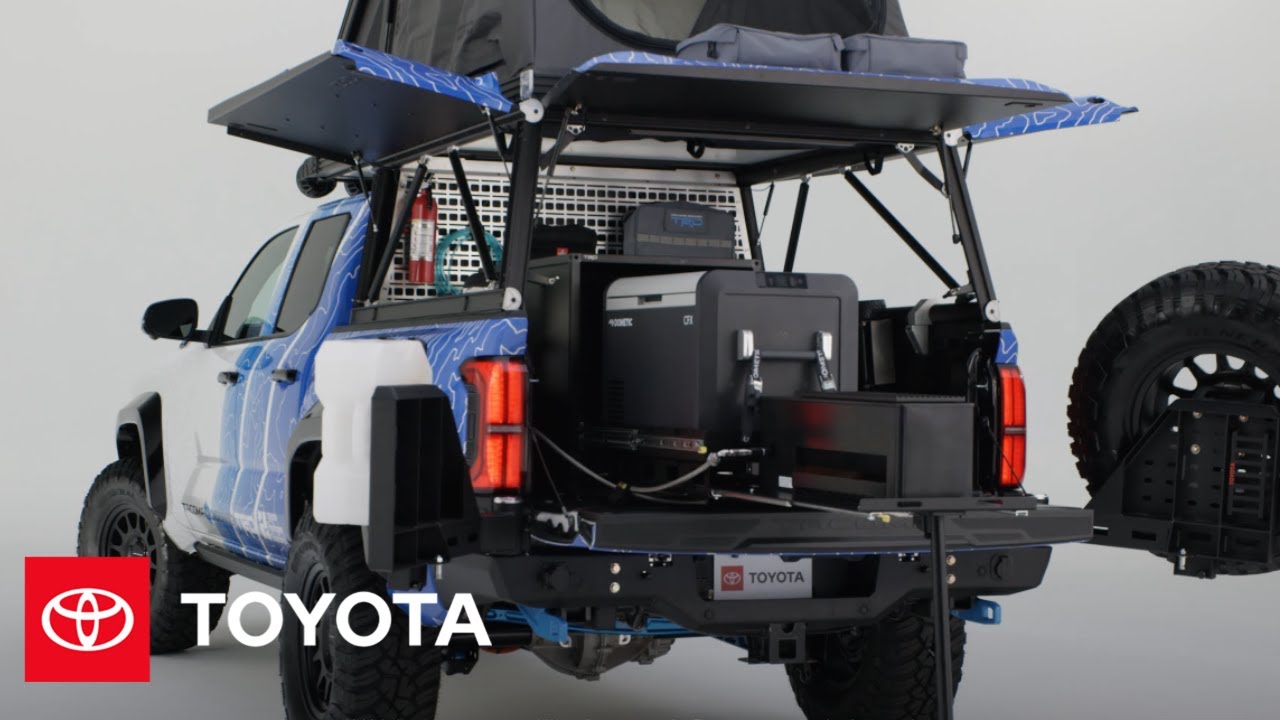
how this is going to turn out. It looks official, guys. It does not look like a project. It looks like a production car. It looks like like it was meant to be. The vehicle wrap is really really unique. On the vehicle itself, there is a topography map. There’s a little bit of a Easter egg. I enjoy for someone to try to
tell us what that came from. Seeing it assembled was a
huge kind of sigh of relief, I guess, is the first thing
I could say is once we got the body and the bed and the
camper all made it together, it was a lot more rugged, had a lot more character than what I expected. So, it came out even better
than I could have thought. It’s amazing how this all turned out. I can’t believe it’s all put
together. It looks great. The wrap, the accessories, the wheels, the tires, the lift, the suspension, and
it all went blended together better than I could have ever imagined. This is amazing. I can’t believe we got this done. I’m hoping that they notice that it’s
still the capable Tacoma Overlander and they get wowed by the extras that they can get from the fuel cell system,
the torque, the water offtake, the power off-take, things that would
increase the value of this as an overlander. Toyota’s always looking to improve and expand. This concept has a lot of
exciting attributes to it and I really hope they enjoy it and look to Toyota in the future for anything exciting coming down the pipe, especially with hydrogen.
The TRD team’s ambitious journey reaches its pinnacle as they unveil the completed H2-Overlander Concept. With 547 horsepower of near-silent electric power and groundbreaking innovations like filtered water recovery, witness the reveal of a hydrogen-powered overlanding machine that redefines what’s possible when sustainability meets off-road capability.
00:00 Final stages of finishing the project
00:37 What has the biggest challenge been?
01:09 The vision for the H2-Overlander Tacoma
01:26 Benefits of the Hydrogen vehicle
01:58 Getting the body on and lining everything up
02:35 When the model meets reality
03:02 Fitting all the final parts in
03:18 What you get with fuel cell energy
03:35 Finishing touches & what the future past SEMA looks like
04:00 What has kept the team motivated
Check out what’s new and watch more Toyota SEMA videos:
▶Latest videos from Toyota: https://www.youtube.com/watch?v=2_53LXo-UNo&list=PLsOvRYzJPCwVPnQZg9qWBpGP8oHLM1aT_
▶More Toyota SEMA Show videos: https://www.youtube.com/watch?v=Wj_lldj0zI4&list=PLsOvRYzJPCwUOCtl_IzAzuB063QdnmDPS
▶Watch the “Tacoma H2-Overlander Concept”: SEMA Build Episode 2 | Toyota: https://youtu.be/RpnVUHsQlSo
Subscribe for more Toyota videos: http://bit.ly/ToyotaSubscribe
Connect with Toyota USA online:
Visit the Toyota WEBSITE: http://bit.ly/ToyotaSite
Like Toyota on FACEBOOK: http://bit.ly/ToyotaUSAFB
Follow Toyota on INSTAGRAM: http://bit.ly/ToyotaInsta
#ToyotaUSA #SEMA #Tacoma