The Plug-In Hybrid Lie: Why They’re Polluting Almost as Much as Petrol Cars!
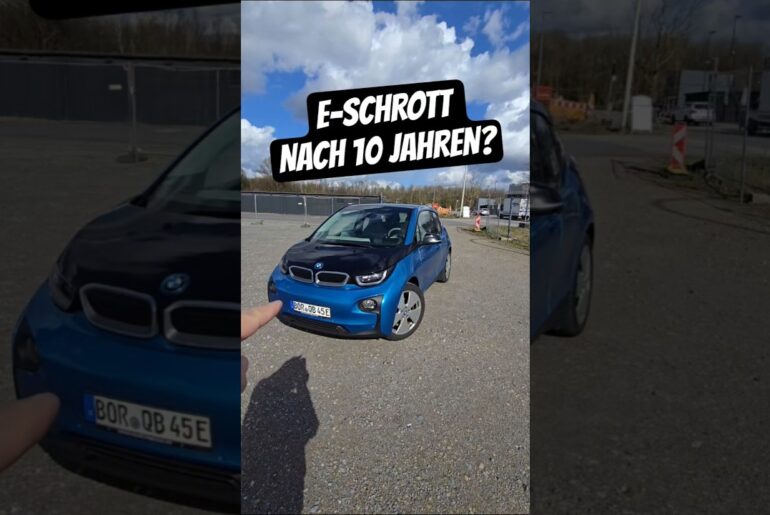
You might think plug-in hybrids are the perfect compromise. Charge them up, run on electric for short trips, and run on petrol for long ones. Best of both worlds, right? Well, new data says otherwise. According to a fresh report, plug-in hybrids or PHEVs are polluting almost as much as petrol cars. Yep, that’s right. The cars marketed as planet saving eco warriors are in practice barely greener than the old gas guzzlers we were told to scrap. How bad is it? Well, in the lab they claim saintly low emissions of around 30 to 50 g per km of CO2. But in real life nearly five times higher. In fact, the study found on average real world emissions only 19% lower than petrol or diesel cars. So what’s going on here? Are manufacturers lying? Are the tests broken? or are drivers just not doing their homework properly? Let’s find out. [Music] The report comes from Transport and Environment based on data from over 800,000 PHEVs or PVs as you as some people like to call them across Europe. So, this isn’t some Backstreet study with a handful of test cars. It’s big data from real drivers scattered through their cars onboard fuel consumption meters, their their onboard uh data management systems. And what it found was damning. PAVS emit on average 4.9 times more CO2 than official figures claim. They spend only about 27% of their miles in electric mode, even though official testing assumes well a saintly 84%. And even when in electric mode, the engine still fires up roughly onethird of the time to heat the cabin or to climb up a hill or just because the software feels like it. So those glossy uh brochures numbers that you get which tell you that you’re doing 250 m per gallon and near zero emission commuting, well, it seems like it’s pure fantasy. And because governments based their CO2 targets on those from the lab results, car makers have essentially managed to dodge about 5 billion euros worth of emissions fines. Could this be the next scandal to hit the industry? Not necessarily. Right? So, let’s get into why is this actually happening? Well, it’s simple really. People aren’t plugging them in. I mean, let’s start with the obvious thing, right? The plug-in part of plug-in hybrid. It only works if you actually plug it in. But most drivers don’t do that, especially company car users who are actually a massive share of PHV owners u because they get free fuel cars and they can’t always charge the cars at home or at work. So they just simply drive them like regular hybrids or worse like heavy petrol cars with the decorative socket just for show. Because when the charge is depleted and the battery is empty, you’re basically dragging around 150 kg of dead weight batteries, motors, wiring, and your 70 mp gallon car suddenly ends up at 25 mp gallon um heavy weight. The other problem is the trip patterns aren’t matching the lab results. So, the WLTP test assumes short commutes and frequent charging. In the real life, like I’ve suggested with these company car drivers, we’re talking long motorway halls, cold morning starts, and school runs with the heater immediately switched on. Now, that kills the electric range in minutes. So, even if the driver starts with a full battery, by the time they’re halfway to work, the petrol engine’s roaring away while the electric motor is taking a nap. The hardware itself is compromised. So, the thing is that with these PHVs, they’re kind of engineering half measures in a sense. many of the older ones because to keep prices reasonable and to qualify for the tax perks, manufacturers fit tiny batteries for 10 to 15 kW per hour and weak electric motors that sometimes can’t even handle say going up a hill or towing or even turning on the air conditioning. So the result, the car has to then switch back to turning the engine on rather than using the EV mode. So the tests are fantasy land. Lab tests assume a nearperfect world. always charge, gentle driving, ideal warm weather. Whereas real world data says otherwise. Drivers of course also are human. We forget to charge. We like to put our foot down. We use a heater. The EU is now updating its utility factor, the percentage of electric miles to reflect this reality. But until that’s fully implemented, the numbers are still well, they’re kind of flattering the technology really. So here’s the thing. Plug-in hybrids can be amazing. If everyone used them properly, they’d make a massive difference. Imagine it. Short commutes done in silent EV modes and in long trips with no range anxiety. The tech is there. They do work. The problem is driver behavior. The problem is design. And the problem is policy. All of these things are combining to work against it. We’ve turned plugins into like a tax dodge thing for company fleets and a guilt-free purchase for people who never even unpacked a charging cable. It’s like buying a treadmill to hang your clothes on and then blaming the gym when you’re still not really that fit. Manufacturers also love PHEVs because they tick the emission boxes without actually lowering the emissions in reality. Politicians love them because they make the fleets look greener on paper and they can say, “Yes, we have all of these cars out there, so therefore we are cleaner.” and consumers love them because they uh sound very clever. It’s electric, but it’s not too electric. But the reality is we’ve created a generation of cars that pretend to be sustainable whilst they quietly continue to guzzle fuel in the background whilst lugging around, like I said, that extra 150 kg with them. Right, enough whining about it. If you own a plug-in hybrid, what are the solutions? What can you actually do to fix this mess? Well, the first thing you can do is use a plugin like it’s supposed to be used. Plug it in properly. Treat hopefully have a smart charger at home, a wall box. Treat that like a toothbrush. Use it every day. Charge overnight. Top up at work or wherever you can. If you commute 20 to 30 miles, you could find that actually you’ll go for weeks without burning a drop of fuel. Although remember that fuel does expire within 3 months. But, you know, build that habit. Don’t wait for range anxiety to kick in before plugging in. Treat electrons like coffee, a daily essential. Manufacturers also need to step up. They need to give us plugins with real range. Many of them are doing 40 plus now. We need 60 to 80 to 100 km minimum in all weather. Not this 25 mi con nonsense that vanishes as soon as you turn the heater on. Uh and make sure the electric motor in these cars can actually do the job like climbing up hills, overtaking, towing a caravan if that’s the sort of vehicle, SUV for example. But rather than begging the petrol engine to help out every time you sneeze in the car. Oh, and you know what? install heat pumps in these things because that way the engine doesn’t have to fire up every time you want to, you know, feel a little bit warmer. Governments also need to stop rewarding lazy tech. If a car is driven mostly on petrol, then it’s not a low emission vehicle. It’s a high emission vehicle with an identity crisis. So tax incentives should depend on real world data, not fantasy WLTP mats. Uh tie company car benefits to how often they are actually charged. Maybe maybe that could be one way to do I don’t know how you police that, but that might be one way of doing it. So, you’re essentially rewarding good behavior, not just a badge on the back of your car. Hey guys, while I’ve got your attention, make sure that you hit like, share, and subscribe and support independent journalism channels like mine. You can do that at patreon.com, coffee.com, and of course, right here on YouTube. You can take out a voluntary paid subscription. Or you can buy my books. I’ve got three books out at the moment. A full action thriller, the Ullesp, the collection of short stories, the quantum races, and how to do what I do. How to be an Automotive Content Creator. All of those books are on Amazon and Kindle Unlimited. If you buy any of those books, I’ll be grateful. But if you buy all three, I’ll enter you into a prize draw to win this key ring and badge. This is an exclusive set. There’s only 20 of these. Two of them have already gone out. So, there’s still 18 left of these to be won if you buy all three of these books and send me proof that you have them. Now, back to the video. Another thing you can do is choose the right hybrid for your needs. Now, this bit is actually crucial because hybrid covers a whole buffet of technology and picking the wrong dish will leave you hungry and broke. Let’s break this down so it’s absolutely clear. Plug in hybrids. PV. These are for people that will charge the cars. You normally drive short daily trips um to your workplace or to your home or to the school or whatever and you can charge there as well. and you occasionally do longer drives which is when you rely on the petrol version petrol uh part of it. So the perfect example is you live in out of London, you commute 15 mi each way and you have a driveway with a charger there. So you charge it overnight and you’re glide around town in silent EV bliss hardly using petrol except for weekend trips. But if you park out on the street and you never plug it in, then you shouldn’t really have a PHV cuz you’re just lugging around a battery and all that tech for no reason. Self-charging hybrid HEV. This is for the urban multitasker. So, this is like a Toyota Prius, a Yares, Honda Jazz, that sort of thing. There’s no cable. You don’t plug it in. It just cleverly uh recycles its own energy. The petrol engine and the regen braking top up a small battery that’s installed in the car. And they’re brilliant if you mostly drive short stopst start urban routes where the system can constantly capture braking energy and keep that energy topped up in the battery. They won’t run on electric for miles, but they will save you fuel. They are remarkably clean and fuel efficient. mild hybrid electric vehicles or MHEV. These are great for regular driving. So, motorways and all kinds of stuff. Think of these as regular petrol or diesel cars, but with a supplement, you know, so it can not drive on electric power alone, but a small motor in there will assist things such as stop starts, um getting going, a little bit of extra energy when you accelerate. You’ll barely notice it apart from maybe slightly better economy and slightly lower emissions. Uh, and if you’re doing a long lot of long-distance cruising, a mild hybrid diesel, for example, might actually be the best option for you today. Uh, and the best thing about these mild hybrids is you can even get some of them with manual gearboxes. Thank you, Suzuki. Range extender hybrids or REX if you like. This is kind of a unicorn. Initially, I never understood these cuz why are you carrying around all this tech if you’re not going to use it? But actually, they kind of do make sense. A lot of the new London taxis that are supposedly electric are not. They are range extender hybrids and things like the old BMW i3 or the Chevy Volt. These all have proper electric um uh motors. Uh but they have a small petrol generator that recharges the battery when it’s needed. So they run they drive like EVs most of the time, but there’s no range anxiety because you still got a generator to charge up the batteries. So fewer manufacturers do this now, but some still do. For example, Nissan. Full electric cars. So, BEVs, battery electric vehicles for the these are for people that are fully adopting the charger lifestyle. If you’ve got home charging, it’s perfect for you and your daily driving is predictable. It’s not too far. Go full EV. Skip the middleman. Don’t need a internal combustion engine. Yeah, it’s a bigger leap to go from that to EV, but it’s simpler. It’s one power source. There’s no exhaust. There’s fewer moving parts. And if you charge cheaply overnight, your running cost could well, it will embarrass a PH for sure. So, here’s your quick cheat sheet. If you’re able to plug your car in daily, then go for a plug-in hybrid or a full electric vehicle. If you can’t, then go for a regular normal self-ching hybrid. If you do lots of long distance runs, then a mild hybrid or a diesel or an efficient petrol car will still make sense. And if you just can’t be doing with any of this f, you know what? Skip the cable. Forget about all the guilt. just buy something that fits your lifestyle, your needs, and your understanding of the technology. It’s buy a regular petrol car. Technology only helps if you use it properly. And a plugin that never that’s never plugged in. Um, you know, is is a waste of time, quite frankly. So, to sum up, plug-in hybrids aren’t fooling anyone. They’re not a mistake. They’re not a scandal. They’re just misunderstood and misused. They can be brilliant stepping stones to full EVs, but only if people actually use the plug-in part of the plug-in. Otherwise, they’re just the automated equivalent of greenwashing on wheels. So, what do you think? Are PHEVs worth saving if people don’t charge them properly, or should we just pull the plug on the entire technology completely? Drop your thoughts below. And if you enjoyed this deep dive into what plugins are, then make sure you hit like, share, and subscribe, and stick with me because unlike some hybrids, this channel actually delivers more power when you need it. Shout out time, guys. Thank you so much. Hey, if you enjoy my content, why not get involved? Buy me a coffee. You can do that at either of these links. Or if you’re watching on YouTube, buy me a thanks or take out a membership. It all helps. It really does.
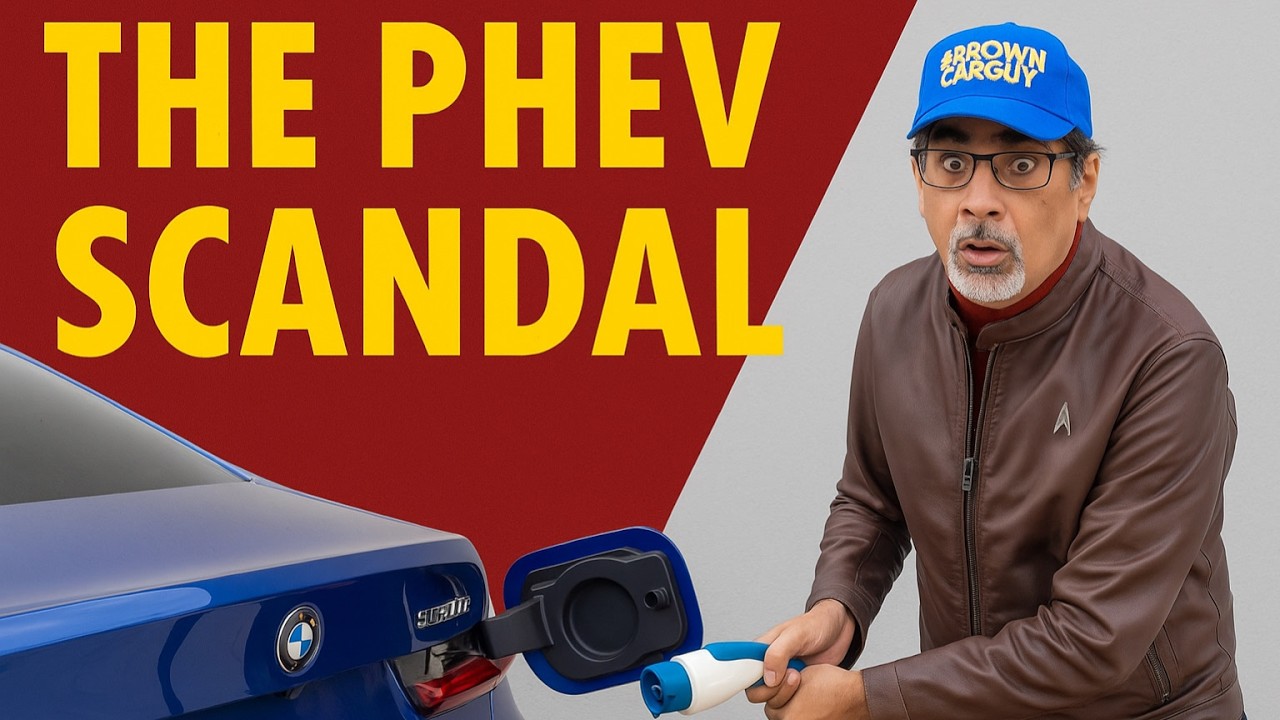
The PHEV Scandal: Are Plug-In Hybrids the Biggest Greenwashing Con in Cars Today?
They promised low emissions, sky-high MPG, and a bridge to the electric future… but new evidence reveals plug-in hybrids (PHEVs) might be one of the biggest automotive scandals of our time!
In this video, The Plug-In Hybrid Scandal — uncovering shocking new data showing that these so-called “eco-friendly” cars pollute nearly as much as petrol vehicles in real-world driving.
🚗💨 According to Transport & Environment’s latest report, PHEVs emit up to 5× more CO₂ than official test figures, and most drivers don’t even plug them in! Instead, they use them like normal petrol cars — wasting fuel, tax breaks, and credibility.
In this video I’ll break down:
✅ The real numbers behind plug-in hybrid emissions.
✅ Why the “green car” image is a myth for many PHEVs.
✅ Who’s to blame — drivers, carmakers, or policymakers?
✅ Which hybrid you actually should buy for your lifestyle.
Whether you drive a BMW 330e, Mitsubishi Outlander PHEV, Volvo XC60 Recharge, or you’re just curious if hybrids are still worth it, this video is a must-watch!
⚡ If you can plug in daily, plug in properly.
If not — skip the cable, skip the guilt, and buy what actually works for you.
Visit and subscribe: https://BrownCarGuy.com for more motoring stories, videos and updates!
SUBSCRIBE for more motoring news, car reviews and insights!
YouTube: https://www.youtube.com/browncarguy?sub_confirmation=1
You Shorts now here https://www.youtube.com/@BrownCarGuyShorts
And follow all my channels https://linktr.ee/browncarguy
🔥 MY BOOKS ON AMAZON! 🔥
https://browncarguy.com/2025/05/12/browncarguy-books/
📖 Want to become an automotive journalist, content creator, or car influencer? Check out my book: How to be an Automotive Content Creator
👉🏽 https://amzn.eu/d/7VTs0ii
📖 Quantum Races – A collection of my best automotive sci-fi short stories!
👉🏽 https://amzn.eu/d/0Y93s9g
📖 The ULEZ Files – My all-action thriller set in a dystopian ULEZ future!
👉🏽 https://amzn.eu/d/jhADkOt
📌 SUPPORT INDEPENDENT AUTOMOTIVE JOURNALISM
Enjoy my content? Support the channel using the links below! Every little helps.
👉🏽 Channel membership: https://www.youtube.com/browncarguy/join
👉🏽 Buy me a Coffee! https://ko-fi.com/browncarguy
👉🏽 Patreon – https://www.patreon.com/BrownCarGuy
🙏🏽☺️
Filmed with DJI OSMO Pocket 3 👉🏽 https://amzn.to/4mNhMnS
STRATIGENCY:
Want to grow your garage, detailing biz or car YouTube channel — without burning out?
Stratigency helps auto-passionate small business owners scale smart with automation, content, and online systems 🚀
💥 Book your FREE 15-minute strategy call now:
👉 https://meeting.calendarhero.com/BCG15#DriveToScale
🚗 Want to work with me? Sponsorships, reviews, collabs – DM me!
Big Thanks to
Stratigency
Design5IT www.Design5IT.co.uk
Tom Conway-Gordon ( https://www.instagram.com/tconwaygordon/ )
Please subscribe to my channel for more videos like this – and make sure you hit the bell icon to switch on notifications.
📲 Follow @BrownCarGuy everywhere!
📧 Contact me for collaborations, freelance work, or press/media enquiries.
#ThePHEVScandal #PlugInHybrid #HybridCars #BrownCarGuy #CarNews #PHEV #HybridVsEV #CarIndustry #EcoCars #Greenwashing #AutomotiveScandal #CarReviews #SustainableMotoring #BMW330e #EVMyths
—————————
Brown Car Guy