
Volvo Bets Big on Plug-In Hybrids With China-First XC70 Launch
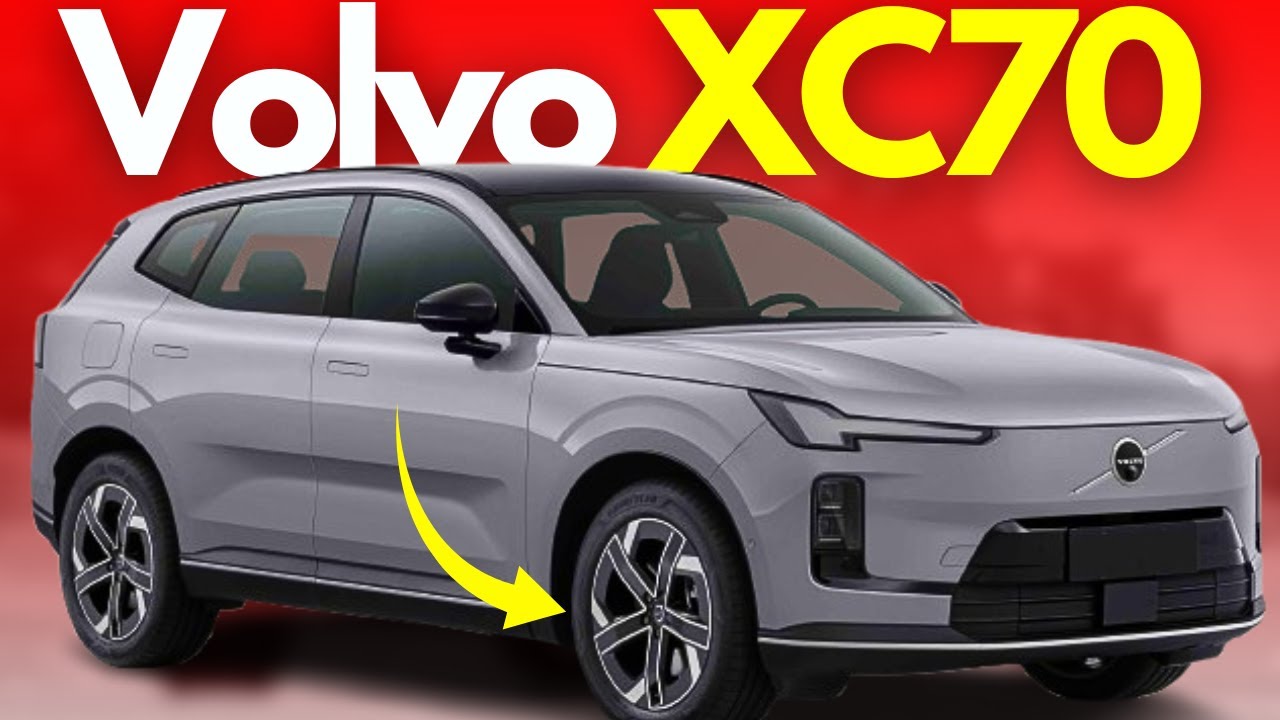
Volvo Cars has officially unveiled the all-new XC70 in China, a mid-to-large SUV that fills the gap between the brand’s XC60 and XC90 while debuting the company’s next generation SMA super hybrid architecture. More than just a new model, the XC70 underscores Volvo’s evolving strategy as it seeks to balance electrification with consumer demand for flexibility, and it’s doing so in the world’s largest and most competitive auto market. The XC70 will be offered in four trims priced between 416,900 yuan and 496,900 yuan, about 57,300 to $68,400. But Volvo has gone further to spark demand in China’s crowded premium SUV segment. For a limited period, promotional prices start at just $269,900 yuan, $37,100. That is an unusually aggressive discount strategy for a brand long associated with Scandinavian restraint, but one that reflects the urgency facing all global automakers competing against China’s fast-moving new energy vehicle, Nev Champions. The platform, a new beginning. The XC70 is the first Volvo to be built on the SMA super hybrid architecture, which will serve as the foundation for a new generation of Volvo’s plug-in hybrid and extended range electric models. The architecture supports both two-w wheelel drive and four-wheel drive variants, and it has been engineered with flexible battery packaging. Customers can choose between two packs, a 21.2 kilowatt hours unit that delivers 116 km of CLTC rated electric range or a larger 39.6 kilowatt hours battery capable of 212 km. When combined with the hybrid system, total driving range exceeds 1,200 km, positioning the XC70 as a long-d distanceance cruiser in a segment where Chinese consumers continue to prize convenience and range security over pure electrification. Charging performance is equally central. Volvo says the XC70 can charge from 0% to 80% in just 23 minutes under fast charging conditions, a figure that puts it ahead of many traditional plug-in hybrids on the market. The vehicle also features 6 kW external power output catering to outdoor enthusiasts who want to run appliances or electronics directly from their SUV. A popular lifestyle feature among Chinese buyers. Powertrain and performance. Volvo’s powertrain strategy for the XC70 balances efficiency and performance across the lineup. All versions pair a 1.5T hybrid dedicated engine with electric motors, but outputs vary significantly depending on trim. Entry-level models produce 234 kW, more than enough for daily urban and suburban driving. Mid-tier versions increase total system power, offering stronger acceleration and all-wheel drive stability. The top configuration boasts 340 kW, propelling the SUV from 0 to 100 km perph in just 5.28 seconds. Performance that puts it on par with many luxury battery electric SUVs. This flexibility allows Volvo to court a broad swath of consumers, from efficiency-minded families to buyers who might otherwise consider performance-oriented models from BMW, Audi, or China’s homegrown leaders such as BYD and Lee Auto. Scandinavian design meets Chinese preferences. While electrification and performance specifications dominate the headlines, Volvo has not neglected design. The XC70 continues the brand’s minimalist Scandinavian styling, but it incorporates fresh elements to help the SUV stand out in a crowded showroom floor. The front features a shield-shaped closed grill and active air intakes designed to balance aerodynamics with cooling needs. Flanking the grill are the brand’s signature Thor’s hammer LED headlights, now upgraded with adaptive matrix technology for better nighttime performance. At the rear, vertical tail lights shaped like Viking axis add a dramatic flourish while maintaining Volvo’s instantly recognizable light signature. The XC70 measures 4,815 mm in length, 1,890 mm in width, and 1,650 mm in height with a 2,895 mm wheelbase. That makes it slightly larger than the XC60, but more maneuverable than the full-size XC90. An intentional sweet spot for China’s urban households. Buyers can choose from seven exterior colors and wheel options ranging from 19 to 21 in, reflecting the increasing demand for personalization in the premium SUV space. Inside the cabin, the XC70s interior aims to reinforce Volvo’s reputation for understated luxury. The cabin follows a floating layout that emphasizes openness and light, consistent with Nordic design principles. A 15.4 4 in central touchscreen dominates the dashboard, complemented by a 12.3 in digital instrument cluster and a 92in augmented reality head-up display. Technology integration is central to Volvo’s pitch. The infotainment system supports wireless Apple CarPlay, four zone voice recognition, and iPowered trip planning. Volvo has also leaned heavily on premium audio with a Harman Cardon system featuring 23 speakers tuned for immersive surround sound. a level of attention to in-car entertainment that reflects Chinese buyers growing expectations for techrich cabins, safety and driver assistance. Volvo has built its reputation on safety, and the XC70 continues that legacy. The SUV is equipped with 24 sensors that enable 21 driver assistance and safety features. These include emergency braking, adaptive cruise control, automated parking, and lane keeping assist. Perhaps most notable is the inclusion of NPA intelligent pilot assist. Currently available on selected highways in Jang Su, Zha Jang, and Shanghai. The system offers semi-automated driving capabilities that will expand over time via software updates. This is a pragmatic approach. Rather than promising full autonomy, Volvo is offering incremental improvements while ensuring regulatory compliance in each region. The strategy also reflects the influence of Chinese consumers who are among the most receptive in the world to assisted driving features according to industry surveys. Competitive positioning. Volvo’s XC70 lands in a tricky but potentially lucrative segment. Priced between 416,900 yuan and 496,900 yuan. The SUV sits above most domestic new energy competitors, but undercuts German luxury stalwarts like the BMW X5 and Audi Q7. The promotional starting price of 269,900 yuan, however, places it in direct contention with high-end trims of Chinese plug-in hybrids from Lee Auto, BYD, and Gile’s premium Zeer brand. This two-pronged strategy allows Volvo to compete simultaneously for price sensitive buyers and aspirational consumers. It also signals the brand’s willingness to experiment with pricing in China, where discounts and aggressive promotions have become the norm. By offering such a deep initial cut, Volvo ensures the XC70 captures consumer attention at launch. Though the long-term impact on brand equity remains to be seen. Built in China, sold globally. The XC70 will be manufactured in Taiha, Jha Jang. In line with Volvo’s global standards, production in China gives Volvo access to cost efficiencies in a robust local supply chain, especially in batteries and electronics. From there, the SUV will be exported to more than 70 markets, including Europe and select Asian regions. This global rollout is critical for Volvo. While China is the brand’s largest single market, international expansion ensures economies of scale and helps offset the risk of relying too heavily on one geography. At the same time, Volvo must manage potential brand perception challenges in Europe and North America, where some consumers may still hesitate to embrace made in China vehicles, even from established global markets. Strategic implications. The launch of the XC70 highlights several broader trends shaping the auto industry. One, hybrid rebound. While battery electric vehicles dominate headlines, plug-in hybrids and extended range EVs remain attractive in China due to their convenience and lower purchase anxiety. Volvo’s choice to debut its SMA architecture with a PHEV first model reflects that reality. Two, pricing pressure. Aggressive discounts underscore how crowded the Chinese premium SUV market has become. Even a global brand like Volvo must fight for attention against domestic NEV leaders. Three, export ambitions. By planning global exports, Volvo is leveraging China not just as a market, but as a production hub, a model that other Western automakers may increasingly adopt to remain cost competitive. Four, technology differentiation. Features such as AR head-up displays, AI trip planning, and high-powered external outlets highlight how consumer tech expectations are driving automotive development. Looking ahead, the XC70 is more than just a new SUV for Volvo. It is a test case for the brand’s ability to navigate an auto market undergoing seismic change. Success in China will hinge on whether buyers view the XC70 as a compelling alternative to domestic NEV champions and German incumbents alike. Globally, the XC70s performance will serve as an indicator of how far Volvo can leverage China’s cost advantages to compete with rivals on technology and pricing. If the SMA platform proves versatile, it could underpin a new wave of Volvo hybrids and electric vehicles, giving the Swedish brand a sharper competitive edge. For now, the XC70 enters the market with a unique blend of Scandinavian design, hybrid efficiency, and pragmatic pricing. In a segment where competition is fierce and consumer expectations are rising by the month, Volvo has positioned its newest SUV as both a statement of intent and a hedge against uncertainty. [Music]
Volvo has revived the XC70 name as a China-exclusive extended-range plug-in hybrid (PHEV), marking its entry into longer‐range hybrids with an EV-only range of around 200 km under the CLTC cycle. Pricing starts at about ¥269,900 (~US$37,100) for the base model under a limited-time offer in China, while higher-spec four-wheel-drive variants with larger batteries go up to ~¥496,900 (~US$68,400).
Subscribe to our channel: https://www.youtube.com/channel/UCSY5DKFDXgzL0nu_BbBQYIw?sub_confirmation=1
YouTube Membership joining link: https://www.youtube.com/channel/UCSY5DKFDXgzL0nu_BbBQYIw/join
See more videos:
Pickup Trucks Once $80,000 Now Selling for $20,000 — The Market Crash Is HERE
How America’s Auto Giants Lost Their Edge—and Why Trucks Won the Road
Xiaomi Prepares to Show High-Performance YU7 GT SUV Amid Global EV Ambitions
CATL CEO: Sodium Battery Will CHANGE The Entire EV Industry!
BYD’s Denza Unveils N8L SUV Interior as Pre-Sales Loom, Targeting China’s Luxury Hybrid Market
Nissan Bets Big on Affordability With 2026 Leaf, Now America’s Cheapest EV
EV Price Parity Sends U.S. Electric-Car Sales Skyrocketing—But Don’t Expect It to Last
All the Right Numbers, All the Wrong Feels: The 2025 Prius PHEV Verdict
BYD’s Denza Brand Teases Massive N8L Hybrid SUV — 6 Seats, Luxury Power, Launching Soon!
Europe’s ‘Eco-Friendly’ Hybrids Are Lying to You—PHEVs Emit Up to More CO₂ Than Advertised!
Shocking! Renault Reinvents the Electric Van with the R4 E-Tech Societe
Wow, Maybe Elon Really had something in his mind!
Tesla Model Y 2026: Which Version Delivers the Range, Features and Value?
Xpeng X9 EREV Minivan Packs Insane 1,600 km Range — Set to Shock the Market This October!
Revealed: The Shockingly Cheap Cost of Owning a Car in Australia
Huawei Rolls Out Stelato S9T Premium Wagon with $42,800 Starting Price
GM’s V8 Scandal Just Got EXPOSED — Owners Are FURIOUS
Shocking! Zeekr’s New 7X Blows Minds: 784 HP Beast With 802 KM Range!
Micro EVs Set to Explode Into a $90 BILLION Goldmine by 2045!
Shocking! Ford F-150 Lightning SuperTruck DESTROYS the Nürburgring with INSANE 6:43 Lap Time!
Zeekr 7X EV Stuns with 784hp Power and Mind-Blowing 802km Range — Tesla Killer?
This Plug-In Hybrid Ute Can Tow 3,500kg — BYD Shark 6 Upgrade Revealed!
#volvo #carnews #carexperts
This channel may use some copyrighted materials without specific authorization of the owner, but content used here falls under the “Fair Use” Copyright Disclaimer under Section 107 of the Copyright Act 1976.
Allowance is made for “fair use” for purposes such as criticism, comment, news reporting, teaching, scholarship, and research. Fair use is a use permitted by copyright statutes that might otherwise be infringing. Non-profit, educational, or personal use tips the balance in favor of fair use.