Diesel Engine + Plug-in Hybrid: The Perfect Combination?
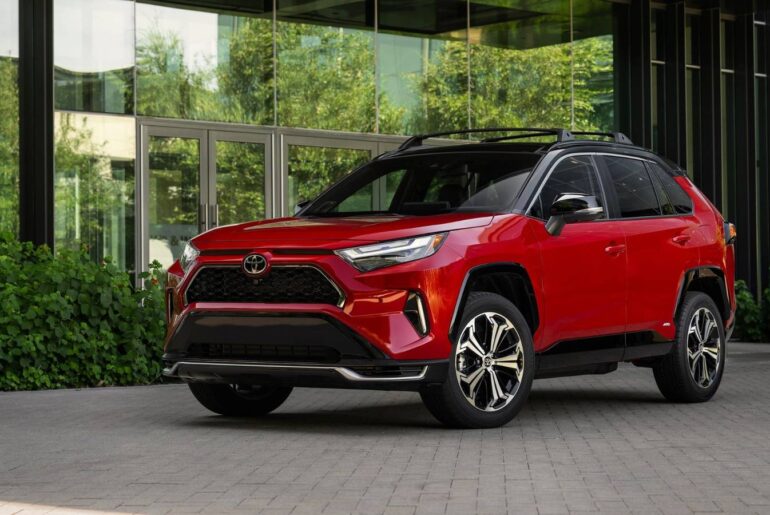
This channel provides easy-to-understand explanations of car mechanisms. Everyone knows that hybrid vehicles have better fuel economy than gasoline-powered vehicles. And it’s also well known that plug-in hybrid vehicles consume less fuel than self-charging hybrid vehicles. Furthermore, it’s common knowledge that diesel engines are more fuel-efficient than gasoline engines. Then, the combination of a plug-in hybrid and a diesel engine should offer the ultimate fuel efficiency, right? This video explores this using the data sheets of each vehicle model. Before we start, here’s an important notice. The figures used in this video are WLTC fuel-efficiency values for the Japanese specification, which do not include the extra-high-speed phase. In actual driving, fuel efficiency may be lower than the values shown in this video. Thank you for your understanding. Let’s compare the fuel economy of the diesel and gasoline engines in the MINI Countryman. The gasoline engine is a 1.5-liter three-cylinder, and the diesel engine is a 2.0-liter four-cylinder. The fuel economy is as shown in the graph. The diesel model is roughly 20% more fuel-efficient. Next, we’ll compare the gasoline and hybrid models of the Toyota Corolla. Both models are equipped with a 1.5-liter, four-cylinder gasoline engine. Fuel economy is as shown in the graph, with the hybrid model far outperforming the gasoline model. We will compare the fuel consumption of these four models over a 500 km drive using their WLTC combined fuel economy figures. The gasoline model of the Mini Countryman consumes 34.0 L of fuel, whereas the diesel model uses only 28.7 L. For the Toyota Corolla, the gasoline model consumes 25.3 L of fuel, while the self-charging hybrid model uses 18.0 L. Let’s also compare the Toyota Prius self-charging hybrid and plug-in hybrid. The self-charging model consumes 17.5 L of fuel, whereas the plug-in model uses only 15.9 L because it can travel 87 km in EV mode. The self-charging hybrid consumes less fuel than the gasoline model, the plug-in hybrid consumes less fuel than the self-charging hybrid, and the diesel model consumes less fuel than the gasoline model. Therefore, the combination of a diesel engine and a plug-in hybrid offers the best fuel economy. These days, very few vehicle models use that combination. But since it offers the best fuel economy, diesel plug-in hybrids are sure to hit the market one after another before long. Can that really be true? You have a charger at home and either solar panels or a low-cost electricity plan specialized for EV charging. Each weekday commuting or shopping trip falls within the EV mode driving range. On weekends, you enjoy long trips on the highway. If these conditions apply to you, a plug-in hybrid is the best choice. For distances within the EV mode range, a Level 2 home charger is sufficient. Therefore, weekday fuel costs are zero or very low. Weekend road trips are even better with a diesel engine. Mitsubishi and BYD plug-in hybrids use gasoline engines, but they are equipped with a system that allows them to run on the engine when cruising at a constant speed on the highway. This means that engine fuel consumption is more important on long highway trips. In that case, diesel engines must be clearly better than gasoline engines. This channel has a video explaining Honda’s self-charging hybrid system, which uses a setup similar to those of Mitsubishi and BYD. If you’re interested, please check it out. The link is in the description. Let’s calculate the fuel consumption using a Toyota RAV4 as an example, assuming a daily commute of 50 km round trip and a 500 km weekend drive. For weekday commuting, the gasoline model uses 4.3 L, the self-charging hybrid model uses 2.8 L, and if you have solar panels, the plug-in hybrid model uses zero. On a weekend trip, the gasoline model consumes 32.9 L of fuel, the self-charging hybrid model consumes 24.3 L, and the plug-in hybrid model consumes 18.2 L. If the RAV4 plug-in hybrid were equipped with a diesel engine, its fuel consumption would be even lower. Hybrid systems can be broadly classified into three types: power-split, series, and parallel. All of these configurations are used in both self-charging hybrids and plug-in hybrids. Let’s take a look at the parallel hybrid system, which has the simplest configuration. In conventional engine-powered vehicles, the powertrain consists of an engine and a transmission. In self-charging hybrid vehicles, an engine disconnect clutch and an electric motor are installed between the engine and the transmission. A small hybrid battery of around 1 kWh is generally used. During startup and low-speed driving, the engine disconnect clutch is disengaged, allowing the vehicle to run solely on the electric motor. Once the vehicle speed exceeds a certain level, the engine starts and powers the vehicle. When strong acceleration is needed, the electric motor assists the engine. During deceleration, the electric motor operates as a generator, charging the battery through regenerative braking. The configuration of a plug-in hybrid vehicle is similar to that of a self-charging hybrid. However, because it travels long distances in EV mode using only the electric motor, it is equipped with a larger-capacity battery than a self-charging hybrid. We will compare the weight difference caused by their different systems, using the Toyota Corolla and Prius as examples. The difference between the gasoline model and the self-charging hybrid model is 50 kg. It can be said that the weight difference of 50 kg comes from the transmission and the hybrid system components, including the two electric motors, the power split device, the battery, and the inverter. Therefore, this 50 kg accounts for the weight difference that helps improve fuel economy. The difference between the self-charging hybrid and the plug-in hybrid model is 150 kg. Since these two models use almost the same hybrid system, most of the weight difference comes from the battery. Therefore, this 150 kg is for extending the EV range, not for improving fuel economy. Please note that we used Toyota models for comparison because they have a wide range of hybrid models, though Toyota’s hybrid system uses a power-split type. If you’re interested in Toyota hybrid system, please check out this video. There’s a link in the description. We’re going back to the parallel-type plug-in hybrid. Let’s say that after getting home last night, you forgot to plug in your plug-in hybrid to charge it. The next day, you end up commuting in a self-charging hybrid with a useless 150 kg battery. Take a look at the fuel economy of the Prius self-charging hybrid model and the plug-in hybrid model. In fact, the fuel economy of the plug-in hybrid isn’t good at all. Since it’s carrying an extra 150 kg of useless weight, there’s no way the fuel economy wouldn’t suffer. You might say, “It’s fine because I’ll always make sure to charge it every night”. When driving in EV mode, the engine and transmission become an unwanted burden. Generally, a 4-cylinder engine and transmission together weigh around 200 kg. Even with a full charge, a plug-in hybrid is essentially a battery EV carrying around 200 kg of useless dead weight. There’s another reason. When driving over 900 km on the highway, the fuel consumption of the plug-in hybrid exceeds that of the self-charging hybrid. So what if we combined a plug-in hybrid with a diesel engine? There are issues with that as well. Although diesel engines are more fuel-efficien than gasoline engines, they are very expensive, mainly for two reasons. The first reason is the extremely high fuel injection pressure. In gasoline engines, port injection typically operates below 0.5 MPa, and even in direct-injection turbo engines, around 30 MPa is common. However, in diesel engines, it exceeds 200 MPa. As a result, the fuel injection system is extremely expensive. In addition, exhaust gas purification systems are also expensive. Generally, in gasoline engines, a three-way catalytic converter removes harmful substances from the exhaust gas. On the other hand, diesel engines require three systems: a diesel oxidation catalyst, a particulate filter, and an SCR catalyst. The SCR catalyst, in particular, must be equipped with a dedicated tank, injector, pump, and control unit. If you’re interested in the exhaust gas purification systems of gasoline and diesel engines, please check out these videos. The link is provided in the description. Because diesel engine vehicles are fuel-efficient, they can recover their high purchase cost by covering longer distances. In short, the greater the mileage, the more economical a diesel engine becomes. In contrast, the more a plug-in hybrid is used within its EV mode range, the more economical it becomes. So, diesel engines and plug-in hybrids are fundamentally a poor match. This is likely why very few vehicles use a diesel–plug-in hybrid. From a fuel consumption perspective, combining a diesel engine with a plug-in hybrid is ideal. But that’s for people who apparently have something more important than money—like CO2, for example… If you’re thinking about buying a gasoline plug-in hybrid, it’s a good idea to consider how you’ll actually use the car before signing the contract. Otherwise, your circumstances may not align with the characteristics of a plug-in hybrid, and you could face unexpected expenses. Thank you for watching. If you enjoyed this video, please consider subscribing to the channel. We’ll see you in the next video!
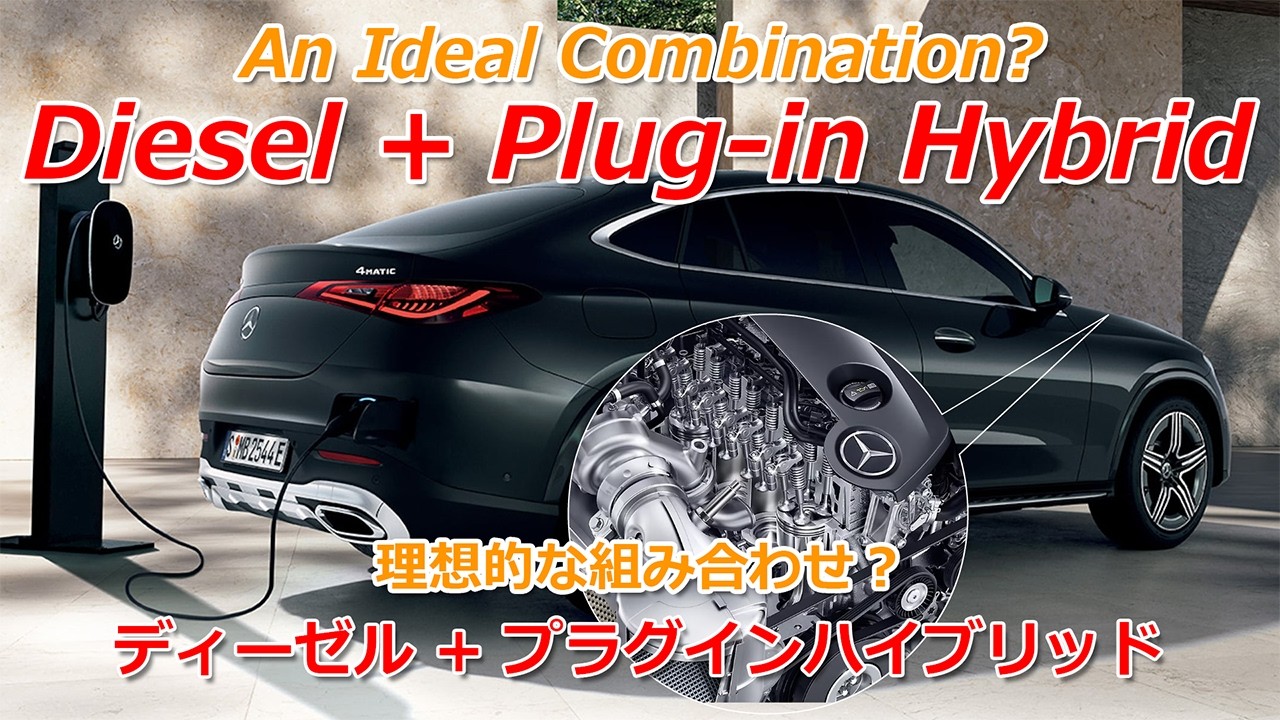
Diesel + Plug-in Hybrid delivers outstanding fuel economy, so why are there so few models available?
Honda hybrid: https://youtu.be/hpm4GZJ4QVY
Toyota hybrid: https://youtu.be/81ogeIqw1KY
Gasoline exhaust gas : https://youtu.be/AnbWDVQ9aCw
Diesel exhaust gas: https://youtu.be/e-e3dYAThxI
00:00 Introduction
01:08 The superiority of Plug-in hybrids and Diesel engines
03:17 YES! If certain conditions are met
05:20 NO! That’s quite inefficient
11:10 Conclusion
#hybrid
#plugin
#diesel
#engine
#fuelefficiency
#ハイブリッド
#プラグイン
#ディーゼル
#燃費