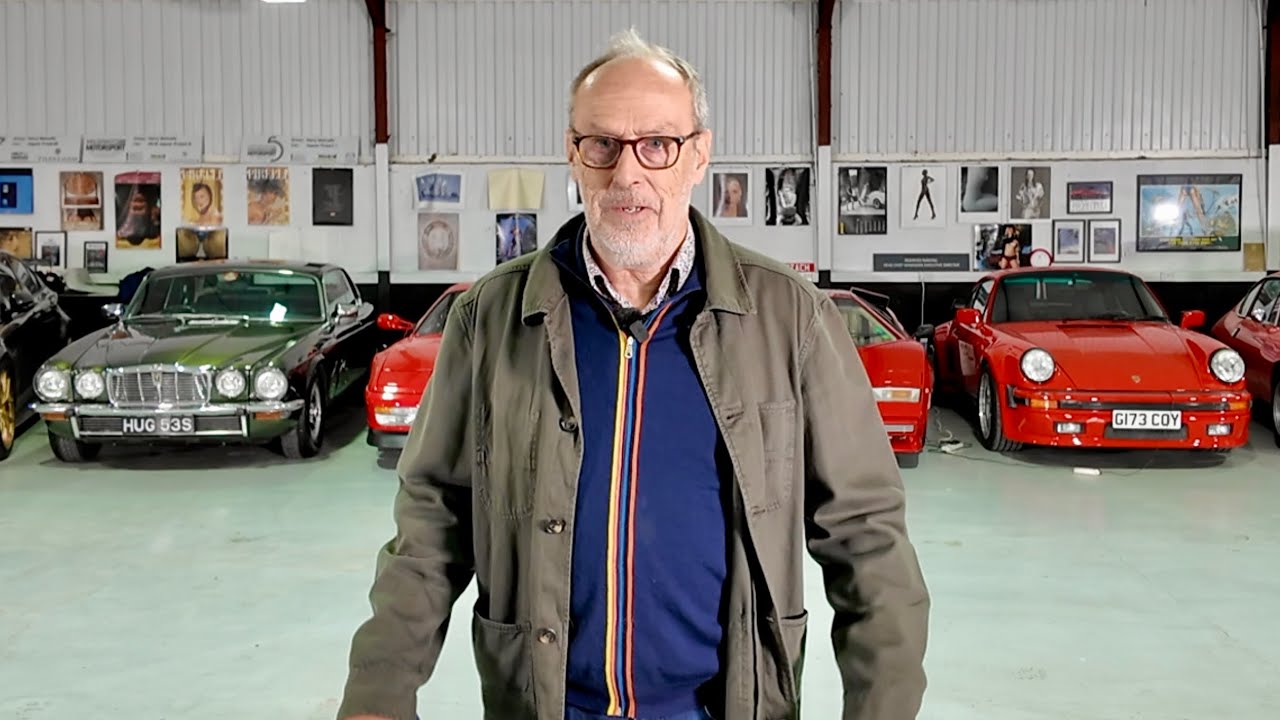
Car makers will never sell enough EVs to meet Government regs. Here’s what needs to change.
Well, welcome to a new Harry’s Garage video. And this is a video I’ve been meaning to do for quite a while, but trying to pick the moment to do it has been hard. And it’s all about the car market in 2025 and the disruption and the announcements coming from manufacturers basically saying uh it’s not working and these targets and we’ve got zero emission mandates and we’ve got in Europe this cut off of internal combustion engines in 2035 and manufacturers thought there was going to be this smooth transition to electric and it hasn’t happened as imagined and the business case has all gone awall and it’s got to the stage now where I saying hands up this is not working. We are going to have massive job losses. We’re basically not going to exist if you continue with the regulations you’re asking us to hit on battery electric vehicles and emissions and all the rest of it. And it really came to a head in Munich. has recently been a motor show. I’ve known about this lobbying behind the scenes within the EU, which is the reason I wanted to do a video um because I’ve got um sustainable fuel as you know in the cars. I’ve been running it for a couple of years and I knew that there was a lot of conversations happening in the background and whether they are solution to the issue that manufacturers have at the moment and there’s way more than that. So, I’m going to go in all sorts of details, but let’s just start with the basics and the recent announcements. And it seems every manufacturer in your the main German brands in particular are in a right pickle. Just the other day, we had the Mercedes boss saying, “This is suicidal what we’re doing. It’s terminal for our business if we continue as we are. The electrification of our fleet is not happening at the speed we envisaged a few years ago and we cannot continue. We have to have something with internal combustion engine to continue our business case otherwise it is mass redundancy right across Europe and I don’t think that EU could afford to see this job losses on this stage and then we had Ford announce a thousand jobs going in Cologne because in their brand new plant 1 billion pounds worth of investment on this new plant they canned the Fiesta went into production of the Explorer and the new Capri electric car in Germany and sales have been a disaster. They have a capacity of 250,000 cars a year and I think the sales of Explorer is 19,000. I didn’t say exactly what Capri was, but not good at all. So far off target that the business case has gone and they’re having to make their redundancies and have a plan on what on earth they do with it. The decisions to go to the mass electric cars that we now have on sale and have been announced was all taken pre-lockdown. We’re at the tail end of dieselgate, but we were net zero was high up the agenda and Theresa May in the UK but put it into law that we have zero emission by 2050 and of part of that the motor manufacturers were critical to this change to net zero by introduction of electric cars and that is sort of where the electrification sort of sparked from. They were looking at Elon Musk as I’ve mentioned in the past Tesla were doing very well. Hang on, that might be the answer. Let’s do that. Now, in 2025, those cars are on the market. And there’s been cars that have blotted the copy book of EVs because manufacturers went into premium product. And what happened was, well, they didn’t quite have the range that was promised and they cost an awful lot of money and they weren’t worth much when he came to sell it. And the depreciation hit was huge, but it was subsidized. So businesses were the main buyers of these products and therefore they could just about wear it. But now it’s something that they don’t really want to repeat. And so especially at the premium end, which is what the German manufacturers are mainly involved with, they said, “Hang on, we’re not carrying on doing this. we cannot sell this product. What we going to do? We’ve also had China um come up board and they have massive capacity to produce cars. I’m told it’s around 50 million a year for a domestic market of 28 million. That leaves 22 million that have to be sold somewhere else. And boy are they coming to the UK. They would like to go more into Europe. They are, but they’ve got tariffs to deal with. And obviously in the US they’ve got tariffs as well. But it is really getting critical. Now in Germany, I’m told there are 51,000 job losses in the last 12 months in the auto industry. VW have asked for 35,000 redundancies by 2030. Huge, huge impact in the market. And if we just look at the numbers here, we go back to the UK. Peak car sales in the UK 2016, 2.65 65 million cars. 2024, 1.94 million. A drop of 3/4 of a million cars sold. It’s interesting if you actually look at the figures for how long we are keeping our cars because it is changing. We are hanging on. We are not buying new. And in 2019, the average age of a car was around 8 years. It’s gone up to in 2024 to 9 and a half years. that is going to to increase because we have extremely good cars from 2010 2018 that still work turnkey fuel is available. Petrol prices have gone down. What’s not to like? Do I actually need that new shiny car? Now in the UK we have this zero emission mandate and it is set at 28% for 2025 and it rises to 80% of sales of electric cars come 2030 and then it will have to hit 100% by 2035. In Europe it’s slightly different. They have a guillotine coming down on internal combustion engines in 2035. But there is this little of light because they will allow e- fuel, sustainable fuels uh beyond 2035. But the manufacturer is saying, “Hang on a minute. You’re saying that we need clarification on this because motorsport has wholeheartedly going over to sustainable fuels e- fuels. If it’s all right for F1 to continue on it sustainable fuels e- fuels, why can’t the car industry continue with internal combustion engines beyond 2035? That is the argument. I mean it’s not only F1, it’s obviously lemon, IMSA, Formula 2, Formula 3 and all sorts of other motorsports. Quite a lot of Dhaka entrance were on sustainable fuels as well. And it’s quite an interesting argument there, isn’t it? They are obviously because of that motorsport, they are developing internal combustion engines to get more competitive. Quite a lot of them have the hybrid technology with them as well, but they are pursuing engine technology. It’s not disappearing. So, if it’s all right for motorsport, why isn’t it all right for road cars? And that is one of the conversations happening in the background a little bit on sustainable fuels. I have been running them, as I say, all the cars here have been running on them for the last two and a bit years. Not 100% because obviously I go out on road trips and you can’t fill up with sustainable fuels. And there’s basically nothing really to tell about it. It is a straightforward transition from one to the other. You just fill it up. You can mix the fuels. And I particularly like the stain fuels in the motorbikes that do tend to sit around for a couple two or three months and then I can just fire up. But they are expensive. Um about £450 a liter. Now I’m not paying that because I’m part of a trial because I’ve got such a spread of cars from the McLaren to the Rolls-Royce and things. So I’m trying the sustainable fuel on the subsidized rate and then reporting back my findings. I use classic 80 blend in these cars. That means it’s 80% sustainable fuel, 20% fossil. That is the other thing to understand. When people talk about e- fuel, sustainable fuels, they add a bit of fossil because all cars were designed to basically run on fossil fuels. And there are certain seals and things that need the um the bit of fossil in there to continue working as designed. You can make 100% sustainable fuel e- fuel and that is what Formula 1 have adopted but the price is extraordinary. I haven’t got the exact price, but from someone who knows, he told me it was just around the £500 a liter mark. And even the F1 teams are saying this is not a sustainable level for the price of fuel to go racing at £500 a liter. But anyway, that’s what they’re um looking at for 2026. So sustainable fuels the the what they need is more investment to make it a more available product and there are two types of sustainable fuels. You have the ones developed from cellulose really or waste food product or forestry and you have the e-ules as Porsche is doing out in Chile where you’re using electrolysis on water and splitting the water into hydrogen and oxygen and then creating an efuel from the hydrogen using the CO2 from the air. I’m not going to go into the chemistry. It’s not my strongest point but a completely different technology. And one of the recipients of this uh sustainable fuels was going to be the aviation industry. But behind the scenes, the authorities are saying we’re not sure about this because they want identical fuel on sale wherever a plane fills up. Whether it’s in New York, Perf or London, the fuel has to be absolutely identical. And because you’ve got this difference in fuels that some are e- fuels and some are made from um waste products, it’s not absolutely identical chemistry. And the aviation authorities are saying, “Hang on, that’s not good enough. It’s got to be one fuel.” So they’re thinking behind the scenes at the moment, the sustainable aviation fuel will never actually be 100% the fuel that jets run on and it’ll be the last bastion of fossil fuels. That is the thinking at the moment. And that means there’s going to be more effort put into sustainable fuels, e- fuels for cars, transport in general. But they need that investment and they can’t get an investment because of this 2035 guillotine saying no more internal combustions after that. Personally, I don’t think sustainable fuels and e fuels are going to be the complete answer. I think we just need to get cleverer on what we think is a zero emission vehicle. And I think there are some things I really like about electric vehicles. having lived with them. I just love this ability to fill up from home in effect and very cheaply and then have that fuel in the car for whatever journey I’m going to do. The downside comes is when you’re using the outside charge network and there is no getting away from it. It is less convenient to fill up your electric car than it is your fossil fueled car when you’re away from home. And it’s a real sticking point for a lot of people. Whatever you say, oh, you’ve got to stop cuz you need a drink, you need a break, etc. It is an inconvenience. It is something that you think about in the electric vehicle when you’re traveling over a longer distance. And it’s it’s so frustrating because the silence, the ease of an electric car is addictive. And I found that moving away from a pure electric car to a plug-in hybrid has given me 90% of what I enjoy about electric motoring without any of the downsides. And there’s a lot of argument, oh well, it’s over complicated. You shouldn’t do it. Well, you could just do the same with an electric vehicle. Sorry. I’ve decided, I enjoy it, and I’m very happy in that space. And I am not alone in this. And I think it’s ridiculous that we’re in this battle. We have one aim to reduce emissions. Using a plug-in hybrid does reduce emissions and I think we’ve got to think a w broader scope to how to reduce emissions rather than saying oh it’s it’s a battery electric vehicle all nothing sorry it’s life is more complicated than that and I think China actually have the answer and rather than battery electric vehicle mandate they have a new energy vehicle mandate and they want 50% of the cars sold in China to be NEVs, new energy vehicles. And that covers everything from a battery electric vehicle, a plug-in hybrid vehicle, and a range extender electric vehicle, and a fuel cell electric vehicle. They have leaving it to the engineers to come up with the best solution, and the customer is deciding which one suits their needs. And it’s very interesting that the range extender is the one that’s coming up on the rails. So they started with electric vehicles, plug-in hybrids as well, but the range extender is mainly an electric vehicle and then it has a smaller engine generating electricity to extend its range. So you’re not limited to just what the battery can do, but that engine never actually powers the wheels. The car is basically electrically powered but it does have a onboard generator and they’re the ones that are proving very popular. We have ignored that technology in Europe. Basically there was the BMW i3 had a little range extender but it was a very good solution. BMW came up on their first attempt and that is the direction of travel that is happening in China. and you think, “Hang on a minute, Europe, you’re missing a trick here.” Or politicians because you you’re good at engines, really good. Mazda has one on sale, and you’ve you haven’t got the battery um infrastructure that China has, but you’re okay at making plug-in hybrids because it’s a smaller battery. Therefore, the actual cost of the vehicle isn’t as dominated by the size of battery, and we can make engines very cheaply. This is a solution that could get us to where we want to be with lower emissions quicker than forcing pure electric vehicles down to a consumer that doesn’t want them. I’m going to mention now this is all very good if you can charge from home because not everyone can do that and I think it’s critical to the adoption of electric vehicles that you can charge from home because you can pay very low rates for electricity at home overnight that make it very cheap motoring and you always have a full tank when you step out in the morning. The downside of the outside charge network is not only there aren’t enough charges, but the cost of it. And the cost is significant. If you want a fast charger, you’re hovering around 80 p a unit compared to a domestic rate which is about 23 p normal. But if you have a low rate during the night, you can get 78 p for a unit electricity. So a tenth of the really high cost if you use a super fast charger on the outside network. And if you’re paying the higher rate where your cost per mile is significantly higher than where you charging from home, you you’re costing more per mile than your petrol car was costing you in MPG. Because the other thing that’s happened since those days is the price of oil has fallen. We had that spike when Ukraine got invaded and now it’s half of the rate it was or just not quite half of what it was in 22. So the the actual price of fuel for your conventional car is much lower. That is not helping electric cars sales either. Now, much as I’d like this idea of new energy vehicles to be accepted in the UK, the UK government is dead against it. They are fixated on the um pure electric car as a solution. And there’s no getting around it. And be the main reason behind the scenes for that I understand is because they’ve committed a lot of taxpayers money towards new battery facility for like JLR in Somerset and other places. They’ve invested in Nissan so they can bake battery electric vehicles and they just refuse to look at any other solution. Incredible. I think I think it’s just madness that the politicians are pushing a solution that the customer base is not having it. They’re having to subsidize it incredibly hard. Both the industry, dealerships, and government. It’s like pushing water uphill and there’s no getting away from it. There is customer resistance to battery electric vehicles. However advantageous they are for a lot of people, there is a sector of the car buying public who refused to buy an electric vehicle. It doesn’t matter what it what the features are, how fast it is or whatever. I’m not having one. It’s the same frustration you have people who continue to smoke or never take any exercise or drink to excess. All sorts of things that we shouldn’t do, but we do. We’re humans and that’s how we’re wired up sometimes. You know, it’s very annoying, but uh that’s the way it is. And if they say they’re not buying an electric car, they really are not buying an electric car. They’re going to continue with whatever car they got at the moment and they’ll be very happy. Thanks very much. You can nap off with your electric car, not having it. And telling people, you will buy an electric vehicle, you got to get rid of your internal combustion car, it’s just not going to happen. We we’re just not wired up to take instructions like that in a democratic society. The other thing also you got to look at the sales they were you know the people championing around 25% at the moment of sales of electric cars. The electric cars that really work well are the smaller cheaper electric cars because then the appreciation can’t be as high because they’re cheaper in the first place and they are not used for the longer run. So the second car if you like or the junior car they work brilliantly as electric car and they are make up the most of the sales today in the in the 25% mix of electric cars. The downside for the manufacturers and the dealers they aren’t the cars that they make the money on. They want the premium cars and those premium cars electric cars just can’t sell them. and the premium buyer doesn’t want to buy electric anymore. And that is where this plug-in hybrid comes in. That is a great solution for that type of buyer cuz he just, you know, suddenly he’s got super cheap running cost and he’s got an engine and he’s got unlimited range. And the the other thing about the range, a lot of people say, “Oh, you you 250 miles is ample range.” That McLaren does naugh to 100 miles an hour in 6 seconds. I don’t use 6 seconds to 100 miles. 10 seconds is plenty quicker. Oh, 15 seconds, but we humans will buy it because wow, that sounds exciting. We’ve got massive capacity on our phones or our computer that we only use a tenth of it. And it’s no good saying, “Oh, it’s got a range of two range of 250, 300 miles. That’s fine.” No, we want a range of 800 miles and then, well, all right then, we’ll have a look. It’s just the way we are. Um, there’s no get. It’s frustrating for everyone involved, but you can get the range with a plug-in hybrid or the range extender. There are solutions. It’s just the pure electric car. It’s really hard to do. Although, I am mighty impressed with what the technology BMW announced in Munich with their X3i and the i3. They’re coming out with really clever tech and Mercedes with their sale as well. They are moving the range up, but again, you’re going to get that resistance from that bar group. So, no, I’m not buying electric. Full stop. Yeah, you’re my neighboring farmer. Case in point. So, there’s turmoil out there at the moment. And I think the sales will continue to drop. And there is this standoff between the consumer and the what the manufacturers are producing and government are going to have to look at it. Otherwise, you’re just not going to have a motor industry left. The other final point on this is even if internal combustion engines continue and plug-in hybrids into the 2030s and beyond, the EU regs they are demanding are really hard to meet and they might well have to have a look at that. I am told behind the scenes they are actually looking it’s the demise of the small car basically because of this tech they’re demanding and it’s on startup is when you start the car from cold there is this chance of hydrocoms coming out a load of technology just to get over the startup potential emissions and it’s going to cost thousands and thousands of pounds and increase the cost of car even more. They are looking like the K cars in Japan. Whether they create the sub sector of the European car market that is freer from these emissions so they can continue with mobility be very interesting if that continues. But I do find it mad that you know these cars the the more simple the car the longer the longevity of the car. We making these cars so complicated and all this emission tech on it and all this ADA stuff, you’re actually making a a product that doesn’t last as long because there’s so much more to break on it and is, you know, I come back to my Rolls-Royce sitting over there. That car is 1970, so it’s 55 years old. I can step in that turnkey works. It is simplicity itself. the actual mechanicals of that car. It’s running on sustainable fuel. Isn’t that the most environmentally friendly car? We’ve got to think and get back to a more simple solution that just adding more and more tech onto the car makes it a shorter lived car in the first place. That isn’t sustainable. If we continue on this path we’re on at the moment, I think we struggle to ever get beyond 50% sales of electric vehicles across the fleet. I reckon that’s about peak. I cannot see 80% ever being viable. It’s just with what we see now, we’ve been on this journey, they’ve been around a while, we’ve seen the public attitude, the bio uh restrictions to it. They’re not going to get beyond 50% in my view. And that means massive fines for manufacturers, unsustainable. And the the idea that the guillotine comes down on all internal combustion engine in 2035 is manufacturing suicide for the whole of Europe just isn’t going to happen. And I think the sooner we realize that, well, they are starting to realize it. And it’s really good because they’ve just got to get more flexible on this. And I think that Chinese model of the new energy vehicles as it’s termed that covers that multitude of cars I’ve explained earlier, I think that will get us much closer and 80% would be possible. I would go as far by 2035 we adopted that model would be 80 to 90% new energy vehicles and a 10% sliver at the top end that is still internal combustion engine. perhaps Aston’s, Morgans’s, Ferraris, something right at the very top, heavily taxed, but people who still want to continue with internal combustion engines and they’ll be powered by sustainable fuels maybe by then as well. So, they won’t really have the impact. I think that is achievable while the zero emission mandate that the government have committed to is an utter nonsense and utterly unachievable. Will we see it happen? I certainly think we will now because the the lobbying from the manufacturers on Europe and the already job losses happening in Europe, it’s something that is unsustainable. I’d love to see it in the UK as well. Where will that happen? I have my doubts. But there you go. There’s a background of what is happening behind the scenes within the car industry, particularly in Europe. Different sort of video. Hope you found it interesting. If you did, well, keep watching, keep subscribing. More videos coming on very soon.
Car makers can’t sell enough EVs & they are returning to ICE to survive. What happens next?
This video was created with the support of: http://www.footmanjames.co.uk/
Claim 10% off a new car warranty: https://www.warrantywise.co.uk/harrysgarage/
https://www.ctek.com
Follow me on
https://www.instagram.com/harrysgaragevids/
Tweets by harrym_vids