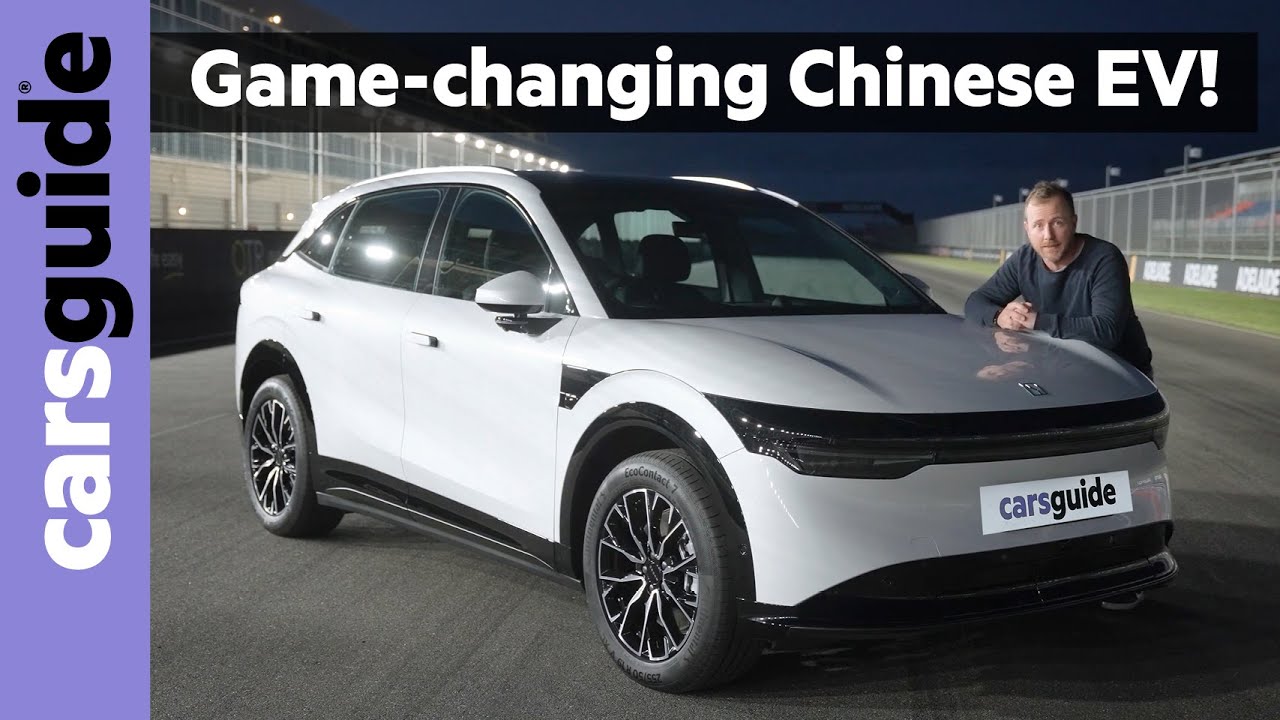
Zeekr 7X 2026 review Australia: This new electric car might be Tesla Model Y’s biggest threat yet!
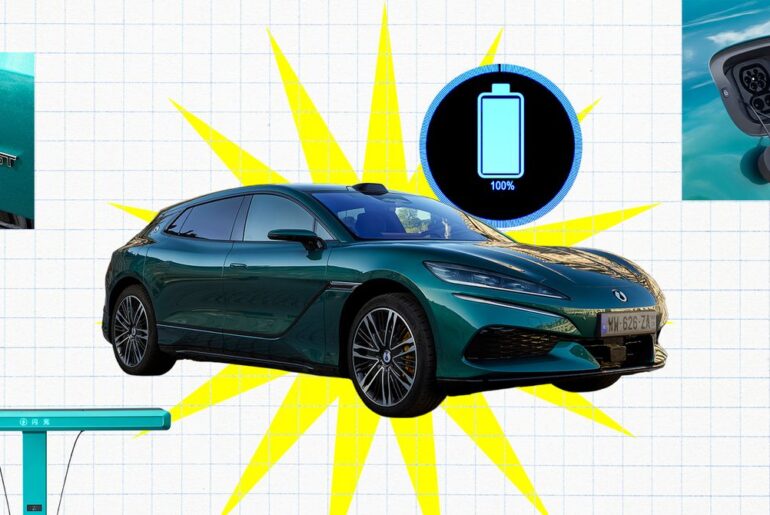
This is the vehicle that will put Zika on the map in Australia. And that’s not hyperbole. Put it this way. Across all of 2025, Zika sold just over 600 vehicles. But this one, it’s not even on sale yet. And they’re already holding more than 2,000 orders. For one, it’s a midsize SUV, so it’s launching straight into Australia’s sweet spot. Plus, it’s got mega fast charging, proper performance, decent range, and plenty of kit. So, is this the car that can help Zika finally crack the Australian market? Let’s go find out. There are three ways into the 7X with two rear drive models and one all-wheel drive performance completing the trilogy. That story begins with the 7X rear drive which gets the smallest battery and lists at 57,900 before on-road costs. Next is the longrange at 63,900 which is also a rear drive model and it gets a bigger battery and a longer driving range. Finally, the performance is 72,900 and it’s the only twin motor model in the lineup. It scores the same 100 kWh battery as the longrange, but significantly ups the performance, which in turn dramatically lowers the 0 to 100 km an hour time. Standard kit is pretty impressive across the board with the entry-le model scoring 19-in alloys, LED lighting all around, a powered boot, and a glass roof with a powered shade and ambient interior lighting, too. Tech is handled by a 16-in central touchscreen with Apple CarPlay and Android Auto. There’s two 50watt wireless charge pads as well. And you also get a digital dash, trizone climate, and a 10- speakeraker stereo. The longrange model then adds a better 21 speaker stereo and a head-up display. While the flagship performance gets the tricky auto opening and closing doors. You just push a button on the pillar to open them and then step on the brake to close them as well as real napper leather trim and 21in alloys. It’s a pretty sleek looking SUV, this 7X, and nowhere near as boundary pushing as something like the Polestar 4, with which this shares a platform. For one, this one has a rear windscreen. Now, Ziger calls the design language hidden energy, which I take to mean at least partly. You can’t immediately tell what’s powering it. At a glance, it could be an ice, a hybrid, a FEV, or an EV. And you don’t really figure it out until you look a little more closely. Now, there’s light bars front and rear. And this area here is reserved for what’s called the light curtain. This kind of heavily pixelated wall of light that shines out of the front of the vehicle. Now, unfortunately, that design element didn’t make it to Australia. Even without it, I do dig its kind of sporty yet familyfriendly proportions. Now, inside, it’s actually a fairly subtle feeling space, and that’s not something you can say about all Chinese brands. Some of them do feel a little over the top, both outside and in, but that’s not the case here. It feels understated. It feels polished, and it feels really quite premium. I love some of the material choices. I love the big central screen and the digital dashboard. And I love the fact that your two wireless charge pads are 50 watts each, and they both have a cooling function for your phone. Now, EV platforms are usually a boon for backseat riders, and that’s certainly the case here, too. I’m 175 cm. I’m sitting behind my own driving position. As you can see, tons of knee room, tons of headroom, and clever storage abounds in this car, as well. There’s a big central bin between the front seats, but also these little drawers underneath the back seats, I suppose, so you can hide some expensive stuff if you’re going to the beach. Now, there is one quirk, though. There are USB charge ports back here, but they are hidden in this pull down divider. You lift this flap and you can find a USBC and a USBA port. The only downside is, I suppose, if you’ve got three across the back, you’re not charging your devices. Now, when it comes to boot space, obviously it’s an auto opening boot. Bring it up and you will find a 539 L space here. It’s nice and flat, nice and wide, and there’s even a little bit of under floor storage as well. Of course, that number grows when you drop those rear seats. There’s also a frunk, at least in the rear wheel drive models, which gives you a little bit more storage up front. The two rear drive 7X models share the same rear-mounted motor, and both produce 310 kW and 440 Nm. Not stratospheric sounding numbers, I’ll grant you, but the powertrain delivers plenty of usable realworld grunt with both variants reporting a 0 to 100 kmh time of around 6 seconds. But this one, it’s the performance. It’s the only twin motor model in the 7X lineup, and it makes a massive 475 kW and 710 Newton meters, or enough to push this family-friendly SUV to 100 km an hour in just 3.8 seconds. It’s also the only one to nab standard air suspension. [Music] The cheapest 7X variant scores a 75 kWh LFP battery, while the longrange and performance both score a 100 kWh NCM unit. Now, all 7X variants ride on an 800vt architecture which unlocks mega fast charging. In fact, Zika says this is set up for 450 kW DC fast charging. The only slight fly in that electrified ointment is the fact that we actually don’t have any 450 kW DC chargers in Australia. But even using our 350 kW units, the brand reckons every variant will go from 10 to 80% charge in 16 minutes or less. And they’re set up for 22 kW AC charging as well. In terms of driving range, you can expect 480 km in the rear drive, 615 km in the long range, and 543 km in the performance. All on the WLTP cycle. So, why am I wearing this astonishingly big white helmet when I’m driving a family electric SUV? That’s a very good question. is because this is the 7X performance, the twin motor variant, which produces plenty of power, tons of torque, and a 0 to 100 km an hour time of 3.8 seconds. Now, for the record, I was in a Porsche Carrera GTS recently that was 0 to 103 seconds flat. So, this one is only8 of a second slower despite being a lot bigger and a lot heavier. Now, I reckon you could probably count the number of people who are going to take their 7X onto a racetrack on less than one finger, but the point Zika is trying to make, I suppose, is that a little bit of driving fun isn’t off the table in this car. That said, it’s fair to say it’s really not a track vehicle. It is big. It is heavy, and you certainly can feel that weight shifting around, but it doesn’t feel underdone either. It feels like the kind of car that could be quite a lot of fun on the right twisting road. The power is properly immense. We’ll get to the straight in a moment and we’ll put our foot down flat and see what we can get to. But there really is no shortage of acceleration in this thing. It turns in quite nicely as well. And in fact, the four-wheel grip of this does make this one feel far more lively, far sharper than the rear drive version. There’s also not really an obscene amount of roll through the body either. But keep in mind, you can’t properly hide that weight. There’s no magic tricks at work here. It’s still a big and heavy vehicle. But the fact that you can trundle out onto a racetrack in a family-friendly SUV that really isn’t that much slower than a 911 Carrera or GTS is pretty astonishing really. It shows just what electrification has done for car performance. So, we’re coming onto the main straight now. We’ll put our foot down. Use all of the track. We’re already sitting at 130, 140, 150, 160. We’re starting to run out of power now. In the rear wheel drive, I was clipping 200 km an hour plus on the main straight. In this car, at about 150 km an hour, it started to wash off acceleration. I think the reason is we’re down to 69 km of range left and about or 13% of the battery. And I think it’s probably gone into some sort of survival mode, limiting the power to make sure you can get home. And if I’m being totally honest with you, that’s not something you find too often in petrol powered vehicles will let you push until you just stop moving. But again, I really can’t see too many people taking this thing on track. In fact, I can’t see anyone taking it on track ever, really. But if you do, make sure there’s a battery close by. I got to say, though, it does feel remarkably competent and composed. This all-wheel drive version is far more athletic than the rear drive version. It’s actually quite a bit of fun. Okay, so we’re back onto the main straight. Let’s see if it does it again. So, foot flat to the floor, pushing through 100, 120. No, you can actually feel that accelerator response is at 3/4. In fact, now it’s at half. So, it’s literally drained half the power away from my right foot, which explains why it doesn’t feel as quick on this straight as the rear drive version, although it does feel far more confident through the corners. So, away from the racetrack, which to be honest, really makes a lot more sense for a car like this. So, we find ourselves behind the wheel of the all-wheel drive on a kind of gravel road. The kind of thing you find dotted all over country Australia. And I do just want to add one small caveat to this and that is that we’ve driven this car currently on a racetrack now on a gravel road and soon we’ll do a little bit of off-roading. But the one thing we haven’t done is just driven it on a suburban street. So, how it performs on the road near your place. Unfortunately for that, we’re going to have to wait and see until we get it through the Cars Guide office. But for now, let me tell you what I can tell you. For the rest, I’m afraid you will have to wait. So, from the very beginning, I can tell you that the all-wheel drive version has plenty of grunt and actually the better suspension. It’s got an air suspension setup that’s fully adaptive. It feels far more composed, far more controlled, especially when you’re traveling at speed. But if you’re not taking the car to a racetrack, and I don’t suspect many of you will be, the rear wheel drive actually offers plenty of power. It’s not like push you back in your seat, rocket ship kind of stuff, but it’s more than enough power for everyday drivers. It would be more than enough power for me and it’s never going to feel as though you’re underpowered or underdone. You’re never going to be nervous overtaking. Plus, you get the benefit of all that extra range. The rear wheel drive longrange version travels in excess of 600ks between charges. For me, that’s probably the sweet spot in the range so far. Elsewhere though, it does feel quite tight and well put together. The steering is nice and direct. The ride, albeit on a billiard smooth racetrack, is pretty good as well. There’s not a huge amount of body roll, nothing horrific. feels really composed and controlled. It’s also got that kind of point andoot characteristics so common to EVs where you put your foot down, all the power simply arrives and off you go. And again, while I can’t tell you what’s what it’s like on the coarse pitch near your place, I can tell you on the roads I’ve taken it on so far, it feels very quiet, very composed in the cabin. There’s not a lot of road noise, not a lot of wind noise. It feels pretty well damped and dead in here as well. So, downsides. Well, there’s really not that many to report to be honest. It performs better on a racetrack than you might expect. the several ton SUV to do. It can feel a little doughy in its softer settings, but you can dial up the acceleration, the braking, and the steering into sportier settings through your center screen. And the cabin feels largely calming and citing on most road surfaces, including this very loose gravel road. The biggest downside, I suppose, is that I really don’t know what it’s like to drive on the actual street. And let’s face it, that is where this car is going to spend all of its time. So, for a full and detailed review, I’m so sorry. You’re just going to have to bear with us. For now, I’m afraid you’re just going to have to consider this a taste test of this vehicle. But so far, it has impressed. The 7X wears a five-star Euro Encap crash rating. And I just want to point out one pretty wild feature. Standard across all trims is a high def camera in the B-pillar aimed at the rear seats. You can cover it if you feel like you want some extra privacy, but the idea is that anyone in the front can hit a button near the central screen that will pull up a high depth feed of exactly what’s happening in the back seat. So, no more having to turn around to see what the kids are up to. [Music] The Zika 7X is covered by a 5-year unlimited kilometer warranty, while the battery is covered for 8 years or 160,000 km. There’s 5 years of roadside assistance thrown in, too. Servicing is demanded every 2 years or 40,000 km with what the brand describes as optional health checks in years 1, 3, and five, with the first one of those entirely on the house. Go for all the services, including the optional ones, and you’re looking at 2,415 bucks over the first 5 years. Skip the optional ones, and it’s more like 1,755 bucks. Not the most comprehensive of tests this one, I’m afraid, but the early signs are good for the Zika 7X, which takes plenty of on paper boxes, looks sleek and fresh, and feels pretty sorted from behind the wheel, too. [Music] [Applause] [Music] [Applause]
Join CarsGuide journalist Andrew Chesterton for a full review of the 2026 Zeekr 7X, a new mid-size electric SUV entering the Australian market. This video covers the model range, from entry-level to flagship, looking at its design, standard equipment and key differences between grades.
Inside, Andrew takes a close look at the Zeekr 7X cabin, technology and practicality. Seating, storage, boot space and family friendly features are tested to see how the SUV stacks up against rivals like the Tesla Model Y, BMW iX3 and Audi Q6 e-tron.
On the road, the review explores how the Zeekr 7X drives, covering performance, ride comfort and efficiency. Andrew also examines charging times, driving range and ownership considerations, before weighing up the value proposition in a competitive mid-size EV segment. This is a detailed look at what the 2026 Zeekr 7X offers Australian buyers.
#Zeekr #7X #Review
—
Timecodes:
00:00 Intro
00:30 Pricing and features
01:45 Design
02:52 Practicality
03:47 Under the bonnet
04:23 Efficiency
05:12 Driving
10:53 Safety
11:17 Ownership
11:52 Verdict
—
Read Andrew’s full review: https://bit.ly/4nmnca0
Check out our Zeekr 7X hub: https://bit.ly/4nDgCf6
Find more SUVs: https://bit.ly/3mXXb6P
Visit our EV Guide: https://bit.ly/3DjhPTX
—
CarsGuide – Go beyond the test drive
Visit our website for News, Reviews, Advice and more: https://www.carsguide.com.au
Subscribe to our YouTube channel: https://www.youtube.com/carsguide
Like our Facebook page: https://www.facebook.com/carsguide.australia
Follow our TikTok profile: https://www.tiktok.com/@carsguide.com.au
Follow our Instagram profile: https://www.instagram.com/carsguideaus
Follow our X profile: https://www.x.com/CarsGuide
Follow our Threads profile: https://www.threads.net/@carsguideaus
Follow our LinkedIn page: https://www.linkedin.com/company/carsguide-com-au