
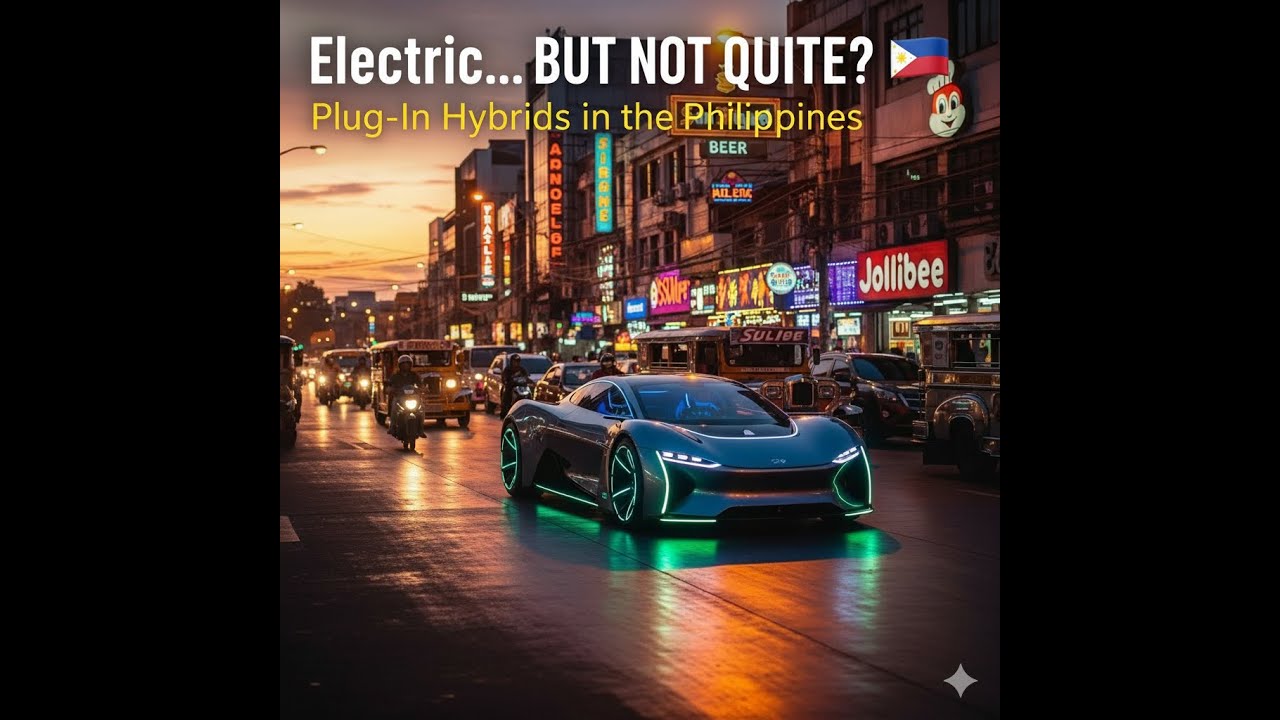
Should a Plug In Hybrid Be Your Next Car
I get it. Thinking of going electric, but not totally ready to say goodbye to your gas engine. Don’t worry, we’ve all been there. Plug-in hybrids or PHEVs are on the rise here in the Philippines. And today, we’re taking a look at whether they’re the perfect midstep for Filipino drivers. Hi everyone, welcome to another episode. And today, we’re unpacking plug-in hybrids in the Philippine setting. from local incentives to your daily drive feel. If you’re curious about whether a PHEV suits your lifestyle, stick around because by the end of this video, you’ll know exactly what a plug-in hybrid is, why it might be a good fit for you, and how it could be your bridge to the exciting world of electric mobility. So, what exactly is a plug-in hybrid? A plug-in hybrid combines a gasoline engine, an electric motor, and a battery that you can charge, giving you the best of both worlds. You’ll get short drives powered purely by electricity and the flexibility to go gas when you need to travel far and wide. Now, let’s talk about the pros, starting with the one that makes the most sense in our local context. One, lower fuel cost. With a plug-in hybrid, you can drive from your home to work using only electricity, assuming, of course, that you have a charging setup at home or at your office. Then, once your battery is depleted, you can seamlessly switch to your gas engine for the rest of your day. So, you won’t have to worry about soaring gas prices since you’re mainly using electricity when you’re driving around the metro. Number two, tax perks. According to EVIDA or the Electric Vehicle Incentive Development Act, PHEVs enjoy zero tariffs, which means no import duties and no VAT. This also extends to the charging equipment and even spare parts. Take note that EVIDA was recently extended and is now valid until 2028. Three, no range anxiety. Unlike full EVs, plug-in hybrids still have your trusty gas engine to rely on. So for those long trips or provincial drives, you don’t have to worry about running out of juice. You just hit the road and go. Four, available models locally. Now you might be wondering what PHEV models are available in the Philippine market. Well, let’s start with the BYD Selian 5 German Marksai, which starts at 1.248 248 million pesos. It boasts a combined range of up to 1,000 km with 71 km in pure EV mode. There’s also the Changen Nevo Q5 PHEV priced starting at 1.259 million pesos offering 125 km of all electric range. And for those who prefer full-size SUVs, the Cherry Tiggo 8 Pro PHEV at 2.60 60 million pesos provides 90 km of EV range. Lastly, for pickup enthusiast, the BYD Shark 6 can be an option. This model has an impressive 80 km of all-electric range. Well, these are the pros, but let’s not forget the cons to consider before making your decision. One, higher cost. Initially, PHEVs are more expensive than regular hybrids. However, this investment can be offset by government incentives and lower fuel costs. But if you’re considering a plug-in hybrid solely for its potential resale value, think again. The additional complexity of a plug-in hybrid powertrain may make it less appealing to future buyers, leading to a potentially lower resale value compared to traditional internal combustion engine vehicles. Two, more things to maintain. PHEVs have extra components such as batteries and electric motors, which means more parts to care for and maintain. Regular servicing is crucial to keep these systems functioning optimally. So, while PHEVs offer an electric driving experience, they do come with the added responsibility of caring for these additional systems. Three, could cost more than expected. Some studies have shown that realworld fuel costs for plug-in hybrids can be higher than expected if owners don’t plug in and charge the battery regularly. The sweet spot seems to be around 2,500 m or 4,000 kilometers per year when the cost savings of the PHEV really start to kick in. Four, limited charging gaps. One major downside highlighted by Filipino drivers is that PHEVs aren’t very eco-friendly since they still rely on fossil fuels. While they do offer more flexibility, the reality is that charging stations are still few and far between in the Philippines. So, if you frequently travel outside Metro Manila, finding a place to charge your car could pose a challenge, especially since many gas stations don’t yet have charging facilities. So, what’s promising is the newest PHEV tech shows remarkable efficiency, going as much as 2.9 L per 100 km and up to 1,200 km total range. As more countries shift towards adopting plug-in hybrids as a cleaner and more efficient alternative to traditional internal combustion engine vehicles, the technology will likely become more refined and accessible to consumers. In fact, a recent study by Bloomberg Nef suggests that plug-in hybrid sales will continue to grow, accounting for nearly a quarter of new car sales globally by 2040. So, if you’re thinking of getting a plug-in hybrid in the Philippines, here are some models worth checking out. Locally, you can check out models like the BYD Celian 6, Cherry Tiggo 8 Pro E+, Changen Nevo Q5, and Jeku J7 PHEV. There’s a lot to love about plug-in hybrids, especially their versatility and fuel efficiency. Just remember to weigh the pros and cons based on your lifestyle and driving needs. If your daily commute is short, you charge regularly at home, and you want flexibility, go for a PHEV. But if you drive mostly long halls and charging options are still limited, maybe wait for more infrastructure or consider a traditional hybrid. So, could a PHEV be your next car in the Philippines? If you’re balancing cost, convenience, and future readiness, the answer could be yes. Let me know in the comments what PHEV you’re eyeing or are you waiting for full EVs. Don’t forget to like, subscribe, and hit the bell for more car insights, all from a Pinoy perspective. See you next time.
Should a Plug-In Hybrid (PHEV) Be Your Next Car in the Philippines?
Thinking about going electric but still want the flexibility of a gasoline engine? Plug-In Hybrids (PHEVs) might just be the perfect balance! In this video, we’ll break down everything you need to know about PHEVs in the Philippine context:
✅ What a Plug-In Hybrid really is and how it works
✅ Pros & cons of owning one in the Philippines
✅ Local incentives under the EVIDA Law and zero tariffs (until 2028!)
✅ Real challenges: charging infrastructure, costs, and maintenance
✅ Available PHEV models in the PH like BYD Sealion 6 DM-i, Chery Tiggo 8 Pro e+, and Jaecoo J7 PHEV
✅ Decision guide: Is it the right car for YOUR lifestyle?
💡 Whether you’re a first-time EV buyer, a daily commuter in Metro Manila, or someone who loves long road trips across Luzon, Visayas, and Mindanao—this vlog will help you decide if a PHEV fits your needs.
🔔 Don’t forget to Like, Subscribe, and Hit the Bell so you won’t miss more car tips, EV reviews, and Pinoy motoring insights!
#PHEVPhilippines #PlugInHybrid #EVPhilippines #HybridCarsPH #CarTipsPH #BYDPhilippines #CheryTiggo8Pro #JaecooJ7 #EVFuturePH #SustainableDriving