Charging a Non-Tesla Electric Car at a Tesla Supercharger
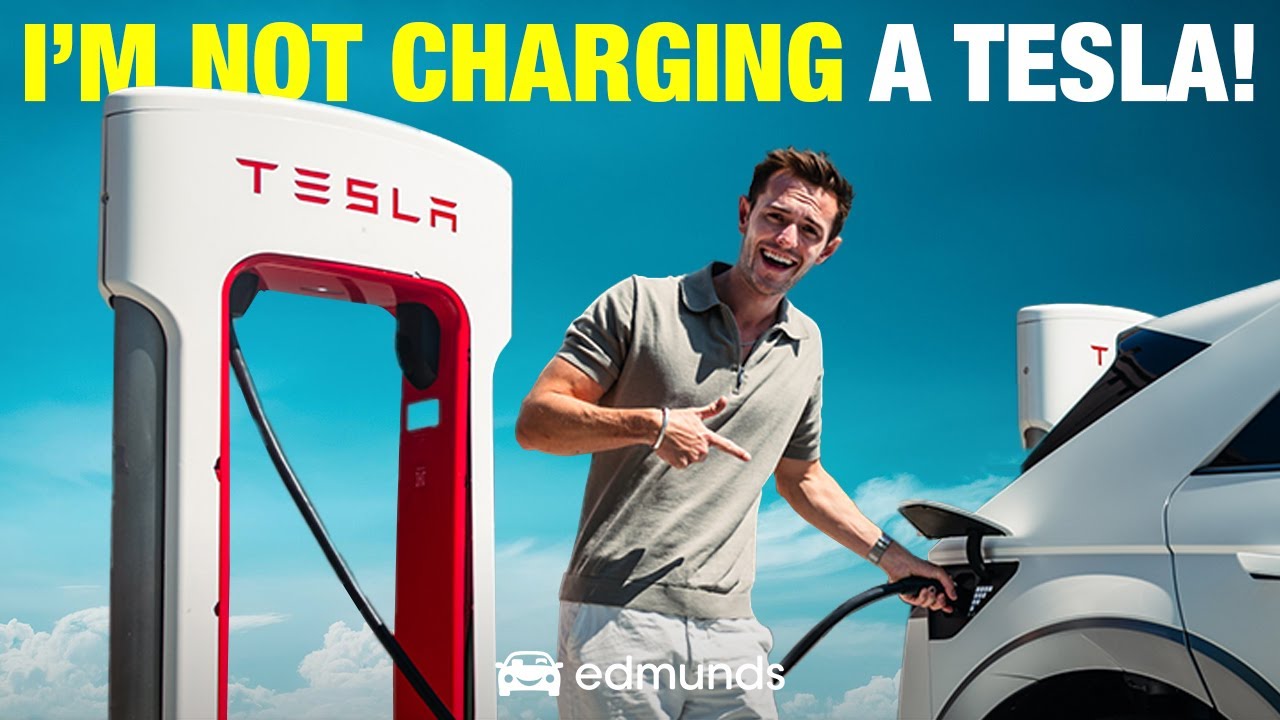
SPEAKER: I’m driving to a Tesla
Supercharger in a Hyundai. I can do that because
a ton of automakers, including Hyundai, have switched
over to the North American Charging Standard Port, or NACS,
better known as the Tesla plug. But even with an NACS port,
using a Tesla Supercharger in a car that doesn’t have
that T badge on the hood may be a little less
simple than you might hope. We’re going to take this
thing to a few different kinds of superchargers to find out
everything you need to know. Before we get there,
some background. There are two main types of
charge ports for EVs in the US. The Tesla developed
NACS system and CCS, which for the past decade
has been the default for all non-Tesla vehicles. There are advantages to each. With NACS at a
Tesla Supercharger, the cable you use to
plug into your car is smaller and lighter
than at a CCS station. Plus, Superchargers
have historically been more available and
reliable than CCS chargers. Cars with a CCS port can charge
at a wide number of stations and aren’t limited
by manufacturer, but that requires the
stations to actually work, and we’ve encountered
tons of CCS stations that are broken, vandalized, or
just straight up not working. So why are so many
companies switching to NACS? Simple. People are more likely
to buy an EV if they’re confident they’ll be able
to charge the thing easily, and the Supercharger network
delivers that confidence. There’s a Supercharger
station right by Edmunds HQ. Let’s head there first. I was worried this might happen. So now we know, even if
your car has an NACS plug, but it’s a non-Tesla,
you can’t necessarily charge at every
Supercharger station you see at the side of the road. It’s not quite as easy
as seeing a random one, pulling over, and
plugging in to charge. So how do you know
where you can charge? Well, if you have an official
CCS adapter like this guy, ideally from your automaker so
your car doesn’t catch fire, you can charge at
any CCS station, including Electrify America,
EVgo or ChargePoint. For NACS stations, the first
option is to use the Tesla app. More on that in a second. At least for some
vehicles, you can also use the car’s built
in navigation system, should it have one,
to route yourself to a Supercharger station that
accepts non-Tesla vehicles. But what if you’d rather use
Apple CarPlay or Android Auto for your navigation? Well, Google Maps does
have a feature that allows you to add your
vehicle and search for NACS stations that accept
non-Tesla EVs, or you can use an
app like PlugShare to filter by non-Tesla
EVs and route yourself to a Supercharger
station that way. All right, we’ve found a
Supercharger that I’ve confirmed will work with our IONIQ 5 here. Let’s go. This is a V3 Supercharger
station, the most common type you’ll find. But if you don’t
have a Tesla vehicle, you might run into
some problems, as these were designed for
Teslas and Teslas only, all of which have their charging
port on the driver’s side rear tail light. Because of the way these parking
spots are set up and how short these cables are, they’re not
going to reach everywhere. So this right here is
the charging station for this parking spot. So let’s see if it’ll reach. Absolutely no way. So what are we going to do? We have to use this
charging station. But the thing is,
this station is for this spot, which is now
empty, which effectively means that I’m taking up
two charging spots just to charge my one IONIQ
5 because these cables are so short. As you can see here,
this Supercharger station doesn’t actually have an option
to pay with a physical card. There’s no tap,
there’s no swipe. It’s not quite that simple. So how are you going to pay? You’re going to
download the Tesla app, give them your credit
card information, and pay via that app every
time you want to charge here. But for this car,
Hyundai does actually have a system that
allows you to pay from directly within
the vehicle thanks to the company’s Bluelink app. It works with Superchargers, as
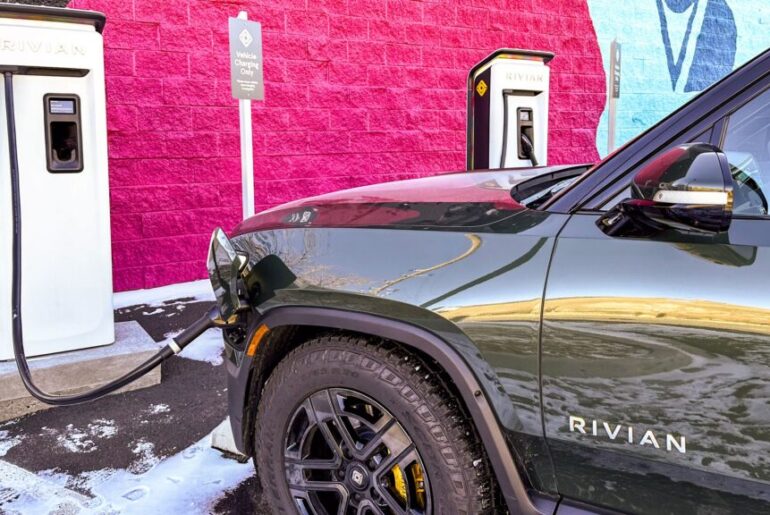
well as other charging stations. Some other automakers,
like Rivian, have added plug-and-charge
capability, which just means that when
you plug in your vehicle, the car and the charger
automatically communicate about your payment information. So if you like easy
and convenient, definitely check out EVs
that have that functionality. Once you’re all set up in
the app, it’s pretty easy. You just plug in, and boom. Charging speed, though, is
a bit of a different story. These V3 Superchargers
can charge at a maximum rate
of 250 kilowatts, but the fastest
cars we’ve tested can charge at speeds in
excess of 300 kilowatts. So you might be losing out on
a little bit of juice here. So V3s are good, but
they’re not perfect if you like parking normally. But there’s a better option. There’s a very limited
number of V4 Superchargers around the country. The first one only opened
in October of 2023, but more are on the way. These are the ones you want,
and that’s where we’re headed. All right. We’re here at the V4s. Power is humming
away, and we’ve even got a couple little IONIQ
5 friends joining us here at this station. Now, the first thing
you’re going to notice here is the parking. It’s a lot easier. I don’t have to
park across spaces or take up multiple
chargers, and that’s because these charging cables
are significantly longer here at the V4s. Compared to the V3s,
they’re about 50 inches, or more than 4 feet longer. We measured to check. That makes a huge
difference, and it means that with a few exceptions,
no matter where your cars charge port is,
you shouldn’t have a problem. The other big difference
at these chargers is charging speed. Unlike the V3s, these
have a max charge rate of up to 325 kilowatts. Currently, the
only Tesla product that can take advantage
of that is the Cybertruck, but plenty of other EVs,
including this IONIQ 5 here, should be able to charge
faster at these stations versus the other ones. So if you can find
a V4 station, this is definitely the way to go. We’ve got easier parking
thanks to those longer cables, and depending on
your EV, your car may charge even faster here than
it will at other Superchargers. OK, what does all this mean if
you’re actually buying an EV? First off, if you can get an EV
with Supercharger compatibility, do it. Access to more chargers
is always better, even if they’re not
perfect, and you’ll have to check to make sure that
you can charge at that location. Second, you’ll want to
carry an official adapter whether your car has
an NACS port or not. Remember, cars with
an NACS port can still charge at CCS stations, and a
lot of EVs with the CCS port can still charge
at a Supercharger, even if they’re a
couple years old. Port location is actually
more important than port type. Most Superchargers
you’ll find will have that shorter
cable, and potentially a less than ideal
parking situation that will force you
to get a bit creative. So what EVs do we recommend? All the details are on
our site, but if you want an affordable sports
sedan, the Tesla Model 3 is hard to beat. Not everyone loves their style,
but Tesla built an incredibly refined, long-range,
tech-forward EV for around $45,000 grand that ticks
nearly all the boxes, as long as that whole everything
through the touchscreen thing doesn’t bother you. Plus, it can charge at
every Supercharger, and even CCS chargers with an adapter. For an SUV around
the same price, you could always go
Model Y, but we really like the Hyundai IONIQ 5. You get a comfortable, quiet
interior, fast charging, and much more
user-friendly controls, although cargo space
is a little tight. This one, as we know, has
an NACS port for 2025, but earlier models can still use
Superchargers with an adapter. If you want a three-row, the
Kia EV9 has similar strengths. Luxury sedan enjoyers should
steer toward the BMW i5. Quality materials, a comfortable
ride, and great driving dynamics make the BMW stand out. This one can’t charge at
a Supercharger just yet, but BMW has said
compatibility will arrive by the end of 2025
via an adapter for older i5s and through an NACS
port in the future. And for a luxury SUV,
we love the BMW iX, which will have the
same Supercharger compatibility as the i5, but we
also recommend the Rivian R1S. The boxy three-row is ready for
adventures away from pavement, but it’s still comfortable
and composed on road, and interior quality is
excellent, especially on newer models. These work at Superchargers as
long as you have an adapter, but NACS-equipped versions
of the R1T and R1S are coming for the
2026 model year. And that’s all you need to know. What do you think? Would you avoid the headache
of finding the right charger and hoping you can
park semi-normally? Is there somehow a
working V4 Supercharger in your neighborhood? Should I trade in my old
Macan GTS for an IONIQ 5, which I absolutely
will not be doing? Let us in the comments. I like to read them while I
roll out of bed in the morning. See you next time.
The Tesla Supercharger network is one of the most robust and reliable in the country — and it’s now been opened up to non-Tesla vehicles, too. With more and more automakers switching to the Tesla-style NACS charge port, Edmunds’ Ryan Greger grabbed a Hyundai Ioniq 5 and set out to experience exactly what it’s like to charge a non-Tesla EV at a Tesla Supercharger.
00:00 Intro
01:14 Finding a Charging Station
02:39 V3 Charging Station
04:34 V4 Charging Station
05:53 Edmunds’ Take
Subscribe to Edmunds https://www.youtube.com/user/edmundsvideo?sub_confirmation=1 for the latest car news, car reviews, car comparisons, car shopping and advice.
Visit us! https://www.edmunds.com