Tesla & BYD SHOCKED as Toyota Unveils Game-Changing Dynamic Force Engine!
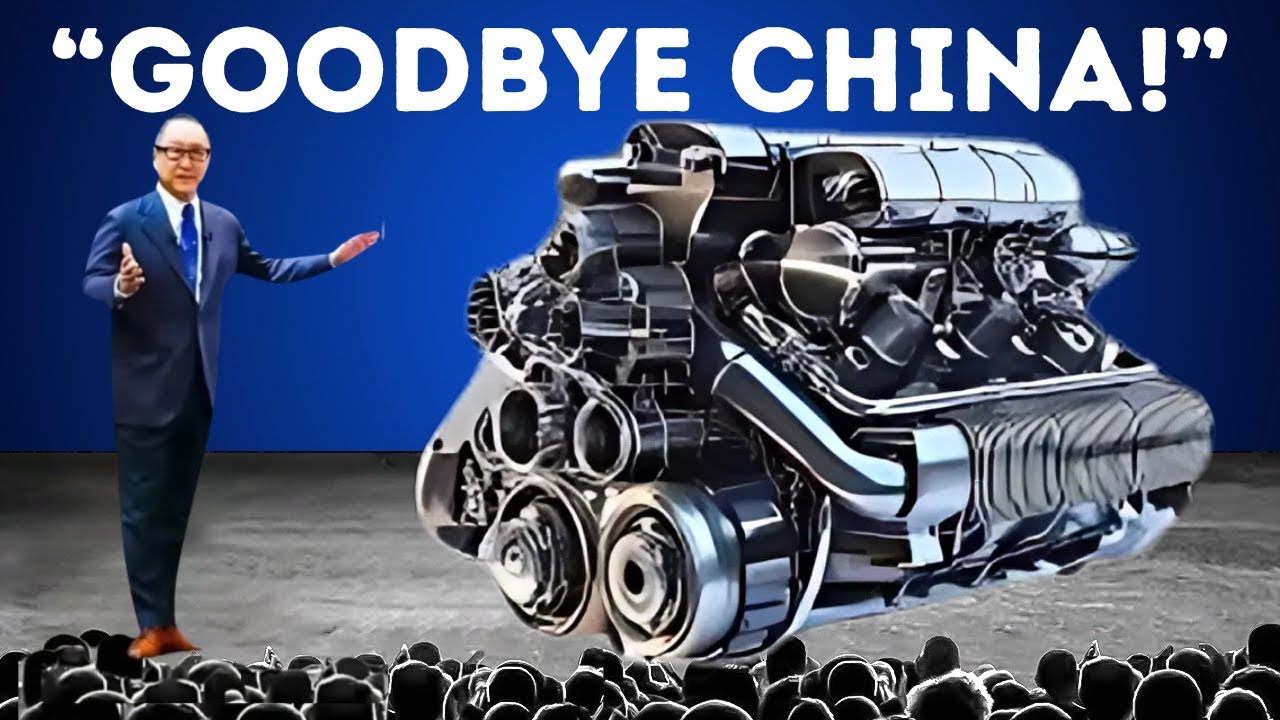
This was never supposed to happen. The electric revolution was unstoppable. Tesla charging ahead. BYD flooding the streets. Governments betting trillions on one future. The gasoline engine dead, buried, forgotten. But in the shadows, Toyota was plotting its revenge. And now it’s here. A machine so efficient it smashes the ceiling engineers swore could never be broken. 40% plus thermal efficiency. A design so adaptable it can drink petrol, ethanol, or hydrogen without breaking a sweat. A platform so versatile it powers everything from a compact hatchback to a seven seat SUV. And it’s ready to be built in factories across the globe today. No charging cues, no rare earth shortages, no waiting for infrastructure that might never arrive. Just raw future proof performance wrapped in Toyota’s reputation for bulletproof reliability. Before Tesla and BYD figure out how to bury this story, make sure you’re in the loop. Like, subscribe, and share so they can’t silence it. For years, the auto industry’s gospel has been simple. The future is electric. Governments rewrote laws to push EV adoption. Investors poured billions into battery plants. Automakers tripped over themselves to ditch petrol for plugs. But Toyota refused to kneel at the altar of lithium ion. Instead, it doubled down on what it calls a multiathway strategy, an unshakable commitment to mastering all propulsion systems, EV, hybrid, plug-in hybrid, and hydrogen. It’s not stubbornness, it’s cold realism. Because Toyota sees what others don’t. There’s a huge swath of the world. India, Africa, Southeast Asia, the Middle East, where EVs are still a fantasy. Where charging stations are rare, electricity is unstable and battery logistics are a nightmare. In those markets, going EV only isn’t visionary, it’s suicide. So, while others bet the farm on one future, Toyota is playing every future at once. And right at the heart of this master plan is the engine now sending shock waves through the industry. The dynamic force engine, an internal combustion platform rebuilt from the ground up to sip less fuel/e emissions and run on petrol, ethanol, or even hydrogen. In EVsaturated strongholds like Norway or California, it can go toe-to-toe with the latest battery tech. In regions decades behind, it powers ultraefficient hybrids, echoing the strategy that made the Prius a household name, not forcing customers into an unprepared future, but giving them a bridge that’s cleaner, faster, and far more reliable than anyone expected. And that bridge isn’t just clever strategy. It’s a mechanical revolution. Every bolt, every channel, every moving part has been reimagined with a singular purpose. To outperform anything in its class, not just on paper, but in the real world where conditions are messy, unpredictable, and unforgiving. Built on Toyota’s TGA, Toyota new global architecture, this modular platform rewrites the rules of manufacturing efficiency. The same base engine can slip into a nimble hatchback one day and a full-size SUV the next without a costly, time-consuming redesign. When market demand shifts, Toyota doesn’t lose years in re-engineering. It just slots the dynamic force engine into the next model and ships. But flexibility isn’t just about vehicle size. It’s about fuel adaptability. This engine is future fuel ready. It can run on petrol today, ethanol tomorrow, and hydrogen the day after without needing a major overhaul. Where other automakers panic at the idea of shifting fuel regulations or outright bans, Toyota simply pivots. And because the TGA platform was designed to be multicompatible from the start, these changes don’t disrupt assembly lines or balloon production costs. Toyota’s manufacturing strategy turns geography into an advantage. The company’s global network of plants can build this engine anywhere, sourcing region specific components to meet local regulations and resource availability. That means lower costs, faster rollouts, and fewer logistical nightmares. While EVO only manufacturers wait on battery shipments from across the world, Toyota can spin up production locally, tailored to each market’s reality. In a volatile world where governments rewrite emissions laws overnight and supply chains collapse without warning, this kind of agility becomes a weapon. And the numbers backing it up prove just how sharp that weapon is. Over 40% thermal efficiency. In plain terms, that means this engine converts more than 40% of the fuel’s energy directly into motion. A staggering leap from the 25 to 30% efficiency that has been the industry norm for decades. The path to that number starts with a longer piston stroke and smaller bore. An unconventional pairing that gives each drop of fuel more time and space to combust fully. The result, more power per cycle and far less waste heat bleeding into the atmosphere. This isn’t about squeezing a little extra performance. It’s about rewriting the combustion equation. Then there’s the compression ratio now raised to 13:1. That’s an aggressive number even for high performance sports cars. But here it’s engineered for everyday driving. The tighter the air fuel mix is squeezed before ignition, the more explosive power is released, if you can keep the engine from cooking itself in the process. Most engines can’t. This one can. That’s where Toyota’s variable cooling system comes in. Instead of a one-speed mechanical pump, the engine uses an intelligent electric water pump that fine-tunes cooling in real time. On a freezing morning, it warms the engine faster for better efficiency. On a scorching climb through the desert, it steps in early to keep temperatures locked in the sweet spot. This adaptive system doesn’t just prevent overheating, it actively boosts performance by ensuring every component operates in ideal conditions. Add to that multi-hole direct fuel injection, a mouthful of jargon that hides its real impact. Instead of blasting fuel into the cylinder in a coarse stream, it atomizes it into an ultrafine mist through multiple precision drilled holes. The finer the spray, the cleaner and more complete the burn. The outcome, lower emissions, more power, and the kind of throttle response that makes even a hybrid feel alive under your foot. These are minor tweaks. their cumulative gains, each multiplying the others to make the dynamic force engine one of the most technically advanced combustion systems ever put into a mass-production car. And while electric vehicles might still look unbeatable on paper, zero tailpipe emissions, cheap per mile energy costs, whisper quiet acceleration, the real world tells a different story. Charging can take hours without ultra fast stations. Public chargers are often busy or broken. In an extreme cold or blistering heat, battery range can nose dive by 30 to 40%. That’s where Toyota’s hybrid approach, built around the dynamic force engine, sidesteps the limitations entirely. In city traffic, the hybrid system runs almost entirely on its electric motor, gliding on stored battery power for quiet, clean movement. The petrol engine only wakes when it’s truly needed.
#Toyota #DynamicForceEngine #Tesla
Tesla & BYD SHOCKED as Toyota Unveils Game-Changing Dynamic Force Engine!
Toyota has stunned the auto industry with its all-new Dynamic Force Engine, a breakthrough that could challenge EV dominance. Delivering 40%+ thermal efficiency, compatibility with petrol, ethanol, and hydrogen, and the ability to power everything from compact cars to SUVs, this engine offers EV-like efficiency without charging delays. While Tesla and BYD focus on batteries, Toyota’s future-ready platform is production-ready now, bypassing supply chain bottlenecks and offering unmatched versatility.
Watch now to see why this engine could rewrite the future of transportation.
#Toyota #DynamicForceEngine #Tesla #BYD #HybridTechnology #CarNews #FutureCars #AutoIndustry