I EXPOSE WHY HYBRIDS ARE POINTLESS!
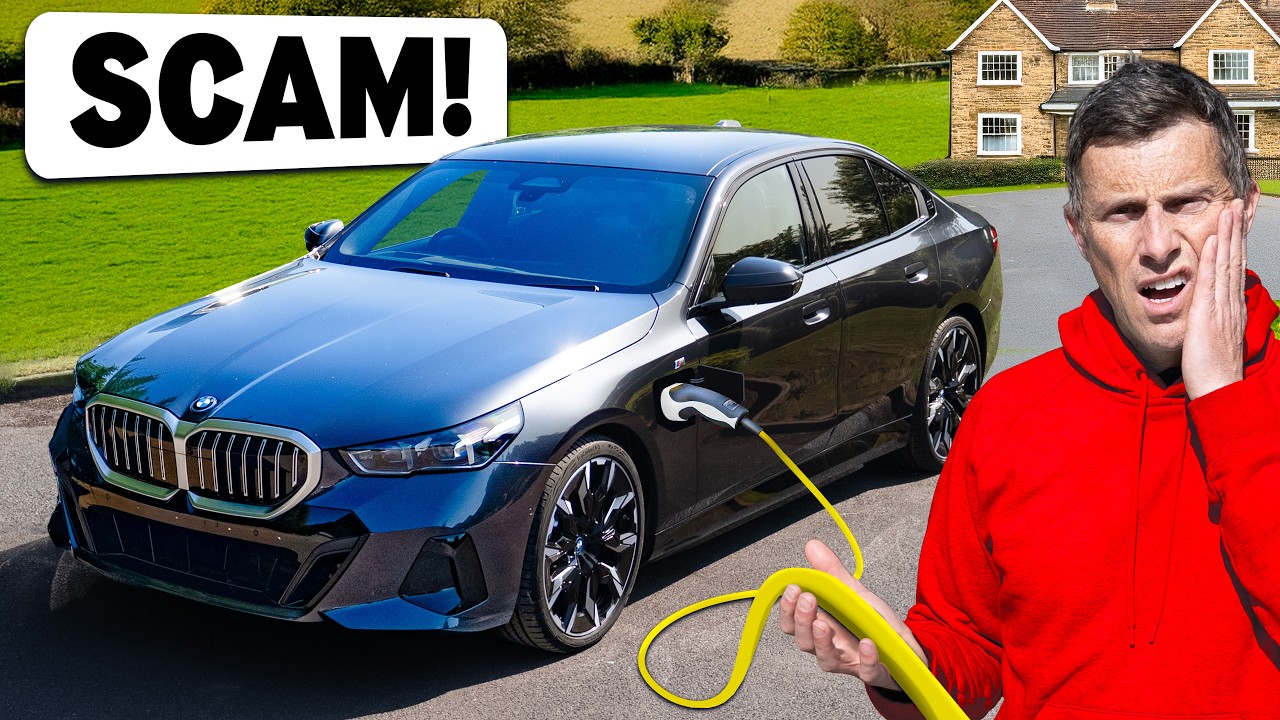
Are plug-in hybrids the best of both worlds or a poor compromise? To find out, I’ve got each version of the new BMW 5 Series, the electric, the petrol, and the plug-in hybrid. I’m going to drive each of these cars on a variety of motorway, country road, and in town. And we’ll find out exactly how much they really cost to run and own. And it might not be quite what you expect. That’s the worst race I’ve ever lost. I’m also going to compare the cars to show you the differences between the petrol version, the electric version, and the hybrid. And I’ll tell you exactly which one to buy and which one to avoid. I’m Matt Watson, and you’re watching Car Wow. Why am I doing this? Well, because on paper, plug-in hybrids look almost too good to be true. They cost less to buy than an equivalent electric car, come with massive tax breaks for their drivers, and should be better for the environment than the equivalent petrol car. Also, they claim fuel economy figures are off the charts. But are these claims over exaggerated? To find out, I’m going to drive a 60 mi route to measure exactly how much fuel and energy it uses when the battery is charged for the best case scenario. Then, we’ll do the route again with a depleted battery to see the difference. Because this is how a lot of hybrid owners will run their cars if they use their vehicles over longer distances. The petrol 5 series and the i5 electric car will also compete in the exact same route. So, we have a fair comparison to find out which is best, petrol, full EV or a plug-in hybrid. I’ll also tell you just how many miles you have to do using electric power alone in this plug-in hybrid in order to offset the premium it costs over the normal 520i. You will be shocked. This is the recommended retail price of each of these cars, but this is sales in the UK are actually dropping and more expensive hybrids and EVs are growing. And there’s one key reason for this tax. The government offers large tax breaks on these cars, especially if you’re a company car driver. A high rate taxpayers’s three-year tax bill is an insane 19,849 for the 520i. That is what they actually have to pay to the inland revenue. Whereas the hybrid is only £7,139 that you have to pay to the tax man. Whereas with the electric i5, the total tax bill is £3,559. But with a government actively pushing people into hybrids and EVs under the guise of cheaper motoring, while this may ring true for company car drivers, for everyone else, I doubt this is the case. But I want to find out exactly. What I’m going to do is find out how far you can drive this plug-in hybrid on electric power alone. I’ve got it in a mode where it’s given me electric power. You can see here that it will go up to 87 mph on electric power alone, and it will give you 50% power or something on electric power alone. I imagine if I fl the throttle, then the engine will kick in to give me more power. So, I’ve got to be quite gentle on the throttle because the idea is how far can I go under electricity? No internal combustion engine. BMW says this car should be able to do between 59 and 64 mi under electric power alone. I have a full battery and it’s given me an electric range of 61 mi. Anyway, let’s off and see what happens. While I’m driving this, I’ve got to make sure that this line never goes over the 50. So, got to be very careful. It gives you plenty of punch actually up to that mark. I think that’s part of the idea with this is that you use it as a range extender in a way that you can just drive around on electric power alone most of the time. If you need added performance yet you get a boost from the petrol motor or if you’re going a long distance then you don’t have to worry about the battery draining because you just got 592 mi combined it thinks and of course you can just pull over at a petrol station and fill up quickly. At the moment it’s seeming like a pretty good idea this plug-in hybrid but will I change my mind later on? Before we go any further, I think it’s time for a quick history lesson. There are three main types of hybrid cars. Mild hybrids, self-charging hybrids, and plug-in hybrids. This 520i is technically a mild hybrid. It has a battery and a small 18 horsepower motor to assist the engine, but it can’t drive in electric only mode. It’s basically there to just recoup some energy under braking and then use it to power the incillaries and to give a little added boost when you first put your foot down. Mild hybrid systems also help reduce a car CO2 emissions ever so slightly. Next, there’s self-charging hybrids like the original Toyota Prius. These use a petrol engine combined with a more powerful motor which can drive the wheels independently or together depending on the circumstances. They charge up by recouping lost energy under braking or by using the engine as a generator. Most self-charging hybrids are able to drive at slow speeds and for short distances on electric power alone. But when you put your foot down and want to go a bit quicker, then the petrol engine soon kicks in and takes over. And that brings us on to plug-in hybrids, which first appeared in the late 2000s with the BYYD F3DM and the Chevrolet Vault. These have larger batteries with external charges to give you more electric range, better fuel economy, and fewer emissions. These cars can often go more than 10 mi on electric power alone and able to travel up to speeds of up to 70 mph, once again, on electric power alone. They also deliver more performance because the electric motors have even more power than those in self-ching hybrids. BMW took the plug-in hybrid approach with its 530e. It has a 19.4 kWh battery pack and can supposedly do 64 mi on a full charge. But unlike those old hybrids, this new BMW has a few advanced features designed to maximize your range, which can take a little bit of getting used to. First impressions, it’s quite nice to drive. Smooth, it’s quiet, the suspension is good. I quite like it. So, I’ve got the adaptive regen on, so the car is automatically braking using Well, I thought it was then at the end, the automatic brake actor kick in there. Yeah. So, it uses adaptive system that it should sense when you’re getting close to the car in front and it’ll automatically provide extra regen braking. You can see that little marker there. So, you don’t really have to touch the brake. It kind of does it for you and we’ll do it in the most efficient way to put energy back into the battery. That works exactly the same in the i5. The brakes on hybrid and electric cars can feel a little bit grabby, but these aren’t bad. Be interesting to see what they’re like compared to the 520i. We just have normal friction brakes. See, I’m on a country road. Let’s see what the handling’s like. Here is a rather tight corner. Can I just chuck it in and it’ll go around? Oh, I’ve got the regen braking. Actually, it knows there’s a corner coming up because of the satnav. It’s linked and it automatically started to slow me down, but I went around that corner at 49 mph on a 50. It just held the road really well. I think the added weight of this hybrid will go against it if you’re really pushing it. But at that point, you are going to be breaking the speed limit. So, I think to most people, yeah, this happens pretty blooming fine as far as I’m concerned. I’ll be driving the other cars later on in this video to see how they compare, but I’ve already found a few things that I don’t like about the 530e. I’ve got all the cars safety systems on, so if I get too close to the white line, it starts to shake the wheel and get a bit cross. Now, modern cars all come with various like speed limit warning, lane keeping warning, and all that kind of stuff to keep you safe. But sometimes they can be annoying. So, I’m going to try and turn them off now in this car. I think it might be quite difficult to do while driving, but this is often the case and you have to do it every time you restart the car. God, where’s the button? Hey BMW, turn off lane keep assist. There is currently no driver assistance system active, which I can deactivate. Hey BMW, turn off speed limit warning. Okay, I will deactivate the Brilliant. Hey BMW, turn off lane departure warning. Are you sure that you want to deactivate the lane departure warning? Yes, I am very sure cuz I’m going to have to go around this bag. There we go. See, that was handy. Just in the nick of time. Oh, that was close. Almost engaged the engine. Okay, so this is a real test for the car suspension cuz this is one of the worst roads in Oxford. It’s horrendous. But even though this car doesn’t have the adaptive dampers, which I’d normally fit on something like this, absolutely fine. Even when I hit a massive pothole like and we are on some big wheels. There is one thing I’ve noticed about this hybrid though. It does feel like quite a heavy car, but then I guess it is. It weighs in at 2,000 kg. Another thing that I’ve noticed that I’m not so pleased about is that some of the bits feel a bit cheap for a 5 series. Like just the feel of that, the indicators just it’s plasticky. It’s like some Japanese car from the ’90s. I’m telling you now, the indicator on my old 2002 X5 feels more expensive than that one. But thankfully, there’s nothing cheap feeling about the way this car drives. It might not be sporty, but the extra weight hasn’t hindered comfort at all. At this point, we were about to reach the motorway. So, I swapped into the 520i for a few miles to compare it back to back with the plug-in hybrid. And I immediately noticed a difference. Just feels a little bit more sporty, more responsive. It feels lighter than the plug-in hybrid because it is it’s significantly lighter. And as a result, it’s just has a slightly nicer feel to it. And even though it feels sportier, the suspension feels just as comfortable. So, this is a pretty poor bit of road and it feels absolutely fine to me. One thing I am noticing though compared to the plug-in hybrid is obviously I’ve got my engine wearing the whole time and you do just hear it a bit. Does it put me off? Not really. It’s just not quite as serene as the plug-in hybrid when it just got it in electric only mode, but not that bothered. You’re actually getting far more noise from the tires. Now, the plug-in hybrid has more power because you got that electric motor boosting the engine, but I’m just going to floor this It really doesn’t feel much slower. That’s because it’s not having to move so much weight. Be interesting to see how much slower it is in reality when I do the naugh to 60 times. Might not be as big a gap as you’d imagine. But there’s another important side effect of cars getting heavier. And it’s all to do with emissions. I mentioned earlier that the taxi pound these cars is dictated by their carbon dioxide emissions in g per km. The 520i does 130 grams. The 530e just 14 grams. And obviously the i5 zero grams per kilometer of carbon dioxide from its tailpipe cuz it doesn’t have a tailpipe. But that’s only half the story because if you want a car that’s good for the environment, you should not just consider tailpipe emissions, but also the emissions related to the production of the vehicle itself. This is typically much higher with electric and hybrid cars because they require larger amounts of materials like lithium, cobalt, copper, and nickel to build their batteries, which has a significant environmental impact. For instance, in the production of the 520i, 11.1 tons of carbon dioxide is produced. With a 530e, that number grows to 14.6 tons, and with the i5, that’s 17 tons of carbon dioxide released into the atmosphere for the vehicle’s production. As a result, you could buy a 520i and drive it for over 16,000 mi before it emitted as much carbon dioxide as it took to build one brand new 530e. And that number jumps to over 27,000 mi for the i5. Anyway, back to driving the hybrid. Okay, we’re entering the motorway now. Need a bit more performance here, but I’m balancing it. And that’s that’s all right. That is it probably accelerates like the original 5 series with the lowest performing engine. I do think though when you’re on the motorway like this, if you want to do an overtake maneuver, you’re probably going to have to engage a petrol engine. So, I’m just going to have to pretend that I’m driving some old low performance car and plan my overtakes well in advance. I tell you what’s a bit annoying. I don’t have adaptive cruise control on this car. It doesn’t come standard. It’s a little bit disappointing really. You know, you get adaptive cruise control on an entry- level Toyota Yaris, but not on this expensive BMW. It’s all about the options and what extra bit of cash they can get from you. I know. I suppose they are in the business of making money, not just making cars. I just want to say a quick thank you to Steven James BMW for lending us this car and the 520i. They’re one of our Car Wow partners. It’s really interesting when I’m driving along and I’m accelerating. Even though I don’t go over that special line there, it makes a noise like the petrol engine’s cutting. There’s no jerk though. I think it’s fake noise. Let’s just double check the trip to ensure I’ve just been driving on electric power alone. So, 21 mi total 21 mi on electricity. Yes, it’s saying that I’ve got 38 mi of range left in electric power alone. And I’ve done 21 mi. So, that’s a total of 59 mi. It was claiming 62 at the beginning. So, pretty close so far. And this is on the motorway. This is like the worst place for electric power. We’re going to be heading into town a little bit later on. That’s where they really excel. So, I might even get some range back. Right, we’re coming into Oxford now. We’re going to be doing like 30 mph and sometimes 20. It’s worth doing a quick range check. So, I’ve got 27 milesi remaining in my battery. Let’s find out what the i5 is doing. Hey, so I’ve got 86% of my battery remaining, which equals 285 mi of range. And 520i. How much you got left in your tank? Saying I’ll do another 566 miles. And it doesn’t look like the needle’s moved at all. So, still 90 something. Well, my needle hasn’t moved on the old petrol tank anyway, so I’m good, too. Interestingly, even though my car hasn’t used any petrol yet, its total combined remaining range is still slightly less than the 520i at 559 mi. This is a bit more like the Oxford I was thinking about. Wow. I feel like I want to be back at uni now. Do you know what I mean? Just like young in the sun. 50 grand in debt. I’ve got 60 mi of electric only range remaining. Let’s see how far I’ve gone. 41.6 mi. Let’s call it 42. So 4 58 mi that means in total electric only range. So it really is delivering the claimed electric range. But is the i5 delivering its claimed electric range so far? BMW says it should manage 374 mi on a full charge. We’ve currently driven 42 mi. So, if BMW’s prediction was accurate, it should have 332 mi of range remaining. Hey, i5, what’s your remaining range? Hey, so I’ve got 82% of my battery remaining, and apparently that means I can go 255 miles. That is really interesting, isn’t it? How come they can get it right for this hybrid, but not the electric car? And I’ve been running completely on electricity. Look, look, look. I decided to jump into the i5 for a bit and see what was going on for myself. One thing you notice when driving the i5 is the added performance. When you put your foot down, the pickup is instant. I mean, just like really just chucks it back in your seat immediately. It tails off rather than builds other cars with an internal combustion engine, but it’s definitely more impressive. Another thing that’s a bit interesting is that for some reason, even though it’s heavier, the suspension feels more compliant. Maybe because it’s put more weight onto its suspension, so it’s just having a little bit more give in it. What is interesting compared to the 520i is that I’m noticing the wind noise a little bit more because there’s no engine sound. And what’s strange is that for some reason, while it’s heavier than the hybrid, it seems to handle a bit better. Maybe it’s because all the weight is low down because that’s how they arrange the battery packs. It doesn’t feel as responsive as a much lighter 520, though. Do you know what? If it was comfort I was after, I’d take this i5. But if it was for a more sporty driving experience, I’d definitely take the 520i, which sort of leaves the plug-in hybrid floundering in no man’s land, just in the middle. But maybe the 530e’s biggest strength is being cheap to run because so far it’s getting much closer to its claimed economy figures than I expected. And when we got back in after driving the i5 for a bit, I noticed the plug-in hybrid still had a whopping 545 mi of combined range left. Hey 520i, what’s your range saying? It’s saying I’ve got 547 mi of range and it looks like I’ve still got a full tank of fuel. So he’s just ahead, but I’ve closed the gap a little bit. We’ll see how that compares later on in the video when my charge runs out. It’s not going to be too long now. I’ve got 6.2 mi left of my route, but it’s saying I’ve got 5 miles of electric power left. So, it’s going to be interesting to see what happens, whether like with electric cars, there’s some extra range in reserve or as soon as I hit zero, we are going to be having the engine kicking in. It hasn’t come on at all yet, but I wonder when the first time is that it fires up. Here we are. Two miles of range left and we’ve done 54 miles. So 56 in total. It’s coming out at one mile of range left. 55 miles gone. It’s been on one mile remaining for blooming ages. Right, we’re at 56 milesi there. Right, that’s it. No battery left, but I don’t think the engine’s kicked in. So it seems there is a bit of reserve like with full EVs. There. There we go. The engine has just kicked in and that turned gray. So, 56.3 mi. We are now just under the power of the engine. That’s 88% of what BMW claims this car can manage in electric only mode. And it means the 530e was averaging 2.9 m per kowatt hour. The i5 managed 3.9 m per kowatt hour and the 520i did 47.7 mp gallon, which are both very close to their claim figures. This means the i5 journey was the cheapest. Then the 530e and finally the 520i was the most expensive. But despite that, you’d still need to drive the 530e in electric only mode for almost 9 years and cover 70,000 mi to offset the premium it costs over the 520i. If you think that’s bad, the i5 would take almost 25 years and 200,000 mi to break even to the 520i. Obviously, it would be better if you bought these cars through CarWow because the plug-in hybrid and the EV have larger discounts available than the petrol car, but even then, it would still take 5 years to offset the cost of the 530e and over 14 years for the i5. And remember, this is an ideal scenario for the hybrid and the electric car using cheap home charging. If you use public chargers a lot, it could end up costing more. And I’ll reveal exactly how much more later. But first, I want to compare these cars performance to see if BMW’s been lying about their naugh to 60 times. This 520i is supposed to do naugh to 60 mph in 7.5 seconds, but I have the feeling it could be significantly quicker. 6.67 seconds. That was all right. Okay, the fake noise makes it seem faster than it actually is, but Oh, shut my mouth. That’s a decent time. 5.26 26 seconds. Finally, we come to the 530e, which will do naugh to 60 in 6.3 seconds. But there’s a catch. The battery is showing 0 miles of range. We got a mixture of engine noise and weird washing sounds. It did it in 6.4 seconds, which is a tenth slower than BMW claims and only slightly quicker than the 520i. But this doesn’t tell the whole story. I wonder if I put some charge into the battery whether it will go quicker cuz then I’ll be able to get more punch from the electric motor or does this keep some in reserve anyway for the hybridiness. I’m going to now drive about using regen and hopefully I should be able to start adding battery. This isn’t a fast process, but it’s still a lot quicker than trying to use a public charger as I’ll discover later in this video. But let’s see if I can improve on my best naugh to 60 mph time. Right, we’ve got a bit of charge in the battery. Let’s see if this makes a difference. Oh, 6.28. That’s not a very big improvement. So, I asked BMW what was going on. They confirmed that even when the battery says it’s flat, it still keeps a little bit of charge in reserve to provide full boost if you accelerate hard, which explains why both naugh to 60 runs were pretty similar. But how will the added weight of these batteries affect braking performance? Well, I’m going to set a baseline by testing the heaviest car here, the i5. How many meters will it take to stop from 60 mph now? I’m going to hit the brakes hard. 36 m. The 538 weighs this much. So, let’s see how that affects the braking. Here we go. Oh, 34 m. That’s better than the i5 so far. lighter seems to be better. So, I expect the 520i to win this test because it only weighs this much. Oh, good. 36 m. The 530e must have the best combination of friction brakes, regen braking, and overall weight, which is why it stopped in the shortest distance. But now, I need to find out how well it performs in a second economy test. We’re going to drive the exact same route as before to get a fair comparison. The only difference is that the hybrid now has a completely flat battery. This is an absolute worst case scenario for the 530e. But even though it has zero miles of electric range remaining, I might still be able to use the electric motor to save fuel. Right. So, just slowing down then. I’ve got a little bit of electric power. So, when I pull away this time, that’ll probably be blue rather than the weird pinky color. That signifies that I’m running on electricity rather than the engine. Right. So, I’m pulling away. No, engine’s in straight away. I gave you a little bit of electricity, but then that was it. I mean, I’m effectively running this like a normal hybrid, not a plug-in hybrid now. So, I will be able to put some energy back into the battery when I’m braking or going down a hill. However, it’s going to be interesting to see how many miles I can actually accumulate through normal driving. I don’t think I’m going to get any. It’s always just going to be around the pretty much empty mark, but we shall see. Oh, look at that. So, I just lifted off the accelerator going from a 60 into a 40. It charged the battery and gave me 1 mile. So, we’re now going to be using that, and that will help the economy. We’re at 22.4 4 MPG. I’m thinking it’s going to go up now. And sure enough, it is increasing because now I’m just cruising on electric power. But it’s ah that was shortlived. The electricity. Yeah, it didn’t give me a mile. It was used like that. And look, it’s dropping again. What is that number going to come to? Is it going to get anywhere near where the normal 520i got? It’s quite interesting. I’m pretty much driving this car in exactly the same way as when I had it in EV only mode. I know I was trying to keep it from having the engine cut in, but I’m not really going any quicker when I don’t have that to worry about. So, we should get a very fair comparison. Okay, joining the motorway again, I’m averaging 31 MPG. So, when I’m cruising along at speed, that’s not great for electric power, but that’s where a petrol engine really starts to benefit. Look, it’s climbing already. See, that’s what an internal combustion engine is good at, just maintaining steady speed. Hey, 520i, what’s your current MPG? Just under 42 m per gallon. Really begs the question, why? Is it going to get better? Is it going to get worse? When we hit town, am I going to benefit from the hybrid system? Will it pull some back? I don’t know. We’re going to find out. It’s going up. It’s going up. Right, we’ve done a big section on the motorway. I’m averaging 38.7 MPG. Hey 520i, what’s your average economy? 48.3 miles per gallon. Oo, that’s interesting. I’ve closed the gap for sure. This is doing better than I thought it would. Hey i5, what is your average energy consumption so far? Hey, so it’s currently saying 4.1 m per kowatt hour. So, despite having done lots of motorway miles so far, where EVs are usually less efficient, the i5 is currently performing slightly better than in my first test, it’s also performing much better than the i5 I tested last year. That car managed 3.7 m per kowatt hour. So, what is going on? Well, it could be related to temperature. Today, the conditions are ideal. EVs perform better in warmer weather. However, when I drove the other i5, it was much colder, resulting in more consumption from accessories such as cabin heating, but also because the batteries don’t perform so well when they’re cold. However, despite the ideal temperatures for our current test, I started to feel a little bit hot under the collar in Oxford City Center. Oh, wait. Oh, no. Whoops. I say you don’t own the road. You should be over there, Mark. I know. I cocked it up. You know, sometimes you get things wrong. Sorry. Thankfully, there was no harm done. But it got me thinking about insurance because that’s a huge part of any car’s running cost. So, I got some quotes through Go Compare for me to insure each of these cars. And here’s how much they cost. These cars are all based on the same chassis. So, why is a hybrid more expensive to ensure? I spoke to Go Compare and they told me that when insurers calculate your premium, one of the main risk factors is the cost to repair your car should you need to make a claim. Replacement parts for petrol cars tend to be more readily available and garages are far more familiar with fixing them. While electric vehicles and hybrid cars often need specialist components. These often have limited availability as they aren’t as common in the market as well as specially trained technicians to carry out the repairs which all come at a premium costs. But even though it costs more to ensure, the 530’s complexity does have a few advantages. So I’ve been driving around town slowly stop start traffic for quite a while now. My average economy in this plug-in hybrid is 37.8 8 MPG. It hasn’t actually dropped by much compared to when we’re cruising along at the petrol engine’s most efficient speed. I imagine the petrol cars has 520i. What’s your average MPG now? My average MPG has gone down to 45.6. So, the 530i’s economy dropped by 2.7 mp gallon in heavy traffic, but the 530e only dropped by.9 m to the gallon. This gave me hope I might be able to close the gap before the end of this route. And I was about to get some more good news. This is interesting. Even though we had an empty battery, we’ve managed to do 10.6 miles of the 35.5 mi so far under electric power. That must have all come from like regen. I’m at 55.9 mi. When the car was running on electric power, it did 56.3 mi. So, we’re going to see what the average economy is when I hit that number. 56.3 36.7 miles per gallon. Interestingly, 19.7 miles on electric power. What are you getting out of the BMW 520? Got 44.8 mp gallon. M. What’s the efficiency of the i5? 3.9 m per kowatt hour. This is very close to what these cars got during the first route, which means it’s a very fair test of the 530e hybrid system with no charge. But how much did this second journey actually cost? Well, the i5 and the 520i were the same as before, but without any battery charge. The cost of my journey in the plug-in hybrid shot up from 1.36 to935. If you drive £8,000 m per year and you don’t charge your hybrid up, it will cost you £1,135 more to run. And because the fuel economy was worse than the 520i, you never recoup the extra cost of buying the hybrid, no matter how many miles you drove. However, it’s completely the opposite story for company car drivers. Tax breaks for plug-in hybrids are so huge you could drive a 530e for over 400,000 mi without ever charging it. That’s 16 times around the world and your combined fuel and tax bill would still be less than a 520i. But if you want to save even more cash by actually charging it, you might run into a few problems. Now we’re going to have a race, a charging race. The i5 can charge up to 205 kW. We’ve got it plugged into a 150 kW charger cuz that’s the fastest we can find around here. The hybrid can charge at 11 kW cuz it only has AC charging and we plugged it into an 11 kW charger. So, what we’re going to do is send the 520i off. It’s going to go to the petrol station, fill up its tank with fuel, and then come back. We’re going to see how many miles of electricity we add to each of these two cars. Right, Rory, are you ready? I’m ready. Go on, pay. No, I’m just getting nothing from this. We’ll see if this works. This one works. Is it? Yeah. Okay. So, this is a classic problem with charging a car. Sometimes things don’t go to plan. So, Rory, does yours work? No. So, do you want to find one that works? Yeah. Are you ready? Yeah. Okay. Let’s see if we can start charging now. That worked. Right there. Processing. It’s starting. Yeah. Go. The race is on. That was a faf. Classic classic charging shenanigans. Oh, look. There’s nowhere to fill up. Oh no. What will we do? Oh no. Let’s just go and put fuel in the car, shall we? Oh no. Like a civilized human being. Oh, I wish it wouldn’t take so long. I feel like my life ebbing away. It’s only charging at 6 kW. It says on Zap Map that it’s an 11 kW charger. Why is it only charging at 6 kW? 100% at 2259. I don’t think it’s added any charge. Saying no miles. If only we had more time here. It’s making charging sounds. It’s just so slow. Oh, stuck at the red light. Heavens, this is impacting our our race. You think you’d have at least one little mile? Oh, wait. They’re here. Stop. Hello. Stop the clock. You just like cidled up on me. Okay, let’s stop the charging. We are done. We’re done. Rory, let’s have a look how much range I’ve added. O, look. How many miles of range did it add on your car? Say 37 miles of range. 11 kw hours. How many miles did you add to your car? Oh, only 140. How long did that take? Less than 5 minutes. Guess how many miles I added. I think you added two. What do you think? It cannot be less than 10. Surely one. One. That’s the worst race I’ve ever lost. And I was even less happy when I looked at how much I just spent. These 11 kW grids serve chargers cost 49p per kowatt hour. The 150 kW chargers we used for the i5 cost 79p per kowatth. And the petrol for the 520i cost £163 per liter. And based on these prices and economy figures I just recorded, the 520i is actually the cheapest to run. Over a year and 8,000 mi, it will cost you £1,240 in fuel. The i5 will cost £380 more in electricity. And even if you drove the 530e in electric only mode, it would still cost £110 more per year to run than the 520i. And this could be one of the main reasons why hybrid and electric versions of the 5 series don’t hold their value as well as the standard petrol. Here’s how much you can expect to lose on these cars if you bought them new, then sold them 3 years later with 24,000 mi on the clock. And that means there’s only one conclusion I can draw from all this. If you’re getting it as a private purchase, I wouldn’t go for the plug-in hybrid, nor would I pick the i5 all-electric model. I would just keep things simple. I would go for the 520i, the good old petrol model. That’s right. It appears that the internal combustion engine ain’t dead yet.
Change your car with Carwow: https://bit.ly/Change-Your-Car-3008
Are plug-in hybrids a waste of time? Or do they offer the best of both worlds?
Well, to find out, we’ve got our hands on every version of the new BMW 5 Series – the petrol, the electric & the plug-in hybrid – to put them to the test! The question is, will the plug-in hybrid offer the best efficiency value to the average consumer?
On paper, hybrids sound almost too good to be true! Not only are they cheaper than equivalent electric cars, but they also come with massive tax breaks, and should be better for the environment than the petrol-powered equivalent. They also have absolutely HUGE efficiency numbers, but have they just been inflated by the manufacturers? Well, Mat’s putting the three cars through a 60-mile test to find out for himself.
But let’s take a closer look at the cars we have here. The hybrid car we have here is the 530e M Sport. It has a 2-litre 4-cylinder engine and a 19.4kWh battery pack. On electric power alone, it has a claimed range of between 59 – 64 miles of range, and it has a recommended retail price of £59,655.
Next up, it’s the petrol-powered 520i M Sport. It has the same engine as the 530e, a 2-litre 4 cylinder, producing 208hp and 330Nm. It has a recommended retail price of £52,285.
Then, finally, it’s the i5 eDrive 40 M Sport. It’s equipped with two electric motors, an 81.2kWh battery, and has a claimed range of up to 374 miles on a full charge. Its recommended retail price is £74,205.
So will the plug-in hybrid come out on top? Or in the real world, will the electric or petrol prove to be a better buy? You’ll need to stick with Mat to see for yourself!
Check out Carwow Leasey: https://bit.ly/Carwow-Leasey-3008
Thanks to https://www.instagram.com/hedinautomotivebmwgroup for helping us create this video!