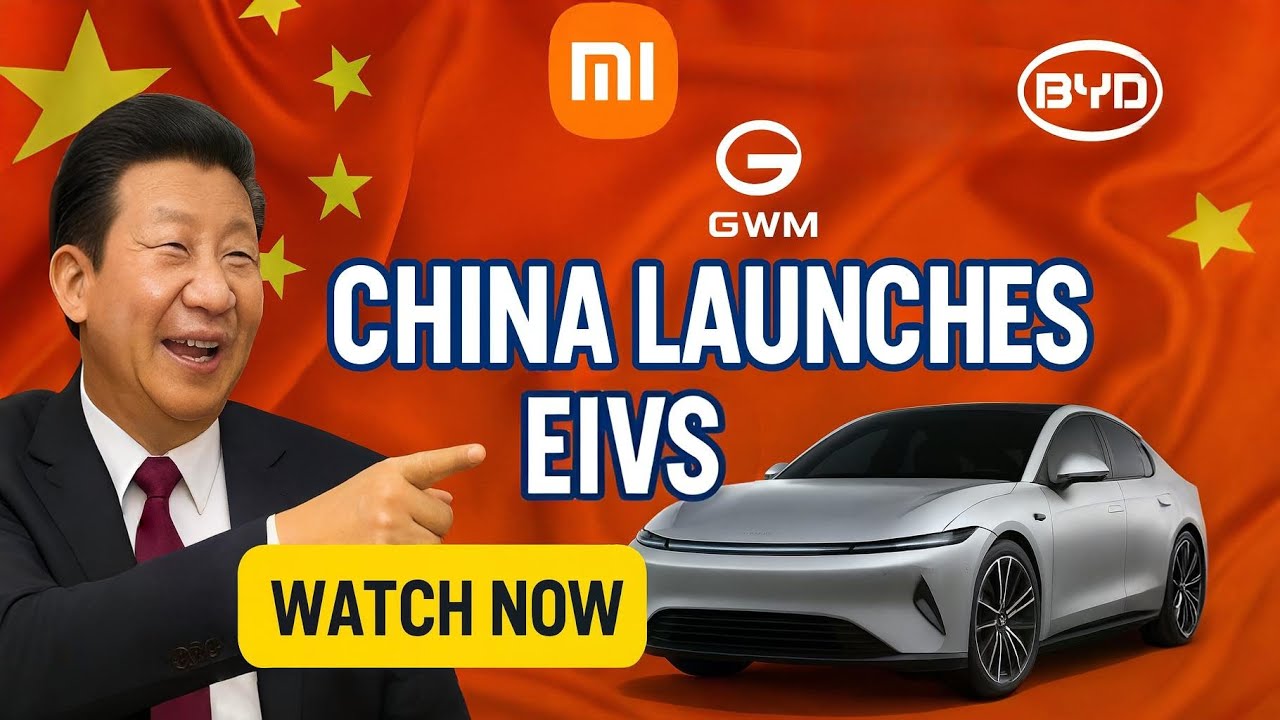
China Just Killed Electric Cars? EIVs Are Taking Over!
Something big is happening. What if the future we imagine for electric cars isn’t the one that will truly dominate the world? China has just launched a new generation of vehicles that could put an end to the electric car era as we know it. While the West is still trying to improve batteries, build more charging stations, and solve lithium bottlenecks, China has taken a step forward, and it’s not a small one. EIVVS don’t rely on fixed stations, don’t have the same range limitations as conventional electric vehicles, and are energy self-sufficient. This isn’t just a technological leap. It’s a complete revolution in how mobility is thought of. These new vehicles use a combination of advanced solar panels, microurbines, and intelligent energy recovery systems. The result, they practically produce their own energy on the move, under the sun, or even in diverse weather conditions. Chinese automakers are already in the advanced testing phase, and some have even begun pre-sales for domestic markets and strategic partners such as the United Arab Emirates, South Africa, and Southeast Asian countries. The promise, a car that never needs to be refueled in the traditional way. For countries where electrical infrastructure is fragile or expensive to expand, this represents a logistical and economic revolution. The global response, a mix of surprise and nervousness. Western automaker executives have tried to downplay the impact of this innovation, saying that EIVVS are still experimental and that EVs, common electric vehicles, have a guaranteed place for decades. But at the same time, there’s a quiet race underway behind the scenes to understand, copy, or adapt this new concept. For China, this innovation is more than a technological breakthrough. It’s a statement of leadership. After dominating the battery and semiconductor production chain for electric cars, the country is now showing that it can also create a new transportation paradigm, one that doesn’t rely on fossil fuels or western infrastructure. The impact could be enormous. If EIV’s work is promised, thousands of charging stations around the world could become obsolete. Entire companies from lithium miners to high voltage cable manufacturers could see their demand plummet. And for consumers, this could mean less reliance on expensive energy, fewer charging lines, and less fear of running out of battery on long trips. Make sure to like this video and subscribe to our channel. Don’t forget to hit the notification bell so you never miss an update. Thanks for watching and we’ll see you in the next video.
China just took a bold step that could mark the end of traditional electric vehicles (EVs) as we know them. Introducing EIVs — Electric Intelligent Vehicles — a revolutionary new wave of automotive technology that’s smarter, faster, and more autonomous than anything we’ve seen before.