Elon Musk Unveils $9,875 Model 2: The 2026 Electric Car That Changes Everything!
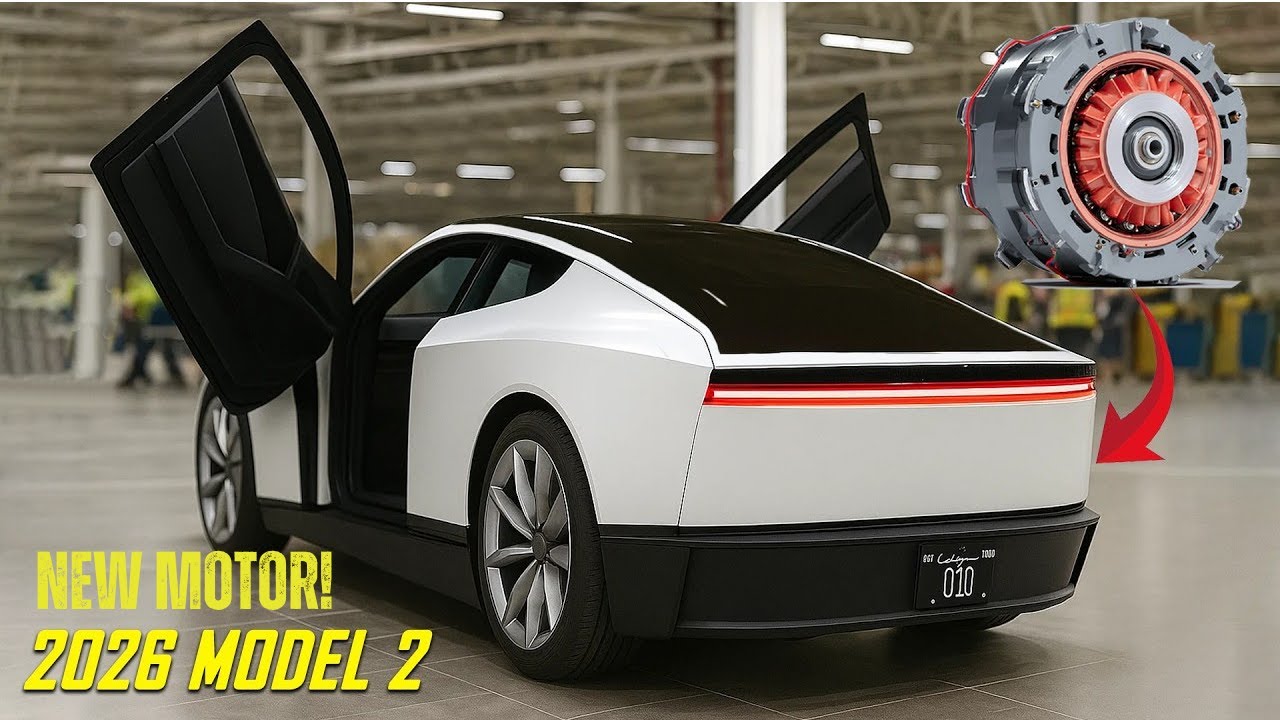
Tesla’s rapid expansion in Austin represents more than just a boost in infrastructure. With employment at Gigafactory Texas soaring to nearly 23,000 workers by late 2023, it’s becoming clear that Tesla has been quietly preparing for something significant. While Elon Musk hasn’t made an official announcement, industry analysts increasingly suggest that the much anticipated Model 2 could be Tesla’s next major move. Expected to start at just $9,875. The Model 2 is rumored to feature advanced axial flux motor technology, a highly compact and efficient motor design that could lower production costs while enhancing performance supported by the growing manufacturing strength in Texas. This development could mark Tesla’s next leap in making electric vehicles genuinely affordable and available to the broader market. If you’re eager to stay ahead of these shifts, be sure to subscribe to Drift Tesla. Don’t forget to hit the notification bell so you never miss a crucial update. Now, have you ever stopped to consider how crucial a motor truly is to an electric vehicle’s performance? And how this new type of motor might be the key to unlocking the full potential of the Model 2? Axial flux motors represent a new era in electric motor design and could play a pivotal role in Tesla’s upcoming compact model. Unlike traditional radial flux motors, which direct magnetic force outward in a cylindrical formation, axial flux motors operate using a flat disc-like layout where the magnetic energy flows parallel to the rotation axis. This structural shift leads to a thinner, more compact design, often referred to as the pancake motor. An axial flux motor generally includes two flat sters with copper windings on each side of a rotor embedded with permanent magnets. This setup provides a broader surface area for torque generation while reducing the motor’s overall thickness. For example, a traditional radial motor might span 200 to 300 mm in length, while an axial flux motor can be just 50 to 100 mm thick without compromising power output. This space-saving design is more than just an engineering achievement. Tit sets the Model 2 up for greater performance, enhanced efficiency, and a more versatile vehicle layout. Axial flux motors can deliver 30 to 50% more power for their size and weight compared to conventional motors. A 20 kg axial motor could potentially generate up to 250 kW of power, making it ideal for a smaller, lowerc cost EV like the Model 2 without sacrificing acceleration or top speed. The motor’s compact size also gives engineers greater flexibility in how the car is built. Instead of designing around a large cylindrical motor in the center of the vehicle, Tesla can position the thinner axial motor closer to the wheels or nested in tighter areas, enhancing balance and handling. Its flat shape allows for more effective heat dissipation as well. Some tests show up to 30% better thermal performance compared to conventional designs, which reduces the chances of overheating during extended drives or high-speed conditions. From a manufacturing standpoint, axial flux motors present several key advantages. Their simplified construction with fewer moving parts and less reliance on long shafts or heavy support. Rackets makes them quicker and more cost-effective to produce. Once production scales, this can lead to a 10 to 15% reduction in motor costs, which is essential for delivering the Model 2 at a competitive entry price point. So, the real question is, could a smaller, more efficient motor like this truly transform the affordability and practicality of Tesla’s upcoming compact e? If you think so, drop a comment saying axial flux to join the discussion on how this tech could reshape the future. The benefits of axial flux motors go far beyond just compactness. They directly impact how far the Model 2 can drive on a single charge, how quickly it can accelerate, and how little energy it wastes with every mile. One of the standout benefits is extended driving range because axial flux motors operate with a higher energy conversion efficiency, typically around 96 to 98% compared to 92 to 94% in traditional radio designs. More of the batteries stored power is converted into actual motion. Over the course of a full charge, that extra efficiency can translate into 15 to 20 additional miles of range on a vehicle expected to deliver about 300 m per charge. Instant torque delivery is another critical advantage. Due to the shorter magnetic path and flatter layout, axial flux motors provide faster and more direct torque response. This leads to quicker acceleration, particularly from a standstill, which is where electric vehicles tend to shine. For the Model 2, this means faster 0 to 60 mph times and a smoother, more responsive experience in daily driving. Whether you’re accelerating through city intersections or merging onto highways, reduced energy loss also plays a major role. The compact disc-like shape of axial flux motors helps limit heat buildup during operation. Since less energy is lost as heat, more is available to actually power the vehicle. This efficiency helps reduce stress on the cooling system, which can enhance durability and reduce maintenance needs over time. On top of that, axial flux motors enhance regenerative braking. Their precise magnetic control improves how energy is recovered during deceleration, sending more kinetic energy back into the battery. Regenerative braking systems paired with this motor design can reclaim 10 to 15% more energy than traditional setups, extending driving range even further. Have you ever wondered how a change in motor design could also reshape how a car feels and handles on the road? That’s exactly what Tesla is aiming for with the Model 2. The axial flux motor’s ultra thin profile ranging from 50 to 100 mm. Thick makes it possible to build a car with a lower overall ride height. This sleeker stance improves aerodynamics, allowing the model to to move through the air with less resistance. Even a 20 to 30 millimeters drop in ride height can yield a 5 to 7% gain in range just by reducing drag. The motor’s compact size also changes. How the rest of the vehicle is laid out. Without a bulky central motor taking up space, engineers can push the wheels farther toward the corners, boosting stability during turns and freeing up additional space inside the cabin. For a smaller EV like the Model 2, every inch matters, and these design freedoms translate into more passenger comfort and a larger cargo area. Additionally, the streamlined shape of axial flux motors simplifies the car’s exterior design. There’s no need for protruding motor housings or awkward body panel adjustments. Instead, Tesla can create a more aerodynamic silhouette that improves both looks and energy performance. Weight distribution also benefits. Because axial flux motors are generally 10 to 20% lighter than traditional units and can be mounted closer to the vehicle’s center of gravity, the Model 2 can achieve better balance between front and rear. This translates into sharper handling and more confident braking, particularly helpful in stop and go city driving. If that sounds like something you’d appreciate, Comet Model 2 wins below and share how it could make your daily commute smoother. Inside the cabin, the axial flux motors compact design opens up new opportunities for space and usability. Conventional radial motors can take up 70 to 90 L of volume underneath the floor. An axial flux equivalent might use only 50 to 65 L, freeing up significant room in a small vehicle like the Model 2. That space savings results in expanded rear legroom, a bigger trunk, and smarter use of the interior. One of the most noticeable interior upgrades is the possibility of a completely flat floor. Many EVs still have small humps or tunnels due to motor or drivetrain placement. The pancake- like form of the axial flux motor allows for a smooth continuous floor, adding 30 to 50 mm of foot space for rear passengers and enabling creative storage options under the seats or between footwells. This design freedom allows Tesla to consider features like sliding back seats, fold flat front seats, and modular cargo storage luxuries that are rarely seen in compact vehicles. These innovations could expand usable interior volume by 10 to 15% depending on layout. The thinner motor also enables a lower step-in height, reducing the distance from the ground to the cabin floor by 20 to 30 mm. That makes it easier to get in and out, particularly helpful for seniors, children, and people carrying bags. Studies show that even a 20 mm reduction can ease entry effort by 5 to 8%. Creating a more user-friendly experience overall. Dot. From an economic and sustainability perspective, axial flux motors bring massive advantages. Their streamlined construction, fewer components, and less material makes them cheaper and faster to manufacture. This design could lower motor production costs by 10 to 15%. Helping Tesla achieve the Model 2’s target price without compromising on performance or margin. Durability is also improved. Fewer moving parts and better heat dissipation, reduce work, extending the life of the motor and minimizing the need for repairs. For a mass market car aimed at high production volumes, these factors are critical. Axial flux motors are also highly scalable, allowing Tesla to ramp up output quickly at facilities like Gigafactory Texas without needing extensive retooling. This efficiency aligns with the company’s broader mission to produce millions of affordable EVs each year while keeping manufacturing complexity low. Dot. As the countdown to the Model 2 continues, all signs point to a breakthrough that could shift the EV landscape forever. Tesla’s bold use of axial flux technology isn’t just a design choice.
Elon Musk’s $9,875 Tesla Model 2 Breaks Cover: The Affordable 2026 EV That Could Reshape the Auto Industry!
Elon Musk’s $9,875 Tesla Model 2 Breaks Cover: The Affordable 2026 EV That Could Reshape the Auto Industry! While Musk hasn’t officially confirmed it, growing speculation suggests that Tesla’s next big move is the long-awaited Model 2.
Reportedly priced at just $9,875, this game-changing EV may debut with a powerful axial flux motor—a cutting-edge, compact design that promises increased performance and reduced costs. With production ramping up at Tesla’s Texas Gigafactory, the Model 2 could mark a bold leap toward truly affordable electric mobility.
Want to stay ahead of this revolution? Subscribe to Wet Tech as we close in on 139,587 subscribers, and don’t forget to turn on notifications so you never miss an update!
What makes this Model 2 even more exciting? It may come down to what’s under the hood—because in EVs, the motor is everything.
Axial flux motors, a next-generation leap in electric motor engineering, are expected to power Tesla’s Model 2. Unlike conventional radial motors that distribute magnetic force outward in a cylinder, axial flux motors use a disc-shaped layout that directs energy in a flat, parallel flow. This design is thinner, lighter, and more efficient—earning it the nickname “pancake motor.”
These motors typically use two flat stators with copper windings placed on either side of a rotor embedded with permanent magnets, forming a highly compact and powerful drivetrain solution.
#tesla #elonmusk #model2 #teslamodel2
How this content was made