Smart Tech in a Beach Cruiser? Electra Townie Go! S Review
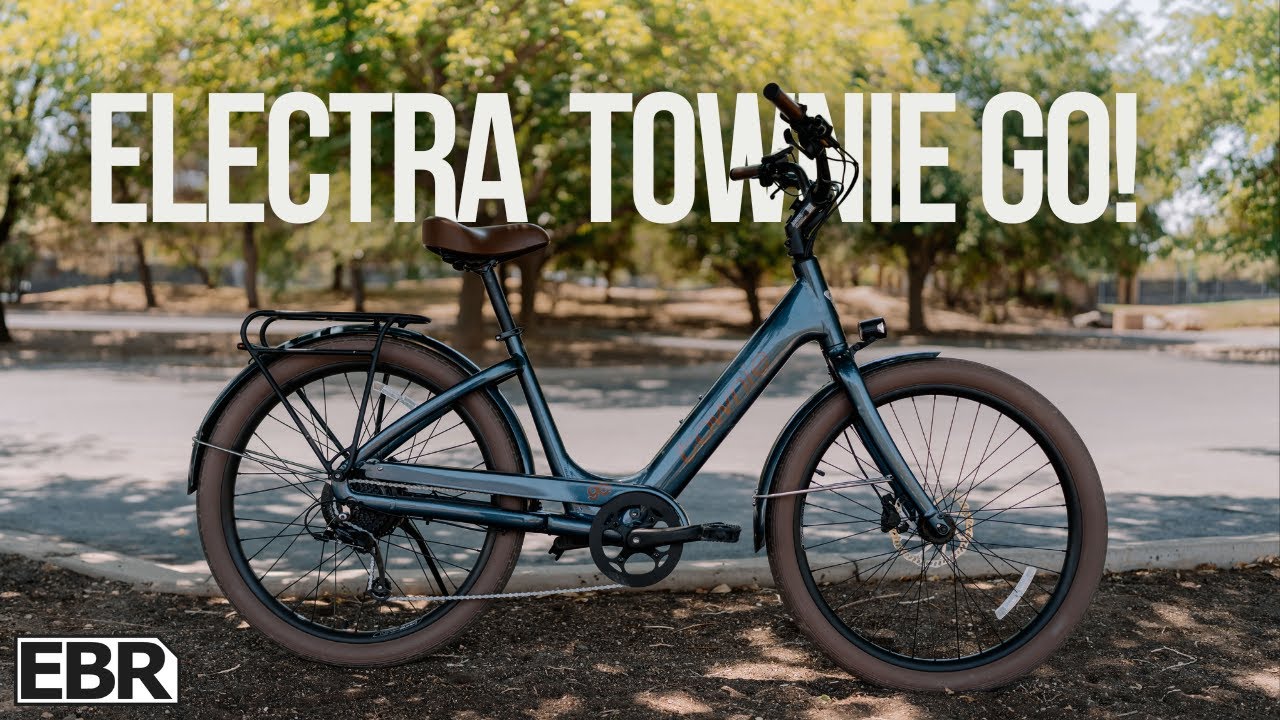
Hey guys, Mike here with EBR and this is the Electra Towny Go. It’s a modern take on a classic cruiser that gave me over 50 mi of range, has class 3 speeds, some new very innovative smart battery technology that ultimately extends the life of the battery and some new frame engineering that they call flat foot technology that basically just makes the bike more stable and easier to ride for a wider group of people. But we’ll get into all of that and more in this review of the Electra Towny Go. [Music] All right, guys. Now, the Electro Towny Go is a class 3 capable ebike that does have a throttle and can reach speeds of 28 mph. But I should say that’s on the S version, which is what we have here. If you get the nons version, that one will be limited to 20 m an hour and not shipable to the state of California. So, I think they just do that based on where you live in your local laws. You can get the class 3 or the class 2 version. Now, this is priced at 1999 and it is UL28.49 and UL271 certified. Now, in terms of weight, they say this bike weighs about 57 12 lb. And I always throw the one we get for testing on our local scale just to see if there’s any differences. And usually there is by quite a bit, few pounds here and there. But in this case, I was pleasantly surprised to see that it weighed right at 57 12 lbs. Kind of dead on the money with their estimation, which we don’t see too often, but I can appreciate as I test all these bikes that come in, and they’re not always just as close as that. Nonetheless, that’s a long way of saying it is what they say it is at 57 12 lbs. Now, when it comes to colors here, this is their Shark Gray. It’s got brown tan accents. I think it looks phenomenal. This is my favorite color out of the lineup. Now, it’s called shark gray, but to me, it’s got much more of a blue tint. Maybe that’s where the shark part comes from, the water, I don’t know. Nonetheless, it’s really classic, good-looking for a cruiser bike. But if you don’t like this color, they have a few other options. They have more of a teal color, more of like a pale purple color they call vapor. And then Orchid is going to be their bright metallic purple color that’s kind of just louder and funner. Um, so really, whether you want something more conservative and mild or just brighter and wild, they really do have a color that will fit any of those tastes. Now, in terms of sizing, this comes in two frame sizes. A small medium that covers from 411 to 5’8 and the large medium large that covers from 5’5 up to 6’4. Now, I am 5’11, so right in the middle of that medium large frame size, and I felt this bike fit me really well. I felt like I had plenty of room to adjust the seat or move it around, and ultimately anybody in that range should get a good fit out of this bike. Now, when it comes to specific geometry numbers for this medium large frame, we’ve got a 47in wheelbase from front hub to rear hub. We have our lowest point of standover height at 17 in here, right at that lowest point. And then you have about 10 in of adjustability here in the seat post. And then the reach up top is around 15 in, but I say around because based on how you loosen that stem and angle the handlebars for your comfort, it can really be anywhere from about 13 all the way up to closer to 20, just depending on how you like your reach. But I found in the middle spot kind of where it should be in my opinion it’s about a 15 inch reach. Now in terms of max payload, this is a 300lb max capacity. When it comes to things like accessories, fenders, lights. So we’ll start with the fenders. We do have color matched alloy fenders that regardless of what color you pick on the bike, the fenders will match and they are an aluminum alloy um with some really solid retention on them. They don’t rattle or wiggle like sometimes metal fenders can do. Now, when it comes to racks, we do have a Mik or a Mick HD rear rack here that is rated to hold up to about 55 lbs. And it’s got an integrated tail light here. Now, in terms of additional mounting points, we do have two bosses on the down tube where you could add a water bottle cage or some sort of accessory tool kit. And in terms of lighting, we have everything you need for just commuter ready lighting. So, we’ve got a front headlight that’s an adjustable angle up front. It’s an LED lumen or excuse me, an LED light with 180 lumens. And in the mik rear rack here, we have a rear tail light that also has a brake light feature when you activate the brakes and has turn signals built into it. When you hit the arrows up on the control pads up top, you will get amber corner light um turn signals that alert people behind you that you plan on turning. Now, in terms of tires, we have a two different size sets depending on the frame you get. So, this is the medium large. So, it’s got the larger wheel set. They are 275 wheels or 27.5 wheels wrapped in a 275x 2.35 in tire. Now, if you get the SM or the small medium frame size, you’ll get a 26-inch wheel with the same 2.35 inch wide tire. Now, the tires themselves are a nice tan color on this one, but not all depending on which color frame you get. They have a nice commuter slick tread on them or a cruiser slick tread that is good for wet pavement and things like that, but not off-roading. Now, the plus side of that is they’re very low rolling resistance. They roll really efficiently. They’re quiet and smooth, and frankly, you can air down just a bit in these and get some extra comfort out of them, which is what I do. Now, they say to run this between 40 and 65 PSI in these tires, but I do tend to stick to the very bottom edge of that cuz I always like getting a little more comfort out of the air volume and tires, especially on a rigid frame like this where there’s no kind of suspension in place. All right, guys. When it comes to the power on this, we have a 500 W rear hub motor here. Now, this has a torque sensor and it puts out 60 N me of torque. Now, when you talk torque sensors from a brand like Tre, you can expect they do it really well. And this was not surprisingly done really well. This is a very smooth torque sensor. Very nice feeling when it when you feel it onset. It’s very smooth and subtle. It’s not punchy or pushy. It feels like a natural way to pedal the bike. And really, the bike in general is just kind of very fun to ride. Between the smooth tires, the smooth torque sensor, and just the overall comfort factor of the geometry, it’s a very fun just playful bike to ride. It’s one of those bikes that you ride and just kind of enjoy it no matter where you’re going. Now, when it comes to things like the pedal assist levels, we’ve got three levels, eco, mid, and high. Each getting progressively more powerful, up to 28 mph on this S version. Now, if you also want to use a throttle, you have that on the right side up there, and that takes you up to 20 m an hour. Um, each of which have varying levels of power depending on which pedal assist mode you’re in. But if you want to play with those pedal assist modes, you can go into the Trek Central app and use the motor tuning feature. Now, that’s going to let you go in there and play with each level of pedal assist, but specifically play with the torque and power and how each level feels. And you could max everything out or you could dial everything back or whatever combination in between you want to do. Um, I did play with it just to mess around, but I found that the factory default settings were really solid, just nice middle of the road range to begin with. And ultimately, it’s going to probably give you the most optimized range um, and still have all levels of power available. Now, just keep in mind the more you max out everything in your pedal assist settings to make your motor perform faster, more powerful, that ultimately will obviously affect things like range and how long you can do that because you’re asking more work out of the motor, ultimately more work out of the battery, which will reduce range. But, nonetheless, if you’re the type that likes to tweak on your motor and want to play with those levels and just see what you can do with it, you’ve always got that option in this bike, which is really nice feature. Now, when it comes to the battery, this is a fully encased battery in this down tube. But before you panic, it can still be removed by a service technician for things like service, repairs, replacements. It’s just not removable at the consumer level for taking it off, you know, in the evening to put inside the house or take it inside for winter storage, which for some people, depending on where you live, that could be an issue. So, it’s worth just sharing now. And now, in terms of the battery itself, it is a 48vt battery that has about 10.9 amp hours, giving us 520 W hours of juice for our rides. It’s also got a 2-year warranty or 600 charge cycles, whichever comes first. In addition to that, this bike also comes with the easy mag charging. That is their magnetic charge port up top. Just think like Mag Safe for your iPhone, but essentially the same thing for your ebike. It makes putting it on and off the charger even easier without the worry of bending pins or damaging anything along the way, getting it ripped off or ripped out. It just makes it very smooth and very easy to do the whole thing. And the battery management system on here allows for some really unique charging modes, things like winter charging, but we’ll go into that when we go into the um Trek central app here in just a moment and we’ll go over all those features. But ultimately, there’s smart charging cycles on here you can do that will overall extend the life of the battery, which is a really nice feature and just a smart way of thinking, letting owners get a bike and then plan for having it for many, many years down the road. That’s one of the ways that it gets you there is with smart battery charging. because the more you overcharge or charge zero to 100%, the more you’re kind of taxing that battery. And so, they’ve got some clever ways in the programming of the new battery management system to kind of mitigate that and extend that life, but we’ll get into that in just a second. Now, when it comes to things like range, they say you can get up to 50 mi on a single charge. So, I did two runs. I did it in max PAS and I got about 38 mi, and that was going kind of full speed. And on minimum PAS, of bringing it down to eco, I was able to get 54 miles. So really anywhere between roughly 38 and 54 mi in my 180 lbs. Relatively flat course. Kind of ideal conditions, but nonetheless exceeding their estimations of the 50 mi range. All in all, that’s a solid number for most people for regardless of what you got that you’re tackling during the week. All right, so when it comes to components on here, we’ll start with the drivetrain. We’ve got an 8-speed micro shift setup. So a micro shift Mezu rear derailer 8-speed, and then microshift trigger shifters up top with a small window to let you know which gear you’re in. Now, the chain ring is a 44 to chain ring with an 11 to 34 to rear Shimano cassette. Now, this also has an alloy chain guard with 170 millimeter alloy cranks and flat plastic pedals for some traction. It’s got some little studs there and some reflectors for visibility. Now, as far as the micro shift drivetrain goes, I thought this was a really wellperforming drivetrain, especially the trigger shifters up top. They were nice and crisp, and it never had any problem going in and out of gears. It was never hunting for gears or rattling through gears. you get that cable tension right and it it really does shift very nicely. It’s a nice setup overall. Now, the 44 to chain ring to that 11 to 34 cassette is a nice solid wide range to tackle anything from pretty aggressive hills to going fast on flat terrain as well. And if you need any more, well, it’s an ebike. You’ve always got it in the throttle or the pedal assist. When it comes to braking, we’ve got Rush hydraulic disc brakes that are two piston calipers with 180 millimeter rotors, both front and back. And these rotors have a thickness of about 1.8 8 mm. All in all, the braking performance on a bike at 58 lb with this type of braking setup, very solid braking and it does really well even from higher speeds upwards of 25 mph to a fast stop. It performs really well, which I’ll show you when we go on a ride in just a second. Now, the saddle here is going to be this is like a comfort saddle. It’s kind of a wide padded saddle with the tan colors to match the grips and the tires on here, but it’s got these elastimeters on the bottom. They’re like rubber basically springs in here. And ultimately, it’s a very comfy saddle. And with the geometry of the bike, the way it’s just kind of a sit back and relax style, you can put all your weight in your sitbones here. And it’s just a very comfortable ride, mostly because of these saddles, and then obviously because of the nice tires on here as well. It really does team up for a smooth, comfy ride. Now, up front, as you can see, no suspension in the front, no suspension in the rear, fully rigid frame. And on the handlebars themselves, we have a 700 wide millimeter bar or 700 millimeter wide bar. It’s an alloy bar that’s got a nice rise to it and swept back for kind of that relaxed feel. Instead of reaching forward aggressively, you’re kind of just sitting up and being more comfortable. Now, like I said, the reach depends on how you loosen these um stem bolts and angle this handlebar forward or backwards depending on where you like it comfort wise, but it’s about a 15-in reach, and it’s very comfortable in this middle of the road setting for me. But depending on your height and your arm length, you may want to change that to just what’s more comfortable for you. But just know ultimately it’s a very smooth, very comfy, just nice relaxed hand position on these bars. Now, starting on the ends, we have these kind of leather wrapped Electra um grips on both sides. On the left side over here, we’ve got a push throttle and the PAS control buttons. In the center, we have a quad lock mount for a quad lock phone case. If you have that, you can apply it here and hold it in place. I didn’t have one on my phone, so I just used a typical um phone mount that clamps to the bar. that worked just as well, too. Now, on the left, excuse me, right side here, we’ve got the micro shift trigger shifters I was telling you about. Both ends have the Rush um alloy hydraulic disc brake levers, and we have our turn signal buttons here on this right side. Now, when we look at the cable routing on here, everything is run to the center to this one kind of junction box, if you want to call it that. It mounts right under the stem and then they go down into the headset to their final destination throughout the rest of the frame. Um, but let’s take a closer look at this display and we’ll also open up that Tre Central app and we’ll go through everything from the motor tuning to the battery management systems and then we’ll go out for a ride and talk about how all of this translates to kind of just how it feels on the road. All right, so this is the home screen on the display. Now, I will say about this display, it’s not a massive display, but it’s bright enough to see get everything you want at a glance. Um, in some scenarios when I was riding this bike, I did have the display wash out a little bit to where I couldn’t see anything on it. But that’s only like midday under direct sunlight, which is only happens at certain angles. So, it never lasted long. But just a heads up, if you do look down in the middle of the day on a bright day and you see like it, oh no, it looks blank or it died on me, just turn your handlebars a little bit. It’s probably just the angle the sunlight is hitting it. But I had that a few times, so it’s at least worth sharing to you guys. Now, this is the home screen layout. We got the time up in the top left. We have the Bluetooth indicator and then the headlight indicator next to that. The top bars and numbers are going to be referencing the battery percentage remaining. The middle is going to be your speed, which you can change between kilometers and miles per hour should you want to. Below that is going to be the odometer. And if you tap the mode button beneath it, it’ll change that to how many miles remain based on your charge level. And if you see it says zero miles remain, that’s because we have no pedal assist on. Now, if I go up to eco mode, that will change. Says we have 75 miles left. If I go up to mid, that’ll come down to 47. And if we go up to high, it’ll say roughly 37 miles, which if you remember my high test, I got 38 miles. So, that’s pretty darn accurate as far as that goes. But we’ll turn that off to back to nothing. And then hit that will take us back to our odometer. Now, if you hold the up button here, you’ll see the headlight indicator turns on. Just holding it for a couple seconds, you get your headlight on. Holding it again for a couple seconds will turn it off. And I’m not going to do it now, but if you hold the negative button, that will activate walk mode where it will move at about 3 m an hour for you to just walk with you rather than you pushing along a heavier bike, which is a nice feature. Now, there aren’t many advanced options in this display. Those are mostly in the app, but I’ll show you what we do have. We’ll hold both the I think we hold the mode button. There we go. We get the advanced settings here. We get screen brightness. We can change units between miles an hour and kilome/h. And we can get error codes if we had any error codes. But that’s all you’re going to get in the display. Like I said, everything you need at a glance with not a bunch of extra fluff in there, which is nice. And anything else you need, you can always jump into the Tre Central app, which we’ll go ahead and do that now. So, we can take a closer look at the app and see how it all integrates to the bike, plus those extra charging and motor tuning features as well. All right, guys. This is the home screen on the Tre Central app. This is going to be kind of your command center for all things related to anything outside of just the basics. So, like I said, everything basic is covered in the display. But when you want to get into the deeper settings, navigation, motor tuning, battery charging modes, that’s where you jump into the app. Now, at your home screen, it just let you know that your bike is connected. It’s the Towny Go, and we have 93% battery remaining. Now, if I tap this gear icon next to it, that will take us into these really cool battery smart charging modes. Now, here you can get charge alerts. You can get to extended life mode, long-term storage mode, and then optimized charging. Each of these are going to be a different profile that’s going to um offer some sort of level of improved efficiency in the charging. Um here you can get alerts when it gets to a certain percentage. Um it says need more battery before your next ride. With charge alert, you can see how much charge you need and will let you know when your battery’s charged up and ready to go. So, if you know you need a certain percentage to get to a certain location and you’re kind of in a pinch, you can set that charge alert up, throw it up on the charger, and you’ll notice exactly when it’s got the charge you need to tackle whatever your day has ahead. Here in extended life mode, um, says get the most out of your battery. Cuz if you ride often but rarely use your bike’s full range, you turn on extended life mode and that’s going to that’s going to prolong the life of the battery with only a small decrease of your ebik’s range. Essentially, it’s not going to do full charges like zero to 100%. It’ll keep it within a certain range. Maybe it’s 20 to 80% or 70 to 30, but something that’s more optimized to not do a full charge cycle. So, you still get the most out of the charge, but you don’t put a full charge cycle on the battery’s life. Um, optimized charging. This is where you keep your ebike plugged in on the regular um charge with optimized charging. Basically, it charges your battery at a slower rate to reduce wear and maximize its life. This is going to be more of a trickle charge if it’s more of a long-term charging. Um, it’s not going to just leave it on there with full blast the whole time. And then long-term storage. This is something you can store your bike and keeping your battery in a healthy um at a healthy level instead of ruining your battery by keeping it charged in in long-term storage for a long time um or leaving it unplugged for a very long time. This is going to allow it to just smartly charge while it’s in long-term storage. And then down here you can see some just metrics about the battery and its current health. It’ll give you like remaining capacity, remaining power capability, roundtrip efficiency, um internal battery pack resistance, gives you a lot of just different metrics you can get out of the battery itself. And though over the life of the battery, you can see how those numbers change. Now down here, we’ve got our estimated range has in kilometers here um based on PAS level. And then if we use throttle only, it says we’ll get about about 25 miles or 40 km. Um, if you hit let’s ride, that’s going to take you to Sorry. If you hit let’s ride, that will take you to this screen, which is going to be kind of just a large display you can use in the event you want to ride the bike and you don’t want to look at the small display. Um, you’ve got the app display as well. Or you can pause your ride and then you can finish ride when you’re done and it will just save your uh ride for you. Now, if we go back to here, we can go to tune your motor. This is going to be the ability to kind of play with the motor settings. You’ve got three different levels of pedal assist, eco, mid, and high. And you can change pedal response and max power through each of those. And if you notice as I do that, so we’ll bring the power up on one of these. And that will ultimately when I press this apply um it apply the changes to the bike, but it also changes the estimated range we have left once we’re done. So as you play with these numbers on the bike, you can see how it’s going to affect the range. Now, if I bring those all the way back down, so right now it says in eco we have 64 km. If I bring that down to nothing or just barely on at all, that almost doubles us to 130 km. Basically, you use less power, you get more range. You use more range or you excuse me, you use more power, you get less range. That’s kind of the idea behind it. So, I’m just going to restore to defaults because I don’t want to leave one of these wild settings on and the next person who uses this think is broken. But, that will kind of apply to the bike. You’ll get a notice that it’s all good on the display. And you’ll go back to the screen as soon as this is done here. There we go. Factory settings applied. So, we’ll go back. And right here we have our navigation settings. This is actually a really cool feature in my opinion. They didn’t take just standard maps. They’ve got I don’t have the best service where I’m at right now, so it’s not loading very well, but basically they’re like maps with really good layers like topographic features and more to the terrain around you. So you can actually see where you’re at instead of just having like an animated display of a road or a sidewalk. This gives you more of a real world view, but you can change those layers as well. Um, these numbers will change based on your pedal assist level. And to back out of that, you can go into your histories of your recorded rides. And then you finally have your settings here, which will take you to the same places or give you just app information about the bike like the app info, navigation settings, rider profiles, and back to motor tuning, which will back out of that and take us back to the home screen here. Um, the odometer right now is at 196 km. You can disconnect the bike from altogether using it at all. That will unpair it from the app. And essentially that is everything you have and your bike and on the Trek Central app really laid out nicely. It’s got everything from ride tracking and planning all the way to um you know the smart battery charging. There’s just a lot going on here that I think a lot of people will get a lot of use out of. So that wraps that up, but let’s go on a ride and see how this feels out on the road. All right, guys. We’re out here on the Electra Towny Go. And this is the S version, which the only difference between the S version and the nonS version, just the standard towno is the S version has 28 m an hour class 3 speeds, whereas the nons version is limited to 20, which basically comes down to like what state you live in, your local laws, what you’re allowed to buy. Um, which is why they do that. At least in my I’m guessing that’s why they do that. But nonetheless, the only difference between the S and nonS is the total speed. I just tell people to remember S is for the speedier version going up to 28 miles an hour. All right, so I gotta say, and I don’t say this too often on bikes, but this thing is just fun to ride. It’s smooth, it’s easy, it’s quiet, it’s just a fun bike. It’s a one of those bikes you can cruise around town or cruise to school and cruise to the beach, whatever you’re doing. It just makes it kind of fun. I don’t really know how to describe it. Um, but and I don’t say it often, but I found myself thinking it a lot when I ride this bike. So, I figured it’s only fair to share it when when I’m feeling it. And that’s it’s how this bike feels. It just feels fun to ride. It’s easy. It’s really comfortable. Just a lot of really cool parts to this bike to enjoy. Now, with all that said, let’s talk about some actual performance and metrics and things like that. So, this is in three levels of pedal assist. So, you’ve got eco, mid, and high. We’re currently in eco and I’m just cruising. The torque sensor is very dialed in and smooth. I’m cruising around 13, 14, 15 miles an hour depending on elevation changes, but just at like a noeffort pace with a nice program torque sensor in eco mode. I’m just basically cruising around 14 mph, which is kind of an ideal speed. You’re not going fast, you’re not going slow, and get anywhere in a pretty reasonable time. But we’ve also got a throttle on this. So, let’s stop on this throttle and see how it does. Getting us up to 20. And I’m going to do it in high. We’ll see what that changes. But 3 2 1. And so, we’re at 10 miles an hour. 15 and 20. So, not crazy fast, but also not super slow. It’s just a kind of good middle of the road everyday lifestyle bike speed that you’d expect. Um, but then we got a little hill up ahead. This little short hill up ahead. It looks really small on camera and it is technically small, but it’s got a 9% grade. There’s a sign on it if the construction workers haven’t taken it down, but it’s little 9% jaunt. Let’s see on throttle how much we lose going up this. Mind you, we’re still in eco mode. And so we lost a few miles an hour there. Um 60 Newton meters of torque at a 500 W motor. It’s going to perform well enough on hills. Um and that’s with no pedaling of course by pedal that will do much better. And when we go around this bend in the neighborhood, we’re going to go up. It’s more of a sustained climb. It’s actually like a/4 mile long in length. Um, but it varies between like five to 7% in its grade. So, not super steep, but um, a lot more than just a slight incline in the road. And that’ll give us an idea of how it performs when you’re using pedal assist. Um, even in eco mode like I’m in right now, um, going up the hill. So, we’ll come to this. We also have turn signals on this bike, which is sweet. You can hit them. You see, they come on the display for a second and then they go off on their own. But so let’s just cruise up this hill. I’m going to go to mid. And that’s accelerating nicely up the hill with my pedaling. And that’s not hard pedaling. I’m not using a ton of effort. I’m not getting out of breath. I’m not working hard for this speed. Um this is just pretty nominal regular everyday effort. Um, it’s not raising my heart rate and I’m just able to hold 16 15 up the hill here. And if we go to high, I felt a little more. And as you can see, we’re still accelerating up the hill. And again, I’m not pushing hard. I’m not breathing heavy. My heart rate’s not going up. This is really standard relaxed, just pedaling, casual pace. And I’m holding 18 mph. And if I start to push a little hard, now we’re going 19. Now we’re going 20. So, we’re still able to accelerate up the hill even with a little bit of effort. So, the motor and power is it’s really kind of that sweet spot for a cruiser. It’s got enough to get you around town. The hills you got, it can work through them. Um, it’s going to be great on flats without being overpowered and overweighed down by a big 750 W motor. I think it’s a good balance. I don’t know if you guys can see that on camera, but certain angles when direct sunlight, I do lose the screen a little bit, it washes out. Like right there, I lost it for a second. I thought it was off, but in just certain angles of direct sunlight midday like this that it can get it. Other than that, I’ve never had an issue seeing it. So, we’ll use these turn signals coming down this trail here. Turn signal on. It’s clear. All right, so let’s get up to a little higher speed and check the brakes. These are the Rush hydraulic disc brakes, two piston calipers, 180 mm rotors. Pretty standard setup for any ebike these days. And so we’ll get to about 20. So it says 23 on the um display. 3 2 1. So the stopping power is really nice. Um I felt a little modulation in there. You got a little room to work with as far as how you feather that stop, which is good. No crazy noises, no tire screeching, never fishtailed or anything. Nice controlled stopping. Another aspect that I have been pleasantly surprised with on here is the micro shift trigger shifters. They’re really crisp and quick between gears. Um, and I know a lot of people are kind of always on the fence about Microshift, and it’s really I just feel like they’re one of those really solid value brands that performs really well dollar for dollar for dollar. And with the torque sensor and the pedal assist and the motor and then these gearings, you can pretty much get around to anywhere you want to go. I never felt like this bike was limited despite being 500 watts and kind of a cruiser style. Now, the only place that’s really going to be limited is going off-road and doing anything crazy. We have no traction on the tires or no no major tread knobbies on the tires for anything off-road. Um, we do have some seeping lines or some some water lines for having grip and cornering and wet pavement surfaces, but it’s definitely not going to be an off-road bike. No suspension, no knobbyby tires. It’s just not built for that. Hence, you know, it’s a fun cruiser. I think it’s really going to be a bike that if you don’t know what kind of bike you want, but you know you’re never going to do any kind of serious off-roading that’s just not in your wheelhouse, you live downtown, you don’t go camping often, and you want a fun get around town bike, a fun go to the lake, go to the beach style bike, commute to school, a bike that looks really good. This shark gray and this tan accents I think looks solid on this bike. Um, yeah. I mean, you could say I’m a fan of this. I’m not too not usually too hyped up about cruiser bikes. They tend to be kind of boring to me, but something about this one is just fun. It’s fun to ride. It looks good. And, you know, Tre owning Electra. Everything’s done right. This is sharing the same motor uh setup and battery power setup as the new Tre FX models, FX1, and it just feels like a quality bike. It feels really well done. Coming in just under $2,000. All in all, it’s a solid buy with a lot of potential for just a lot of daily lifestyle activities. But let’s go back and put it on a stand and let’s talk about it from kind of an owner’s perspective. Things that maybe you wouldn’t see when you’re on the website that you would want to know before you got your hands on it. All right, guys. Let’s take off our reviewer hats for a second and put on more of an ownership hat. And when you’re looking at buying a bike, whether you’re on the website or even going into a Tre store and the sales guys talking to you about everything the bike has, it’s easy to go through all the good and see all the good. But what about the things that are not so easy to see that might not be so good? I’ll point out some of those as well as some of the just exceptionally well done things on here. That way you have more of a balanced view of what you’re getting um instead of just looking at it in the store and buying it and then realizing it afterwards. This will kind of help give you a heads up on those things. So, first things first, I’ll start with some of the good. So, good here, all name brand components. So, we’ve got a Shimano HG cassette, a Micro Shift um rear derailure, micro shift trigger shifters, 170 mm alloy cranks, everything on here as far as like if you need to repair something or replace something, your local bike shops will have these parts or you can just order them off Amazon and get them in a day or two. This bike comes with very name brand consistent components that are not only going to perform well, they’re just workhorse components, but they’re really easy to find and they don’t cost a lot to replace. All those are really good perks if you plan on having the bike a long time and want to maintain its kind of overall ride feel over the years. Having access to the same good parts will always be a nice feature. Now, on top of that, you notice when this bike is in the smallest cog in the rear, this chain’s really close to this chain stay, meaning as we hit bumps, that’s going to rattle on this chain stay, which happens on many bikes. It’s nothing from a build quality perspective. But what Tre did is they added a really nice beefed up layer of protection here right where that chain might be touching or rubbing over time, which is ultimately going to protect all that paint and and aluminum underneath from getting just beat away by that chain over the years. That’s going to protect it and just keep that positioned nicely and in a place where it’s not going to get just chewed up over the years. Now, on top of that, we also have the easy mag charging. So, this is TX, like I said, think of Mag Safe charging for your iPhone. Basically, you’re getting that now on your ebike. And while at first glance, a magnetic charger connector might not seem like that big of a deal. If you think about current chargers on bikes and you look inside, they usually have small pins you have to be careful with, they sometimes hang outwards and if you hit them with your leg or something falls, they can get ripped out and damaged. And while those are kind of worst case scenarios, they definitely do happen fairly often. So, having something like this that you just put on, you can do it with your eyes closed, it’s always going to be in the right orientation because all it needs to do is just stick to it and it starts charging. Um, that’s a really nice feature. But then on top of that, like we talked about in the app section, you’ve got all these smart charging modes that are just going to optimize and extend the life of the battery rather than just a standard charger on a ebike that just charges it from zero to 100 every time. This has got some brains programmed into it that’s going to say, “Yeah, we’re going to charge it enough to whatever you need it for, but we’re also going to do it in a way that extends the life of the battery and ultimately your bike.” So, I think those are all really solid options. Now, as far as things that you wouldn’t pick up on maybe in the store or at the time you’re looking at it, I’m going to start with um kind of one of the ones that is a bit of an elephant in the room, at least for people who work on bikes, and that is the beauty of internally routed headset cabling is just that it’s very clean. Everything goes right into the head tube here and it’s gone out of sight, out of mind. It doesn’t interfere with turning the handlebars. That’s all great from an aesthetic standpoint and just how it looks. It looks great. The only downside to it is when you go to get this serviced, maybe maybe you need to have a brake line replaced. Maybe you’re going to get shifter housing cable replaced. Maybe you change the stem length and they have to replace the length of one of these cables. Whatever the case may be, if they have to get into here, they’re still going to be able to do it. It’s not going to be a problem. Every bike mechanic knows how to work with these type of headsets. The only thing it does do is add about an hour of labor to the job that you’re getting done. And depending on where your bike shop is, that could be anywhere from extra $50 to $120. So, just keep that in mind because and to the to the mechanic’s defense in your local bike shop, these are not the easiest to work with. They’re kind of add an extra layer of just, oh gosh, got to get all these extra parts taken care of and move these cables a certain way. Certainly doable, but just takes a little bit more time on the mechanic side, ultimately costing you just a couple more bucks or a few hours of your own frustration if you own the bike and do your own maintenance. Now, on top of that, we also have another somewhat of a negative to some people. To others, it won’t matter at all. And that’s going to be the fully integrated battery in the down tube. Now, at one hand, it’s more attractive looking. There’s no lines, no battery covers, nothing to get in the way of the overall look of the bike. And from a good standpoint, it’s not you can’t steal this battery. You can’t just walk up to it, pop the battery out, pick the lock or whatever, and drop the battery and take it and go. It’s in there. As long as the bike is there, your battery is there. Now, with that said, if you live in the up in the, you know, certain areas where it’s just constantly snowing and sub-zero temperatures and you may need to have your battery, your ebike battery in a more optimized like environment, many people like to rely on the ability to just drop that battery out, take it inside for the night and keep it charged or safe that way. In this case, you’d probably have to take the whole bike inside to a more climate controlled area. Um, but like I said, it’s got its pluses and its minuses. Depending on where you live, this may be a problem and other people, they may not care at all. Um, I think it looks good. I don’t take my battery off to take it inside for anything. So, I prefer this look. And in the worst case scenario, you have to get something repaired or replaced. A trek or service mechanic can actually still access it through the access panel and still pull the battery. It’s just not going to be an everyday consumer dropout like some people like on their bikes. Just something to be aware of. Other than that, everything’s really well done on this bike. It rides really smooth. The components are all name brand and straightforward. Everything performed really well on a ride test. And all in all, you know, when Trek and Electra get together, make a bike or Tre makes a bike, it’s just done really well. And that shows in this bike. All right, guys. There you have it. The new Electra Towny Go. A really fun cruiser that I honestly, every time I rode it, I just kind of enjoyed the ride. It’s a bike it’s kind of hard to be in a bad mood when you ride a fun cruiser like this that’s comfy, smooth, and just relaxed overall. And it just translates to an enjoyable ride everywhere I went. Now, we had lots of great performance here. We had that 500 watt motor with 60 N meters of torque, a range of over 50 mi. um class 3 speeds, smart battery technology. It was a really just good bike. Well done. It’s got all the modern features that you’d expect with a really modern 2025 ebike, but in true Trek fashion or electro fashion, they found a way to not det not detract from its overall classic cruiser soul. So, if you have any questions about this that I did not answer, drop them down in the comments and I will figure that out and shoot them your way. And until the next review comes out, we’ll see you guys out on the trail.
See the Best Price on the Electra Townie Go! S here:
https://ebreviewdeals.com/Electra-Townie-Go-S
Check out our written review here:
Electra Townie Go! Review: A Classic Beach Cruiser with Smart Tech
Testing the 2025 Electra Townie Go! S – a Class 3 beach cruiser that combines classic style with smart e-bike tech. Real-world range testing, Trek Central app features, and that gorgeous shark grey finish.
At $1,999 with included accessories, does it deliver premium value? Full review covers motor performance, comfort, components, and whether this cruiser is worth buying.
#electraebikereview #electratowniego #trekbeachcrusier
00:00 – Intro
00:44 – Overview
05:16 – Motor & Battery
09:11 – Components
12:49 – Display
15:06 – App Walkthrough
20:46 – Ride Quality
29:08 – Mechanic’s Take
34:36 – Conclusion