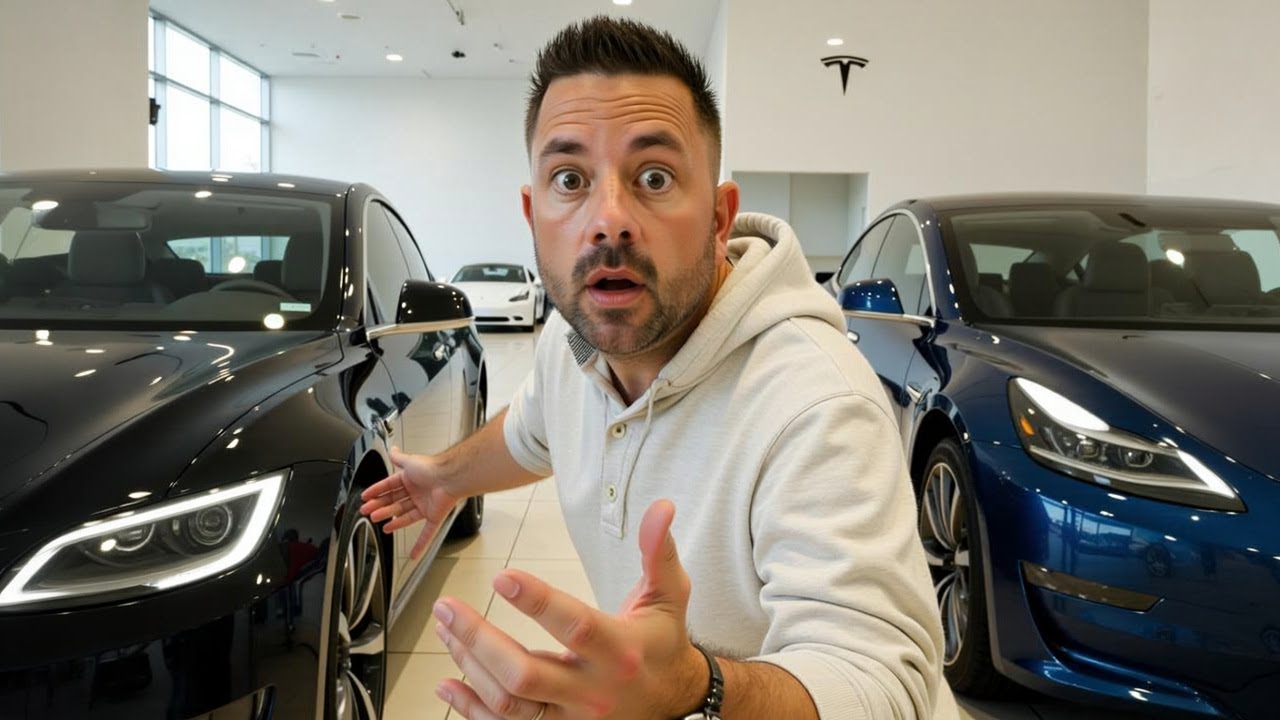
Are Electric Cars Really the Future?
What’s going on YouTube family? Today we’re going to be talking about the electric dream. Why EVs may not be the way to the future as we thought. In the early 21st century, the world stood on the cusp of an automotive revolution. Electric vehicles, EVs promised to be the key to a cleaner, greener future. Automakers, governments, and environmentalists hailed the shift from fossilfueled cars to batterypowered ones as an inevitable transformation that would both save the planet and revolutionize the way we think about transportation. It seemed like the perfect solution to climate change, air pollution, and our dependence on oil. Yet, as we look back today, we find ourselves at a crossroads. The grand promises of electric vehicles have not fully materialized, and what was once seen as the future of transportation may turn out to be more of a costly mirage. As the years have passed, the reality of widespread EV adoption has revealed some hard truths. What was marketed as the solution to all our problems is in many ways turning out to be more expensive and less efficient than anticipated. The initial hype, a cleaner, greener future. When electric vehicles first began to appear on the market, their promise seemed too good to be true. EVs were sold as a panacea for environmental problems. They would cut down on greenhouse gas emissions, reduce the harmful effects of air pollution, and usher in a new era of sustainable transportation. The image of a world where roads were dominated by silent emissionfree vehicles powered by clean energy was captivating. Governments incentivized EV purchases with tax breaks, rebates, and promises of a greener tomorrow. The push for electric vehicles was based on the assumption that their energy use was fundamentally cleaner than that of gasoline powered cars. Battery technology, it was believed, would continue to improve, making EVs more affordable with longer ranges and faster charging times. The infrastructure to support them, such as charging stations, was expected to expand rapidly. It was a utopian vision, one that seemed both achievable and necessary for the health of our planet. The reality check, the hidden costs. Fast forward to today, and many of these assumptions have been questioned. While it is undeniable that electric vehicles have made significant strides in terms of performance, safety, and energy efficiency, the reality of their widespread adoption is far more complex. The dream of an entirely electric future may in fact be more costly than it’s worth. One, the environmental cost of battery production. One of the most glaring issues with electric vehicles is the environmental impact of their production. While EVs themselves may have no tailpipe emissions, the production of their batteries, particularly lithium ion batteries, comes with significant environmental costs. Mining for lithium, cobalt, and nickel, uh the key materials in these batteries, is energyintensive and often harmful to local ecosystems. In regions like the Congo, where much of the world’s cobalt is mined, human rights violations, including child labor, are widespread. The extraction of these minerals also contributes to deforestation and water contamination. Moreover, the energy required to produce an EV battery is substantial, often offsetting some of the emission savings from using the vehicle. In regions where electricity is primarily generated from fossil fuels, the net environmental benefit of driving an EV can be much smaller than anticipated. Two, battery disposal and recycling. The life cycle of an EV battery is another issue that has yet to be fully addressed. After years of use, batteries degrade and need to be replaced. Currently, battery recycling is not widespread, and the process itself is complex and expensive. Most of the materials within an EV battery are not easily recyclable, and improper disposal of old batteries can lead to environmental contamination. As the number of EVs on the road continues to grow, we will face an impending crisis of battery waste. The environmental consequences of this will likely be felt for decades. As the infrastructure for recycling and repurposing old batteries is still in its infancy, three, the cost of EV ownership. While the initial price of an EV may seem attractive with government incentives and rebates, the long-term cost of ownership can be steep. A typical electric vehicle is more expensive upfront than its gasoline counterpart. And while battery prices have been dropping, they still represent a significant portion of the vehicle’s cost. In addition, EVs require specialized maintenance, and parts such as batteries can be costly to replace. While EVs have fewer moving parts than internal combustion engine vehicles, they are not immune to mechanical issues, and the repairs that do arise can be expensive. Moreover, as more EVs hit the road, demand for electricity will rise. To meet this demand, utilities will need to upgrade infrastructure, potentially passing the cost on to consumers in the form of higher energy prices. In some areas, the cost of charging an EV could surpass the cost of fueling a conventional car, particularly if electricity comes from non-renewable sources. or four, range anxiety and charging infrastructure. Another major hurdle for electric vehicles is the issue of range anxiety. While the range of EVs has improved, they still lag behind gasoline powered vehicles in terms of the distance they can travel on a single charge. For many people, particularly those in rural areas or with long daily commutes, the limited range of an electric car is a deal breakaker. Additionally, charging infrastructure remains inadequate in many parts of the world. Despite rapid expansion, public charging stations are often few and far between, and charging times remain much longer than refueling a gas tank. The reliance on home charging is also not a viable solution for everyone, especially for those who live in apartments or urban areas without dedicated parking spaces. The inconvenience of charging combined with the uncertainty about the availability of charging stations on long trips has left many consumers wary of making the switch to electric vehicles. Let’s talk about the long-term picture. A extremely expensive gamble. Despite these obstacles, the push for EVs continues, driven by the promise of a cleaner, more sustainable future. However, as more data and experience accumulate, it’s becoming increasingly clear that the future of transportation may not be as simple as a universal switch to electric power. While EVs certainly have a role to play in reducing emissions, they are not the magic bullet that many have hoped for. In fact, the widespread adoption of electric vehicles could come with a host of unforeseen consequences. Environmental degradation from mining and battery disposal, higher long-term costs for consumers, and the challenge of scaling up infrastructure to meet demand. In the end, the dream of a world powered by electric vehicles may not be worth the price. The environmental cost of battery production, the need for continuous upgrades to energy infrastructure, and the economic burden on consumers could make the long-term cost of EVs far higher than the benefits. It’s possible that we’ve placed too much faith in technology to solve our most pressing problems only to find ourselves facing new complex challenges as a result. Perhaps the future of transportation lies not in a single solution, but in a more nuanced approach that includes a mix of cleaner technologies, hydrogen fuel cells, improvements in public transportation, and innovations in urban planning and mobility. The electric car, for all its promise, may not be the future we envisioned, and that’s something we need to seriously reconsider. So, we’ve all been told the EVs are the future, but they haven’t told you all the convoluted things and the direction on how to get there. Now, I’d love to hear your opinion in the comments section below. What do you think of some of the remarks that we made in this video? On top of that, are you a current EV owner? Are you having any type of issues with whether it’s resale infrastructure problems? Also, please follow me on Instagram, Lucky Lopez. We’re going to do a lot more fun stuff about behind the scenes about going into the actual EV market and showing all these cars and how the resale value is dropping. Um, once again, I’d like to thank you guys so much for watching and we’ll see you next video. [Music]
Are Electric Cars Really the Future?
Revenued: https://info.revenued.com/apply?refsource=Influencer&subrefsource=Lucky-Lopez
Book a Consulting call with Lucky 📞 👨 https://automotivelife.com/#section-d7n-9a3EGE
Contact me at 📧 Lucky@Automotivelife.com
IG 📷: https://www.instagram.com/luckylopez
X ⚠️ https://x.com/Luckylopez