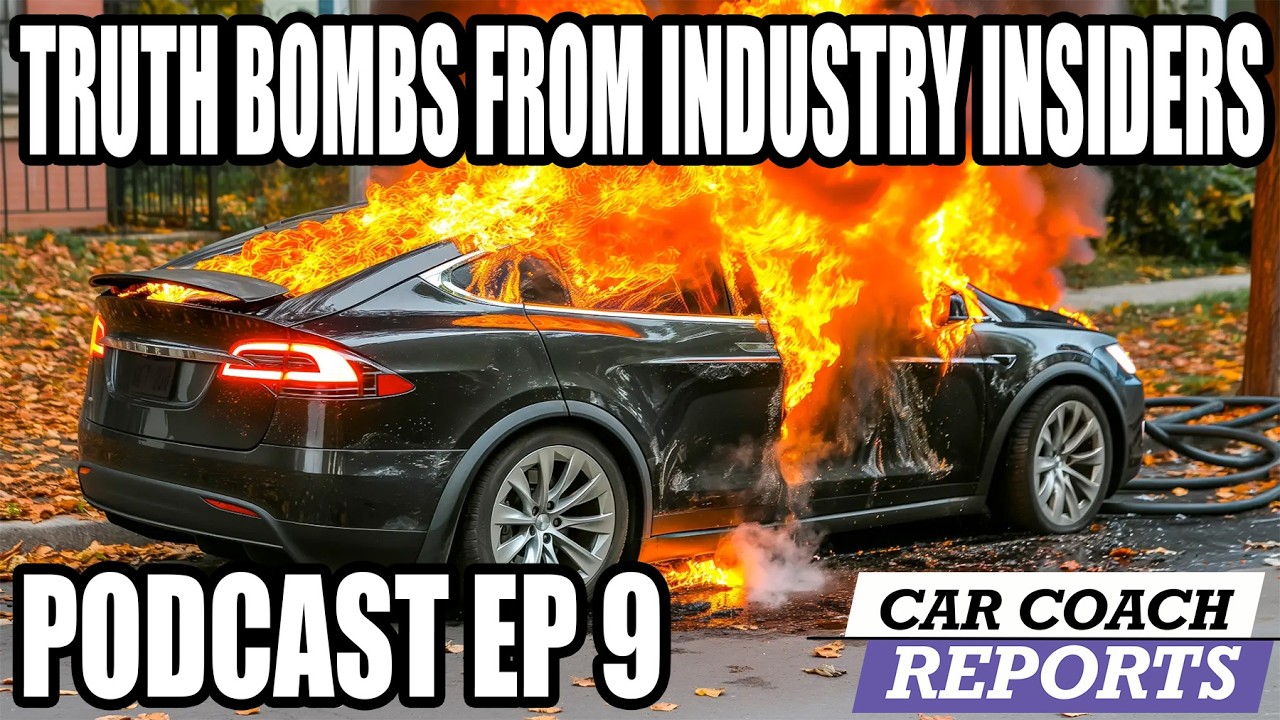
Electric Vehicle Meltdown? Truth Bomb from Car Industry Insiders
There are some major changes happening in the automotive world right now with the passing of the big beautiful bill, the repealing of the EPA waiver, and we don’t know what companies are going to survive and which ones are going to collapse. So, that’s what we’re going to dig into real deep today. I’m Paul. And I’m Lauren, and we’re going to talk about the truth of the auto industry with no agenda. We’re not getting paid by any brands. We’re not getting paid by big oil. We’re here to tell you the truth about the brands that are going to survive and which ones are going to die. Yep. and and these changes are having widespread effects. So, we’re going to go through every single manufacturer to talk to you about which ones we think are going to be the most heavily affected and how they’re going to survive, especially where they currently are right now. Because, um, kind of understanding this position is going to heavily affect what cars you can buy moving forward, especially if you lease every a new car every 3 years or if you’re investing in the markets or if you work at a dealership and you want to know what to expect. All these things moving. so quickly, especially with the tariff discussions and all the changes in manufacturing, lot millions, billions of dollars being moved uh between different manufacturing facilities. The passing of the big beautiful bill and the repeal of the EPA waiver to California means that there’s no longer a a mandate or even just a pseudo mandate that says that you have to buy an electric car. And what that means is that it’s essentially allowing the market to prove itself. Electric vehicle sales are not very big. Uh the they peaked at 8% in the last uh in the last numbers that came out and it’s just proving that people aren’t buying them. So when you hear us dig into why electric vehicles are not a good business plan, that’s really what we’re talking about here is that the the market just cannot sustain this this type of vehicle that nobody wants to buy. Okay. Having with us today, we have a panel of experts Anton Walman. He’s a sellside analyst and works in the financial world for decades specializing in automotive and technology. Anton writes a column for Seeking Alpha, which is definitely worth subscribing to. Carl Brower uh offers extensive experience and we’ve known each other for decades in the auto industry and he’s a expert in automotive data specializing in analysis, market trend reporting, automotive knowledge and you can find Carl on IC Cars as well as Carl Brower Cars on YouTube. Welcome guys. Hey, great to be on with you, Lauren. I should also qualify that there is approximately a 100 days worth of electric vehicle inventory in the US and that is while some brands thought ahead, others well they’re they’re digging in their heels on all electric and that’s kind of where the winners and losers start. So, we’ll go through the different brands. Um, Anton, welcome to the show. Tell us what your thoughts are initially and then we’ll go into some of the brands. Yeah. So all the stems from the passage last week of the u uh big budget bill, the reconcil reconciliation bill in Congress signed by the president July 4th and it has two components that is pertinent to this discussion. One is the ending of the federal tax credit $7,500 to qualified purchasers and leis that takes into effect on September 30th. By far the bigger impact to the industry is the ending of the so-called EV mandate. In other words, the fines that the automakers have to pay in a federal level in order to uh you know basically meet the quota of the total fleet mix that they’re selling into the market. So the 7500 is a known figure. Everybody’s talking about it. But the impact of the other part is less discussed and less known because the economics around it are not as explicit. The automakers aren’t really telling you how what they’re doing behind the scenes to achieve that formula because their penalties are in the many many many thousands of dollars on the federal level alone. And in order to meet that they either have to buy credits from somebody who’s got credits to sell and that’s the normally they just the EV makers and by far the largest one is Tesla and or they can uh just sell more EVs. Well, how do they sell more EVs? Well, they have to price them below market because the dog isn’t eating the dog food. I mean, if they were to charge for a Navy the cost plus the same margins that they would have on their average gasoline vehicles that they’ve had in their portfolios for a century, those vehicles would be far more expensive. They would cost whatever they sell into the market today for 39,000 might be 79,000. And of course, then they wouldn’t sell as many. So, they’re taking a bath on all of those models. So, that is going away immediately. And as a result, from an accounting perspective, all the automakers right now, their cost structure for their average gasoline vehicle fell, just fell now by several thousand per car, which means that they can price them lower. So what is clear is what is going to happen on an all other things equal basis with the gasoline cars. They’re going to fall in price. What is not as clear in the short run and in the very short run with meaning within the next year or so is what is going to happen with EV pricing because in the short run they have all of these inventories of EVs still on the books and they have production schedules and models that are launching now and for the next year or so that had been planned since five six seven years ago. And so there’s an overhang. I mean you can’t like stop this oil tanker and turn it around on a dime. This was going to take roughly in my opinion and I guess roughly almost about two years for them to adjust their production schedules and take down the model output and so forth. So for the next year or two, I think we can still assume that they’re going to have to keep ED pricing rather low because they had no choice. They got to dump the product. Think of this as a one-time going out of business sale. That’s effectively what it is. They’re reducing their footprint in front of the consumer. fewer models, fewer units, and that oil tanker is taking a couple of years to slow down. Once we get to the end of that process, in a couple of years, ED pricing is going to go up dramatically because there have no reason to subsidize these cars internally anymore. Cost $75,000 to make this guy. Hey, we’re going to sell it for 85. We’re not going to sell it for 35. That’s how it’s going to go. And during that time, in the beginning, they’re going to sell a lot more gasoline cars because they’re going to be priced lower and the sale of EDS are going to drop off sharply over the next two or three years. That’s the thesis. I agree with you, Anton. Carl, what’s your thoughts? Yeah, echo a lot of what Anton says and I think uh what we all have to be expecting and ready for and and being able to see through is the look at this. Look at this. Look how much EV sales are up right when they’re killing them and all. See, we shouldn’t have killed EV sales. Look how many more people are buying them because everyone who’s on the fence about buying an EV knows the $7,500 credits going away. Manufacturers want to clear them out. Dealers want to clear them out before the $7,500 credit goes away because like Anton says, they’re not going to sell any once it does. So, there’s going to be a ramp up in EVs for the next two to three months uh in terms of volume. And you’ll have certain uh components of our population and political spectrum saying, “Look at this. Sales are growing and now they’re going to kill them. It’s ridiculous.” You’re Yeah. And we’re already starting to see that amongst other automotive journalists. But the the interesting thing about the four of us is we have no agenda. We don’t we’re not like aligned with a certain brand or paid by a certain brand or a certain right oil companies. I get accused of that all the time, but but it’s not true. Send a check. Uh, but I haven’t got that. But so the interesting thing is we’re going to be allowed to say whatever we want about each brand and then have to worry about, you know, who’s paying us or or what outlet we work with because we’re all independent. So I’ I’d like to look at some of the brands and if they’re going to sink or swim in your opinion. We’ll start off with this is a big one, Audi. So Anton, what’s your thoughts on the future of Audi? Yeah. So, of course, the only thing that’s happening in this world in the automotive world is not just the whole EV transition or end of tax credits or end of the EV mand. There are other things happening. So, Audi is a good example of that. Audi does not manufacture any cars inside the United States. They have one factory in uh Mexico where they make the Q5. So, their issue right now is just as big as just this whole tariff thing, which is an entirely different topic. I don’t think we’re going to get into that here, but you know, Audi, of course, made a big commitment years ago that they were going to, of course, become an all-electric brand like so many others did. The language over the last 18 or so months has softened quite dramatically. Everybody, almost every brand is now saying that well, you know, we’re still going to be selling none after 2030, after 2032, maybe even after 2035. So, this is a moving target. At some point these companies are going to respond to where the market is going. And if the US market specifically is not going to be consuming many EVs, which is very clear at this point, then Audi, just to satisfy the demand for Audi’s in the US, will have to make plenty of gasoline versions of their vehicles over the next foreseeable future. Carl, you just drove uh two of the Audi brands. Tell us uh what your thoughts are. Yeah, I drove the Q5 and the SQ5. the performance version of their bestselling vehicle in the US, their compact SUV, one of the best uh most competitive high volume categories in the US. And I drove the A5 and the S5, the uh sedan that used to be the bestselling category for a lot of these companies like the uh 3 series and the uh E-Class or the C-Class. But um now uh the SUVs are taking over and and both of them were really good. uh Audi has just made increasingly uh appealing product for the last really like 30 years but even the last 10 years they kept getting better on the internal combustion side and their EVs are fine by EV standards and how they go but uh as we’ve noted they they’re not making money on them they’re losing money and they’re not selling at an increasingly high rate and it just seemed bizarre when all these brands were saying we’re going to be all EV we’re going to be all EV yeah everyone is really annoyed and bummed and depressed when they see us dropping the internal combustion versions of these vehicles, but we have to go all EV. That’s the future. So, that’s where we’re going. And thankfully, the language has softened. And we’ve also seen a lot of re uh prioritizing and reinvesting in product plan, especially in the last even three or four months. So, uh reality is as I like to say, you can love reality or you can hate reality, but you uh ignore reality at your own peril. You know, it’s interesting. JD Power just had their Audi numbers and the lowest ranked car which used to be the benchmark was Audi. I was actually surprised they ranked below Jaguar everything. So, I mean any input on that? Yeah, I don’t know why that they they’ve lost uh some of that ranking, but uh I mean like I said, the newest ones I were in I was in the interior material quality was was fabulous. The interface was good. the handling, everything about them was really solid. Um, but I don’t know. I’d have to dig into those. I’d be curious to know, are there mechanical issues? Are there dealership experiences? You know, I mean, I remember two or three decades, two and a half decades ago, Porsche started to slide off the front and we found out it’s because they hadn’t put cup holders in their cars yet. They were getting hammered for that. So, JD JD Power is a we won’t get into that either, but they’ve they’re an interesting I’ll use the word interesting. We always know that interesting means could mean anything. JD Power is an interesting benchmark for measuring quality, but that’s another top, right? And you do a lot of analysis with IC cars and you can check that out on their website. Carl’s always putting out good content. Uh, the next brand is BMW and Mini because they’re the same company that also includes Rolls, but most people aren’t buying Rolls-Royces and they’re always, of course, they can build whatever they want. They’re going to sell them. But what’s your thoughts on BMW and Mini, Anton? Well, BMW is in is in the somewhat fortunate position of being among the Germans anyway of having the largest percentage of their output both in measured in units as as well as in dollar uh value uh made on US soil. So they’re certainly also being helped from a the Saltar perspective is that their largest SUVs, the X7 and the X5 and the X4 and X3 and maybe I’m missing one or two um are made in South Carolina. So, they are they’re a step ahead of the others. And of course, all of those vehicles are solidly internal combustion engine based. And of course, you can get them all with a plug-in hybrid. They’re in a pretty good position from this standpoint in the context of the issue that we are talking about today, which is to say the changing US market. They can sell their best center of market, center of market, and upscale products. They’re all I mean they’re just sitting there like they’re like the lion sitting in the middle of uh all of the friendly little helpless animals here. I mean they can really just eat from all sides of the coin here. So I would say that BMW as a relative matter uh is is a clear beneficiary in the short to well frankly intermediate and long run especially when you compare it with some of the other German automakers. Mercedes is probably right behind them. Right. BMW is the largest employer in the whole state of South Carolina. So they’re they’re doing something right. Minis are still made in the UK. Carl, what’s your thoughts? Yeah, a lot of the same things and and it’s important that yeah, we bring up where these vehicles are made because this is kind of specific to the US. We know that a lot of other countries we’re we’re seeing some stalling in EV demand in Europe and even in China. Uh but it’s not it’s not kind of I shouldn’t say stalling, I should say it’s it’s slowing down the growth. But it com it it had totally plateaued in the US and was looking to retract or contract even before the incentives go away and even before the change of the administration uh in January or the election in November we were seeing the the growth in EV sales in the US starting to peter out. So this market is not friendly to EVs without a bunch of government help and now the government help’s going to go away too. And what does that mean? That means good good news and bad news for automakers. Good news is higher profit internal combustion vehicles are going to be selling really well here that we’re not going to have all these weird uh non natural forces trying to get us out of uh internal combustion into EVs in the US. That means you can sell cars in in the US and make money on them because you’re going to sell mostly the internal combustion cars and those are still profitable. The bad news is if they’re not based if they’re not based in the US and building them in the US, there are now tariffs and those are going to hammer you. So, as Anton says, probably the single most important feature or characteristic of any automaker, no matter which country their headquarters is located in, is how much of their production is located in North America, specifically within the US borders. And BMW has an advantage there over a lot of the other Europeans. That’s actually a great leadin to the next one, which is Ford and Lincoln, because their production split up all over the place, and they are kind of one of those quintessential American companies. So where do we see them going? Well, so the Ford and Lincoln situation, I mean clearly I mean they are so he heavily focused in terms of their profits on the North American market at least in the short run. The White House has made clear that uh the US MCA produced vehicles in both Canada and Mexico are going to be exempt from all of these tariffs at least for the near term. We’ll see what happens with that longer term, but at least for the moment, it seems like at a minimum they’re going to get some relief, but in the short term, it’s actually zero. So whether the car is made in Mexico, as in the case the with the aforementioned Audi Q5 that we talked about a few minutes ago, or not, it’s okay for now. So, uh, Ford, you know, I mean, look, they they are I mean, they’re in a terrific position because they never went so extremely high on the hog on the pure EVs to begin with. They took, you know, the, you know, the F-150, which was such a natural spot to to try out something, right? I mean, it was the same frame. Um, I mean it was like a lowrisk proposition for them to put a a BEV battery electric vehicle version of the F-150. The Mustang, okay, you know, it’s it’s not the it’s never made any profits for them, but it was an okay tow in the water for them. And after that, it kind of came to just about nothing. They got the big panel van that you can have as like some sort of Amazon UPS delivery vehicle. Perfectly fine again. So Ford has actually taken in my opinion one of the most sensible approaches that uh people were harping on them 2 3 4 years ago. Oh GM is so ahead of you or whatever. Look at the end of the day Ford won this. They wasted less money than GM in particular. And now they come out smelling like a rose. So, I view Ford as one of the clear and obvious winners in what had just happened here with this new uh uh legislation from Washington that ends the EV mandate. Carl, what’s your thoughts? Yeah, basically the same. Uh, you know, what’s interesting with Ford and and some of the other companies that we’re still going to talk about is the amount of investment they put into China. A lot of these domestic automakers, you know, based in North America were thinking that that that was going to be their gravy train for an indefinite period was look at this exploding China market and we’re going to have manufacturing there and look how well it’s going to work. Well, you have to partner with Chinese companies to build in China. And I think anyone who’s not uh trying to uh creatively package this or creatively describe it like me would just say what happened. Chinese forced foreign companies to teach them how to build really good cars for about 20 years. China got it figured out. Now China doesn’t need their help anymore and they’re doing everything they can to kill the success of foreign companies that are operating in their in their borders because they don’t need them anymore and they’d like to have their home product doing well and that’s exactly what’s happening. So Ford is well positioned as Anton says as a result of this legislation and and changing administration in the US, but they were one of the heavy investors in China and had high hopes for China. GM is the other one. We’re going to get to them. I know. And uh they’re not going to have probably nearly the success they thought they were going to have in China. Ford’s also been really slow to um deliver a lot of EVs in comparison to a lot of the other brands. Um, do you think that that’s one of the main reasons why, like, even though they said, “Hey, we’re going all EV. The future is EV.” They’ve said it many, many times over, even when they were putting out a 760 horsepower Mustang and now a 800 something horsepower Mustang, and they’re still saying we’re going all EV, but they’re not showing that. Do you think that their slow roll on that is part of the main reason why they’re going to survive going through this? Yeah. Anton, what do you think? Yeah, I mean the Ford is one of those cases where, you know, there was a bit of due to double speak and you have to look a little bit more at what what they actually did as opposed to what they said. And I think that in terms of actual physical execution out the door, um their their movements were a little bit more guarded. And I think that uh now has it turns out to have served them uh rather well because they are now able to handle this abrupt shift in the US market uh with with lesser um uh sort of sunk costs and launch costs than than some of the others. I mean, they hit the brakes earlier and they were a little bit they had like their foot just a tiny bit on the brake already, a little bit earlier ahead of the curve and uh I think that that certainly helps them at this point. Yeah, I would agree. And and the other thing I would throw in there and again we got to got to get I’m chomped at the bits to talk about GM because we’re net one. Yeah. Yeah. Well, so let me let me just because there’s a good crossover here because because if you’re talking about Ford makes sense to talk about GM for some reason. It’s almost like those two are related somehow. uh you know they’re the they’re the big players in in the US and as a good compare contrast right uh Ford was less aggressive on the move toward EVs and they were more uh dedicated to continuing their work on hybrids and plug-in hybrids and GM was the opposite. It was all EVs all the time. We’re not going to waste money on this halfmeasure hybrid thing. And now hybrids are looking like really smart way to go. And when we get to Toyota, we can really dive into this, but hybrids are looking like the very smart way to go. Plug-in hybrids particularly. And EVs are looking, at least in this market, like not the way to go. And because Ford was more moderate and more balanced in their approach, they’re going to do much better uh going forward. and they don’t have to dig themselves out of a position that they dug themselves into like GM. But let’s jump into GM Carl. Yeah, since you were talking about that. Sorry, Paul. Um, Canada, by the way, and this is a factor to consider. Canada sort of follows the US. They have a 100% tariff on all Chinese cars coming in. So, they’re living off of whatever we produce. So, they’re basically like a sister country. And don’t let me go down that road. But the thought is they’re now easing their EV mandate because there’s not going to be any product. So when you get to General Motors, Paul, you can go through the list of all the sub companies that we’re talking. So it’s all under the same roof. Oh goodness. Uh yeah. Well, the number is smaller than it used to be, but it’s it’s it’s General Motors, which is um Chevrolet, GMC, and Cadillac. Um Carl, since you’re so eager to jump in, go ahead. Yeah. Well, GM I just feel like it’s it’s really unfortunate. uh that there’s this joke about GM finally getting a vehicle right and then killing it. That’s like this, you know, sportier joke. And I’m I hate that joke mostly because it keeps happening and we can keep making the joke. I wish the joke would go away, but GM keeps making the joke possible uh for decades, like most of my lifetime. And that’s a really scary amount of time at this point. So, they’ve done it like 10 times before and this was probably the worst one. And it was a little vehicle, Anton owned one, so he knows even more about them. Called the Volt. Okay. And this was at the time called a range extender. It wasn’t a it wasn’t a hybrid. It was a range extender because the Prius had been out for like, you know, eight or 10 years before the Bolt came out, whatever. And so then the Bolt comes out and they’re saying that it’s an electric car with a range extend. Okay, that was early. That was late 0, late OS or early teens, whatever version of plug-in hybrid. Bottom line is GM had the plug-in hybrid first. And everyone I know who owned a Volt loved it. Maybe they didn’t sell really well. Maybe the Volt wasn’t ever that close to their bestselling vehicle, but it like a lot of really valuable vehicles and name plates in the history of the automobile. It was a passionate name plate in that it people who owned it were passionate about just like Prius people. Okay, Prius was not the bestselling car initially at all, but it had a real following and it was ahead of the game when it came out and so was the Bolt. And General Motors could have and should have continued to play off of that car’s uh innovation and being ahead of the curb and the small but always growing passionate following and instead and the second generation one was even better. Like the first generation one was kind of goofy looking. I’ll be honest, I wasn’t really a very attractive car, but it totally functional and worked. Like most of the alternative energy cars in the 2000s, none of them were very attractive. The first Prius wasn’t exactly beautiful. The second Volt looked good. Like, it had a cool design. I remember when I first saw it, I was like, “Wow, this is a car I’d almost buy just cuz I like the looks of it before you get into the whole drivetrain technology.” So, they’d really done a good job with the Volt and with the plug-in hybrid technology, and they could have so easily spread that across the rest of their massive General Motors, you know, product line that goes through these four brands. Nah, hybrids are half measure. It’s all EVs all the time. We’re going all in. And now it’s all about hybrids and plug-in hybrids. EVs are not looking like the smart way to go. GM has to stop the oil tanker as Anton properly described it on all the efforts and energy that have been put into making EDS and they have to refire the oil tanker that’s been in dry dock for years and get it back onto the ocean and start getting it to do runs for them which is going to take a lot of time and all in the meantime Ford even more so Toyota the Koreans Hyundai Kia all of them full steam ahead so how many billions did to Did GM lose on that bad decision? We’ll never know because we don’t have a Delorean. We can’t go try a different timeline, but it’s a lot. But they’re still all in on it. They’re still all in on these EVs because uh Mary Borrow’s coming out and saying, “No, no, EVs are still the future.” And at the same time investing in the Tanowanda plant not far from us, uh millions and millions of dollars. So, u they’re they they don’t think know what they want to do. I think that they’re probably in meetings as we speak trying to figure out how to retool everything and adjust for the future. It’s going to take a couple of years like Anton was saying. Yeah. So, I think what’s going on here is they know very well what they need to do. I mean they’re although the lobbyists in Washington have told them what’s happened. I mean they’re they’re aware of all of this stuff. There’s a little bit of pride going on there. They jumped into the pool so naked that it was absolutely disgusting. Right. So now they have to say how do we end this movie before anybody notices you know so they they know that their shift in terms of product output is going to not show until we’re into calendar 2027 in any meaningful way there there they made a decision over a full calendar a year ago that they were going to introduce hybrids and so forth. Yeah, going back to the the vault again. I mean, everybody who loved it had it loved it because, you know, we bought it as a little bit of a little bit of a just a ploy, right? We just, you know, it was fun to goof around, tried new new technology and it was a wonderful technology. It didn’t sell well because it was a straight four-seater. Who buys a straight four-seater? You could fit a fifth person. You they just put this thing in an Equinox body, it would have sold a decimal or two point more, no problem. But you know the marketing department at GM sometimes I mean look if you put these people in charge of marketing funeral parlors people would stop dying. I mean there was just such an obvious thing and they missed it. Okay. Totally. So they can’t figure this thing. So now there’s no huge benefit for them to start screaming from the rooftops that oh we made a huge mistake on this pure be stuff and we’re going to launch these hybrids in 18 to 24 months from now and across the board. and for that matter non-hybrid, just basic 5.3 L V8s all over. We’re going to bring back the lineup with the land yachts from 1969 and all the good stuff. They’re not going to say that today because the cars aren’t ready yet. So now they’re biting their time. They’re using euphemistic language. They’re going to say, “Well, we’ll adjust to market conditions.” All this other stuff. The a plan is being set in motion. which started already 15 18 months ago. We’ll start seeing it in 2027. We’ll start seeing it announcements for the fall of next year, fall of 2026 with some early showings and whatever early into call whatever you want, previews of what’s to come. And then these will roll out in 2728. And the full model changeover will not have occurred until 2029 when they will be on an heavy ice focus up and down the line. There’ll be a bunch of hybrids. There’ll be some plug-in hybrids. And yes, they will still have a handful of beevs because at at this point, I mean, they’re kind of the boats in the water anyway. I mean, they’re not going to just kill them for the sake of killing them. They’re going to update them a little bit. They’re going to put them in a let’s call it a a low reinvestment cycle, right? Where they’re all set. They’ll update them, get a new color, you know, adds a little detail here and there, then that’s fine. But other than that, we’re going to see, you know, a lot more pickup trucks with a lot more V8s, a lot more large sedans and SUVs. I mean, there will be all of this good stuff. You know, it’s funny. Um, currently their term that they’re using is we will coexist. And that came from Mark Royce that we were at a an event and I asked him, I said, “You guys going to do hybrids?” And he’s like, “Oh, no. It’s gas or electric. We’re not doing hybrids after we know otherwise.” So, I said, “Really?” and he used the line that I’m sure some PR person gave him. We’re going to coexist. So, I posted it on social media and he wrote back as a comment, “Get over it.” And I’m thinking, “That’s not what you said when I talked to you personally.” All right. Next, uh next on our hit parade is Honda and Acura. They’re they’re doing some good stuff, and they’ve already said they’re going to bring some production back to Indiana, which is good as well. So, uh Carl, what’s your thoughts on Honda and Acura? Well, I I feel like they were not as far along in their commitment to EVs. So, unlike say uh Ford where they could have gone in heavier more in the GM mode, but they didn’t because they I think were thinking about it. I think Honda just didn’t have the ability to as aggressively go into EVs and lucky for them. So they certainly, you know, uh, language-wise, they seemed as committed as GM and the it’s all EVs all the time. It’s all about EVs. And they’ve still been, even fairly recently, it’s still shockingly, it’s surprised me how much they’re committed to that. I think Honda’s got a history of being a very capable engineering company and likes to see themselves as innovative. And they have, they’ve been very innovative in a lot of ways in the auto industry for the past 50 plus years. And I think they decided this is the way we get innovative. we turn our engineering might into the ultimate electric vehicle company. That was the sense I got from their language. But they hadn’t gone much down that road, at least not publicly. Who knows how much they’ve spent behind the scenes, but now they can reorient themselves a little bit. And it it’s not going to be as public of a miaulpa as GM theoretically should be making, but as Anton said, they’re going to creatively avoid actually saying that or trying to appear that way. Uh Honda will rightfully and wisely steer back toward uh uh actually they don’t even have to do anything new if they just go and start re to producing a lot of what they’ve already produced. They are an engine company. They’re a fabulous engine company and I thought it was tragic that they were going to become an all EV company. They were one of the you know a lot of companies they got nothing to lose. You know we tal we talked about mini right? You know, we’ve talked and there’s some others and all. It’s like if you’re a brand that’s all not notice all the brands that were first to commit to going all EV, the ones that were hardly selling any convertible combustion. It’s like, yeah, it’s really easy for many to say we’re an all EV company when your market share is down to down and you’re not selling very many non-EVs or any kind of car. But Honda sold a lot of internal combustion powered vehicles over the last 50 years and they made some of the best internal combustion engines and I hope they continue to do that and uh at least for this market and thankfully they didn’t already, you know, go overboard on going all EV. Yeah. Honda partnership. Go ahead. Honda, you know, is an engine company first. I mean, whether it’s um lawnmowers or other garden tools or whatever. I mean, snowblowers, you know, that’s what they make. They they make an engine and then they make stuff around the engine. I mean, Honda at this point, Carla’s exactly right. I mean, it’s like the little old story about the little boy and the Zen master. It all depends on where you end the story. So, got this little boy, right, who breaks both of his legs and the whole village gathers around. Oh my god, poor boy. He broke both of his legs. I’m sorry. His life is ruined. You know, next year war breaks out and all the boys are sent off to war and all the other boys die. So, you know, he was very lucky to break both of his legs. So Honda in this case, they they basically were late to EVs and they they hardly had time to launch any. They had some absolute joke worth of CRA that came out a few years ago with like 80 miles of range or whatever. No serious person bought them. But I mean they they never got their toe in the water and they never got bit by the crocodiles. So I mean they’re again they can just produce whatever all the civics and the passports and the CF just they don’t need need to do anything. Keep on doing what you’re doing. I mean the they no wounds, you know, no wounds. Yeah, they got pretty lucky. I I think one of the uh one company that we missed on General Motor is Hummer. And I just want to Well, that’s GMC now. Right. But is Hummer going to stay or go? What’s your thoughts, Anton? Well, uh the the the product is already, you know, launched, so they have no incentive to just kill it tomorrow. I mean, they just won’t get any new investment for this stuff. I mean, who’s going to buy? But that thing is 9,500 lb. I mean, its battery weighs more than 10 other vehicles that are sold at the bottom end of the market that I think the battery weighs like a roughly £3,000 on this thing. I mean, it’s $112,000. I mean, hello. So, the answer is it’s going to just simply see reduced investment because the demand for these things are going to be nothing. So, uh, the production will sort of bleed out and they, uh, they will put those dollars into cranking up a bunch of 5.3 liter V8s that they’re going to stick into everything. For all I know, the Chevy Capri is coming back. For all I know, you know, we’re going to have a new taxi cab in New York City. So, uh, that that’s that’s where it stands. So, yeah, it’ll survive because they don’t make money by killing it tomorrow, but three, four, five years from now could be gone. Carl got that. Hummer. Well, and I think they’re they’re a good sneak preview what what has gone on with Hummer in the last three years since they revived the brand. Is a good preview of what I it sounds like is going to happen at Cadillac, right, which is this is a big bad premium brand and we’re going all we’re going to stick with EVs. Cadillac was supposed to be all EV and we’re going that we’ve got all these ick cars and that that’s what I call them, the ick cars, but that’s probably not what they that’s probably not what GM or Cadillac wanted me to call those things. So all those icky cars from Cadillac, uh they’ll keep making them and they’ll commit to going all electric, but uh kind of like Mini versus BMW, right? It’s like, okay, this will be our electric division. We won’t sell very many cars. None of them will be profitable. They’ll have no contribution to the total company’s financial bottom line. But philosophically, we can always say when someone says, “How come you aren’t doing more?” You know, and we all know this is how it works, right? It’s like when the when all the the the scrum of press is there screaming at him in a year or two, where’s your EV investment? You look how many more super suburbans and Taho and uh and uh you know, Yukons are selling with big V8s compared to two years ago. Uh they’re going to say Cadillac Cadillac is what is 100% EV. We have 100% EV division. They won’t say that makes us no money and we sell like 18 a year, but but that’s what they’ll be able to point to. So that’s what Cadillac and Hummer will do. One important aspect of Cadillac is to realize that after GM sold off its Opal brand in 2017 to uh the Kujo group um they which is now of course part of Santis they um they really don’t didn’t have a presence at all in the European market. And the way they got back in, and when I say get back in, they’re so far to the right of the decimal point that the numbers are, you know, if I told you they’re laughable, they don’t even deserve to be called laughable. I mean, they’re tiny, but they’re there and they’re spending money on marketing and you see the big labels in the big cities in Europe and I mean, they don’t have any numbers to show for them, but they are there. And it’s important, I think, for us to enter also into this discussion. What will this decision that was made in Washington DC just barely a week ago uh mean in terms of what will happen in in terms of the European legislation because after all that’s another 30% of the world market right the European world you know in terms of units that there 15 million units a year same as the the US market and um we we have not seen very big moves yet we we got one tangible change in the European legislation which is that uh the the automakers got essentially to pull 2025, 26 and 27 in terms of their EV mandates and hey you can skip a year meaning they’ll all skip 20 25 which is the current one if you make it up in 26 and 27. Now of course they’re all going to come and cry like little babies come Christmas this year and saying uh oh yeah we we couldn’t do make it in 25 and we can’t make it in 26 either. you got to give us another year and we’ll just have to see in terms of at some point the European legislators must come up with some more permanent way of saying look what this stuff that we came up with four, five, six years ago just isn’t working. We need to not just give uh companies a one-year reprieve and keep postponing and postponing. We got to give them some sort of new longer term runway here that sets the rules similar to what the US just did. Will they go as far as what was done in Congress and by the president last week? I have no idea. But I mean, I think we’re gonna see some movement in that direction. But there’s a big gap here between, you know, what could happen in on that side and what could happen over here that uh I mean I think we until we have that there there’s a lot of room of uncertainty for for Europe. And we know the general direction of where uh the chessboard will be tilting, but uh we don’t know how much and how fast. I I think one of the smartest companies out there and they’ve proven themselves is Hyundai Corporation, which is Hyundai, Genesis, and Kia. Not just the product, the benchmark that they’ve created for other brands to reach that level, but the fact that they made everything like a Lego, like do you want electric, do you want the hybrid, do you want gas, we’ll build it. Uh, and diesel in other countries, you know. What’s your thoughts, Carl, on the Hyundai group of all three because they all kind of are kissing cousins, you know? one of the most uh well-run, one of the best, most accomplished uh automotive groups on the planet. Um certainly that are sold here. You know, there’s all sorts of crazy things I’m hearing and seeing going on in China in the last five years. So, I I think we’re like the story like like the Zen story from Anton. We’re not we’re not at the end here yet, but right now today in the US in 2025, if you ask me what automotive group, global automotive group that you have experience with in the US is the most impressive, it’d be the Hyundai uh motor group by by uh by a pretty wide margin. And uh I I think exactly what you said, Lauren. I remember I realized this about 15 years ago that um maybe 18 years ago that that Toyota the reason Toyota was so successful was that no matter what was going on in the world, they could point to what was in their product line and have an answer. Okay, gas prices low, people buying giant SUVs, we’ve got Tundras and and Sequoas and Land Cruisers. Okay, gas prices spike. There’s an economic uh contraction 2008 recession. We’ve got Corollas and fuel efficient Camry and this card you might have heard of that Leo DiCaprio and all the stars like called a Prius. So they were had a they had a a story for every political mo moment in the history and every economic cycle and everywhere in the economic cycle. That’s now Hyundai and Kia. They have wisely followed Toyota’s lead and they’ve got a wide range of product. And and then there’s a second part to doing that too because once upon a time various other automakers that are a little closer to uh to where we are talking right now had a wide range vehicles. They were all good too. They were wellexecuted products. So they didn’t just have a wide range of products but every one of them within the categories those products were supposed to keep compete were one of the best ones. And with Hyundai Kia specifically, they were usually the least expensive ones too, which is never a bad thing when you’re making competitive product that costs less than all your competitors. that that usually translates to good sales and growth. And you know, I look at Hyundai Kia and I think, man, if you’re if you’re one of the some of these other players out there, you know, Mitsubishi, Mazda, you know, or some of these premium brands. Yeah. Nissan, some of these premium brands have been around, Infiniti, Acura, and then you look at Genesis, uh, if you’re if you’re a premium brand that’s been around for 20, 30, 40 years, or you look at mainstream brands, Hyundai and Kia, and you’re a mainstream brand that’s been around for 20, 30, 50, 60 years in this country. Must be a little frustrating because these guys have passed a bunch of you by and they just keep growing. Uh, so that’s my general opinion. and done just specifically. Yes, they’ve got electric vehicles. And even if you’re not an electric vehicle buyer like I am, every time I drive their electric vehicle product, I’m like, if I was buying an electric vehicle, I’d probably buy one of these, whatever I’m in at the time. You know, the Ionic 9 or the the uh the um the Kia the K9, the what is it? I’m forgetting there. I’m getting them all confused. The big three row SUV from Kia. The EV6 also is great. Yeah, the EV9, the Ioni 9, the EV6, the Ionic 5, all of their uh kind of, you know, sister vehicles across those two brands are really well executed on the EV site. And then I love the modular uh thing that you said where you’ve got like how many versions of a Sportage, you know, you got a pure gas, you got a plug-in hybrid, you got a regular hybrid. This is how you have uh an option for every automaker. And if you’re efficient in how you structure the cars modularly, like you said, Lauren, you’re making money on all of them. I a hero. I think the hero is Joseé Munz. I really do. I mean, smart guy, you know, came from Nissan, was there when the Carlos go nightmare happened and super smart of Hyundai. They’ve been I say stealing, but they’ve been hiring really great talent from the Germans and they used it all and they put it together so smartly. Sorry, Anton. Go ahead. No, I was just going to say that I I I couldn’t agree more with with Carl. I mean, I think that they they’ve just executed so well. I mean, look at these interiors and the designs. Again, they just don’t make many mistakes. However, there’s one thing though that is inescapable. If you put if you go to Vegas and you put a chip on every single square, I mean, there’s a penalty, right? So you have so much you know if you bet on everything then if something doesn’t work out you’re going to have to pay a little bit. So they have come out and they have an immediate product pipeline so many beevs for the North American market. Now that that is one area where they just like others that have planned for so many models, so many name plates coming out in the last year or two looking a year or two into the future that they’re going to have to take a little bath on that too. So you know that is that is the penalty that you pay for that strategy. But I think that in the broader context of the Hyundai group with Ken Genesis have executed so supremely treat just like every metric otherwise they can sort of afford to take that uh haircut a little bit. So I see them in a position where at the end of the day here they’ll end up very much on the right side even if there’s going to be a bit of a writeoff in terms of their beeds for the North American market in the short run here. Yeah. And real real quick, what I would throw in also, Anton, is a lot of that investment they did included investment in North American production. So they may not end up building nearly as many ionic 9ines at their new plant outside Savannah, Georgia as they originally invested in and thought they were going to produce, but they can produce Sportages there and they can produce, you know, uh, Tucson’s there and they can produce other things there. So I I feel like they’ll just you know if anyone’s good and all and I’ve known guys I know an engineer I know a guy who worked at Toyota 10 years as an engineer and then he worked at Hyundai for another like 10 plus years and he had very interesting stories on compare contrast and among the things that he was happy to uh acknowledge was that uh much more nimble Hyundai super nimble you know almost he said almost to a schizophrenic level like you know something’s wrong with a Toyota they get feedback and all it’s a typical big corporation that’s very you know prudent in their movement to fix and address that, you know, like the afternoon that they get feedback from a single dealer or customer saying they don’t like something about this thing and this car, you know, they’re like at the plant saying, “Okay, change how that is built.” And they build a steel plant. They’re building a steel plant in Louisiana. So, but their timing was fantastic. Trump says, “That’s it. Everyone’s getting tariffs.” They go, “Oh, we’re bringing in $31 billion or whatever.” There’s their their number was huge to put in a steel plant, expand the plant in uh Birmingham, Alabama, expand the plant in West Point, Georgia, and we’re building batteries here is like, wow, they made they were heroes. So, so I I’ll give you just a a quick sort of case study that that falls within the Hyundai Kia group that that really shows the essence of what we’re talking about here. And that is that you know when the ED mandate goes away on a percentage basis as a percentage of the price of the vehicle the biggest beneficiary are going to be the cheapest most basic gasoline cars because they are the ones that as a percentage of the total price paid by the consumer have been saddled by the accounting costs of these EV mandates because you know they just you know there’s there’s a certain baseline cost to the whole equation and that hits the the cheapest ones the very cheapest SUV that you can buy in the US market that I believe is the Kia Stos. It’s $23,000 for the base one for the 25 model year. $23,000 you get like an actual sort of SUV. It’s not made in North America. The ones we’re getting are made in Korea. The car is also made in India. Now, to Carl’s point, in that factory down in Georgia, what can they put in? Well, this would be a terrific time to move a vehicle in that is not going to be saddled by any of these EVm mandated costs and that is perfectly tailored for the tastes of the North American market where previously this thing was I mean this is the kind of car that potentially could be selling for several thousands of dollars less if they moved the production to the US which was not really in the cards before. But thanks to this change in the legislation that occurred on July 4th, this could be a perfect moment for them to just grab gobbles and gobbles of market share by making the least expensive credible SUV even less expensive for the US market. I mean, they could just rake it home. Yeah. Oh, absolutely. I think that’s what the market everybody says. Every car I review, isn’t there a car below $20,000? We need that. And we haven’t seen that. And then the last one was with a Nissan Versa and then they go, “Ah, we’re not going to make it anymore.” I’m like, you know, let’s get to a more fun product line, Land Rover Jaguar. Go ahead. I can feel the heat rising in the room. Yeah. You know, talk about going allin when you shouldn’t have on something that you shouldn’t have gone all in on. Uh yeah. Um, it’s fascinating to look at those two brands because one is a long-standing pure SUV brand and one is pretty much a long-standing pure automobile non-SUV brand. And they were starting to make some SUVs with Jaguar name plates on them because that’s where the market was going. Uh, but it just never really caught on for all the various reasons. uh the Jaguar SUVs, you know, I think they were good sellers by Jaguar standards, but certainly not by industry SUV standards. And so Land Rover has benefited big time from the ongoing shift to SUVs, and Jaguar has not. And they kind of threw a a Hail Mary uh in terms of remaking the brand, I guess, would be the nice way to say it, uh recently. They fired their PR agency. Yeah. Yeah. And it didn’t it didn’t go well on so many levels. And if there was, you know, you don’t want to feel like that was the, you know, this that was the the stake in the uh in the in the van in the in the in the vampire that was struggling in the in the coffin to to finish it off, but that wasn’t a good move. So, I I don’t know what the future for Jaguar holds. Uh and it’s really unfortunate because as a historic brand, you know, style, performance, uh uh you know, premium, desiraability, and all, there’s a lot of brands that would kill to have the brand equity that Jaguar once upon a time had. And I don’t know how much of that equity is left, and I don’t know how much investment will come from uh the Indians that control that brand to try to keep it going. Once upon a time is a great way to put that because they have actively said that they do not care about their current user base and they don’t care about they’re going after a totally new market. The history is gone. Scrap everything. Anton, what’s your thoughts on Land Rover Jaguar? Well, the tale of two worlds, right? I mean, uh, we all see that there are plenty of Land Rover Defenders that are doing well. The Land Rover Defender is a very credible product. is a kind of a design that it’s you know for what it’s worth you know I happen to like it a lot but either way whether you like it or not it absolutely stands out it’s a very nicely chiseled product made in the Slovak Republic only it’s not made anywhere else in the world so they got that to deal with for what it’s worth but you know I see that you know Jaguar I mean at the end of the day what’s under the skin I mean how how are the how could they possibly differentiate in the new world what under the skin the they’re going to have to make an extraordinary statement on design which is possible because in this new world I mean that’s like if design is going to be the thing that sets you apart but we don’t know what’s coming from them and if they’ve said that all these designs are going to be made based on pure battery electric vehicle foundations with no possibility for any internal combustion engine then well huh they better they better scrap that idea if they’re going to survive. So, uh, I mean, we’re talking about so many years worth of a multi-year process here that I mean, this thing is dead for a long while. Meanwhile, they’re just going to have to live off the Land Rover side of the of this family. Yeah. I wonder if uh the F are the F-Type molds still in their possession? Can they refire that? I mean, Yeah. seriously right, Paul. I mean, talk about like a recent model. I remember the first time I drove the F-Type, you know, give or take 10 years ago, and I was 12 years ago, and I was like, “Wow, I would have never thought that I would I would consider a viable uh 911 alternative to have a Jaguar brand, you know, badge on it.” And that the bad F-type when it first hit, the sound it made and everything in the look and uh it’s all gone now. Yep. All right, next. Next brand, Lauren. Uh Mazda, which I loved the RX7. I had one back in the 80s. Uh they’re not going to come back with rotary, I don’t think, but maybe an RX7, but I still love the little Miata. So, what do you They never went electric. They tried I think that was during co They tried one electric car uh three years ago and they took it off the market immediately. Look, it was like such a ridiculous compliance car effort that it was just so it was I mean it had no redeemable quality. It was ugly, you know. Hello. Yeah. And uh the range was you know moped you know I mean it was horrible. So but you know Mazda still have they have that beautiful red color and they’re generally speaking their exterior designs are very very good and now that their bestselling model of course the CX-5 they just showcased it the the other day. Finally, I’ve got away from this rotary connector, which uh you know, in theory sounds good, but in practice just doesn’t work because the dog is eating the dog food. And now they’ve gone back to a 15.6 in screen of all things that looks that are touch Google built-in all the good stuff. So, you know, the product, I mean, look, this is very solid stuff, but it’s just hard to differentiate. I mean, Toyota is a big technology and even an investment partnership uh with Mazda. So, I say the muddling around, but um you know, when when when you’re when you’re the smaller brand, I mean, you’re always up to against the scale economies or lack thereof. So, they have the joint venture production facility in down in Alabama or whatever it is with Toyota. But that’s just one product line. They have one, the CX50 that they make down there. They have a factory in Mexico. So they they they have challenges but I I sort of feel for them because the the product is generally solid and their latest step here. I mean clearly is in the right direction and they also don’t have many of that EV investment baggage. So um I I really hope that they pulled through and then now we moved Carl. I’m sorry you didn’t say anything about Mazda and then we’ll go to the next brand. No, I would just I would echo everything that uh Anton said and uh I would say that generally speaking, Mazda was one of those brands that I almost felt was a little just underappreciated. You know, I feel like they had great driving dynamics, good design, uh you know, solid drivetrains. There was nothing wrong with Mazda, but again, someone like Hyundai and Kia, these brands have come out of nowhere relative to Mazda’s history and and just shot past them and all. Um so again sometimes you don’t you can’t just make a good car or an appealing car. You have to rise above the noise like uh Anton said the differentiation and as much as they tried they had their zoom zoom uh uh uh remember that advertising theme and all. Yeah they which I think kind of worked and stuff like that. And the Miata is a one-of-a-kind. It’s a one-off vehicle you can’t get from any other brand and it’s very cool, but it’s, you know, these guys aren’t aren’t aren’t growing by leaps and bounds every year in sales like like the Koreans are. It’s just unfortunate for them. MercedesBenz, that’s a big one. Built in the USA and Birmingham, Alabama, but some of it is not. And their drive lines definitely come from Germany. I just had a GLE coupe. Wow. Super impressive car. All this electrification though just scares the heck out of me. You think Mercedes-Benz is going to sink or swim? Anton uh you know they they’ll do all right. I mean this is a Mercedes has you know one of the advantages they have on a global basis. They’re truly a global brand right. I mean they make all going back till the time when roughly when all of us or some of us anyway were born in the prehistoric age. They launch one model like the E-Class for example. It’s truly a global car. I mean every car company have always talked well we’re going to make like the global car. It’s going to be available. Mercedes is one of those they made the car like the E-Class and it was sold in the middle of nowhere Africa to uh you know somewhere in Malaysia it was sold in Argentina in the US Europe it was the same car so they have a little bit of an easier time right when they come out with something it tends to be a global car I’ve always felt that about Mercedes is they have a bit of a natural advantage so I think that they’ll be able to weather the storm from that standpoint Their problem is like for all these other German car companies, they’ve got a home market and a home government that has been so hostile to their activities worldwide that they’ve had this ball and chain with their home unions and their home market where you they turn off the nukes, raise gasoline prices. My god, I mean, can they, you know, how how much more can they sabotage their own home industry? So, you know, there there’s a there’s a lot of mixed uh mixed feel, you know, mixed factors when it comes to Mercedes, but I sense that they’re a management now. I mean, they seem pretty competent. I mean, the CEO is on the ball. I would have to say, uh, and I think he knows what’s got to get done. So, I have to say I’m ever so mildly optimistic that they’re a mix of of of properties worldwide is going to make it work out. And of course, they had that one factor. is that they’re one step behind half step or a third of a step behind BMW. They got that huge facility in down in Alabama where they they stamp out many of the large SUVs and so forth. Not to the same extent as BMW, but as I said, a fraction of a step behind. Carl, what’s your thoughts on Mercedes-Benz? Well, talk about a powerful brand, right? I mean, yeah, because of their global presence and their history of producing amazing luxury vehicles, uh, I don’t know if there is a more powerful or valuable automotive brand on the planet than Mercedes-Benz. And, uh, welld deserved, too. I always call them vault. You know, he’s like sitting in a bank vault when you sit in those cars. They just feel so well constructed. And I think what’s fascinating to me about Mercedes-Benz is that, you know, BMW was like the driver’s car with, you know, pretty good build quality and luxury. And Mercedes was the really great luxury build quality car with okay driving dynamics. That was 30, 40 years ago. They’ve really addressed the driving. Like you drive modern Mercedes and they are very dynamic and fun to drive. And I feel like they’ve encroached further into the ultimate driving machine realm that BMW wanted to own than BMW has encroached into the, you know, amazing quality of build and bank vault uh impression that that Mercedes still owns. They’ve just added the driving uh fund as well. So I consider them one of the more successful brands over the last 20 years in terms of how they’ve evolved. They I was not at all happy with all these EQ models for all the same reasons. They’re gone. It looks like Yeah. Yeah. Yeah. I just I wish they hadn’t they I felt they went too aggressive there. A lot like a lot of the Europeans I think they had forces on them that made them even more so than the domestics feel like they had to run down that road and Mercedes did. But everything from their design to even the interface inside and stuff. I just wasn’t a big fan of the EQs any of them. And uh I’m glad that at least in the US there won’t be a reason for them to keep building those and hopefully they’ll keep doing really cool AMG V8 powered vehicles. Well, from very successful brands like MercedesBenz to Nissan, Infiniti, and Mitsubishi, I I honestly fear for the brand. I mean, letting down factories, letting laying people off. I mean, they’re they’re asking for extended terms for their suppliers. I’m thinking, how far is it out now when you’re asking to extend the terms? I don’t know if Nissan’s going to make it. And and they were going to do a dealer deal with Honda that blew up. So what what do you think’s going to happen now, Anton Yanton? Well, I think they’ve been thrown a little bit of a lifeline here for the US market, right? Uh in terms of they they they had that leaf which was, you know, going away and being replaced by something far more interesting. And they had that area which is I guess barely selling. But now they don’t have to lose any money on that. They have to reinvest anymore in that. and the rest of their lineup is again near the bottom end of the market where the rogue and so forth resides and maybe something smaller than that. Uh they can now cut the prices on them because they won’t be saddled by these enormous EV mandate fines, right? So these cars that may have had a base price of 28,000 now they’ll be 22. I mean, so to some extent they’re this is a classical case of I mean they just had you know a pot of gold being dropped into their lap a little bit. So that’ll help them at least in the US market. Of course they got other issues again in Asia and in Europe that but all other things equal this will help them in the US market. So and now keep in mind too at the bottom end they were going to get rid of the Versa right. So all of these small models, this goes for all the automakers. They’ve been taking away the smallest Kia, the Ria, the smallest Hyundai, the Accent, the smallest Ford, the Ecosport, all these things disappeared from the US market because the stupid EV mandates and the cost that they would impose on the smallest vehicles. Guess what? They can now bring them back. So you know, there was back in 2019, we had vehicles in the US market that cost 16,000 right now. And that was with some of these cost involved. All of these models and even lower than them can come back into the market. Fast forward three to four years from now, we could have a re renaissance in the US market where really really cheap basic basic plain vanilla gasoline vehicles doesn’t matter what shape. They could be small pickup trucks, could be small crossovers, whatever they whatever it is, they can flood the market and we could have a total renaissance in terms of affordability for the US market. And Nissan is going to get their pound of fleshier because they have these models around the world. GM and Ford, they killed so many of them. They they have a harder time bringing them in quickly. Nissan is one of those guys together with Hyundai, together with Toyota that could either Toyota killed the Yus, whatever. I mean, but you know these at 13, 14 grand, they could start selling them in the US market anymore where they had to kill them before. Carl, you have anything to add on that? Are you good? Yeah, just I mean, you know, we want turnaround and we’ve we’ve seen some crazy turnarounds in the auto industry, but I think what you were saying, Lauren, is this would this will be uh somewhat miraculous, maybe one of the biggest turnarounds in in an automotive industry history if Nissan can pull themselves back out of uh you know, kind of terminal terminally ill status like they’re in right now. And uh I agree with Anton. Things got much better for them in the US as a result of the big beautiful bill and the and the loss of these uh EPA mandates. But that’s a lot of they need a lot of help. They really need to and and they’re they’re trying to be, you know, like a third the third fourth, you know, you got Mazda, you got Honda, you got Toyota, you got Nissan. You know, it’s just starting to seem like maybe there’s not enough room on the planet. You know, this planet ain’t big enough for the four of us. I don’t know. So, we’ll see. Yeah. All right. Up next is Porsche, who has at one point said they’re going all EV, and there’s kind of pulling back a little bit here and there. They’re talking about putting the hybrid back into the Macan. Uh they have actually officially killed the 9 uh the 718 uh Cayman and Boxster, which is a real shame, but they might reverse course uh on that at some point. Um at least they’re not going with an electric 911. So, um so let’s talk about Porsche. Anton, look, this is a classical case of u they got at some point not to try to be something that they haven’t been seen as being. So look, they just reverse cores, more ICE, wait for the Europeans to change their laws. That’s all we can hope for. Yeah, I would agree. And I and I I’m getting a Boxster in a few weeks and all. I haven’t been in one in a while or I came in and I’m doing the whole, you know, farewell story and stuff. And of course when I was saying that the Porsche people were like, “Well, remember it’s not going away. It’s just we’re going to a different, you know, version. We’re going to go to an electric version and all.” And it was just hard for me not to be like, “Yeah, I know. That means it’s going away.” Right. And the three of us the three of us have Porsches, too. I do, Paul does, and Carl does. It’s like, “Ah, you’re killing us.” Yes. Yes. All right. Let’s look at the next brand, which is Stalantis, which includes Alfa Romeo. And there’s a story there. Chrysler, Dodge, Fiat, Jeep, Maserati, and Ram. I think I got them all. All the ones that were in the US. Yeah. Yeah. In the US. Well, we won’t even go down the whole line. Anton, any thoughts on the future of Stalantis? I know Carl and I are going to be on the same page with the answer on this one. The new management in the US, right? You got Tim Kiscus who sort of has his finger on the pulse of the actual consumer. Hello. for a change, right? So, look, I I’m not worried about Stellantis in the US market. I think that they know what to what to be done here. They’re going to come out with a new midsize truck. They’re going to build that in um Illinois. And uh you know, for all I know, they’ll put a Hemi in LA standard. Wouldn’t that be something, right? It’s like, yeah, I know. It’s like, forget about this other I mean, wouldn’t that be a break? Wouldn’t this be a way to sort of celebrate, you know, the new golden age, right? We put a standard engine in the new midsize truck will be the 5.7 L Hemi and you know welcome to America you people. So that’s the way to do it and uh I’m not worried about them. But keep in mind that a majority of that company is still so heavily European centric where they have roughly what about this stuff for all I know it’s 40 different brands whatever all of these brands right so that are uh hugely important for them and there they’re so dependent on the what the government is going to decide over there that’s the whole that’s going to be the subject of a whole separate debate that we’re not going to have right here on today. But for the US I think uh they’re locked and loaded now. Carl. Well, if we needed proof of how brilliant Maronei was and how non-billiant uh Tvaris was, we have it now, right? Okay. Both these guys were non-native US uh citizens. Didn’t grow up in this country. And yet, one of them so clearly understood the US market and the US consumer and funded brands and products that played to them. And you know, again, if we want to go back to JD Power for a second, when Dodge was getting first place on the JD Power quality survey for a couple years there, if that isn’t a sign of a massive turnaround, I don’t know what is. All under Tim Kiscus, as Anton noted, who’s uh fairly brilliant when it comes to knowing what also what the US buyer wants. Now, he is a he’s couldn’t get more American than Tim. So with him repositioned, pulling him out of retirement at putting him back, not just in the company, but in a position to really run things was brilliant. Thankfully, someone on the other side of the Atlantic at least recognized that uh potential brilliant move and did it. And as Anton said, I think in this country, Stellanis will have, you know, the world is its oyster. they that the the political and regulatory environment has now been uh reset to a position that benefits exactly what brands like Dodge and Ram and Jeep can do and hopefully uh they will with Tim Kiscus there. I’m confident they will. What that means globally in Europe and all the other places that Stellanis is trying to be successful is a whole another ball of a wax that’s too much to get into here. But uh the US brands under the proper uh control of a US citizen who knows how to make them great and already was doing that in the past, they’re going to they’re going to be full speed ahead. Do we think that um that they’re going to sell off the parts of Stalantis to try to save the individual companies or are we looking at just um maintenance mode essentially as Tim tries to turn things around in the markets where he actually can do something like how Anton mentioned the uh the new Hemi trucks that are already uh selling out before they even hit the um the the market. Yeah, I think I think uh if they have to do that, Paul, that would be fine. And you know, I they’ve got a lot of brands. Yeah, maybe too many. Maybe too many in today’s world. Again, it’s kind of like kind of like Nissan, right? I just feel like, you know, consolidation on so many levels, cost structure and everything else. You know, sometimes it’s just not worth it to have uh some brands around. The world’s just doesn’t need as many brands, especially with the Chinese coming in and sucking up so much market share in general. So if Stalantis wants to kind of like what it did again under Maronei when it was FCA when it was Fiat Chrysler and it’s basically like look we’re a global big air quotes automaker and and producer but what I mean US is where we make all our money right if recognize the what already happened and how that company already succeeded by doing that and does again great that’s what they should do right okay uh one one thing I think is I’m watching three brands that have awesome product that sell horribly in the US, which is Alfa Romeo, Fiat, and Maserati. My guess is they’re going to pull them from the US and they’re going to keep them in Europe where they belong because they just don’t sell here. And I love them all and I’m a huge fan of Alf Romeo, but when they dump their performance line of Quadrifoglio, I was like, it’s another car. The Hornet is the same thing as Tonali. Stop trying to just reabel the cars. and and I think that’s going to be something that’s a factor. But with Tim Kiscus in charge, he keeps saying Americans count cylinders, and you’re going to see that for a fact. Um, let’s move on to the next the next brand. I’ve got a bunch of brands here, but I I do want to hit this one. This is a big one, and I know Anton’s gonna have something to say on this. Tesla, Rivian, and Lucid. Do they survive or die? Well, as a as a purely economic matter in terms of their car business and the card business actual economics, they’re, you know, by far in a way the biggest loser here because the EV market is going to shrink very rapidly. They’re not going to be able to sell any credits for the purposes of the US market and eventually not for other markets either, but at least for now their credit intake, which is in the several hundreds of dollars, millions of dollars per quarter, uh that’s going to be gone and they’re going to be facing competition from way cheaper plain vanilla gasoline vehicles. I mean, this is this is plague and colar combined for them. So they are toast in the US market in terms of their trajectory. Sales are falling and margins are falling and the other companies they just don’t have the scale. So they have even I mean they’re they were already sub subscale. So all those companies as far as I’m concerned you can kind of zero them out economically. Even Tesla. Wow. because and only well the only thing I’d throw in there that just that further emphasizes what uh Anton says I know he knows this but just to make it clear China China right I mean if you’re an EV producer and you’re heavily based in the US and the US just changed the policies that to make it not help you much and you think well we’re an EV producer you know what are our global options your global options are to compete with China on the electric vehicle scale so let We know how that works for you. So, they’re they’re in big trouble. For sure. Yeah, for sure. Now, uh we have to talk about a big one, which is Toyota Lexus. Um we talked a little about it, but I I think Toyota’s very smart and they pushed back. They took a ton of heat for saying, “No, we’re not going to do the all-electric thing.” So, what do you think, Anton? I think are they winners or losers? Toyota. Yeah. Toyota Lexus. Yeah. Look, I mean, Toyota was uh always they were very open about it, right? They said up front that, you know, that unlike some others, they were tiptoeing and they were saying one thing and doing another Toyota actually basically said what they were going to do and there was very little daylight between what they said and then and then the actions that they took. So, uh I’m not worried about Toyota at all. I think that Toyota just is facing tough competition in general as everybody will do. And the big question for Toyota is you know in a world in which you have absolutely no benefit from a regulatory perspective of even doing hybrids uh will hybrids be even as important? Will the consumer I know we find hybrids interesting and we see some benefits but the average consumer well the average consumer if the average consumer is faced with a real cost of x number of thousands of dollars extra when purchasing a vehicle to buy a hybrid or non-hybrid what will they really choose so that’s going to be Toyota’s biggest challenges in this radically reshaped market will if you’re buying a Corolla will you buy the basic Corolla or the Corolla hybrid if the Corolla hybrid if they’re going to have to price that to the full cost of the extra true extra marginal cost of the hybrid like some number that is bigger than what is on the sticker today like it’s three grand will they actually pay the three grand but the good news for Toyota is they can make it without the hybrid so at that point they they launched the Camry and a few other models in the last two three years only as a hybrid they can only switch that back to make it the regular for non-hybrid and take three grand out you know out of the bill of material so they tota will be fine. Not worried about them. They’re good. Yeah. Carl, what’s your thoughts on Toyota Lexus? I know you mentioned it earlier. Toyota is my favorite story in the industry. Uh because of what Anton said because they didn’t cowtow. They didn’t bow down to either political or governmental pressure. And I I mean I think you guys have heard me say this ad nauseium in our various discussions, but it’s a story I love to tell, you know, which was being part of the press scrums, having the meetings with Toyota, whether it was a press launch or an auto show uh launch and watching all of our colleagues, big air quotes around that word, but watching all of our colleagues tis tisk them, where’s your EVs? Where’s your EVs? Where’s your EVs? And watching Toyota look them right back in the eye. And they weren’t quite this blunt. I wish they would have been. It would have been great. But they basically said, not quite this blunt, “We’re not going to waste money on a bad business model. Why are you even bo Why would you ask us to make a bad business decision?” That’s essentially what they said. They would say things like, “Well, we’re going to invest where we think it makes sense. We’re going to listen to our customer.” They were very like properly uh uh diplomatic about their response, but they still, if you dug dug through the language, they were basically saying, “We we don’t believe in investing in bad business models,” which crazy. Can you imagine, Lauren, a car company that doesn’t invest in bad business models? Whoa. I talk about a brilliant, you know, it’s like, yeah, how come Toyota is the only one brilliant enough to a think that way and b tell everyone like Anton says, we’re not even going to pretend. We’re just going to tell you what we think here. And I loved watching various people tiss them and then claim they were wrong and and yell about that and stuff like that. Uh, you know, there’s there’s nothing like being able to say a good I told you so. And boy, No, I love it. Could could smack everyone across the face with their the force of their I told you so right now today. Right now, the last three I kind of packaged together, which is Subaru, Volkswagen, and Volvo. They’ve all been through the same thing, testing electric cars, not selling well, having massive issues like Volkswagen. Um, and Volkswagen’s got a lot of pressure because they screwed up on Dieselgate. And it’s a darn shame. We Paul and I both own diesel Cayenne. We love them. We’re not getting rid of them. But what’s interesting to look at the bigger picture is Subaru is still today as we’re doing this recording showing a brand new electric car. And I’m like, what are you doing? And Volvo, which is also kind of sort of Polestar, same thing is going on. And and so the question is, Anton, what’s your thoughts on these smaller companies? Well, Volkswag isn’t small, but Subaru, VW, and Volvo that they’re still all in on EV. Yeah. Yeah. So first of all, Volvo uh you know Volvo is um Chinese company now of course since many years ago and their management seems to believe that uh basically the world is going all EV and they I don’t know so far as of you know very recently here they haven’t just understood what happened just in the US market. So I think Volvo has to have a major moment here and they may very well but it hasn’t happened as of today. the new CEO which is after coming in from retirement here having left the company a couple of years ago doesn’t seem to be getting the message yet. So that’s a big story there. Uh Volkswagen good news for Volkswagen is they have everything in house. They have all the technologies. The problem for Volkswagen is that they execute so slowly. I mean my goodness does it take like you know basically 50 years to develop a new model. So, you know, it’s almost like they have everything, but they don’t know how to put it together quickly. And Subaru, well, Subaru again, partner with Toyota. Um, I’ve been, look, I’m not too worried about Subaru. They’ll take the queue from Toyota and all of these things that we’re seeing with the new EVs. Now, this was baked 2, three, four years ago. So, you know, this is a bit of an unfortunate timing, I think, for Subaru. And I think that uh the Toyota daddy Toyota here is basically going to come in and uh set them straight. So this was really a case of just unfortunate timing because this stuff was baked and they just happened to have these launches happening the moment that we just held the funeral, right? So that’s where it is. Carl, you have any thoughts on Volkswagen, Subaru, and Volvo even though they’re showing us electric cars? Yeah, I mean, yeah, it was just on the Polestar event like you were. So we’re watching another electric vehicle launch as the uh reason to buy them uh in the US market at least goes away. Uh, and now comes a Subaru preview in New York. Um, I I think in the Subaru’s case, just like Anton says, at the at this point, they’re they’re kind of sort of becoming a division of Toyota. So, if Toyota’s okay, Subaru is okay. And uh and and the good thing is kind of like the Europe or kind of like uh Stellantis and uh Dodge specifically, Subaru’s made a lot of progress in the I mean, talk about a success story over the last 20 years in general. Subaru is much better. Oh my gosh. And so if they’re allowed to go back to what they were doing for the last two decades and not be saddled with EV uh regulations and requirements, they should be just like Dodge is going to be now going forward versus the last couple years. So I would hope Subaru also just takes off and everything’s great for them. um Volvo, you know, they’re and Polestar, I guess they’re again, they’re part of a big giant corporate uh entity. So, on some level, maybe they’ll be okay no matter what. But certainly in the US, I just don’t see how uh Polestar is a pure EV company and Volvo, who’s heavily going EV, uh don’t have to do some retracing. Thank you, Lauren. Thank you, Paul, for pulling all this stuff together. This was a great conversation and absolutely I think we’ll have to follow up on this as we find new regulatory changes on the horizon. Again, this is not the last move on the chessboard in the history of the world. So, as European legislation changes in the coming months and years, we’ll have to definitely do it again and for other reasons as well. So, thank you all and we’ll see you soon again. Thanks, Anton. Thanks, Anton. Well, we’ll see Anton. Anton is seeking Alpha and Carl, we can find you at IC Cars and Carl Brower Cars on YouTube and we’ll have all the links down below in the description. Yes, we’ll link Fabulous. I’d like to thank Anton Walman who writes for Seeking Alpha worth subscribing and Carl Brower’s Carl Brower Cars. Also, you can find his analysis on IC cars. The important part about our conversation, our panel discussion is you’re getting different perspectives from people that are not just auto journalists, but that cover the analysis and what this means for you, the brands you own, the brands you might buy, who’s going to survive, and who may not. Yep. So, if you want to follow more about what we do, uh, and also check check out our guests, all the links are going to be down in the description below. You can follow me on Instagram, PaulFix3, and I’m everywhere at LaurenFix. Of course, all the news is right here on Car Coach Reports. And if you’re looking for car reviews, they’re on Car Smarts. If you have any thoughts on future segments for our podcast, put them down on the comments below. We appreciate your support. If you’d like to support us, you can buy us a cup of coffee. All the links are in the description. Thanks so much for watching. See you next time.
What car brands will survive and which will fail with the EV mandate gone and the Big Beautiful Bill has passed. Our panel discusses the truth about the automotive industry with no agenda.
Joining Lauren Fix and Paul Fix III is our panel of experts for this special podcast.
Anton Wahlman @wahlman2007 – sell-side analyst, he’s worked in the financial industry for decades. Specializing in automobiles and technology industries. Anton writes a column for Seeking Alpha.
Karl Brauer @KarlBrauerCars – offers extensive experience in the automotive industry and automotive data. Specializing in analysis, market trend reporting, automotive knowledge. You can find Karl on iSee Cars and Karl Brauer Cars on YT
We start with the elephant in the room. You can probably hear the sales pitches now, “There has NEVER been a better time to buy an electric vehicle! Come buy or lease your brand-new EV today before the $7,500 federal tax credit expires!”
The reality is that the U.S. EV tax credit is expiring at the end of September and this gives automakers and dealerships less than 90 days to sell more than 100 days worth of EV inventories in the U.S. While some brands thought ahead – others have dug their heels in on all electric. There will be winners and losers.
What does the future hold for the automotive industry?
➡️ Looking for car reviews? https://youtube.com/@car-smarts
➡️ Buy me a cup of coffee: https://www.buymeacoffee.com/laurenfix
➡️ Listen to the Total Car Score Podcast: https://www.revolverpodcasts.com/shows/total-car-score/
➡️ Social media:
X: https://twitter.com/laurenfix
FB: https://www.facebook.com/Lauren.Fix.The.Car.Coach
IG: https://www.instagram.com/laurenfix/
TT: https://www.tiktok.com/@laurenfixcarcoach
Gettr: https://gettr.com/user/laurenfix
Rumble: https://rumble.com/c/c-625957
Truth: https://truthsocial.com/@laurenfix
Substack: https://carcoachreports.substack.com/
➡️ Check out our website: https://www.CarCoachReports.com
➡️ Get the Book: Lauren Fix’s Guide to Loving Your Car: https://amzn.to/3ifDi3j
SUPPORT INDEPENDENT CREATORS
The Fix Family has taken generations of passion, pride, & automotive expertise to create unique auto products & books that will keep you, your family, & your cars safer and running better for years to come.
©Automotive Aspects, Inc., 2025. All Rights Reserved.
#news #cars #politics #trump