
Trailer Towing Basics: Hitch, Tongue, Jack, & Safety Chains | How To Name The Parts Of A Trailer
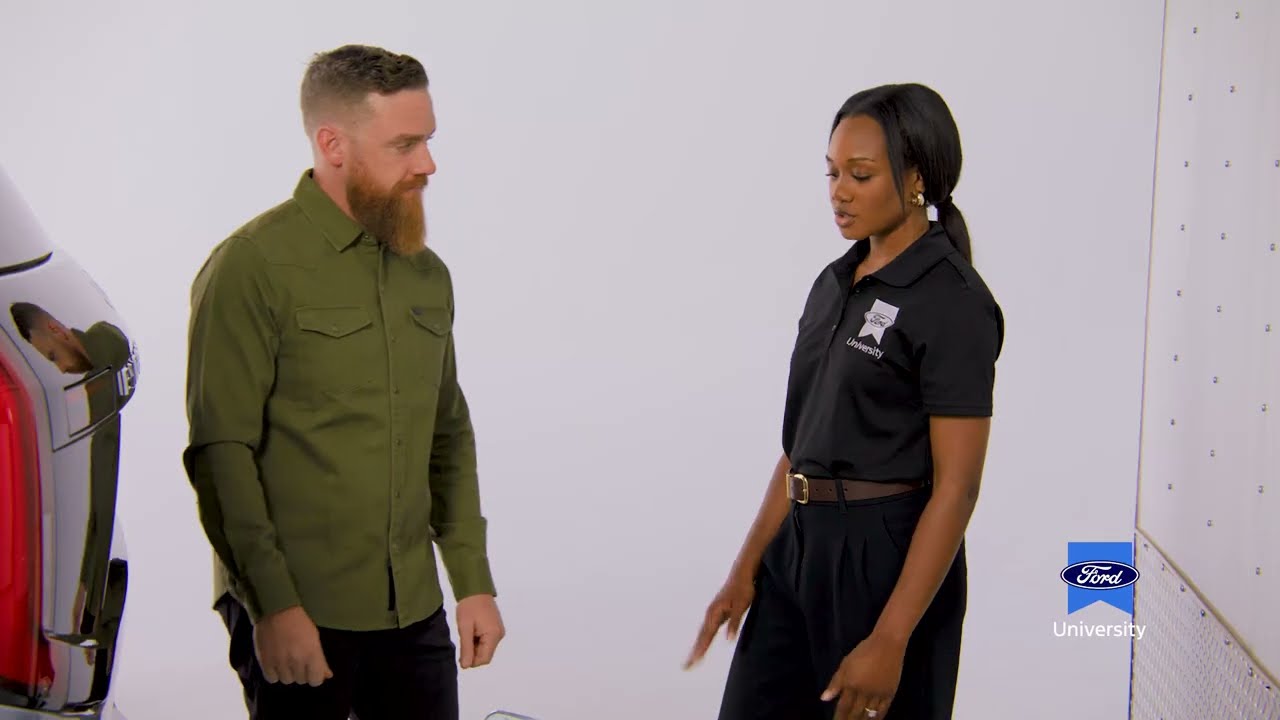
Autumn, we’re here at the front of the trailer where we’re going to begin to discuss the anatomy of the trailering experience. The first piece we need to talk about is the trailer hitch. That’s the hardware that connects to the subframe or the substructure of your towing vehicle and connects to the trailer itself. Okay, got it. Next, we have the ball mount, then the coupler, and finally the trailer tongue and trailer tongue jack. Got it. And so, what exactly does the trailer tongue jack do? It’s a great question. So, anytime we’re unhooking our trailer or putting our trailer back onto our ball mount, uh we want to make sure first of all that we have chocks on our tires. The next step is we’ll use the trailer tongue jack to lift the tongue of the trailer off the ball mount and remove our tow vehicle or we’ll use it to lift the trailer tongue and put the ball mount in the correct position to lower the trailer tongue down on top of that ball mount. Got it. And so does this need to be on level ground or anything as I’m cranking it at the beginning? Absolutely. So it’s always important to park your trailer on a level piece of ground. And the same thing goes for where you use your trailer tongue jack. Always make sure it’s a level surface that’s on the same plane as the trailer’s tires. Okay. Got it. And then when you say trailer tongue, that’s the entire piece here. Right. Correct. The trailer tongue is simply an extension of the trailer frame, but it includes the area forward of the trailer box all the way up to the trailer coupler. Now, the trailer tongue is not just a piece of the anatomy. It conveys all motion from tow vehicle to trailer and in some cases trailer to tow vehicle. At high speeds, this means good dynamics and at low speeds, it means more maneuverable experience. Got it. And then you mentioned the coupler. So, that’s this piece here. What exactly does this do right there? So, that’s our coupler clasp. The clasp itself secures the trailer tongue onto the ball mount. Nice. All right. What’s next? Next, we have our connection points. We’ll start over here with this wire. This is our emergency breakaway line. Next, we have our safety chains. And then finally, this large wire you see here is our seven pin connector. Okay. And so, with the chains, I see that they’re crossed. Is that supposed to be the case? Absolutely. The chains themselves are meant to act as a emergency connection point. Should all other connection points fail, if the tongue of the trailer comes off of the ball mount itself, it would normally fall down to the ground and potentially dig into the ground itself as it’s traveling forward. The chains will act as a basket and they’ll catch the very front end of the trailer, the tongue itself, and prevent it from digging into the ground. So, are the chains meant to carry that much weight? Absolutely. The chains, like every other functional piece on your trailer, has a weight rating of its own and it’s relative to the payload of your trailer. And I know we talked about this emergency breakaway line, but can you tell me a little bit more about what this does? Absolutely. So, much like the chains, the emergency breakaway line has a job. If for some reason the connection in your trailer and your tow vehicle is compromised, should the trailer become disconnected from your tow vehicle, the trailer breakaway line will trip, activating the brakes on your trailer. And we also mentioned this electrical connection. Can you tell me a little bit more about that? Absolutely. So your seven pin connector transfers electrical signals from your tow vehicle to your trailer. Specifically in this application, a seven pin is responsible not only for actuating the lights on your trailer, but the electrical brakes. There are other types of connectors, but most of them are reserved for heavier duty applications.
Learn the essential trailer towing basics to help you know how to hook up a trailer and understand the purpose of each connection point. This video provides helpful towing tips for connecting your trailer correctly.
Components covered around hooking up a trailer: trailer hitch, ball mount and the coupler, trailer tongue and trailer tongue jack, emergency breakaway line, safety chains, and the 7 pin connector.