Trailer Towing Basics: Frame, Axles, Brakes, Loading, Lights | How To Name The Parts Of A Trailer
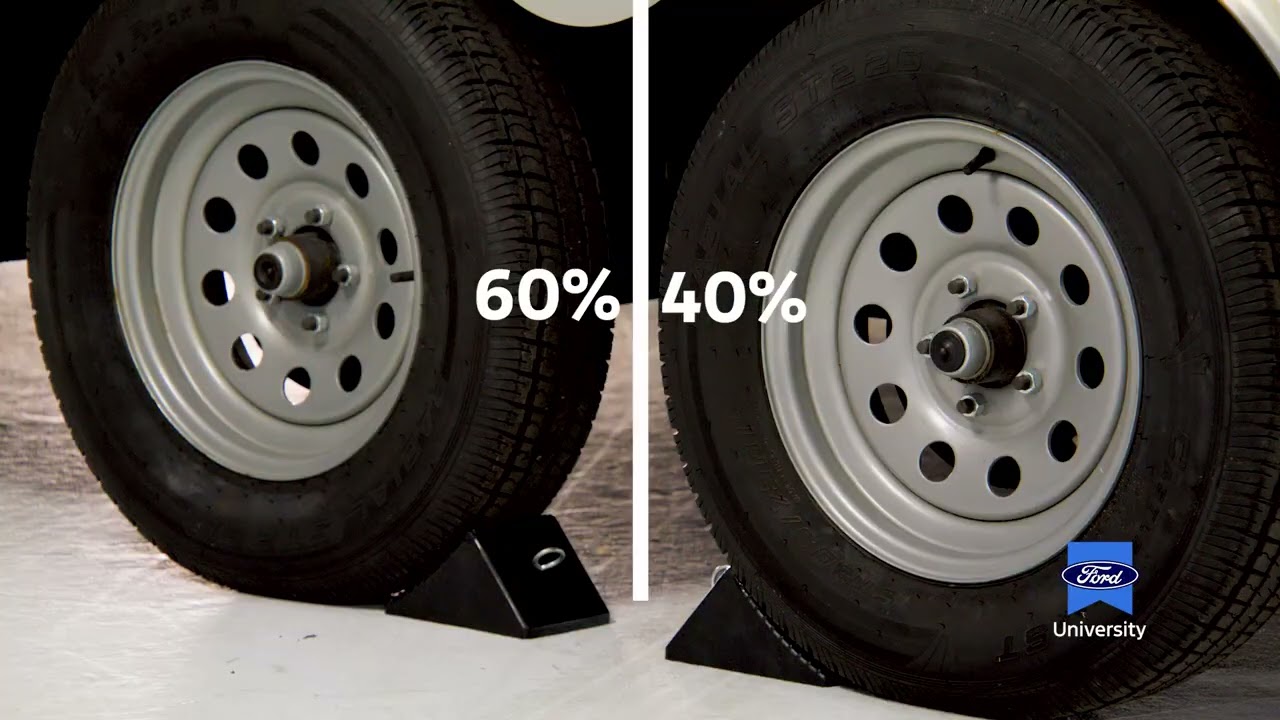
All right, we’ve started at the front. Now, we need to move to the middle of the trailer where we’re going to discuss the frame, wheels, and tires, and the axles. All right, let’s do it. All right, here we are in the side of our enclosed trailer. What do you mean by enclosed trailer? An enclosed trailer just refers to a trailer with four walls and a ceiling. Think of it like a four-season trailer designed to keep your cargo dry and secure. So, how many different types of trailers are there? So many different types. For most applications, there will be a trailer built to your specification, but there are light duty trailers and heavy duty trailers. Trailers designed for powersports and water sports. RVs are considered trailers. There even trailers designed to carry livestock like horses. I didn’t realize there were so many different types of trailers. So, if I’m not towing an enclosed trailer, does that change any of the rules? The good part is most trailers share very similar elements. All trailers have a frame designed to support the payload or the cargo inside the trailer, and all trailers are mounted onto axles, suspension, wheels, and tires that allow them to roll down the road. So, for your purposes, trailers all share similar anatomy. That means the rules are the same most of the time. Right. That’s good news for me. Absolutely. Any other questions about the structure of a trailer? I think you covered them all. Okay, then let’s talk about wheels, tires, and axles. So, these are the chalks you were talking about earlier. That’s right. And you’ll notice that the chalks are positioned between our two tires as opposed to the outside. This is so you can more easily adjust them from one position. Okay, that makes sense. And then I’ve seen trailers that have one wheel and tire, but this one has two wheels and tires. Yeah, that’s correct. So, this is referred to as a dual axle or a two axle trailer. The axle connects the wheels and tires across the platform of the trailer or the frame of the trailer. And this allows us to more evenly distribute the weight once it’s loaded onto the trailer itself. And so, why would you need two axles? So, two axles allow us to carry more weight than a single axle. So does a triple axle over a double axle and so on. The more axles we add into our trailer, the higher the weight carrying capabilities of that trailer is. That makes sense. Behind the wheels and tires, you’ll actually look through the spokes and you’ll see the electrically actuated brakes. Those are part of this setup as well, like we talked about from our seven pin connector. And the axles themselves are suspended by suspension. We have springs underneath that make a compliant ride for your cargo in the trailer. Speaking of axles, we can use our axles to appropriately load our cargo onto our trailers. Let’s, for example, say we have a single axle trailer, and we’ll use this tire at the front as an example. Okay. If you draw a line down the center of that wheel and tire, we want to make sure that 60% of our load is forward of that line and 40% of that load is behind the line. When you have a dual axle trailer, that magic line draws straight between the wheels and tires. And again, we want 60% of that weight forward and 40% of that weight to the back. Okay, that makes sense. Can you think of a reason why we might want to mount our cargo forward of that magic line? Hm. Honestly, not sure. Could you explain that to me? Absolutely. So, if you visualize the majority of your weight of your cargo as sitting between the rear axle of your tow vehicle and forward of the front axle of your trailer, it’s sitting in a nice basket. Right? If we were to mount too much of that weight beyond the rear axle, there’s an increased risk of sway. Anytime you make a quick lane change on the road or a sudden maneuver, the trailer is going to extend the motion that the tow vehicle does. How are you feeling about everything we’ve covered so far? Honestly, you’ve laid it out really nicely. I think I’m good to go. Okay, then why don’t we head to the back of the trailer? I want to talk to you about lights. Okay, Autumn, do you remember at the front of the trailer we were discussing the seven pin connector? Yes, that’s what plugged into the tow vehicle and I think you said that it controls the brakes and the lights. Correct. The electrical connection between tow vehicle and trailer is meant to match up what’s happening from a lighting perspective at the back of the car. So if I’m driving the Ford Expedition and I engage the lefth hand turn signal, the lefth hand turn signal in the trailer will illuminate. If I’m pressing on the brake pedal in my tow vehicle, then the brake lights on the trailer should illuminate as well. In fact, some trailers when you go into reverse with your tow vehicle, that reverse light will turn on also. Wow. Well, I now know a lot more about trailers than I did before. And now we’re going to go cover trailer hitch essentials.
We move from the front to the middle of the trailer where we discuss the frame, wheels and tires and the axles. We also head to the back of the trailer to talk about lights.