
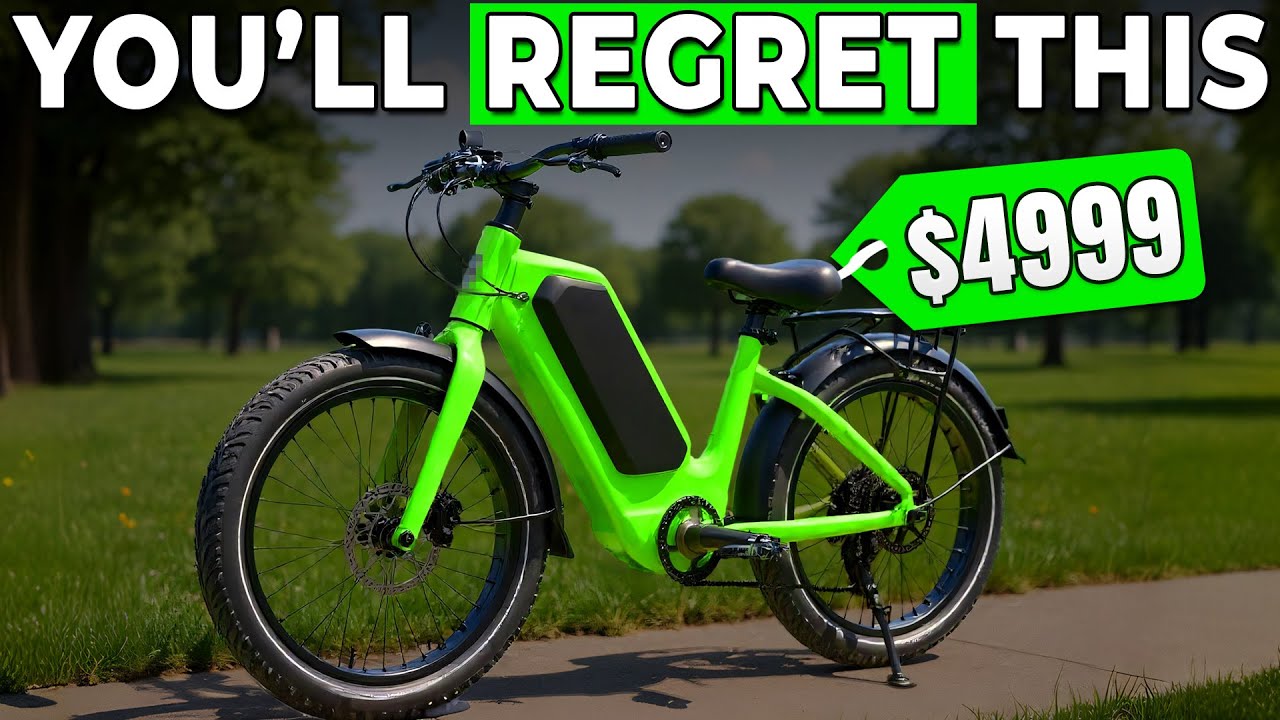
20 Overpriced Electric Bikes That Just AREN’T WORTH IT
Electric bike manufacturers don’t want you to know that their premium pricing is complete fiction. What if I told you that the bike advertised as cutting edge will drain your wallet after just one purchase? That’s not sticker shock. $5,000 and you’ll understand why most buyers develop permanent financial regret. Imagine dropping your life savings on what looks like the perfect ebike only to discover it’s designed by people who clearly never considered actual value. In this video, I’m counting down the 20 most overpriced electric bikes that will make you feel stupid in 2025. And trust me, number one might shock you. It costs nearly $5,000, but performs worse than bikes that cost half the price. Stick with me to the end because this isn’t just a price comparison. It’s your financial survival guide to avoid the wallet traps disguised as premium transportation. Number 20, Specialized Turbo Vado 5.0. Starting our list is the Specialized Turbo Vado 5.0 priced between $4,500 and $5,500. Despite specialized premium reputation built over decades of bicycle manufacturing experience and racing heritage, this particular bike demonstrates how established brand prestige can inflate prices far beyond what actual performance and features justify in today’s competitive marketplace. The bike features a respectable 700 W motor system and provides approximately 60 mi of range under optimal testing conditions, which initially sounds impressive until you compare it directly to alternatives like the Veltric T1 at just $2,199 that delivers comparable or even superior performance in real world applications. When you’re paying more than double the price for fundamentally similar capabilities and performance metrics, the value proposition becomes highly questionable for most practical users. Limited dealer support, network availability add significant hidden cost to long-term ownership because specialized service requirements and proprietary parts often cost substantially more than alternatives throughout the bike’s operational lifespan. When premium brands require dealer only service for warranty coverage, routine maintenance becomes more expensive and less convenient for average consumers. Number 19, Reese and Muller Nevo 4. The Reese and Muller Neo4 represents premium European engineering philosophy in German manufacturing standards with prices ranging from $5,999 to $7,000. While the build quality and component selection are undeniably high-end with meticulous attention to detail that reflects traditional German manufacturing approaches, the pricing is genuinely excessive for most US consumers when compared to domestic alternatives that provide similar practical performance characteristics. The bike provides 50 to 60 mi of range depending on riding conditions and assistance levels, which represents solid performance, but is easily matched by much cheaper options like the Rad Power Radster Road at just $1,999. When bikes costing one-third the price deliver similar range and functionality for daily transportation needs, the premium becomes extremely difficult to justify for practical commuting or recreational riding applications. The extremely high price point makes this bike accessible only to affluent buyers with substantial disposable income, limiting its market appeal and creating serious questions about whether the premium features and build quality actually justify the massive cost difference for average consumers who need reliable, efficient transportation rather than engineering showcases. Number 18, Hey Bike Mars 2.0. The Heyike Mars 2.0 0 priced at $1,499 demonstrates how mid-range pricing can still represent fundamentally poor value when performance characteristics and feature sets don’t match cost expectations in today’s highly competitive marketplace. The folding design and 750 W motor specification appear attractive on paper and in marketing materials, but closer examination reveals significant limitations that affect practical usability. The 30 mile range is genuinely disappointing for a bike in this price range, especially when direct competitors like the well- reggarded Electric XP 3.0 at $999 provide similar or better range performance with comparable features and demonstrabably superior customer support infrastructure. The $500 price difference doesn’t translate into proportional performance improvements or feature advantages that justify the premium cost for most users. User feedback from multiple review platforms consistently highlights persistent support issues that can transform minor technical problems into major headaches for owners, significantly reducing the bike’s overall value proposition and long-term ownership satisfaction. When customer service is inadequate or unresponsive, even well-built bikes become frustrating investments that buyers eventually regret purchasing. Number 17, Juiced Bikes Scorpion X2. The Juiced Bikes Scorpion X2 at $2,499 features a decent 52vt battery system and 750 W motor configuration. But the overall package doesn’t justify the premium pricing when examined against competitive alternatives in the same market segment. The 30 to 40 mile range represents merely average performance for this price category rather than the exceptional capability buyers should reasonably expect. The problematically heavy 80 lb frame creates significant handling and portability issues that affect the bike’s practical usability for many potential users. When bikes are excessively heavy for average users to handle comfortably during transport, storage, or emergency situations, convenience and overall usability suffer substantially regardless of other performance specifications or attractive styling elements. The Aventon Adventure 2 at $1,899 offers significantly lighter weight construction and more versatile performance characteristics, making the Scorpion X2’s $600 premium extremely difficult to justify based on actual practical performance and usability comparisons. When cheaper alternatives provide superior practical performance, premium pricing becomes impossible to defend rationally. Number 16, Super 73 ZX. The Super 73 ZX, priced between $2,199 and $2,690, markets itself aggressively as a premium moped style ebike with distinctive aesthetics and lifestyle positioning, but consistently fails to deliver performance characteristics that justify its substantial price point in today’s competitive market environment. The 750 W motor specification unlocks to 1,500 watts under certain conditions, but the 35mm range doesn’t impress compared to alternatives. Compared directly to the Aerial Rider X-Class at $2,399, the Super 73 Zax offers similar basic performance specifications for potentially higher cost, making the value proposition highly questionable for buyers who prioritize practical performance over brand perception and styling elements that don’t translate into functional advantages. Mixed reviews regarding long-term durability and build quality raise serious concerns about reliability that could make the higher initial purchase price a poor long-term investment if the bike doesn’t maintain performance or requires expensive repairs more frequently than cheaper alternatives with better reliability track records. Number 15, Ecotrick FAT20810. The Ecotric FAT20810 priced between $850 and $1,200 demonstrates how even budget to mid-range pricing can represent genuinely poor value when fundamental quality and reliability characteristics are inadequate for dependable transportation use. Persistent motor and battery issues significantly reduce the bike’s practical value, regardless of its seemingly attractive initial pricing structure. Assembly challenges create substantial additional costs and frustration for buyers who may require professional assembly assistance to get their bikes functioning properly and safely. When bikes require expensive professional assembly help due to poor instructions or overly complex procedures, the true total cost becomes significantly higher than the advertised purchase price, eliminating much of the apparent savings. The 20 to 35 mile range is genuinely underwhelming even for this price category. And persistent reliability concerns reported by users mean that the advertised range may deteriorate rapidly as components wear prematurely or fail entirely. Poor reliability compounds limited range performance by creating uncertainty about actual usable performance in real world conditions. Number 14, Nocto Cruiser. The Noto Cruiser, priced between $649 and $999, appears superficially affordable, but represents fundamentally poor value due to consistently lowquality components and persistent technical issues that create ongoing problems for owners seeking reliable transportation solutions. The 20 to 35 mile range is severely limited, even by current budget bike standards in the marketplace. Lowquality components affect every aspect of the riding experience from braking performance to electrical system stability, creating safety concerns that extend far beyond simple performance disappointments. When critical systems like brakes, electrical components, or structural elements are compromised by aggressive cost cutting measures, safety becomes a primary concern rather than just a quality issue. Technical issues reported consistently by users across multiple platforms suggest systematic quality control problems that make the cruiser fundamentally unreliable for regular transportation use. When bikes can’t be dependent upon for consistent daily use, even attractively low prices don’t represent genuine value for practical transportation needs. Number 13, ADM Motor M60R7. The ADM Motor M60R7 priced between $1,799 and $2,299 provides decent range specifications of 40 to 50 mi under optimal conditions, but faces persistent warranty and customer support issues that significantly reduce its overall value proposition. Component quality doesn’t match the premium pricing expectations in this highly competitive market segment. Trustpilot reviews consistently reveal warranty and customer support problems that can leave buyers completely stranded when technical issues inevitably arise with complex electric bike systems. When customer service infrastructure is inadequate or unresponsive, even well-designed bikes become frustrating investments that buyers eventually regret purchasing. The price range positions this bike in direct competition with established alternatives like the Velatri Discover 2 at $1,899, which provides demonstrabably better overall value through superior customer support infrastructure and more consistent performance characteristics. When direct competitors offer better complete packages, premium pricing becomes extremely difficult to justify. Number 12, Fukari Gemini and Libra. The Fukari Gemini and Libra models priced between $1,399 and $1,799 face consistently mixed reviews citing poor customer support infrastructure, frequent electronic system failures, and missing parts upon delivery that significantly impact their value proposition. The 30 to 40 m range represents merely average performance for this price category. Electronic failures in complex ebike systems can be particularly expensive to diagnose and repair, often requiring specialized technical knowledge that isn’t available at typical local bike shops. When electronic systems are unreliable or poorly designed, repair costs can quickly exceed the bike’s original purchase value, making warranty support absolutely crucial for owners. Poor customer support infrastructure compounds electronic reliability issues by making problem resolution extremely difficult and expensive for owners who need technical assistance. When manufacturers don’t provide adequate technical support for complex electrical systems, even minor issues become major problems requiring expensive professional intervention. Number 11, Ascend Cababrio and Minouret. The Ascend Cababrio and Minouret models priced between $800 and $1,200 represent particularly poor value due to an official 2024 Consumer Product Safety Commission recall for serious fire hazards caused by defective battery systems. Safety recalls make bikes fundamentally unsuitable for use regardless of their pricing or other features. The 20 to 30 m severely limited range doesn’t justify the cost, even without considering the serious safety concerns. And the complete lack of brand reputation in the competitive ebike market suggests extremely limited long-term support availability and virtually no resale value potential for owners. If you’re enjoying this investigation into ebike value traps and want more content about avoiding expensive transportation mistakes, make sure to subscribe and hit that notification bell. Number 10, JetsonB Pro. The Jetson Bolt Pro, priced between $600 and $900, suffers from persistent battery longevity issues with batteries failing within just months of normal use, making it a fundamentally poor investment despite its relatively affordable initial pricing. Battery replacement costs can easily exceed the bike’s original purchase price. The severely limited 15 to 20 mile range is genuinely inadequate for most practical transportation needs, making the bike essentially unsuitable for commuting applications or longer recreational rides that most buyers reasonably expect from electric bike investments. Number nine, Havskco Hav Alpha. The Hovskco Hub Alpha priced between $1,799 and $2,299 receives some positive reviews for initial performance characteristics, but faces increasingly frequent reports of broken motors and inadequate customer support that significantly impact its overall value proposition. The 40 to 50 m range is decent, but not exceptional for this premium price category. Social media posts and extensive Reddit discussion threads report broken motors and extremely poor customer support experiences with some frustrated customers going so far as to label Chvskco a fraudulent operation. When customer experiences vary so dramatically, purchasing becomes a risky gamble rather than a reliable transportation investment. The substantial price range positions this bike in direct competition with wellestablished brands like the Rad Power Radrunner 3+ at $1,999 which offers demonstrabably better customer support infrastructure in established brand reputation for reliability and service quality. Number eight, Voamart 1500 watt conversion kit. The Voloart 1500 watt conversion kit priced between $300 and $600 demonstrates how even seemingly affordable products can represent fundamentally poor value when reliability characteristics are inconsistent and unpredictable. Some conversion kits fail completely within 200 m while others reportedly last over 1,000 mi, making purchases essentially gambling rather than reliable investments. The strict requirement for substantial DIY technical expertise significantly reduces practical value for casual users who may require expensive professional installation assistance that dramatically increases the total project cost beyond the advertised kit price. Complete integrated ebikes like the well- reggarded electric XP 3.0 0 at $999 represent significantly better investments for most users because they provide professionally integrated systems with comprehensive warranty support and consistent performance rather than DIY projects with uncertain outcomes. Number seven, Shang Milo MX01 and MX05. The Shang Milo MX01 and MX05 models priced between 1,200 and $1,800 suffer from persistent battery durability issues with documented failures occurring within just 6 months of normal use. Poor customer service infrastructure compounds the reliability problems by making warranty claims extremely difficult to resolve successfully. Battery replacement costs for typical ebike systems can easily range from $400 to $800 depending on specifications, meaning premature battery failure can dramatically increase the total ownership cost far beyond the initial purchase price investment. When batteries fail quickly, even mid-range pricing becomes genuinely expensive. The 20 to 35 mi severely limited range doesn’t justify the substantial price, even without considering the serious reliability concerns. And the combination of poor range performance and questionable reliability makes these models particularly poor investments for practical transportation applications. Number six, Gyroar C3. The Gyroar C3, priced between $800 and $1,200, was subject to an official Consumer Product Safety Commission recall in 2022 for serious fire hazards caused by defective battery systems, making it fundamentally unsuitable for purchase, regardless of pricing considerations. Safety recalls eliminate any possible value proposition. Mixed user reviews cite uncomfortable riding experiences for taller riders and consistently poor customer support infrastructure that would make ownership frustrating and problematic, even without the serious safety concerns that led to the official recall designation. The 20 to 30 m severely limited range is genuinely inadequate for most practical transportation needs, making the bike essentially unsuitable for commuting applications or longer recreational riding, even if safety concerns weren’t a primary consideration. Number five, Anier electric bike for adults. The Anier electric bike for adults, priced between $600 and $1,000, faces a significant 2022 Consumer Product Safety Commission recall for serious fire hazards affecting model AM 001907 sold between 2016 and 2022. Despite seemingly affordable pricing, safety concerns completely eliminate any value proposition. Consumer Reports testing found the bike functionally adequate in controlled testing environments, but noted persistent pedal assist delays and safety concerns that dominated their overall evaluation. When safety issues overshadow basic performance, even affordable pricing doesn’t represent genuine value for transportation needs. The extensive recall affects bikes sold over a 6-year period between 2016 and 2022, meaning thousands of potentially dangerous units may still be in active circulation among unsuspecting owners. Buyers must verify current recall status and avoid these models entirely for fundamental safety reasons. Number four, Brmpton Electric Sealine Explorer. The Brmpton Electric Sealine Explorer priced between $2,950 and $3,250 demonstrates how premium brand positioning and reputation can inflate prices far beyond reasonable value propositions for most practical applications. The compact folding design is genuinely impressive, but the electric motor system adds excessive cost and weight for minimal practical assistance. CNN testing specifically notes a persistently wobbly ride at higher speeds and excessive pricing compared to non-electric Brmpton models that cost between $1,500 and $2,000. When electric assistance adds $1,000 to $1,500 for marginal practical benefit, the value proposition becomes highly questionable. The severely limited 20 to 30 mile range doesn’t justify the substantial premium pricing, especially when the motor assistance is minimal and the significant weight penalty affects portability, which represents one of the Brmpton’s primary advantages over conventional bicycles. Number three, Gazelle Ultimate C 380 HMBB. The Gazelle Ultimate C 380 HMBB at $4,999 features a premium and VO stepless gear system and high-quality components, but represents fundamentally poor value compared to alternatives like the Ride OneUp Prodigy V2 at $2,295 that provide virtually identical commuter functionality at less than half the cost. The excessive 75lb weight creates significant handling and portability issues that affect the bike’s practical usability for many potential users. When bikes are too heavy for comfortable handling during transport, storage, or emergency situations, premium features become less valuable because basic usability suffers substantially. The restrictive dealer only sales model adds considerable inconvenience and potentially much higher costs for ongoing service and support throughout the bike’s operational lifespan. When purchasing and service options are artificially limited to dealer networks, costs and inconvenience increase substantially. Number two, Canondale Adventure Neo All-Road. The Cannondale Adventure Neo All-Road priced between $1,340 and $1,875 is aggressively marketed as a versatile adventure bike, but suffers from excessive weight of 75.5 lb and lacks important features found in direct competitors like the Ride OneUp Prodigy V2 at $2,295. Despite similar pricing expectations, Forb’s testing and analysis specifically notes that the bike feels like a significant step down in quality and features for the price point, indicating that the established Cannondale brand premium doesn’t translate into superior performance or feature delivery compared to newer alternatives. The severely limited 20 to 40 mile range doesn’t justify the substantial cost, especially when combined with the significant weight penalty that makes the bike extremely difficult to handle when battery assistance is unavailable or inadequate for challenging terrain. Number one, Go Cycle G4i. Topping our list as the most egregiously overpriced electric bike available is the Go Cycle G4i. Priced between $3,999 and $4,999. Despite its undeniably impressive compact folding design and 375Wh battery system, the absolutely pathetic 27m range is completely underwhelming for this premium price point. Consumer Reports comprehensive testing specifically notes the severely limited range and excessive cost compared to direct competitors like the Voltric T1 at just $2,199, which provides similar or demonstrabably better performance at less than half the price. When bikes costing half as much delivers superior performance, premium pricing becomes completely impossible to justify. The absolutely inadequate 27mi range is genuinely unsuitable for most commuting or recreational transportation needs, making the bike essentially useless for its intended purposes. Despite the premium pricing that suggests superior capability and performance, practical alternatives like the Blicks Vikica Plus Flex at $1,899 provide demonstrabably better value for folding ebike applications, offering significantly more practical range and superior features at dramatically lower cost. The Go Cycles Premium becomes completely impossible to justify when superior alternatives cost thousands less. These 20 electric bikes represent a comprehensive guide to avoiding the absolute worst value propositions in today’s ebike market. From premium brands charging excessive premiums for ordinary performance to safety recalled bikes that shouldn’t be purchased at any price, these examples demonstrate the critical importance of evaluating actual value delivery rather than marketing claims. Now that you know the 20 electric bikes that will drain your wallet without delivering real value, you’re probably wondering where these overpriced bikes actually come from and what they cost before the markup schemes kick in. The shocking truth is that most of these expensive disappointments start in Chinese factories at rock bottom prices. That’s what I reveal in my video 20 cheapest electric bikes you can buy in China. The real wholesale costs and why cheap becomes overpriced.
Electric bike manufacturers don’t want you to know that their “premium” pricing is complete fiction. What if I told you that the bike advertised as cutting-edge will drain your wallet after just one purchase? That’s not sticker shock – five thousand dollars and you’ll understand why most buyers develop permanent financial regret. Imagine dropping your life savings on what looks like the perfect e-bike only to discover it’s designed by people who clearly never considered actual value.
🔔 Subscribe: https://bit.ly/30vR5eV