Honda’s 2025 Plug In CR-V For America Isn’t What You Think… It’s a Hydrogen Fuel Cell Plug In
Hey everybody today I am down in Southern California driving the newest member of the CRV family it’s this model right here it’s the first plug-in hybrid CRV available in the United States but it’s a plug-in hybrid with a Twist because when this is not running off of
Its battery it’s running on a hydrogen fuel cell stack nestled right under the hood this is of course not Honda’s first Venture into hydrogen but this is the first time we’re getting a plug-in hybrid system the first ever hydrogen plug-in hybrid in North America and the first hydrogen powered vehicle by Honda
Built in the United States now before we get to the rest of the video I will say hydrogen and hydrogen fuel cells are pretty controversial so I’m going to save all of that discussion into where does hydrogen come from is it green is it not green is it a good idea is it a bad idea
All that’s going to happen actually in a separate video you’ll see the link at the end of this video so if you want to check that out be sure and hang on to the end the video and watch that one instead let’s just talk about what
Honda’s built with the new fuel cell CRV the reason these two CRVs are next to each other is because the one on the right is a regular hybrid model this one is the CRV e fce an e is of course Honda’s new electrification initiative you’re going
To see the E badging on a lot of other electrified Hondas and then of course the FC EV is because fuel cell EV they have created a new front-end design for the fcev version of the CRV you can see the difference over there between this regular hybrid model I actually kind of
Hope that this hybrid design uh or sorry the fuel cell design actually makes its way into the other CRVs because I kind of like the uh change here so we have a chrome strip here we have a slightly redesigned front bumper you can see that the front end is ever so slightly longer
Because of the cooling requirements and the differing packaging dimensions of the fuel cell stack now speaking of the fuel cell stack we should dive under the hood first and take a look at that under the hood we find one of the most compact and one of the most advanced fuel cell
Systems ever put into a passenger vehicle the entire fuel cell system lives now under the hood it’s about the size of a 2 L 4-cylinder engine and transmission which is definitely a big improvement over some first generation fuel cell systems because those occupied not only the space under the hood but
Also some places under the passenger compartment as well power output from this system comes in a little bit lower than the outgoing Clarity 92.2 KW power from the electric motor 174 horsepower 229 pound feet of torque driving the front wheels there are a few interesting things about this fuel cell system the
First one is Honda has really reduced the amount of precious metals that are used inside the fuel cell stack they say the stack is now 50% less expensive than the one used in the clarity the other interesting thing this was designed in coordination with General Motors it’s
Actually going to be built in a joint venture Factory as far as the cells but the vehicle itself that’s built in the Honda specialty manufacturing Factory in Ohio that formerly built the Acura NSX kind of Mak sense for a relatively low production vehicle like this this is
Only going to be leased in California at the moment there’s a possibility it might come to Hawaii and of course some other places around the world that hydrogen uh is available in but in North America it’s just going to be California and perhaps Canada over here we find the
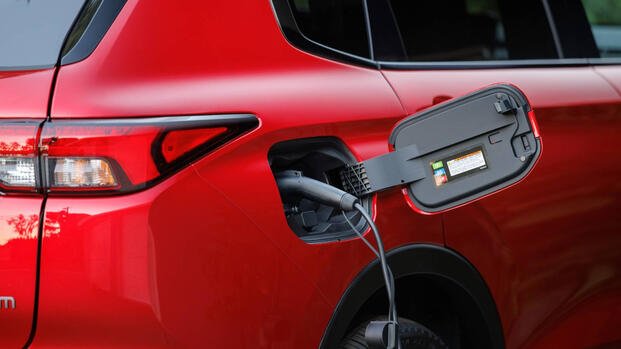
J1772 charging port no DC fast charging for the just under 18 KW hour battery pack on board and then back here we find the hydrogen filling Port pretty much the same Loc that we have with other hydrogen Vehicles that’s what the hydrogen nozzle looks like uh interesting twist I actually owned a
Hydrogen fuel cell vehicle for 3 years I had a Hyundai nexo so if you want to ask any particular questions about that experience be sure and hang on check out that other video or just post down there in the comment section now to the downside uh here’s the cargo area back
Here in the hydrogen CRV and here is the cargo area over here in the hybrid CRV you will notice it’s a pretty big difference the hydrogen tanks aren’t quite vertical stacked one’s between the wheel wells the other one is basically underneath the rear seats and then the
Batteries are located sort of in the center line of the vehicle we have a removable shelf here you can install it in this upper position or you can install in that lower position where you saw it earlier uh they’ve actually made it pretty hefty you can see it has
Ribbing under there and it feels very very sturdy and that’s of course that we can try and have more of a flat cargo area here the other thing you might not notice immedi mediately is that the rear seats are actually different than the other CRV in this hybrid model when I
Fold down the rear seats you’ll notice that the seat bottom cushion actually drops down there a little bit really making that seat back nice and low when it’s folded if I look at the fuel cell CRV over here you’ll notice that not only do we get a different mechanism we
Don’t have the latch right there on the seat back but we get a different seat entirely so if I lift that back up there you’ll notice that the seat bottom cushion does not move when that seat back is tilted over here in the fuel cell CRV you’ll notice that the seat
Bottom cushion does not move downwards when you fold the seat back down that means that this entire module is higher off the ground it’s actually about 4 in or so that you lose because the battery pack for the plug and hybrid system is effectively right there under the rear
Seats now it’s not too much of a problem of course because we have that hydrogen fuel tank back there that I showed you earlier and that’s basically the difference between that load area and the seat back when those are folded if I fold that up you’ll actually see some of
The high voltage cabling right there and some of the steel protection area safety cage that’s around that hydrogen tank from this angle you can actually see that the battery pack itself drops down so this does get a little bit less ground clearance than the regular CRV as
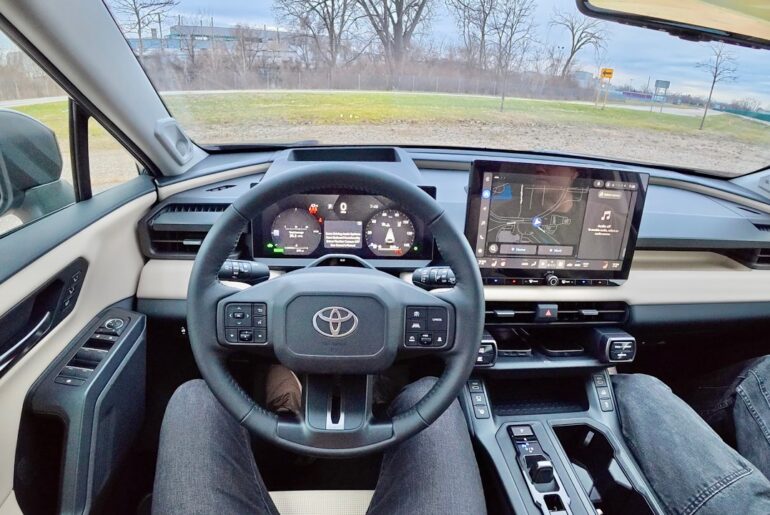
You might imagine the majority of this interior is borrowed straight out of the regular CRV we get the exact same dashboard design with the honeycomb pattern going on right there on the dashboard I think it’s an attractive look but I have noticed that this is a little bit difficult to clean if you
Live live in a Dusty area up here on the infotainment system we get of course a different Power flow meter because this is what’s showing us the status of the plug-in hybrid system our electric range over there and the fuel cell system right over there 230 Mi currently on
This tank of hydrogen they’re actually those two tanks back there and they store just over 4 kg of hydrogen battery electric range 20 mi it does appear to be adaptive so as I was driving one around earlier today the electric mileage range shot all the way up to
About 40 mil because I was driving it gently and and the hydrogen range shot up to about 280 Mi obviously your driving style is going to uh change that this looks a lot like the old Clarity whether we’re talking about the hydrogen Clarity or the battery electric Clarity
Uh the rest of the software though it’s right out of the regular CRV other than the software changes the upper portion of the dashboard is exactly the same same two Zone climate controls there same air vents right over here in the middle of everything down here we have a
Push button shifter rather than the more traditional console shifter that was in the Hybrid models we were driving earlier today over here we have the drive mode selector these are our typical Drive modes like normal sport econ and snow the new one for this model
Is this EV button over here and if I look over here on this side you’ll notice it goes through things like auto mode EV mode the save mode and if I press and hold it it’s actually going to engage a charge mode the battery is a little too full for charge mode right
Now I’ll talk about this more in the drive section but I think that the charge mode makes a bit more sense than I thought initially down here we have two big cup holders aof softly padded Center armrest with lots of available storage as you can see right there everything here is basically lifted
Right out of the regular CRV as is the full LCD instrument cluster right over there on that side you can see it’s not the largest LCD instrument cluster but it does fill up the gauge system quite nicely moving up to the ceiling you’ll notice we don’t have a moonroof in here
That does mean we get a little bit more Headroom than in the top end trims of the rest of the CRV lineup but if you want a moon roof you’re going to have to look at one of the other options now as far as the seating goes seat com comfort
And seat roominess figures are identical to the rest of the CRV lineup because of how they integrated the plug-in hybrid system into the vehicle and these are still very very comfortable front seats so if we move down here we have the power adjustment mechanism no four-way lumbar that’s still something I would
Love to see in the CRV but I think that the seat design itself is certainly one of the most comfortable in this segment for my body shape and there’s plenty of Headroom both front and rear partially of course because we don’t get that sunroof in the back I was surprised that
The seat bottom cushion is not higher off the ground than in the hybrid model it’s actually the same height off the ground although again we don’t have that mechanism that allows it to drop down for additional storage space rear seat passengers also get some rear seat air
Vents there USB charge only ports and we do get a little bit more room in here than we find in the nexo or in the marai the marai has a pretty tight back seat the nexo it’s a little bit narrower the roof line is a little bit lower because
It’s really more of a small hatchback rather than than a compact crossover like this so you definitely get a little bit more room in the fuel cell vehicle now moving to the back you’ll notice one of the other design changes here which are the Frosted white tail amp modules
They illuminate red when the lights are on and that is definitely a bit different than this hybrid model over here where they’re just red all the time all right it’s time to get the CRV fuel cell out on the road obviously it’s going to drive just like an EV because
That’s the core thing about fuel cells is that they are at their heart actually still EVS it’s just that the battery is a little bit different in addition to the regular battery we have the fuel cell stack under the hood but because the maximum power output of the battery
Pack is less than the motor’s total demand there is going to be a different field depending on the mode that you’re in you can choose EV only mode where it’s actually going to save that hydrogen fuel cell stack for later or you can choose auto mode where it’s
Going to prioritize the power source based on whatever you’re commanding from your right foot there’s also a save mode and there’s a charge mode as well so if for instance you want to make sure that you use up as much hydrogen as possible before you get to the hydrogen station
You can move over to that charge mode where it’s going to charge the battery pack and then of course allow you a little bit more of a fill up because it’s consumed more of that hydrogen bearing in mind I have not been able to drive this for very long I have been
Able to do some really quick 0 to 60 testing down here in Torrance this model went 0 to 60 in 8.3 seconds if the fuel cell stack was not on and that dropped down to 8 seconds if the fuel cell stack had already been initialized and that’s
That’s because it does take just a little bit of time for the fuel cell stack to get started once the stack has been initialized this is able to run 0 to 68 seconds Time After Time After Time and that is just a tiny bit different than the other fuel cell Vehicles
Available in North America mainly due to the size of the battery pack the battery pack in a marai or a nexo it’s about a kilowatt hour to a kilowatt hour and a half depending on the model we’re talking about so basically the same size as a regular Hybrid battery pack and
That’s again because the fuel cell stack does not put out enough power for this motor to run at full bore constantly it is ballasting it effectively with the battery pack in the rear but this vehicle has a bigger battery pack so it has a bigger ballast now because it has
A bigger battery pack the stopping distance seems to be a little bit longer than some of the other options out there about 120 ft from 60 MPH back to zero in my very very early testing down here you will likely stop shorter in a regular CRV hybrid but that’s pretty logical
Because this is going to be a bit heavier than a regular CRV hybrid however weight is definitely an advantage for a fuel cell vehicle in general terms because generally fuel cell vehicles are lighter than some comparable battery electrics we’ll talk about that in a different video of
Course stay tuned to the end because there are so many different factors here it is possible to make a battery electric vehicle with better performance than this obviously that weighs less than this but it’s also possible to make a fuel cell vehicle lighter than the one
That we’re talking about here if it had been specifically designed for one and this is really a merging of PL platforms here this is the latest fuel cell technology jammed into one of the best selling small crossovers in America and even though the small crossover was designed for hybridization from the
Beginning it wasn’t necessarily optimized for hydrogen fuel cell technology rather unfortunately today’s Drive route is basically just driving around torrent so no winding roads are happening here but I have to say that the handling feel feels pretty consistent with the rest of the CRV lineup and because they’ve moved some
Weight to the rear the battery p is again in the back I actually kind of like the weight balance in this CRV a little bit better than the rest of the CRV lineup the lack of all-wheel drive though that is a bit of a bummer but
Remember this is only going to be leased in California you won’t actually be able to buy one at least not at the beginning it’s going to be Lease Only California only and that’s kind of the the Allure of a hydrogen vehicle in a way it’s the ability to drive effectively a
Production prototype these vehicles are very limited in number they’re going to be pretty rare they’re quirky technology there are going to be some compromises here and there when it comes to the fueling Etc but you’re driving something that almost nobody else out on the road has or has the ability to get really
Anywhere and that’s logically a reason all on its own to get something like the fuel cell CRV now let’s talk about some of the fuel cell components specifically here early generations of fuel cell Stacks were pretty noisy they had some difficulty starting up in cold weather that has definitely been changed for
This generation of the fuel cell stack this is able to start in some really really cold temperatures basically colder than you will ever find in California and you’d be hard pressed to find colder temperatures than this really anywhere in the continental United States according to Honda startups below zero are absolutely no
Problem although they will take a little bit longer than starting up when it’s 60° outside like it is today so the climate will of course uh have some bearing on that but unlike other fuel cell Vehicles we have the big battery pack on board so even though it may take
A little bit more time for the fuel cell stack to come online you can still move because we’ve still got the battery if you’ve ever driven a fuel cell vehicle before you’re probably aware they can make some funny noises sort of hairdyer noises under the hood but this is quite
Different if I floor it here no weird woring noises Honda has really taken a lot of time to quiet this fuel cell down and there’s another reason it doesn’t make as many woring noises we’ve got the big battery pack in the rear and that’s just one of those advantages of being
Effectively a pluged in hybrid vehicle for the same reason that we find reduced engine output necessary in regular plug-in hybrids this doesn’t have to crank the engine or the fuel cell stack if you will all the way up to 100 right away it can ramp it up actually as you
Accelerate and that really means drivability improvements it’s quieter in the cabin Etc the bigger battery pack also resolves one of the other things that you’ll notice in other fuel cell Vehicles like a nexo or a marai in those Vehicles sometimes it feels like the throttle response is a little bit bit
Duller than you’d expect especially since it’s essentially an electric vehicle but remember it’s an electric vehicle where the battery output has to ramp it takes a little bit of time for that fuel cell stack to go from 0o to 100% output here you still take time for
The fuel cell stack to go to 100% but if I floor it I get much more instant acceleration because of the bigger battery pack in the rear after that initial punch you will then feel a little bit of a delay as the power rolls on as the fuel cell stat gets going but
It’s a much smoother experience than in the other fuel cell Vehicles available currently and of course if you live in an area like I do where there are a lot of Hills a lot of mountain passes Etc the bigger battery pack means you have the ability to continue regenerating as
You go down the hill and that’s certainly something that I noticed driving my own nexo from the Bay Area to Tahoe in California going back down towards the Bay Area you’re relying on the friction brakes for a lot of that Journey downhill this is certainly a use
Case for those various Drive modes if you start off in the Bay Area and your battery was n completely full you could charge your battery before you got to the mountains and that way you’d have 174 horsepower all the way up the hill no problem hill climbing and you can
Also use those Drive modes to make sure that you had used your entire battery before you started going back home so that way you could regenerate all the way back down the hill to the Bay Area and you’d definitely be saving a lot on your brakes it’s a bit difficult to talk
About efficiency and range since I haven’t been driving this at home but so far it appears that 30 Mi of electric range is totally possible and as far as hydrogen fuel cell efficiency goes we’ve been averaging 86 m per kilogram so far that’s about average for fuel cell
Vehicle so far so they haven’t made any huge strides as far as efficiency of the fuel cell system itself goes but they have really worked on the rest of the experience here uh we’ll dive into a lot of that in a separate video again so be sure and stay tuned unfortunately at
This point in time I don’t have any pricing or availability information on the new plug-in fuel cell CRV just yet so be sure and stay tuned hopefully I will have that in the coming months or so we do know however this is only going to be leased like the clarity before it
You won’t be able to buy one you can buy a nexo or MRI so if you’re interested in that check over there they have said that pricing will be comparable to some of those other Alternatives we don’t know exactly what that means but again Lease Only my expectation is this is
Going to be somewhere in the $600 to $700 a month range most likely that’s going to include the fuel for the period of the lease just like we’ve seen from fuel cell vehicles in the past now fueling that’s kind of a tricky thing we’ll talk about that in the video
That’s coming up at the end of this video but it is a consideration for you if you’re considering something like this it’s going to be a little bit easier in a plug-in vehicle however because you aren’t going to need to visit the hydrogen station nearly as often and I do really love this
Combination of usable electric range 30 Mi of electric range is suitable for a lot of folks out there it means that the vehicle can be lighter this is only about 350 lbs or so heavier than a hybrid version of the CRV and that’s a big big step forward because if they
Were to put a 300 mile range battery pack in this exact CRV and do no other modifications the weight penalty would be more significant than that 350 lbs that’s one of the promises of fuel cell technology now again clearly you could make a battery electric vehicle designed
From the ground up to be battery electric and not necessarily have that weight penalty but if you want something that looks and is shaped like this has wider tires like this Etc fuel cell technology might make a bit of sense outside of California it’s logical that
At some point in the future maybe it could be offered as a lease option in Hawaii Hawaii does have some hydrogen filling infrastructure likely some regions in Canada as well because Canada does have some hydrogen filling infrastructure also it is also possible but perhaps less likely that some other
Regions around the world could see themselves in a CRV fuel cell plug-in at some point in time but who knows what the future really holds for this Tech technology it is definitely being built in a low volume specialty Factory that Honda has used in the past for other
Specialty Vehicles so there are no widescale mass production plans just yet but that’s definitely one of the reasons to get something like this and in a way I sort of had hoped that maybe Honda would differentiate the look a bit more from the regular CRV as you can see over
Here the front end definitely looks a bit different but it certainly looks like a member of the CRV family it’s not quite as obviously different as the the clarity was in the past for some folks that’s going to be a problem for others it’s not really a problem at all the
Other thing that if I had a wish list that I logically would have checked off on the wish list is fuel cell stack in an Acura RDX rather than a CRV I think that might have made a bit more sense for the positioning and the expense of the vehicle and it’s honestly it’s
Exclusivity the fact that you’re not really driving anything like anybody else out on the road let me know what you think about all that down there in the comments section below then of course stay tuned for the rest of the hydrogen video see all of you over There
If you’re a Honda fan, love the idea of hydrogen fuel cells but also want to do your daily commute with greater “well to wheel” efficiency, then the new CR-V e:FCEV is the CR-V for you. If you’re one of the ~300 they will build a year. Yep, just about 300. That’s because the market for a PHEV that runs on electricity and H2 is admittedly pretty small.
The H2 video will be up later on Mar 19! Stay tuned!
Join this channel to get access to perks! https://www.youtube.com/channel/UC3qM33hHgedfi7qTKKgIApg/join
Buy Merch! http://aoamerch.com
The Pod: https://www.youtube.com/c/AutoBuyersGuidePodcast
EV Buyers Guide: https://www.youtube.com/c/evbuyersguide
The Mountain Garden: https://www.youtube.com/c/TheMountainGarden
Follow us on Facebook: http://fb.me/theautobuyersguide/