

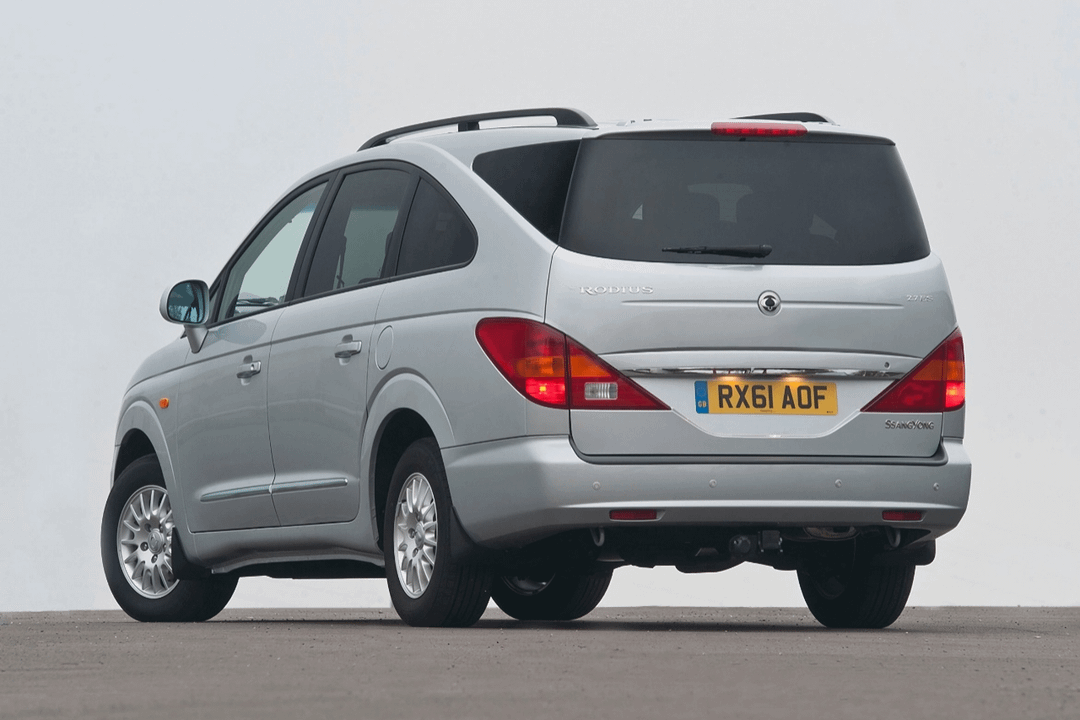


SsangYong Rodius, launched in 2004, expanded the brand’s lineup with a large MPV technically based on the Chairman sedan. Its powertrains included Mercedes-Benz-linked engines, including a licensed five-cylinder diesel and a gasoline inline-six; a SsangYong-developed 2.0-liter diesel arrived later. Four-wheel drive with low range was available, and independent suspension provided a comfortable ride. In corners, however, the vehicle’s weight and substantial body roll became apparent.
Ken Greenley designed the controversial exterior with luxury yachts as his inspiration. The bulky body, sloping rear pillar, and unusual triangular window created an appearance that failed to attract many European buyers. The cabin was one of the model’s main strengths, offering generous space, several seating layouts, and up to 11 seats. Better-equipped versions featured leather upholstery, rotating second-row seats, and other comfort-enhancing equipment.
The Rodius struggled in Europe, where its best annual sales result only slightly exceeded 4,000 units. In its home market of South Korea, it appealed to families with its spaciousness and benefited from tax advantages for vehicles with greater seating capacity. First-generation sales exceeded 100,000 units by 2013. The successor retained the practical cabin but adopted a substantially more conventional exterior.
Could the Rodius have succeeded in the European market with a less polarizing design, or were market conditions simply too different from those in South Korea at the time?
by Autoamazed