

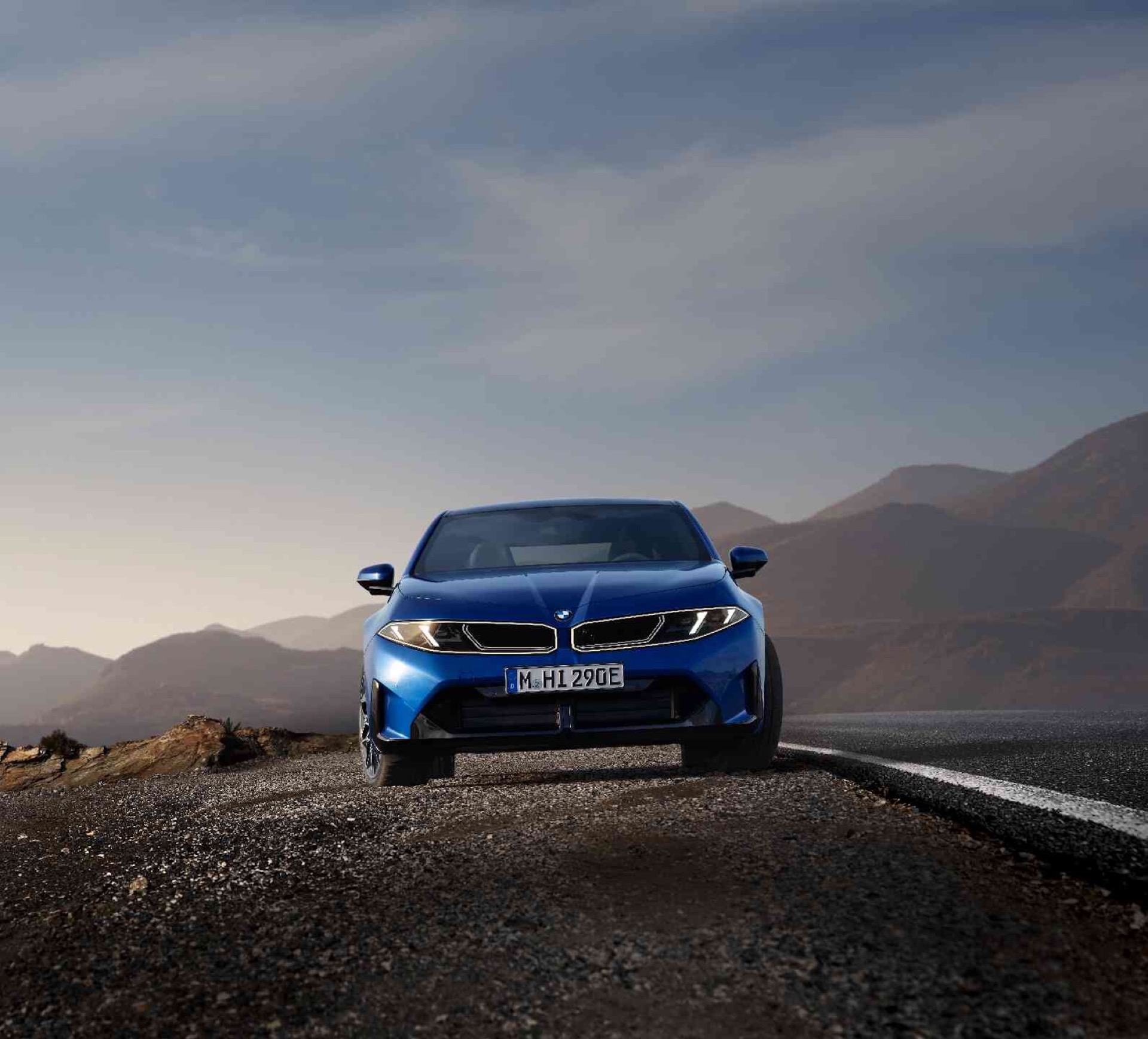
BMW is launching its electric i3 later this year. Far removed from the carbon-fibre experiment of 15 years ago, the new model is now a conventional executive saloon. The new 3 Series looks almost identical to its electric sibling but rides on a different platform. However, the diesel has been dropped, at least for the time being.
Until now, BMW has largely continued to give its customers a choice of powertrains. That freedom takes a significant hit with the new 3 Series, which will be available exclusively with petrol engines or plug-in hybrid power. This is likely to disappoint plenty of customers, particularly in Europe, where diesel engines were once the most popular choice. And that is not the only change. As with Mercedes, BMW is substantially reducing its six-cylinder offering, reserving these engines for its performance models.
Despite the seemingly unstoppable rise of the SUV, the BMW 3 Series remains one of the Munich manufacturer’s most important models, embodying its sporting DNA more convincingly than many of its larger saloons or crossovers. Those who are not yet ready to make the switch to the electric i3 should still find plenty to like about the new 3 Series. The petrol range features four-cylinder engines with 48-volt mild-hybrid technology, while diesel power disappears from the line-up altogether.
Until the arrival of the new M3, six-cylinder power is reserved exclusively for the M350 xDrive, which produces 326 kW / 443 PS and costs at least €80,900. The entry-level BMW 318 is considerably more affordable, starting at €49,900. While the electric versions will be manufactured in Munich, production of the combustion-engined models moves to Dingolfing.
With diesel no longer available, BMW is hoping that fleet customers in particular will gravitate towards the electric i3, with its range of up to 900 kilometres, or the plug-in hybrid version scheduled to arrive in 2027 alongside the sporting M3.

At the top of the electric range sits the 4.76-metre-long BMW i3 50 xDrive, priced from €65,900. Its sixth-generation electric motors, one on each axle, deliver a combined 345 kW / 469 PS and up to 645 Nm of torque. An electrically excited synchronous motor drives the rear axle, while an asynchronous motor powers the front wheels. The latter can be completely disconnected to reduce energy consumption.
Thanks to its battery pack of almost 109 kWh, the electric saloon offers a maximum range of 900 kilometres before it needs recharging. When that time comes, DC charging at up to 400 kW is available, while AC charging reaches a maximum of 22 kW.
The less powerful BMW i3 40 xDrive produces 275 kW / 374 PS and features a smaller battery pack of approximately 83 kWh, delivering a WLTP range of 710 kilometres. While the electric i3 models are available with wheels ranging from 19 to 21 inches, the petrol versions are limited to wheels one inch smaller due to their different platform.

Visually, the combustion-engined and electric models are remarkably similar, although they are not entirely identical. The new BMW 3 Series is based on the outgoing model’s architecture, whereas the electric i3 shares its Neue Klasse platform with the iX3.
The similarities are even more pronounced inside, where both models feature BMW’s latest cockpit architecture, complete with a Panoramic Display, a central 18-inch touchscreen and an optional head-up display. Conventional instruments are absent, just as they are in the iX3 and the updated 7 Series and i7.
The new 3 Series also receives the same suite of driver assistance systems as the electric Neue Klasse models. Level 3 autonomous driving remains off the menu for the foreseeable future. Instead, BMW’s Motorway Assistant allows hands-free driving at speeds of up to 130 km/h in 21 countries, provided the driver continues to watch the road. Additional assistance functions, scheduled for introduction next year, are intended to enable partially automated driving in urban environments.
Those who find the standard electrically adjustable seats insufficiently luxurious can upgrade to leather-trimmed multifunction or sports seats. Other optional extras include heated rear seats, electronically controlled adaptive dampers and a Harman Kardon sound system.
