
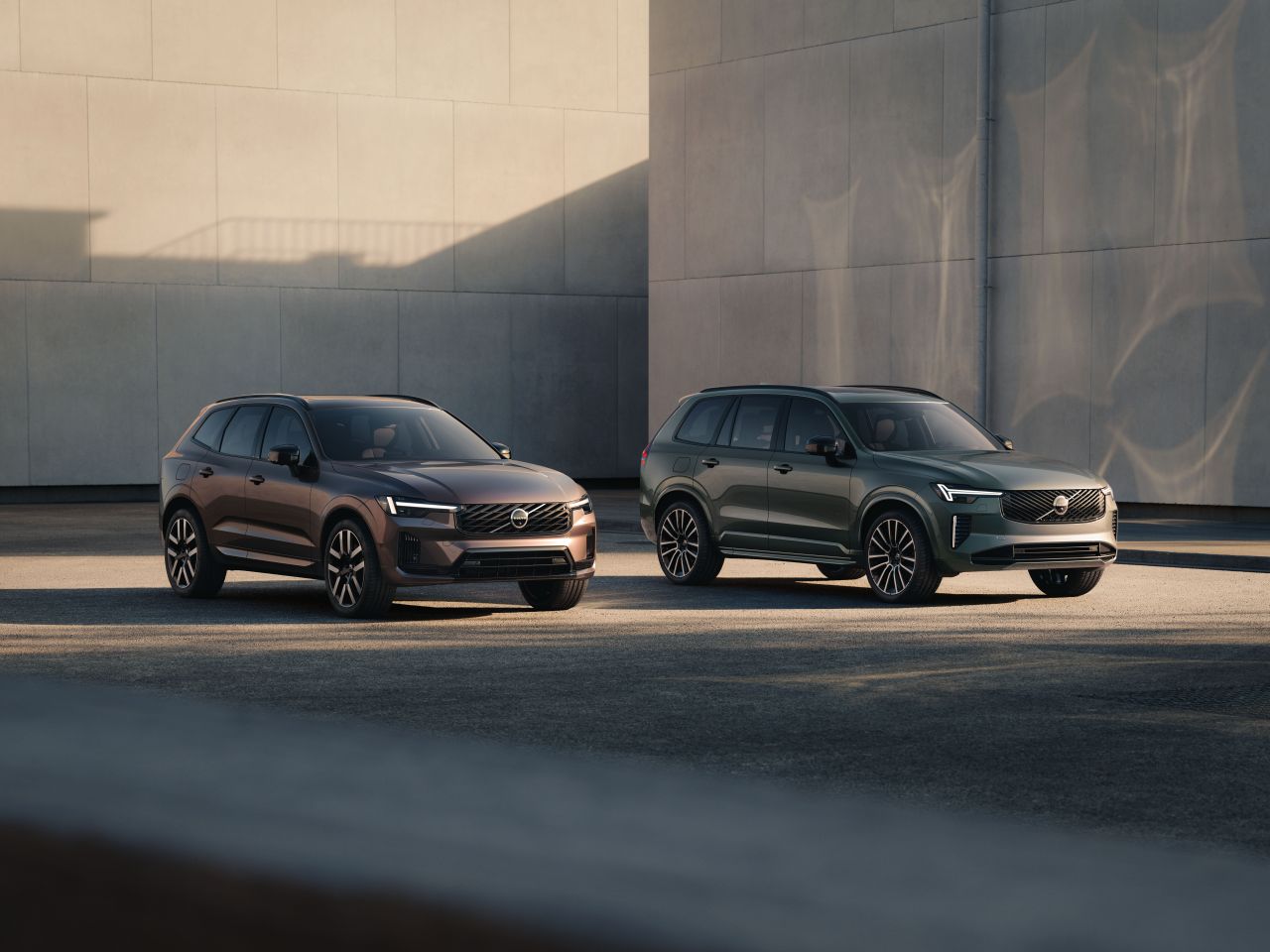
(TestMiles) – Volvo’s updated XC60 and XC90 plug-in hybrids promise up to 78 and 73 electric miles, extending the brand’s bridge toward full EVs.
Volvo is making a larger bet on plug-in hybrids at the same time the auto industry is wrestling with a complicated question: How quickly are American drivers actually ready to abandon gasoline?
The Swedish automaker has unveiled new long-range plug-in-hybrid versions of its XC60 and XC90 SUVs, claiming preliminary electric driving ranges of up to 78 miles for the XC60 and 73 miles for the larger XC90. If those figures hold through final certification, Volvo says they will be the longest electric ranges offered by any plug-in hybrids in the American market.
That is more than a routine powertrain update. It pushes the plug-in hybrid much closer to functioning as an electric vehicle for ordinary daily driving while preserving a gasoline engine for longer journeys.
For Volvo, the vehicles also carry unusual strategic importance. The XC60 is the company’s best-selling model of all time, while the XC90 has served for years as a flagship for Volvo’s safety, design and premium aspirations. Rather than moving those nameplates directly from combustion engines to fully electric propulsion, Volvo is expanding the middle ground.
The company describes the two SUVs as a bridge to full electrification. That phrase has been used frequently across the industry, but nearly 80 miles of claimed electric range gives it considerably more substance.
A Plug-In Hybrid That Can Cover a Real Commute
Most plug-in hybrids have historically offered enough electric range for local errands and shorter commutes, but many owners eventually encounter the gasoline engine during ordinary daily use.
Volvo’s new numbers alter that equation.
The new XC60 can travel as far as 78 miles on electricity under preliminary EPA-based testing, according to Volvo, while the XC90 is rated at up to 73 miles. Volvo says that is more than twice the electric range of the existing plug-in-hybrid versions.
The improvement comes from a larger battery integrated into the floor along with a more powerful electric motor. The gasoline engine remains available when the battery’s usable charge has been depleted or when additional propulsion is required.
That combination is the central argument for a long-range PHEV. A driver who charges regularly may be able to complete a large share of weekly driving without starting the gasoline engine, yet can still make a long interstate trip without planning around public charging stops.
EPA range figures are standardized estimates rather than promises. Driving speed, temperature, terrain, climate-control use, vehicle configuration and driving behavior can all affect actual electric range. Volvo itself notes that its announced figures are preliminary.
Still, the magnitude matters. Even if real-world conditions reduce the number, a plug-in hybrid beginning with more than 70 miles of rated electric capability creates a much larger electric buffer than one beginning with 25, 30 or 40 miles.
It also exposes one of the important conditions behind successful PHEV ownership: charging. A buyer who plugs the vehicle in regularly can use the electric system as intended. Someone who rarely charges is carrying the weight and cost of two propulsion systems while surrendering much of the reason for buying the vehicle in the first place.
The XC60 Gets More Than a Battery Upgrade
Volvo has used the powertrain update to make wider changes to the XC60 rather than simply installing a larger battery.
The exterior receives a revised front and rear design, including an updated grille, front bumper, hood, front fenders and wheels. Volvo has also reworked its familiar “Thor’s Hammer” LED headlight signature and revised the rear lamps, tailgate and bumper.
The changes preserve the restrained Scandinavian visual identity that has become familiar across Volvo’s lineup rather than attempting a wholesale design reset.
Inside, the XC60 gets a redesigned dashboard and door panels, new wood trim and available Cardamom ventilated Nappa leather. Volvo says upgraded interior lighting is intended to reinforce the quieter, more subdued character of the cabin.
Technology takes a larger role as well.
An 11.2-inch center display runs Volvo Car UX, the company’s latest infotainment interface. Google Gemini is being integrated as an in-car assistant, allowing drivers to use more conversational language for tasks that can include route planning, finding stops and handling messages.
That development may be more important than simply enlarging a screen. Automakers increasingly have to determine whether voice-based artificial intelligence can reduce the amount of visual interaction drivers need with touchscreen interfaces. The useful test will be whether Gemini can reliably complete common tasks without requiring drivers to learn exact phrases or dive back into menus.
Volvo also says the XC60 receives updated sensing hardware using radar, cameras and other sensors to support its driver-assistance and active-safety systems.
Those functions include automatic emergency braking and steering interventions intended to help avoid or mitigate collisions, along with lane-change assistance and a 360-degree camera with a three-dimensional view.
The company also describes a system capable of warning occupants about an approaching cyclist before a door is opened.
None of those systems eliminates the driver’s responsibility. Driver-assistance technology can expand the amount of information available to the person behind the wheel, but it remains assistance rather than autonomous driving.
XC90 Keeps the Familiar Formula
The XC90 follows a different path because Volvo has already made recent changes to its large three-row SUV.
Instead of receiving the XC60’s more extensive redesign, the long-range XC90 builds on its existing family-oriented formula while adding the dramatically increased electric capability.
The seven-seat SUV remains positioned above the XC60 and continues to emphasize space, materials, comfort and safety.
Its electric range of up to 73 miles is five miles short of the XC60 figure but significant for a large premium SUV that retains a gasoline engine.
That may make the XC90 especially interesting for families whose normal weekday use consists of school runs, commuting and local activities but who also use the same vehicle for vacations and long-distance travel.
An owner with access to reliable home charging could theoretically treat many ordinary trips as electric journeys without committing the household’s primary family vehicle to an entirely battery-electric powertrain.
Volvo says the XC90 also receives Google Gemini and retains available features including its Bowers & Wilkins premium sound system.
The vehicle remains one of the company’s most important products symbolically as well as commercially. The modern XC90 was central to Volvo’s move further into the premium market, and its design language influenced much of the lineup that followed.
Now Volvo is asking that same nameplate to play a second transitional role: helping customers move from combustion power toward electrification without requiring them to make the entire jump at once.
Why Volvo Is Extending the Middle Ground
The automotive industry’s transition toward battery-electric vehicles has become less linear than many companies once projected.
Consumers have shown strong interest in electrified vehicles, but charging access, purchase prices, trip planning, home circumstances and regional differences continue to shape what type of powertrain works for individual households.
A long-range plug-in hybrid tries to solve several of those problems simultaneously.
It offers an electric drivetrain for the trips that make up much of everyday driving while retaining liquid fuel for situations in which charging may be inconvenient or unavailable. That is particularly relevant for buyers who want an electric experience but remain uneasy about making their only vehicle fully electric.
There are compromises.
A PHEV carries a battery, electric motor, gasoline engine, fuel system and associated hardware. That makes it mechanically more complicated than a pure EV and potentially heavier than a conventional hybrid. Its environmental and operating-cost benefits also depend heavily on how consistently it is charged.
The strongest use case is therefore quite specific: an owner with dependable access to charging whose ordinary driving fits comfortably inside the electric range, but who still values the flexibility of gasoline for longer journeys.
With more than 70 miles available before that engine is needed, Volvo is widening the number of households for which that description could apply.
Production and What Buyers Still Need to Know
Volvo says production of the new XC60 and XC90 T8 AWD Long Range plug-in hybrids will begin later this fall, with customer deliveries expected in early 2027.
Several important details have not yet been supplied in the press material.
Volvo has not announced U.S. pricing for the new long-range variants. Final EPA-certified range and complete efficiency figures will also matter, as will battery capacity, charging power and charging-time information for American customers.
Those numbers could significantly affect the vehicles’ value proposition.
A 78-mile electric range is compelling on paper, but the complete ownership calculation will depend on how rapidly the battery can be replenished, what the vehicles cost relative to conventional hybrids and full EVs, and whether the additional technology changes cargo capacity or curb weight in meaningful ways.
Volvo also says both the XC60 and XC90 will continue to be offered as mild hybrids, preserving a less electrified option for buyers who cannot or do not want to plug in.
The company plans regular over-the-air software updates for the two vehicles, another sign that software capability is becoming part of long-term vehicle ownership rather than something fixed at purchase.
For the broader market, however, the most important number remains the electric range.
A decade ago, a plug-in hybrid with enough battery capacity for more than 70 miles of electric driving would have occupied unusual territory. Today Volvo believes that formula may be one of the most practical ways to keep customers moving toward electrification.
The result is not quite an electric vehicle and not quite a traditional hybrid. For a significant group of American drivers, that may be precisely the point.