

Australians aren’t ready for a battery-electric ute, according to GWM, which is focusing instead on what it sees as more popular plug-in hybrid and diesel powertrains.
GWM has just launched its new-generation 3.0-litre four-cylinder turbo-diesel engine in the flagship Cannon Alpha dual-cab ute and the large Tank 500 off-road SUV.
The Cannon Alpha is also available with a plug-in hybrid (PHEV) powertrain, but GWM’s PHEV ute range will expand in mid-October with the arrival of an Hi4-T version of the smaller Cannon, offered at a promotional price of $47,990 drive-away for Australian Business Number (ABN) holders until October 31, 2026.
That will make it Australia’s cheapest PHEV ute, undercutting the JAC Hunter PHEV, BYD Shark 6 and Ford Ranger PHEV.
Looking for your next car?
CarExpert can help you research, compare and buy so you choose with confidence.

Speaking at the Everything Electric motor show in Sydney, GWM Australia and New Zealand chief operating officer John Kett said the Australian market is not ready for a battery-electric ute.
“We certainly know from a ute perspective that the market is shifting towards plug-in hybrid,” Mr Kett said.
“We’re super-confident that Hi4-T [plug-in hybrid] technology is, in terms of how those vehicles are used, the best proposition if you’re transitioning from diesel into alternative fuel.”
That’s despite GWM showing a battery-electric Cannon concept as far back as 2019, which has not reached local showrooms.
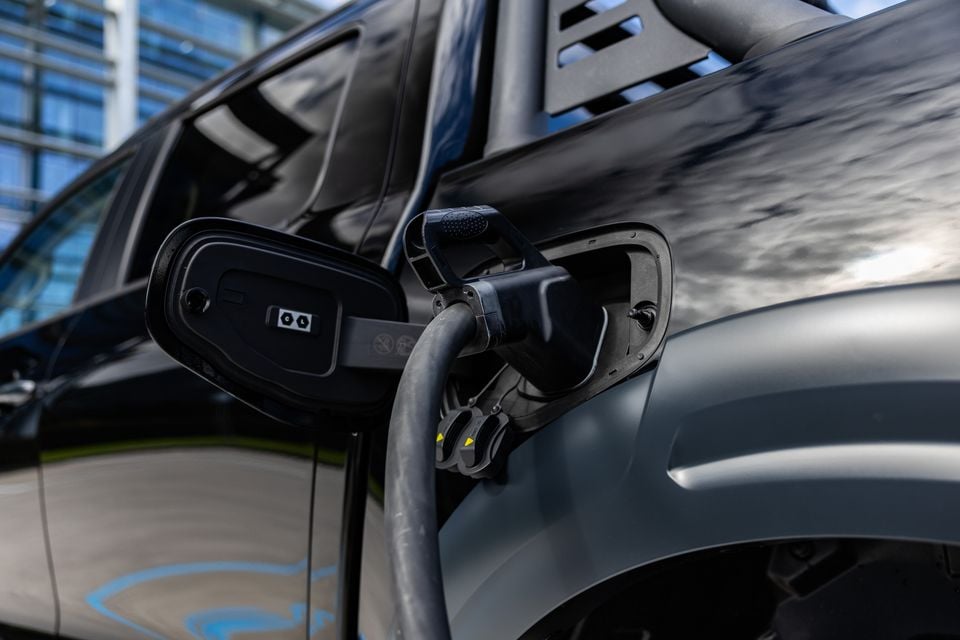
Since then, several electric utes have gone on sale in Australia, starting with the LDV eT60 in 2022, followed by the KGM Musso EV, and now the Toyota HiLux BEV.
At Everything Electric last week, MG revealed a battery-electric version of its U9 dual-cab ute. It could be followed by the LDV eTerron 9, with which it shares core components, although LDV has not yet locked in a local release date for Australia.
An Isuzu D-Max EV has also been promised for Australia, although its previously planned March 2026 launch never eventuated.
While EVs achieved a record 24.9 per cent market share in August, electric ute sales remain relatively modest. Toyota said in July that it had sold around 300 HiLux BEVs since the model’s May launch, which would make it the nation’s most popular EV ute.
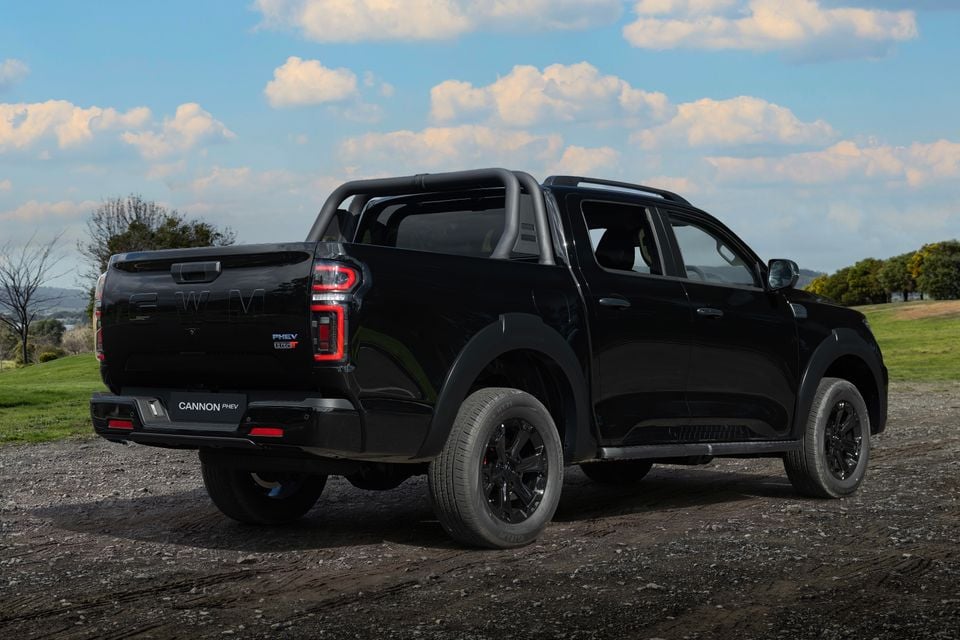
Meanwhile, GWM’s PHEV strategy centres on the Cannon Hi4-T, which combines a 2.0-litre turbocharged four-cylinder petrol engine with an electric motor integrated into a nine-speed automatic transmission, producing combined outputs of 310kW and 750Nm.
It has a 3500kg braked towing capacity, matching the category benchmark set by rivals including the Ford Ranger PHEV.
That’s also the figure Chery is targeting for its ground-breaking Stockman diesel PHEV dual-cab ute, which is due in Australian showrooms late this year.
Mr Kett said hybrid technology is the right choice for Australian buyers for now, despite EV sales reaching record levels and battery-electric vehicles outselling petrol and diesel vehicles individually in August.

“We’re super-confident about that [Hi4-T PHEV] technology, but what it tells us, though, is our next evolution will be revisiting the powertrain around diesel, plug-in hybrids and maybe hybrids first before we worry about full electrification,” he told CarExpert.
“When you’re towing, diesels degrade, right? So, to be honest, plug-in hybrids don’t degrade any worse or less than diesel, so you need battery capacity and an alternative fuel to keep the car going.
“That’s my feeling, so we feel really confident that we’ve got it right.”
Overall, Australian ute sales fell by more than 11,000 vehicles in the first half of 2026 compared with the same period in 2025. Despite this, PHEV ute sales increased by 1290 vehicles, or around 11 per cent, to account for approximately one in nine utes sold.

Within the PHEV ute segment, the Cannon Alpha PHEV recorded 1343 sales between January and June 2026, an increase of 399.3 per cent over the 269 delivered during the same period in 2025.
The market-leading BYD Shark 6 recorded 10,424 sales in the first half of 2026, representing growth of 9.8 per cent over the 9494 delivered between January and June 2025.
The Cannon Alpha and Shark 6 have since been joined by the Ford Ranger PHEV, which began arriving in local showrooms in April 2025, and the JAC Hunter PHEV, which arrived earlier this year.
“The good news for us is when we look at the year-on-year growth in plug-in hybrid – the year-on-year growth, not the absolute volume, but the growth – it’s 100 per cent us; everyone else has plateaued,” said Mr Kett.
MORE: Explore the GWM Cannon showroom