
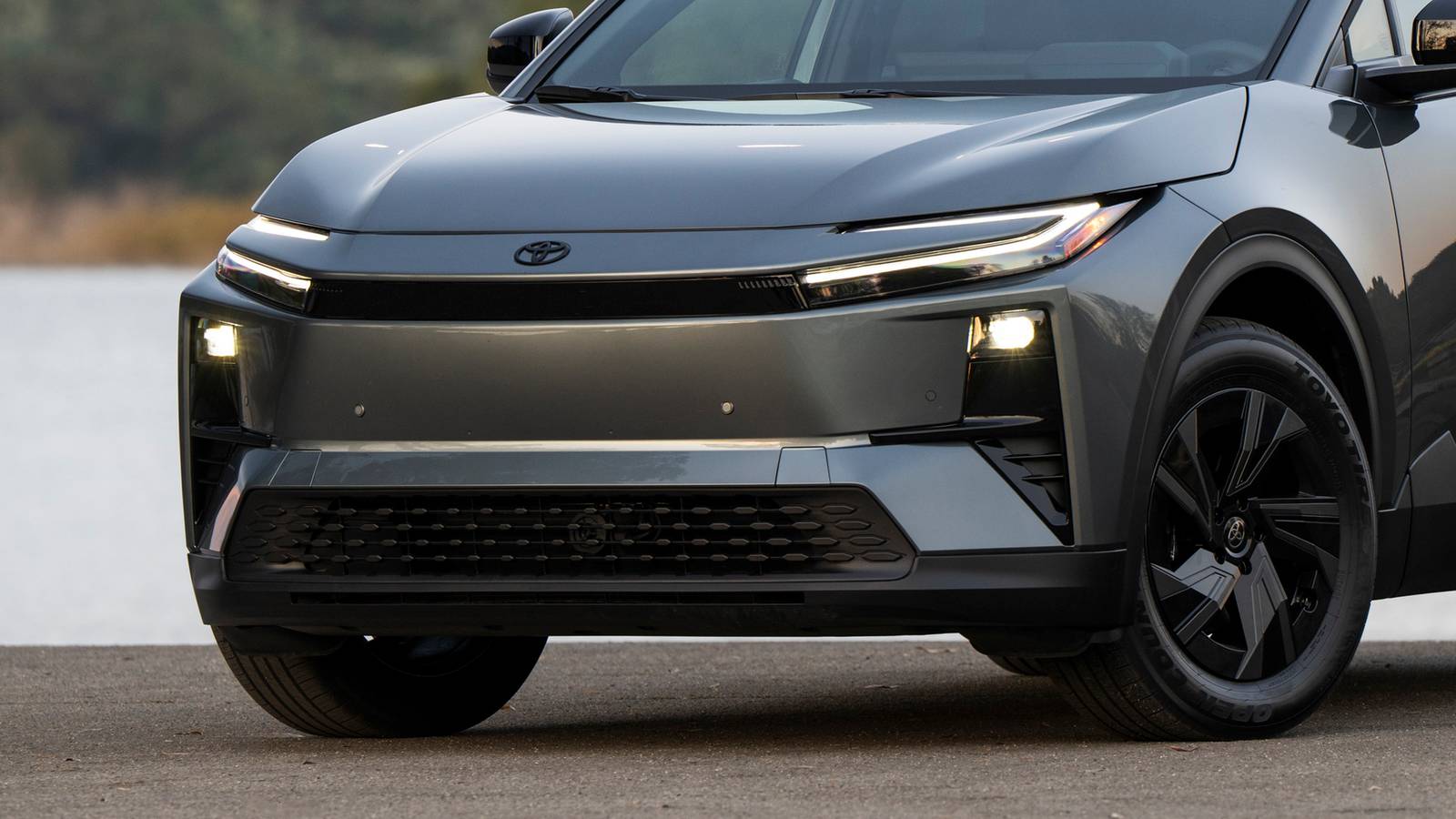
With EVs not being adopted as quickly as before, but customers still showing interest in reducing fuel consumption (especially as gas prices skyrocket), automakers are looking into other ways to combine combustion engines with electric assistance, or vice versa. One of those that’s being bandied about is the extended-range EV, in which a gas generator provides electricity once the battery has drained, offering some flexibility for customers.
The latest company to announce the addition of this kind of powertrain is Toyota, but only for one specific market.
Toyota Is Planning 400,000 EREVs A Year By 2028
Even though the US might seem like the perfect market for an extended-range electric vehicle, what with long distances and still growing charging networks to contend with, Toyota is actually targeting China with these models. This is according to Japanese news outlet Nikkei, which also reported that production would start in April with first year production targeted at 200,000. The company then hopes to reach 400,000 units a year by 2028.
What this first EREV will be, is a mystery. Nikkei had no details, and Toyota doesn’t have any EREVs offered in other markets. The closest it has are its many plug-in hybrids, including the Prius and RAV4. Though these are variations on Toyota’s conventional hybrids with more powerful motors and a large battery that can be charged to go longer on electric power. Those vehicles are still dependent on the gas engine for full power, and their battery capacities are usually still smaller than in an EREV.
Based on EREV announcements from other automakers, we would guess that these Toyotas would be somewhat large models in which a battery might not provide sufficient range without being especially large and expensive. Some kind of SUV or truck would seem like a strong possibility for that reason, in addition to a higher likelihood of that vehicle being taken to remote areas or being used for towing.

2026 Jeep Grand Wagoneer REEV from the front three-quarter angleJeep
Will The US Get Any EREVs?
Multiple Chinese automakers have been selling EREVs in that country for a few years now, but they’re going to be showing up in the US soon, just not from Toyota. One of the first, as long as it isn’t delayed, will be the Jeep Wagoneer REEV. It will feature a 3.6-liter V6 and dual electric motors, plus a massive 92-kWh battery pack. That powertrain will provide an estimated 150 miles of fully-electric range, and a total range of around 500 miles, plus output as high as 647 horsepower and 620 pound-feet of torque. It’s slated to go on sale by the end of the year, with a starting price under $70,000. A closely related Ram is also set to arrive sometime next year.
Close behind it is the Hyundai Santa Fe EREV. It will be the first EREV from the company in the US, and will even be built in the US, but it won’t be the last as the Hyundai Motor Group has more planned. Hyundai hasn’t given any specifics about the Santa Fe EREV, though, but we should know more in the coming months.

2027 Hyundai Santa Fe CalligraphyHyundai
Farther into the distance are the Scout Traveler SUV and Terra pickup truck, as well as the next-generation Ford F-150 Lightning. The Scouts will be available as full EVs or as EREVs, with the latter having ranges almost identical to the Wagoneer, with 500 total, and 150 on battery alone. However, they are smaller than the Jeep, and will use a strange layout with the gas generator in the rear of the vehicle.
The earliest they’re expected to hit dealers is 2028. The F-150 Lightning is even further into the future, and will only be offered as an EREV this time. The only specific information Ford has given otherwise has been a total range of 700 miles and a zero to 60 mph time of less than 5 seconds.

2027 Scout Motors Terra Pickup ExteriorScout Motors
CarBuzz Insight – Why This Matters:
Naturally, these early Toyota EREVs won’t mean much for the US in the short term, but they do show that Toyota sees this technology as something worth investing in. If it’s successful for the company in China, it’s possible that Toyota will expand where it offers those vehicles. It could be especially useful for Toyota’s large and successful range of pickup trucks and body-on-frame SUVs in the US. It has already hybridized most of them, and an EREV could be a natural next step for them.
Basically, Toyota’s entrance into the market is a good sign that the technology has some staying power. However, we can’t help thinking the US market, where the charging infrastructure is still expanding and many buyers still have range anxiety about EVs, is really losing out on Toyota’s efforts here.
Source: Nikkei