

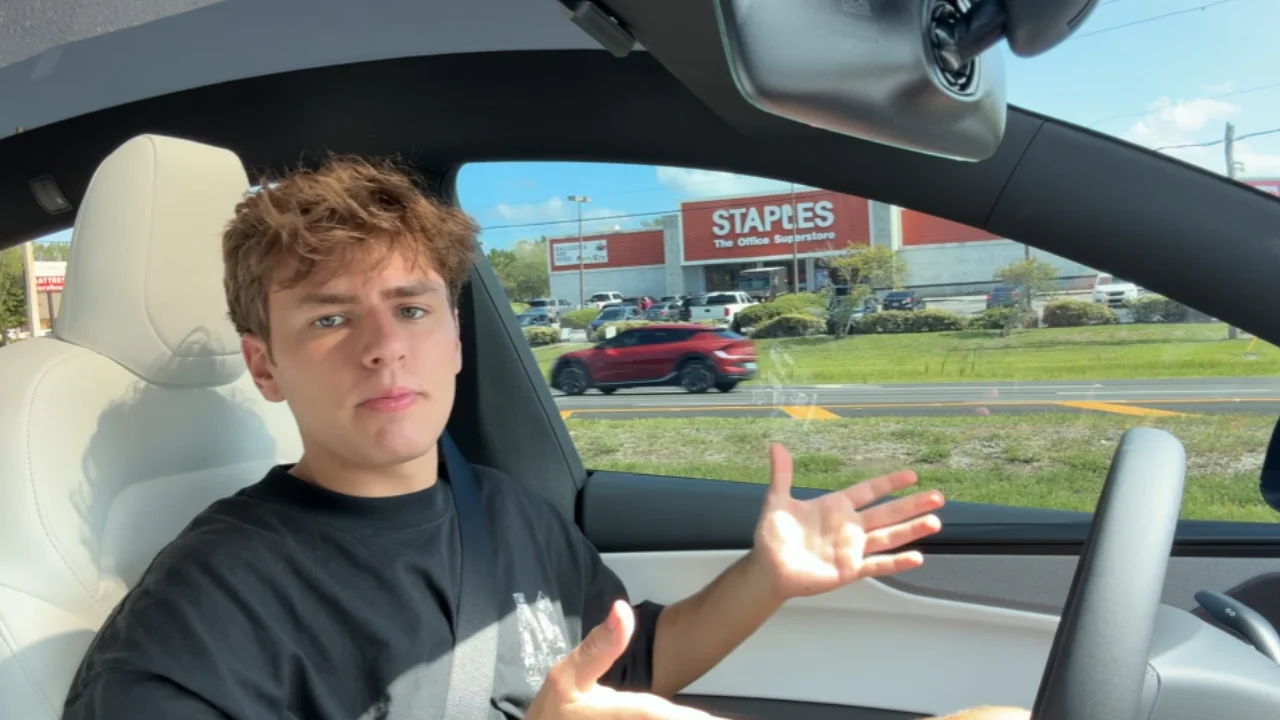
This man took on quite a remarkable challenge, when he took on a 24-hour solo road trip in his Tesla, using only self-driving.
Getting from Miami to Virginia is already a long-haul trip.
But doing that without ever touching the steering wheel? That’s a big ask.
Could YouTuber Nico Grigg do it? Let’s take a closer look.
More and more people are making use of self-driving technology
What was once a concept relegated to sci-fi movies is now a reality.
More people are embracing the technology of self-driving cars, whether that’s in the Tesla Cybercab or in Waymo cars.
But few have taken it on in the way this YouTuber has.
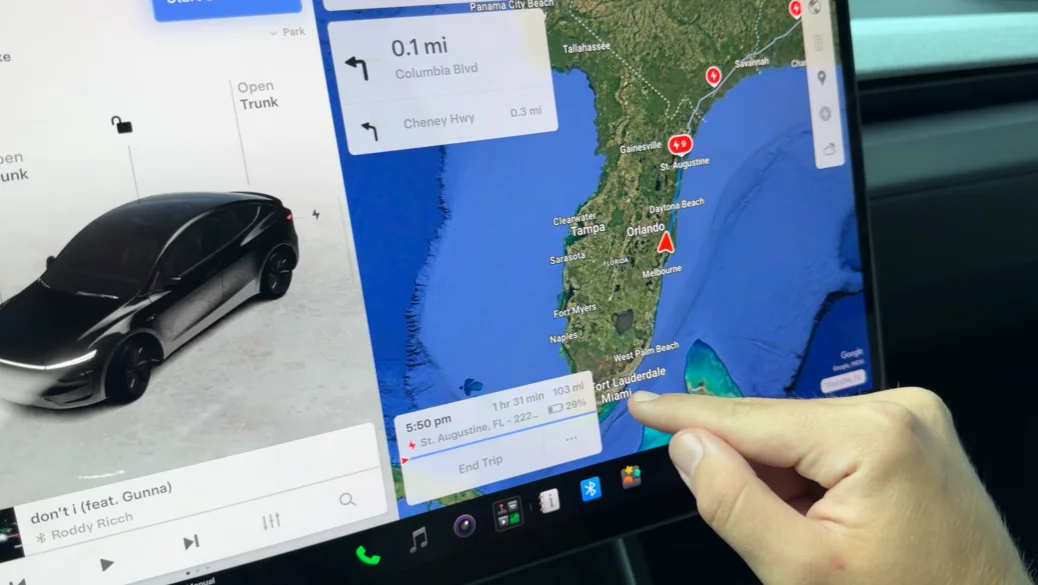
YouTuber Nico Grigg has set himself a challenge – to go from Miami to Virginia without touching the steering wheel.
 Nico Grigg
It’d be down to his Tesla’s self-driving to get him from Point A to Point B.
“Tesla claims that their self-driving is good enough to replace a human. Today, I’m finding out if that’s true by driving across America with one rule. I can’t touch the wheel,” Grigg declared.
“I have never done a road trip over 4 hours. So, this is going to be new to me. But I guess I’m not actually driving because I’m about to click ‘Start Self-Driving’.”
 Nico Grigg
Did he make it from Miami to Virginia without touching the steering wheel?
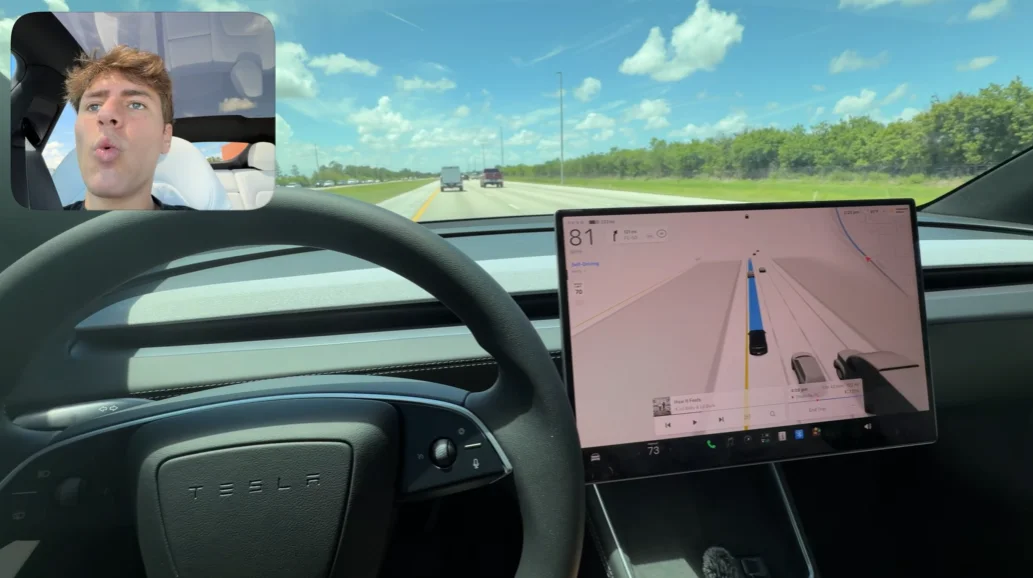
Along the way, he got to enjoy some of the perks of self-driving technology.
“Having the car drive itself and you don’t have to do anything on a road trip like this is probably the best thing you could ask for,” he said.
“One thing I do love about this car ride so far is that I’m actually able to enjoy the sights while the car is driving itself.
Nico Grigg
“When you’re driving, your eyes are just straight peeled to the road. And like that actually gets way more exhausting.”
But the trip wasn’t without its downsides.
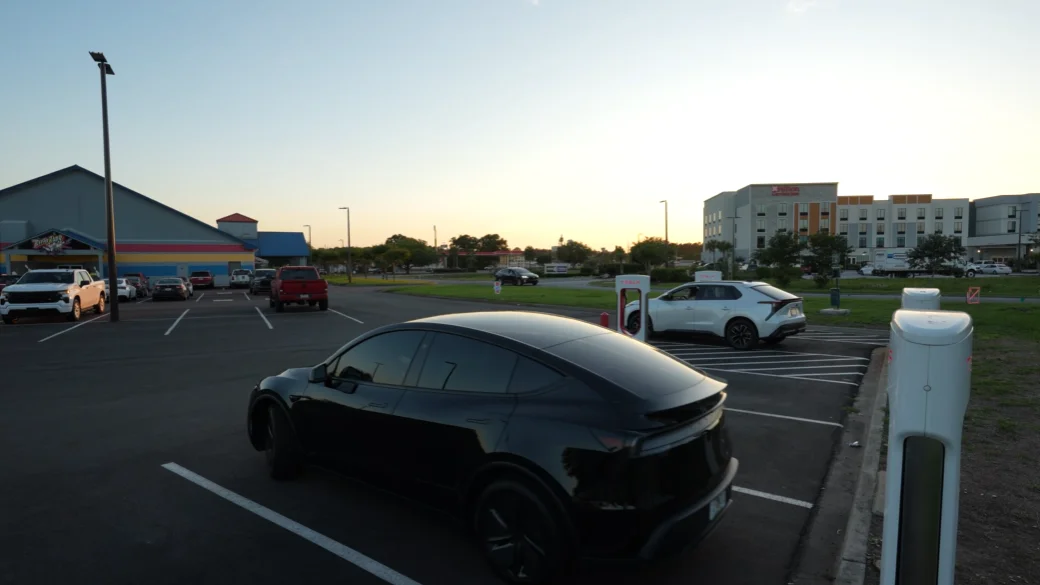
In particular, he took issue with the charging process, and negatively contrasted it with filling up a gas car.
“In a gas vehicle, you stop for like 30 seconds, fill it up. A Tesla, you stop for 20 minutes each stop,” he said.
 Nico Grigg
He also noted that the Autopilot had occasional moments of ‘glitching out’, coming to a complete halt when a ‘deer was on the side of the road’.
Better safe than sorry, we suppose.
By the time he reached his destination, he was left with mixed feelings.
“I’ll probably never do this again because of how inconvenient the charging is, but overall, I’m extremely impressed with the self-driving on this Tesla, and it really, really did surprise me,” he concluded.
Besides a brief moment in which the car prompted him to ‘take over’ after he unbuckled his seatbelt too early while pulling into a Supercharger, he had maintained his ‘no hands’ rule.
That’s pretty impressive.
Timeline of Tesla Full Self-Driving
October 2014: Autopilot Hardware 1 is introduced, offering basic lane-keeping and adaptive cruise control.
October 2016: Hardware 2 announced, with a coast-to-coast autonomous drive promised by end of 2017 (although this didn’t come to fruition).
August 2017: Hardware 2.5 is introduced.
April 2019: Hardware 3 is announced, as part of a custom-built ‘FSD Computer’ – reportedly 21 times faster than the Nvidia chips used in HW2.5.
October 2020: FSD Beta rolled out to a small group of early testers – can now navigate local city streets, stop signs, and intersections with strict driver supervision.
November 2022: FSD Beta becomes available to anyone in North America who requests it via the in-car screen.
Mid-2023: Vehicles with Hardware 4 start getting shipped out, featuring higher-resolution cameras.
April 2024: FSD purchase price drops to $8,000 to encourage adoption.