
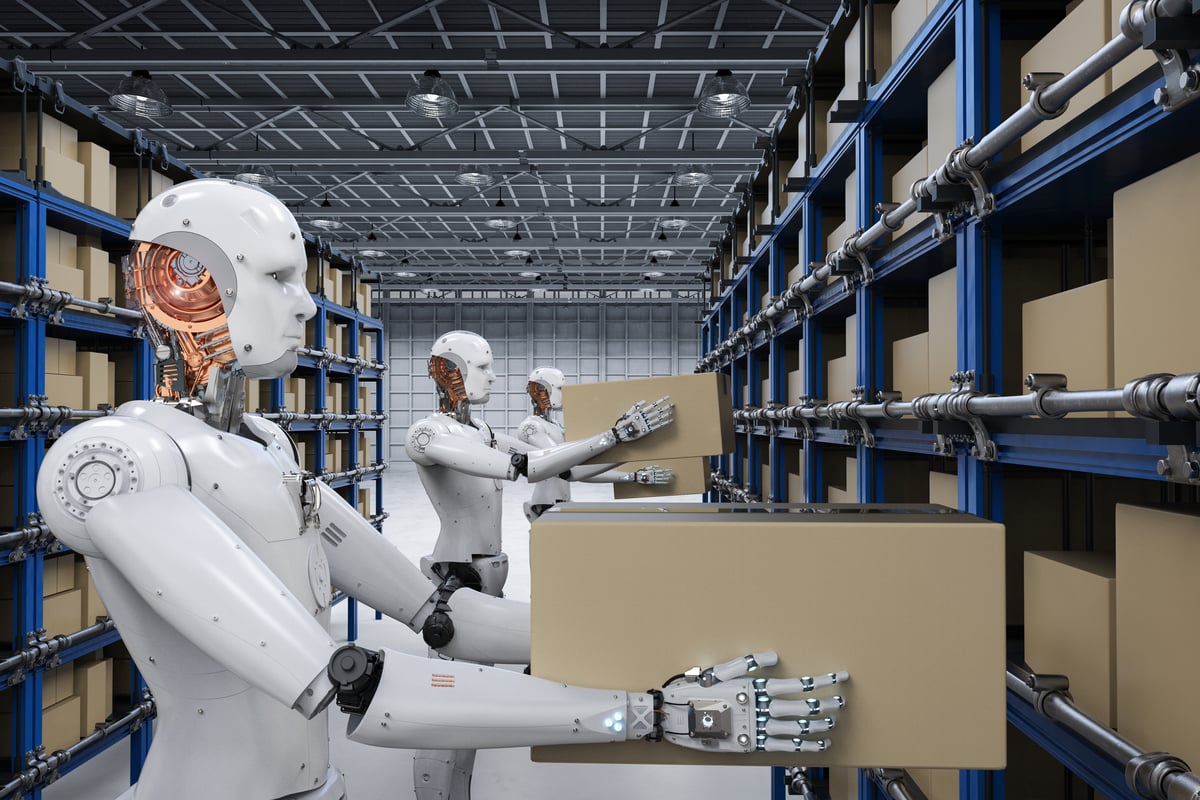
A large portion of Tesla’s valuation is driven by the upcoming Optimus humanoid robots. The company is already behind in the cybercab race, with Alphabet’s (GOOG +3.06%) (NASDAQ: GOOGL) Waymo leading the way, and the humanoid robot segment hit another roadblock.
JPMorgan Chase anticipates commercialization in the second half of 2027. Musk hinted at the production of Optimus 3 starting in summer 2026, but no news has emerged.
Tesla doesn’t have the leverage of a small start-up that can quickly gobble up market share and multiply its value. The company also has a lofty valuation, which complicates its risk profile. Investors looking for lower-risk artificial intelligence (AI) robotics stocks may want to consider these three options.
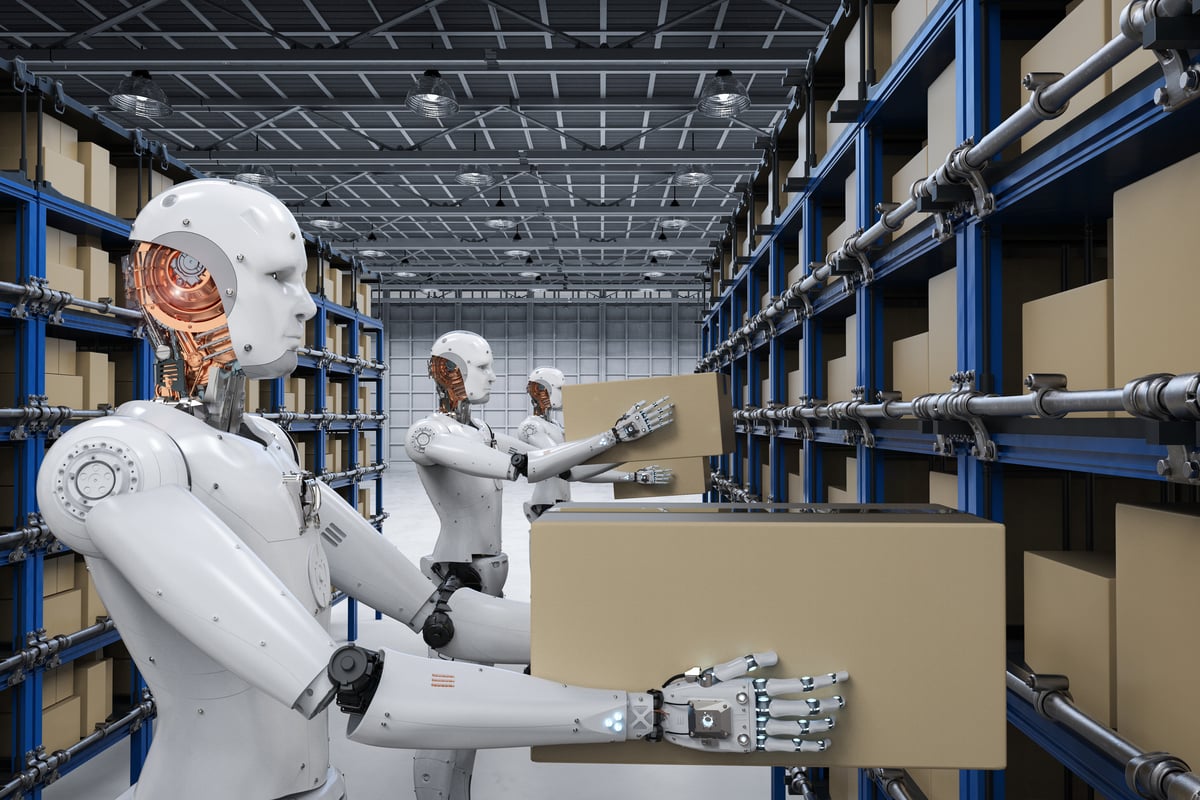
Image source: Getty Images.
1. Nvidia
For Nvidia (NVDA -3.36%), it doesn’t matter which robotics companies come out on top. They all will need Nvidia’s chips in their machines to process users’ requests.

Today’s Change
(-3.36%) $-7.33
Current Price
$210.96
Key Data Points
Market Cap
$5.3TMarket cap calculated using publicly traded shares outstanding only. Does not include unlisted, private, or dual-class non-traded shares. Implied market cap may vary.
Day’s Range
$208.93 – $212.77
52wk Range
$164.27 – $236.54
Volume
132.3M
Avg Vol
131.8M
Gross Margin
74.67%
Dividend Yield
0.24%
It’s also not like Nvidia is waiting on robots to become mainstream. The AI chipmaker is the largest company worldwide, with a market cap above $5 trillion. This scale came about thanks to Nvidia’s critical role in the current AI build-out.
A 106% year-over-year revenue growth rate in the company’s fiscal 2027 second quarter is a testament to its commanding market position. Nvidia also achieves those growth rates while boosting its profits. The chipmaker wrapped up the quarter with a 62% net profit margin.
Nvidia also trades at a generous 0.46 PEG ratio, while Tesla has a much higher 4.37 PEG ratio. The valuation is good today, and Nvidia’s upcoming tailwinds are more certain than Tesla’s.
2. Alphabet
Alphabet is in a similar position to Nvidia. Although AI chips aren’t Alphabet’s claim to fame, its custom AI chips business is gaining momentum. However, the key pieces of Alphabet in robotics are Google Cloud and Waymo.

Today’s Change
(3.06%) $10.26
Current Price
$345.71
Key Data Points
Market Cap
$4.1TMarket cap calculated using publicly traded shares outstanding only. Does not include unlisted, private, or dual-class non-traded shares. Implied market cap may vary.
Day’s Range
$338.74 – $346.45
52wk Range
$236.69 – $404.47
Volume
22.5M
Avg Vol
19.8M
Gross Margin
60.94%
Dividend Yield
0.26%
AI robots need cloud platforms for training and high-intensity tasks. Google Cloud is one of the three largest cloud computing options, and its revenue continues to surge. Cloud revenue was up by 82% year over year in the second quarter. As robots become mainstream, Google Cloud revenue should continue to accelerate, but Alphabet isn’t waiting around for the AI robotics industry to materialize before offering compelling value.
Alphabet trades at a PEG ratio of 1.20, which is much lower than Tesla’s. Google Ads and cloud computing are the main catalysts, but Alphabet has a robotics segment of its own. Waymo’s autonomous vehicles are gaining momentum in several cities and could redefine transportation before competitors catch up.
3. Zebra Technologies
Zebra Technologies (ZBRA +0.41%) is the smallest company of the bunch with a $17 billion market cap, but its 44% year-to-date return is higher than Nvidia’s and Alphabet’s returns over that stretch.
Its data capture technology and software help robots interact with the world and perform tasks effectively. Zebra Technologies doesn’t make robots, but its technology serves as the intelligence for these machines.
The company works with businesses in retail, manufacturing, transportation, logistics, healthcare, and other industries. These connections can become more valuable as humanoid robots scale.
This market positioning has already translated into strong fundamentals. Zebra Technologies delivered 20.4% year-over-year revenue growth in the second quarter, with CEO Bill Burns calling the company “the foundation for intelligent operations and frontline AI.”
Net income also more than doubled year over year, strengthening Zebra Technologies’ balance sheet in the process. The growth stock trades at a 0.59 PEG ratio and has a 16 forward price-to-earnings (P/E) ratio. Zebra Technologies is a relatively hidden pick in the robotics industry that offers a greater margin of safety than Tesla. It’s also delivering impressive growth rates right now, while Tesla investors are waiting for the day that humanoid robots become commercialized.