
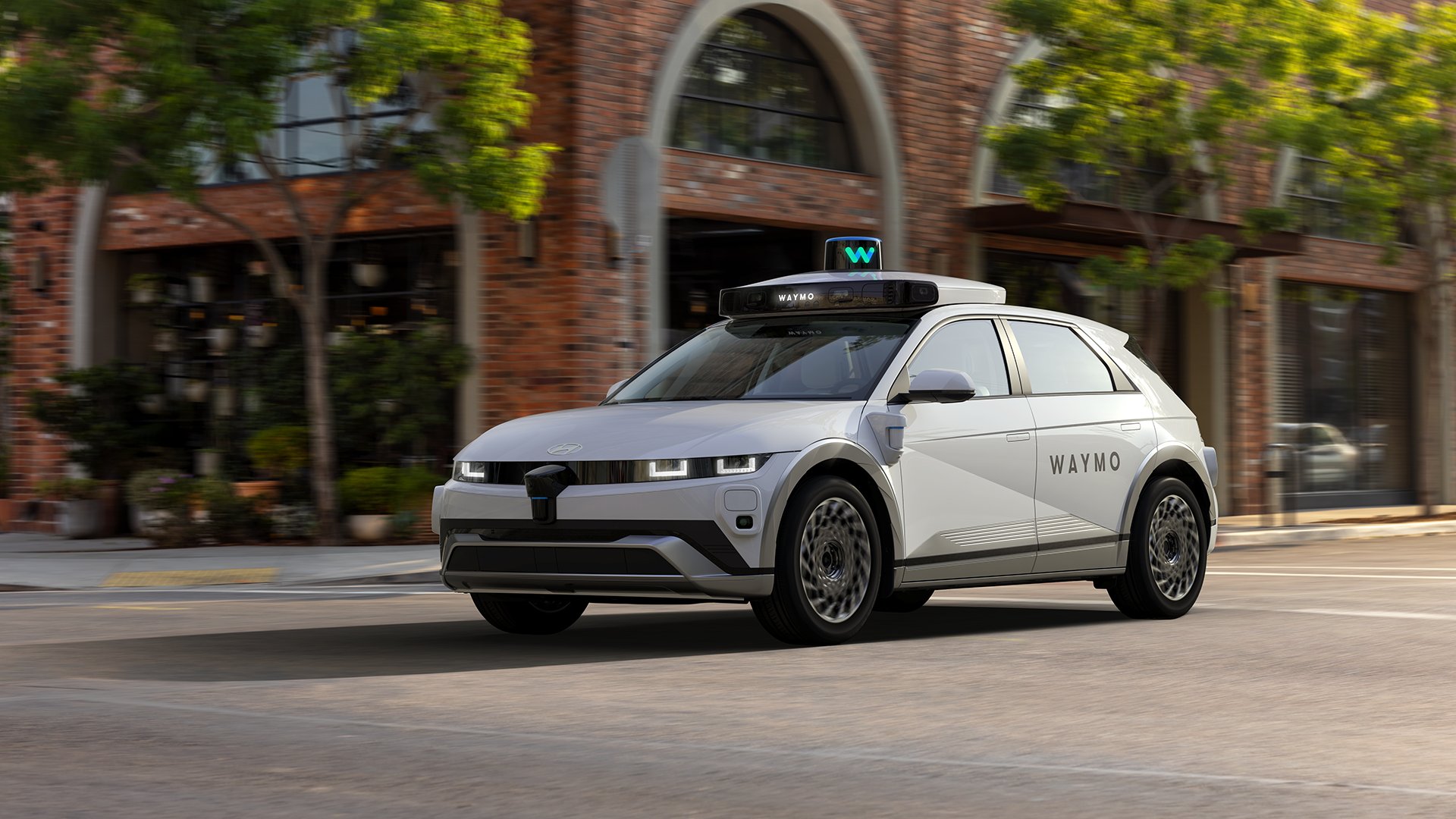
Since Waymo retired its Chrysler Pacifica fleet in 2023, all robotaxis operated in the US have been battery-electric. This is why Hyundai considering autonomous driving tech for internal-combustion-engine vehicles is unusual, to say the least. And yet, the Korean carmaker thinks it knows how to make old and new technologies work together in harmony.
Autonomous vehicles are almost exclusively powered by batteries, and there’s a simple reason for that. Autonomous driving usually requires a state-of-the-art software stack, and legacy carmakers have been unable to develop good software. It’s also much easier to install autonomous driving tech on an electric vehicle, which has been designed from the get-go to be controlled by software.
However, that’s not to say that combustion vehicles can’t be autonomous. Waymo proved that it’s possible with its Chrysler Pacifica fleet. Although people may have forgotten about them, the Waymo minivans have been ubiquitous before the Pacifica fleet was retired in 2023. Waymo indeed installed the entire autonomous driving tech, from sensors and computers to drive controls, the same as it did with the Jaguar I-Pace EVs.
There are reasons why electric vehicles make more sense than gas-powered robotaxis, and it’s more than just software. Combustion vehicles have much higher operating costs compared to EVs. Adding these costs on top of a very expensive autonomous driving tech (estimated to cost tens of thousands of dollars for a Waymo robotaxi) can quickly render the service unprofitable.
However, not everyone wants to launch autonomous vehicles specifically for ride-hailing services. Hyundai is among the carmakers that want to develop its own autonomous driving stack for customer vehicles. Naturally, the technology will first roll out to its EVs, but the Korean carmaker hasn’t ruled out gas vehicles. Hyundai thinks that the same tech can be used not only for EVs, but also for hybrid and internal combustion engine vehicles.

Photo: Hyundai
Hyundai intends to launch a battery-electric autonomous vehicle in 2028 and later use the technology in autonomous vehicles with gas-powered and hybrid powertrains. The carmaker thinks its know-how in developing and manufacturing internal combustion engines can make autonomous driving work without a significant efficiency penalty.
Industry sources speak of driver assistance systems classified as Level 2+, similar to Tesla Full Self-Driving. When equipped with this technology, a vehicle could accelerate, brake, and steer under supervision. This doesn’t change when the car is powered by a gas engine instead of an electric motor and a battery.
Hyundai thinks this provides more choices for customers who want the latest driver assistance systems without buying an electric vehicle yet. To be fair, Hyundai is unique in this regard, as all other carmakers focus on developing autonomous driving for electric vehicles. Chances are Hyundai is either highly successful in jumpstarting this niche or facing a monumental failure, wasting money on yesterday’s technology. Time will tell.