

Simple Energy has launched its latest family-focused electric scooter, the Simple Wave, in the Indian market. The company developed this scooter with a different approach from its performance-oriented Simple One.
Simple Wave vs Rivals- The Wave’s main focus is on practicality, large storage space, long range, and competitive pricing, rather than sporty performance.
Join Our Youtube Channel to stay updated with daily Indian car & bike news instantly!
With a starting price of Rs. 1.10 lakh, the Simple Wave competes with established electric scooters in the Indian market like the Ather Rizta, TVS iQube, Bajaj Chetak, and Hero Vida VX2.
But do the Wave’s numbers genuinely challenge its rivals? Let’s compare based on price, range, storage, and hardware.
Also Read: Simple Wave Electric Scooter Launched At Rs 1.10 Lakh, Offers Up To 243km Range
Simple Wave Has a Big Storage Advantage
 Simple Wave vs Rivals
One of the Simple Wave’s most interesting features is its massive storage space.
The scooter features a 70-liter total storage capacity. This includes a main under-seat storage area of around 63 liters, a 3-liter glovebox, and a 4-liter side compartment, which the company calls “Pill.”
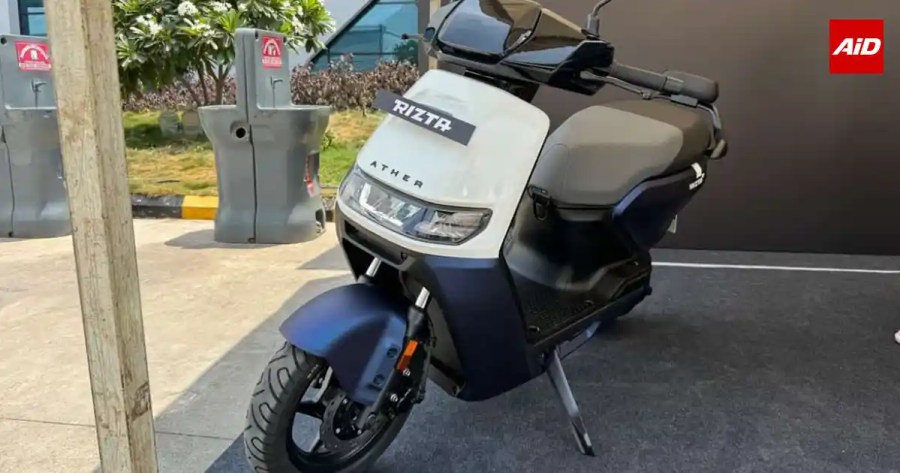
Compared, the Ather Rizta offers around 56 liters of total storage, while the TVS iQube has a storage space of around 32 liters. The Bajaj Chetak comes with an even smaller storage capacity.
This difference can be significant for family buyers, especially if the scooter is used for grocery shopping, office commute, or daily household duties.
243km Range Gives Simple Wave Another Major Edge
The top variant of Simple Wave also significantly outperforms its rivals in terms of range.
The top-spec Wave+ features a 5kWh battery pack that delivers a claimed 243km IDC range. On paper, this figure is quite impressive in the family electric scooter segment.
Simple Wave vs Rivals: In comparison
SpecificationSimple WaveAther RiztaTVS iQubeBajaj ChetakStarting PriceRs. 1.10 lakh~Rs. 1.10 lakh~Rs. 1.17 lakh~Rs. 1.15 lakhMaximum Claimed Range243km160km145km126kmTop Speed75-90kmph80kmph78-82kmph63-73kmphTotal Storage70L56L32L21LRear SuspensionTwin shocksMonoshockTwin shocksMonoshock
Prices and specifications may vary by variant
Of course, the claimed IDC range shouldn’t be directly compared to real-world riding range. Actual range will depend on riding style, speed, load, road conditions, and weather.
Simple Wave Gets a 920mm Long Seat
The Wave’s second major practicality-focused feature is its seat.
According to Simple Energy, the scooter has a 920mm long single-piece seat, which the company claims is the longest seat on an Indian scooter.
The benefit of a long seat can primarily be found in pillion comfort. For family-oriented buyers, especially those with regular two-person commuting, this can be a useful feature.
The Ather Rizta and TVS iQube also offer comfortable family scooter positioning, but the Wave’s claimed seat length is noteworthy in this segment.
Also Read: Ather Konarc vs Rivals: TVS iQube, Bajaj Chetak & Ather Rizta Compared
Four Battery Options Make Wave More Flexible
Simple Energy isn’t offering the Wave in just one battery configuration.
The scooter lineup includes 2.2kWh, 2.7kWh, 3.7kWh, and 5kWh battery options. These are spread across the Wave S, Wave, and Wave+ variants.
The advantage of this approach is that buyers can choose the battery capacity based on their daily usage and budget.
If a customer’s daily commute is relatively short, a smaller battery variant could potentially be sufficient. On the other hand, buyers prioritizing maximum range can opt for the 5kWh version.
What About Performance?

The Simple Wave isn’t focused on outright performance. It’s positioned as a practical family electric scooter.
Depending on the variant, the claimed top speed ranges from 75 kmph to 90 kmph. The top-spec version with a 5 kWh battery has a maximum claimed range of 243 km.
In comparison, the Ather Rizta’s top speed is around 80 kmph, while the TVS iQube variants reach approximately 78-82 kmph. The Bajaj Chetak comes with comparatively lower top-speed figures.
Therefore, the Wave’s strongest selling point is its range and practicality combination rather than performance.
Simple Wave vs Rivals: Suspension and Everyday Usability
On the hardware front, the Wave features a telescopic front suspension and a twin-shock rear setup.
The TVS iQube also uses twin rear shocks, while the Ather Rizta comes with a monoshock rear suspension. The Bajaj Chetak comes with a leading-link front suspension and a monoshock rear setup.
Suspension setup alone does not determine ride quality, as tuning, tyre profile, chassis and overall weight distribution also play an important role.
The Biggest Challenge For Simple Wave
Looking at the numbers, the Simple Wave poses a strong challenge to its competitors. But the scooter’s success won’t depend solely on specifications.
Here, brand reach and after-sales network become important factors.
Established manufacturers like Ather, TVS, and Bajaj have comparatively mature dealership and service networks. Simple Energy is currently expanding its network.
For buyers, especially those living outside major cities, service availability and spare-parts support may be more important than range or storage in the purchase decision.
Simple Wave vs Rivals: Our Verdict

On paper, the Simple Wave package appears quite strong.
Its biggest advantages are the 70-liter storage capacity, up to 243km claimed IDC range, 920mm seat, and multiple battery options. Starting price of Rs. 1.10 lakh also makes it an interesting alternative among established electric scooters.
Ather Rizta is a strong competitor with family-focused design and established ecosystem, while TVS iQube and Bajaj Chetak take advantage of their established brands and service reach.
Simple Wave therefore looks particularly attractive for buyers who want maximum practicality and range for their money. However, before making the final decision, customers should also consider local service availability, charging infrastructure and the exact variant they are planning to buy.
Simple Wave vs Rivals: Key Highlights
Lowest starting price: Rs. 1.10 lakh
Maximum claimed range: 243km
Largest storage: 70 liters
Longest claimed seat: 920mm
Battery options: 2.2kWh, 2.7kWh, 3.7kWh and 5kWh
Top speed: Up to 90kmph
Main rivals: Ather Rizta, TVS iQube, Bajaj Chetak and Hero Vida VX2
Simple Wave has clearly been designed around what many Indian family scooter buyers actually need — space, range and everyday usability. Its biggest question mark remains the brand’s growing service and dealership ecosystem.
Also Read: Ola S1Z Electric Scooter Unveiled at Just Rs. 79,999! 301km Range, Bharat Cell & More

Raj Prajapati is a Senior Automotive Content Writer at AutoIndiaDaily. A B.Tech graduate in Computer Science and Engineering, he leverages over four years of experience covering Indian car and bike launches, EV tech, and market dynamics to break down complex automotive regulations into simple consumer guides. Specialising in Indian motor vehicle laws, IRDAI updates, and ownership costs, Raj translates technical auto policies into actionable advice for everyday drivers.