
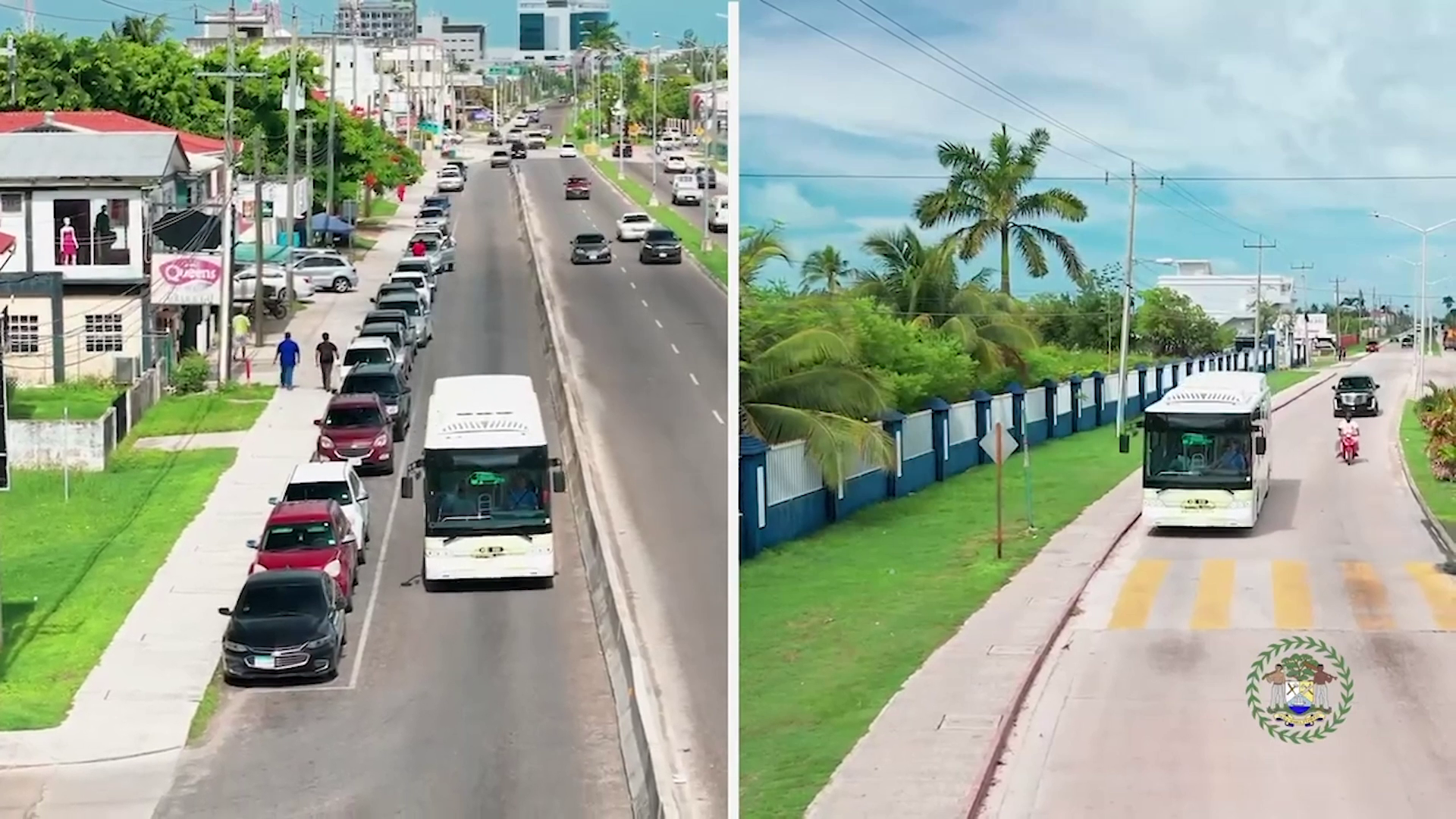
Belize’s roads are going electric, whether commuters are ready or not. Electric cars, buses, scooters and bicycles are becoming more visible, while the government invests in the infrastructure needed to power the transition. But with many Belizeans still questioning the cost and reliability of electric vehicles, will they embrace the change or get left behind? Shane Williams explores the road ahead.
Shane Williams, Reporting
For years this has been the most beautiful sound for car enthusiasts. The powerful roar of a fine-tuned engine. Every day, thousands of noisy vehicles crisscross our streets, carrying Belizeans to work, school, the shops and back home. For many of us, life without the hum of a combustible engine is unfamiliar. But listen closely to this electric Sinogold E-400 and you’ll notice something unusual: no engine roar, just silence. The future may sound a lot like pre-independence Belize. Neil Hall is the e-Mobility Coordinator for Belize City, the municipality setting the pace for e-mobility in Belize.
Neil Hall
Neil Hall, E-Mobility Coordinator
“If we’re a city with low carbon expenditure and a more quiet combustion-type vehicle, you are winning on noise pollution and carbon emissions.”
On the surface, it sounds straightforward. Still, quieter streets and fewer carbon emissions may not be enough to get Belizeans onboard with a complete transportation overhaul, and government is well aware of that challenge.

Dr. Leroy Almendarez
Dr. Leroy Almendarez, CEO, Ministry of Energy, Public Utilities and Logistics
“The cost of – initial cost of an electric vehicle could be pretty expensive, but the long-term usage, because gas at this point in time, as you know, the price is very volatile, like, and we have no real control over that. But when it comes to electric mobility or electric vehicles, the charging or to charge an electric vehicle and to use it over the same space, right? If you were running from Belize City to Cayo, you’ll find out that it’s much cheaper.”
And that’s the pitch businesses like E-Volution Ltd. are making to potential clients. Ultimately, it all comes down to dollars and cents.
Isani Napata
Isani Napata, Program Director, E-Volution Ltd.
“When you buy a diesel vehicle or a gas vehicle, you could say, let’s say you pay thirty thousand for a newer model vehicle. You’re still going to pay a gas, which would then come up to the price of an electric vehicle, compared to buying an electric vehicle for let’s say sixty thousand and you pay twenty dollars in electricity or energy to charge that vehicle, and it could get you from here to PG for twenty dollars, you can’t beat that.”
 While there is no cost benefit analysis for private vehicles as yet in Belize, the data for the city’s E-transit pilot project favours a transition to electric vehicles. An assessment done in 2025 shows a forty-one percent reduction in energy cost. And even with the council’s high administrative and management costs, the payback period is projected to be just nine years. The payback period for a more conservative operation model is just about four years. This is why the council is all in on expanding its e-mobility program. And why both government and the private sector are pushing for the entire public transportation system to embrace e-mobility. Shane Williams for News Five.
Tomorrow Shane Williams will look at the push and offers available to have national buses, city buses, taxis and even dollar vans transition to electric vehicles.
Attention readers: This online newscast is a direct transcript of our evening television broadcast. When speakers use Kriol, we have carefully rendered their words using a standard spelling system.
Watch the Full Newscast Here: