

Your support helps us to tell the story
From reproductive rights to climate change to Big Tech, The Independent is on the ground when the story is developing. Whether it’s investigating the financials of Elon Musk’s pro-Trump PAC or producing our latest documentary, ‘The A Word’, which shines a light on the American women fighting for reproductive rights, we know how important it is to parse out the facts from the messaging.
At such a critical moment in US history, we need reporters on the ground. Your donation allows us to keep sending journalists to speak to both sides of the story.
The Independent is trusted by Americans across the entire political spectrum. And unlike many other quality news outlets, we choose not to lock Americans out of our reporting and analysis with paywalls. We believe quality journalism should be available to everyone, paid for by those who can afford it.
Your support makes all the difference.Read more
Volvo’s latest over-the-air software update could help its drivers avoid everything from a crash or a set of roadworks to a pedestrian, cyclist or even a large animal wandering into the road.
The Swedish brand is adding four new Connected Safety alerts to its EX60, EX90 and ES90 electric cars, giving drivers more warning about what might be waiting for them around the next corner.
The most eye-catching of the new alerts is the new Large Animal Alert, which can warn drivers if a large animal is detected on or near the road ahead. Hundreds of thousands of wild animals are reportedly killed on UK roads each year.
 Volvo’s Vulnerable Road User Alert also highlights danger to pedestrians and cyclists (Volvo)
In addition to the Animal Alert, Volvo has also updated its cars with a new Vulnerable Road User Alert which highlights danger to pedestrians and cyclists who might be detected on or close to highways, plus warnings for roadworks and accidents further along the route.
The idea is pretty simple: compatible Volvos can share information about hazards they come across, allowing other connected cars approaching the same spot to give their drivers an early heads-up. It could be particularly useful when visibility isn’t great, whether that’s because of bad weather or simply because the road twists and turns.
Volvo has been offering connected safety technology since 2016 and says more than one million of its cars now have it activated. The new alerts join existing features including Slippery Road Alert and Hazard Light Alert.
In true Volvo fashion, the tech doesn’t all stay within the Volvo family, either (remember, Volvo invented the seat belt then shared its patented tech with other car makers). Information can also be passed through the European Data for Road Safety system, allowing relevant alerts to reach cars from other manufacturers and national traffic management centres. Volkswagen Group, BMW, Mercedes-Benz, Ford and Geely are all signed up to the European Data for Road Safety partnership.
“Built on decades of our real-world safety insight, these innovations represent another step towards our vision of zero collisions,” says Åsa Haglund, head of Volvo Cars Safety Centre. “Every time a Volvo car shares safety intelligence, it helps other drivers prepare earlier to avoid accidents and feel safer.”
The latest update isn’t just about avoiding trouble on the road. Volvo is also giving EX90 and ES90 owners with the Bowers & Wilkins premium audio system Spatial Audio support through Apple CarPlay.
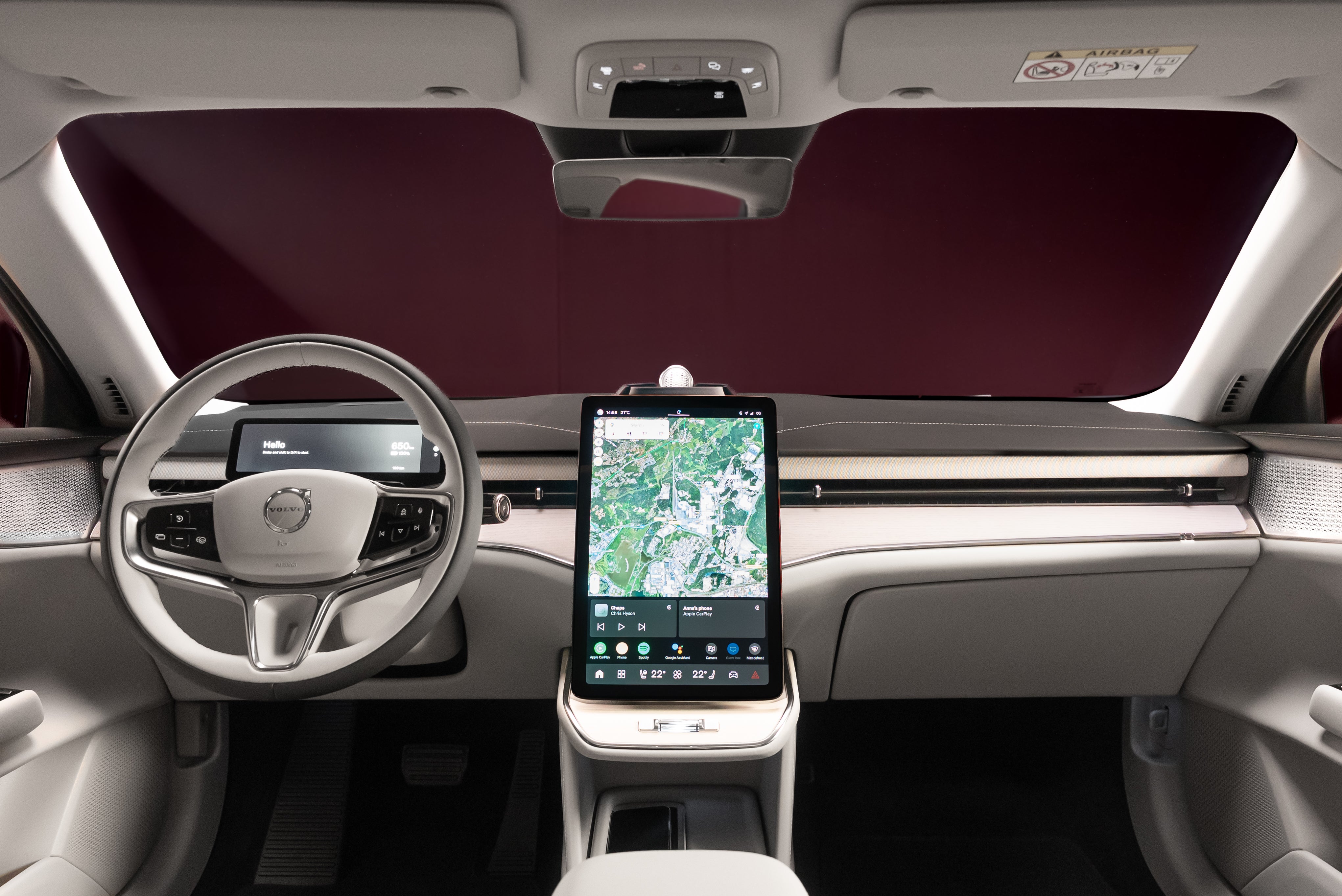 Volvo’s EX90 and ES90 models are also getting a software update to bring Dolby Atmos and Spatial Audio to Apple CarPlay (Volvo)
The 25-speaker system already supports Dolby Atmos and the addition of Spatial Audio is designed to make music, podcasts and live recordings sound more three-dimensional, with vocals and instruments appearing to come from different positions around the cabin rather than simply from the speakers nearest to you.
It’s another example of car makers increasingly using software updates to add new functions after a car has left the showroom. Volvo says it was recently recognised by S&P Global Mobility as the only traditional car maker to achieve Level 5 capability for software-defined vehicles, with cars designed to gain extra features during their lifetime rather than remaining much as they were when they were delivered.