
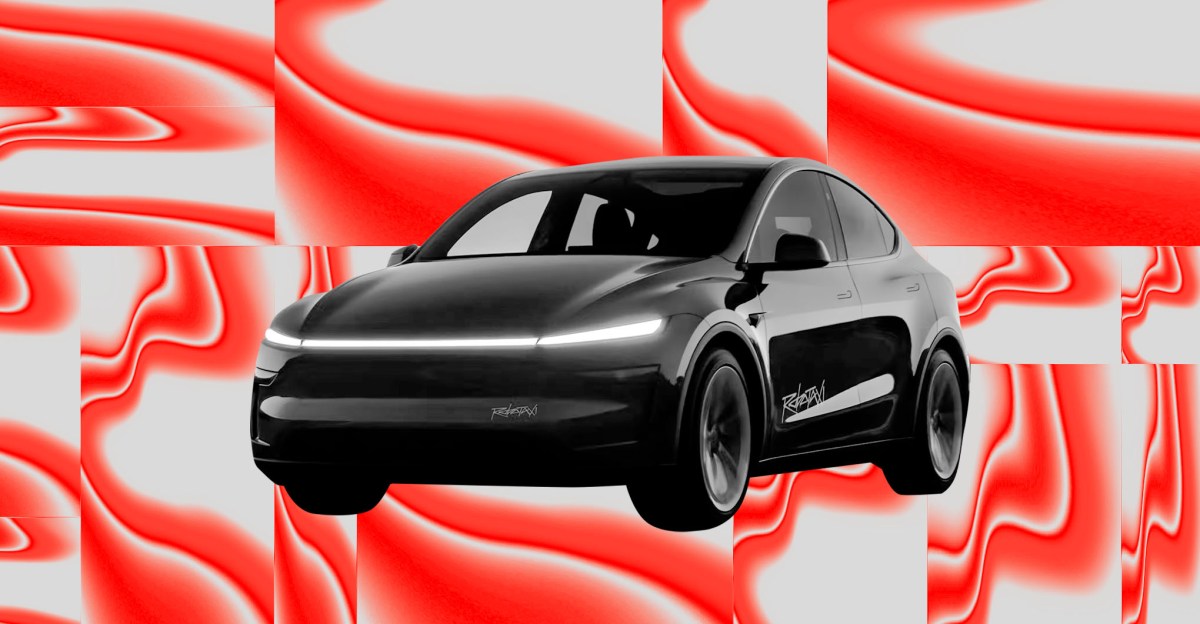
Seven months after Elon Musk announced that Tesla Robotaxis in Austin were operating without human safety monitors onboard, the city’s service appears to have finally gone fully driverless.
Over the past two weeks, all 170 Tesla Robotaxi rides in Austin monitored by the crowdsourced Robotaxi Tracker were unsupervised, the site’s creator, Ethan McKanna, told The Verge. Those rides involved 54 different cars. McKanna has also seen a sharp increase in unsupervised Robotaxis elsewhere, particularly Dallas and Houston, where roughly 30 driverless Teslas have been operating over the past week.
That’s a substantial change from earlier this summer, when Tesla’s unsupervised fleet appeared to be stagnating or even shrinking. Robotaxi Tracker showed just 28 active unsupervised vehicles across six Texas and Florida markets as recently as last week. In other words, McKanna has now identified nearly twice as many unsupervised Teslas in Austin alone as his tracker had previously shown across all six markets.
Some of the apparent jump reflects better data. McKanna, who spent this summer interning with Tesla’s Robotaxi team, said some of the metrics on his site had been lagging. After revising the sources feeding Robotaxi Tracker — which draws primarily on app users automatically logging their rides, along with other crowdsourced and public information — he found that more vehicles were operating unsupervised than the site had previously reflected. He’s currently updating the site to incorporate the revised data.
But the Austin shift itself appears to be real.
“Austin has seemingly stopped supervised rides for a couple weeks now,” McKanna said. “Plates previously marked as supervised have been confirmed to be offering unsupervised rides.”
The site’s findings also corroborate what some Robotaxi users in the Austin area have recently reported on Reddit and X.
McKanna’s site is one of the few ways to track the makeup of Tesla’s Robotaxi fleet, since Tesla does not publish detailed fleet data and typically does not respond to press inquiries. Tesla did not respond to requests for comment for this article.
The shift comes as Tesla prepares to launch the Cybercab, its purpose-built robotaxi, in Austin as soon as this month. Unlike the Model Ys currently providing rides, Cybercabs are designed without traditional controls such as a steering wheel or pedals, making Tesla’s ability to operate vehicles without onboard monitors particularly important to the Cybercab rollout.
On Tesla’s most recent earnings call, Musk said the Robotaxi program would scale “very, very rapidly,” but offered no new target for how many vehicles or cities Tesla would reach — a departure from the much more specific robotaxi forecasts he has repeatedly missed.
Tesla may also be limiting the number of Model Ys it adds as it prepares for Cybercab. According to a new JPMorgan note, Tesla is intentionally holding back on adding Model Ys to the Robotaxi fleet because it expects to scale Cybercab in the near term.
Even after the jump in unsupervised Robotaxis, Tesla remains far behind its biggest robotaxi competitor. Waymo operates more than 300 driverless vehicles in Austin alone, and has around 4,000 vehicles across 10 other cities.