
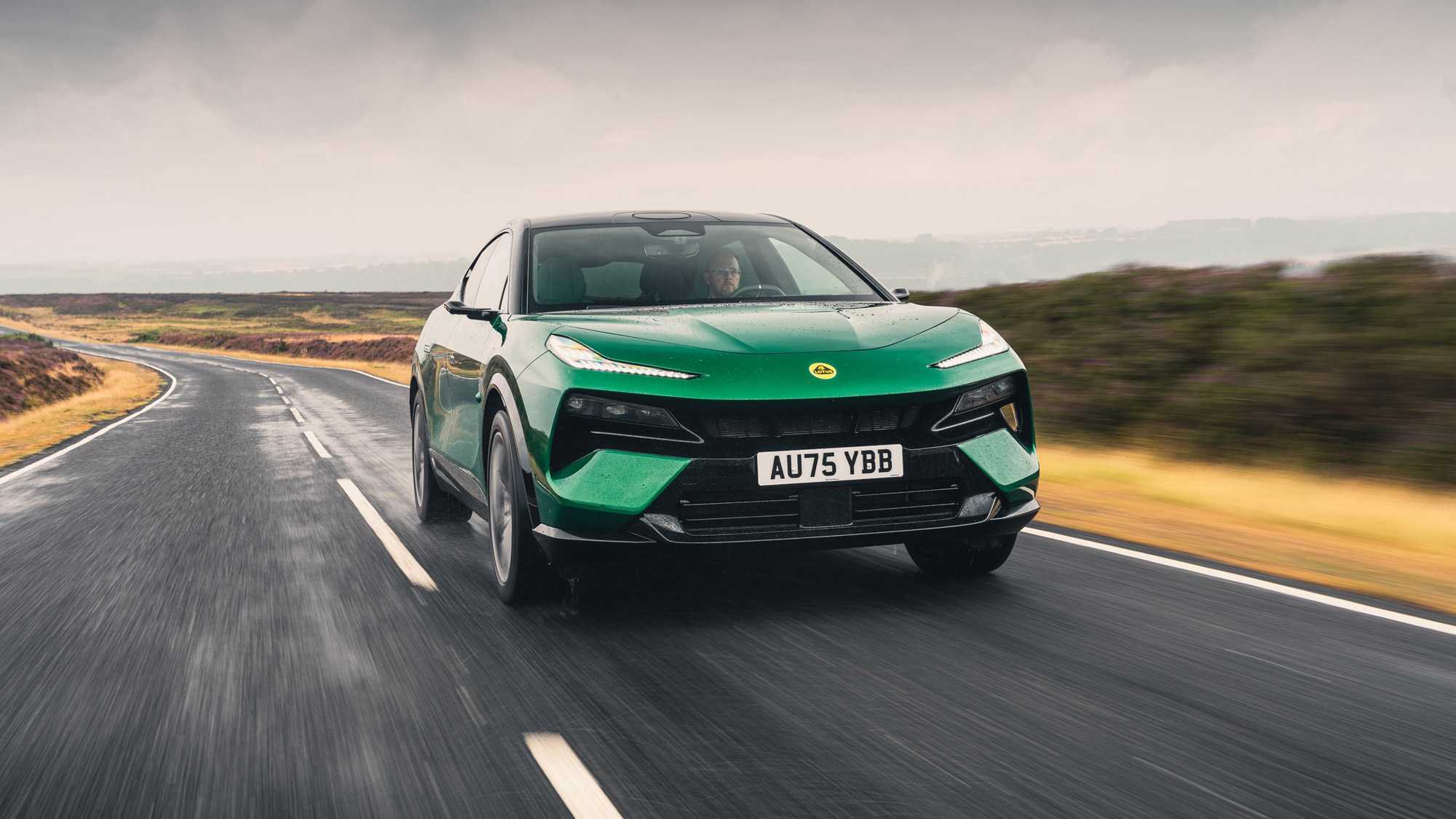
► Lotus Eletre X now offers plug-in hybrid alongside pure electric
► H1000 tested – 939bhp, and 0-62mph in 3.3sec
► Up to 750-mile range on petrol and electric
You have to feel for Lotus. It watched Porsche make a killing with the Taycan, heard it was planning an all-electric Cayenne and thought ‘we’ll have some of that’. Then, just as it launched its electric Eletre ‘Hyper SUV’, the market for high-end EVs started to cool.
Everyone is facing the same issue. Which helps to explain the Eletre X – a plug-in hybrid variant that offers up to 750 miles of range but the same benefit-in-kind tax break as the pure electric model. We’re testing the top-spec H1000.
Read our guide to the best luxury SUVs, and find out more about how we test cars.
Should you buy a Lotus Eletre X? If you want the lowest benefit-in-kind rating with petrol flexibility, the Eletre X offers something unique in the market. It’s also largely impressive to drive, but doesn’t feel particularly ‘Lotus’, especially its poor secondary ride.
At a glance
Pros: Powertrain integration, performance, refinement, agility
Cons: Poor secondary ride, not Lotus-like in feel
What’s new?
The platform for starters. The original Eletre sits on the 800-volt EPA (Electrical Performance Architecture) platform, a Lotus-developed version of Geely’s ‘Sustainable Experience Architecture’, but Lotus describes the Eletre X as sitting on a platform ‘designed from new as an ICE Hybrid’. That presumably means a different variant of ‘SEA’, given plug-in models are already spun off that architecture. All dimensions also remain the same.
Unlike most plug-in hybrids, the Eletre X is very much an electric car assisted by petrol, not the other way around. A 2.0-litre engine usually drives a 150kW motor generator on the front axle, sending electricity to the 70kWh battery and front permanent magnet synchronous e-motor, but the four-cylinder motor can also be mechanically clutched to the front axle. There’s another permanent magnet synchronous e-motor for the rear axle.
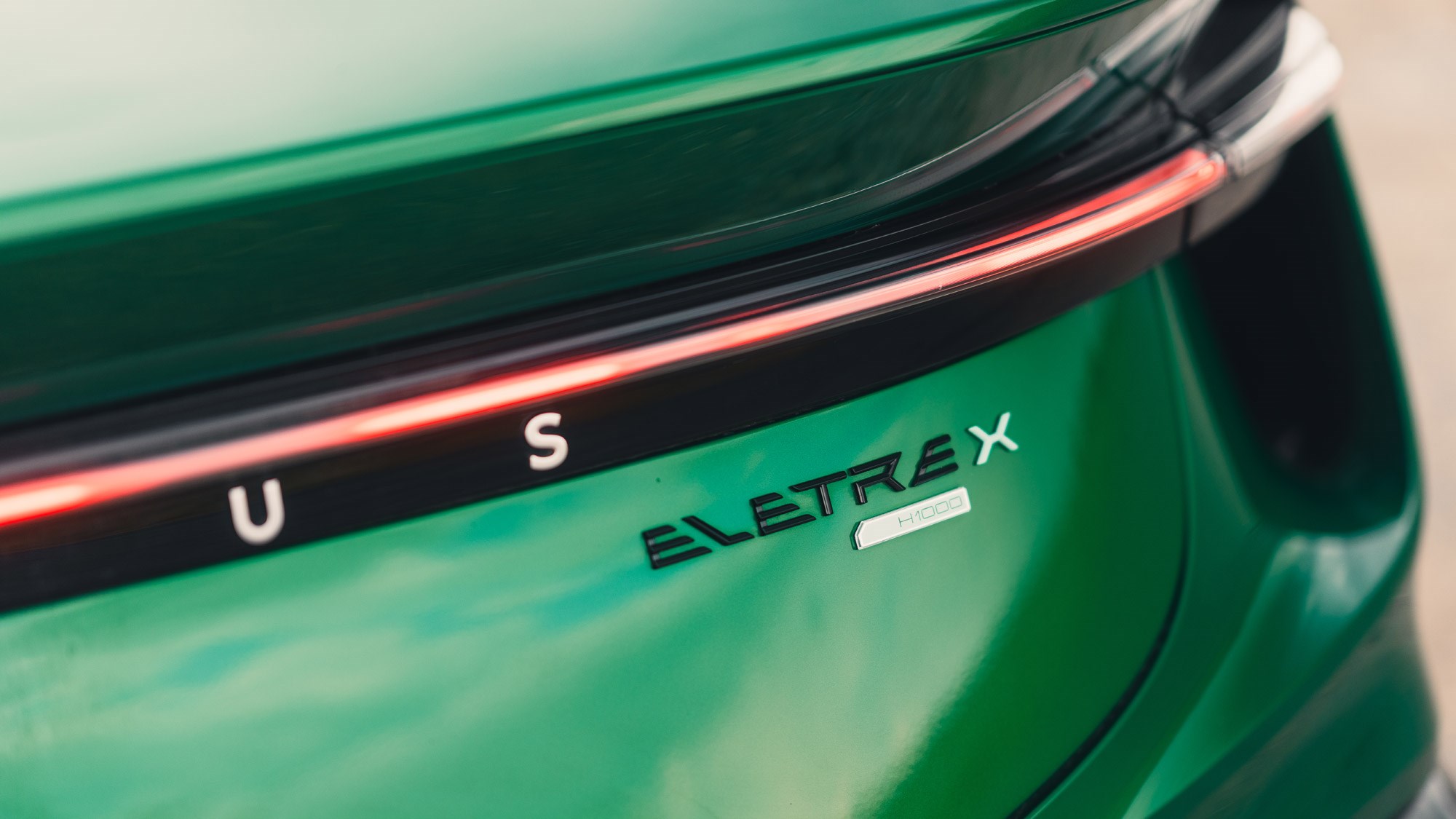
Despite combining petrol and electric, Lotus has saved 120kg over the electric Eletre, though the H1000 model still weighs in at 2615kg.
What are the specs?
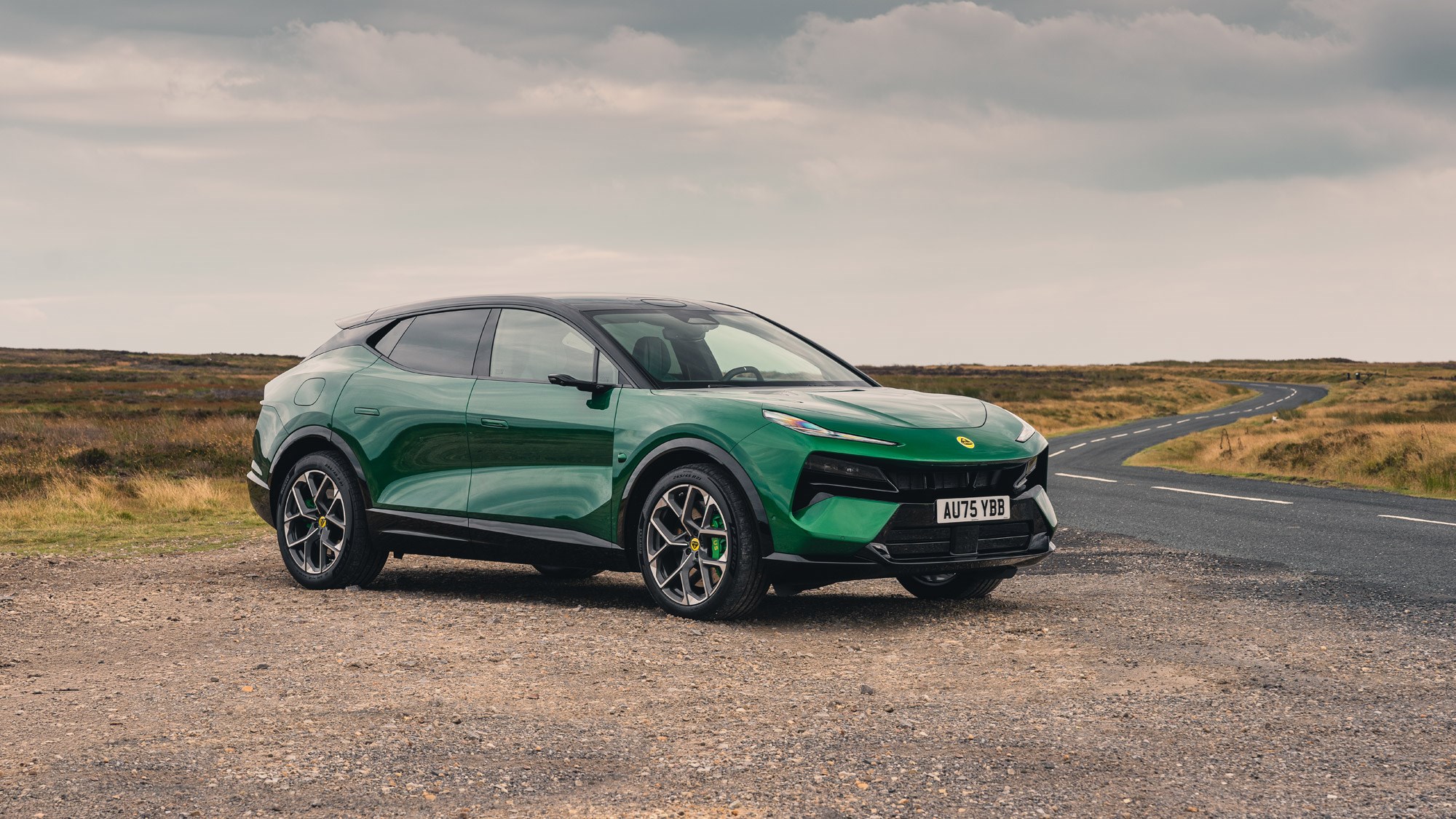
The Eletre X is a substantial luxury SUV, measuring just over 5.1 metres long and around two metres wide. It’s about 11cm longer than a Porsche Cayenne and if anything looks longer in the metal, no doubt because the low roofline and cab-forward proportions emphasize the length (and give it something of a Lamborghini Urus flavour.)
Two versions are offered. The H550 produces 542bhp and accelerates from 0–62mph in 4.9 seconds, while the range-topping H1000 tested here has 939bhp and dispatches the same sprint in 3.3 seconds. It reaches 124mph in 11 seconds and tops out at 144mph.
Officially emitting less than 50g/km of CO2, and with an electric range comfortably exceeding the threshold for the lowest benefit-in-kind tax band, the Eletre X costs company-car drivers no more to tax than a pure electric model – yet never needs to be plugged in.
Lotus claims up to 217 miles of electric range and more than 750 miles with petrol chipping in. The 900V electrical system can accept DC charging at a quoted peak of 436kW, while a 360kW charger can take the battery from 20 to 80 per cent in just nine minutes.
However, our pre-production Chinese-specification test car was not compatible with UK chargers. Instead, I topped it with petrol, and left the desired state of charge (a sliding scale tucked away in the infotainment) at 85 per cent, enough to ensure maximum performance at all times. Maybe owners of production cars will do the same…
How does it drive?
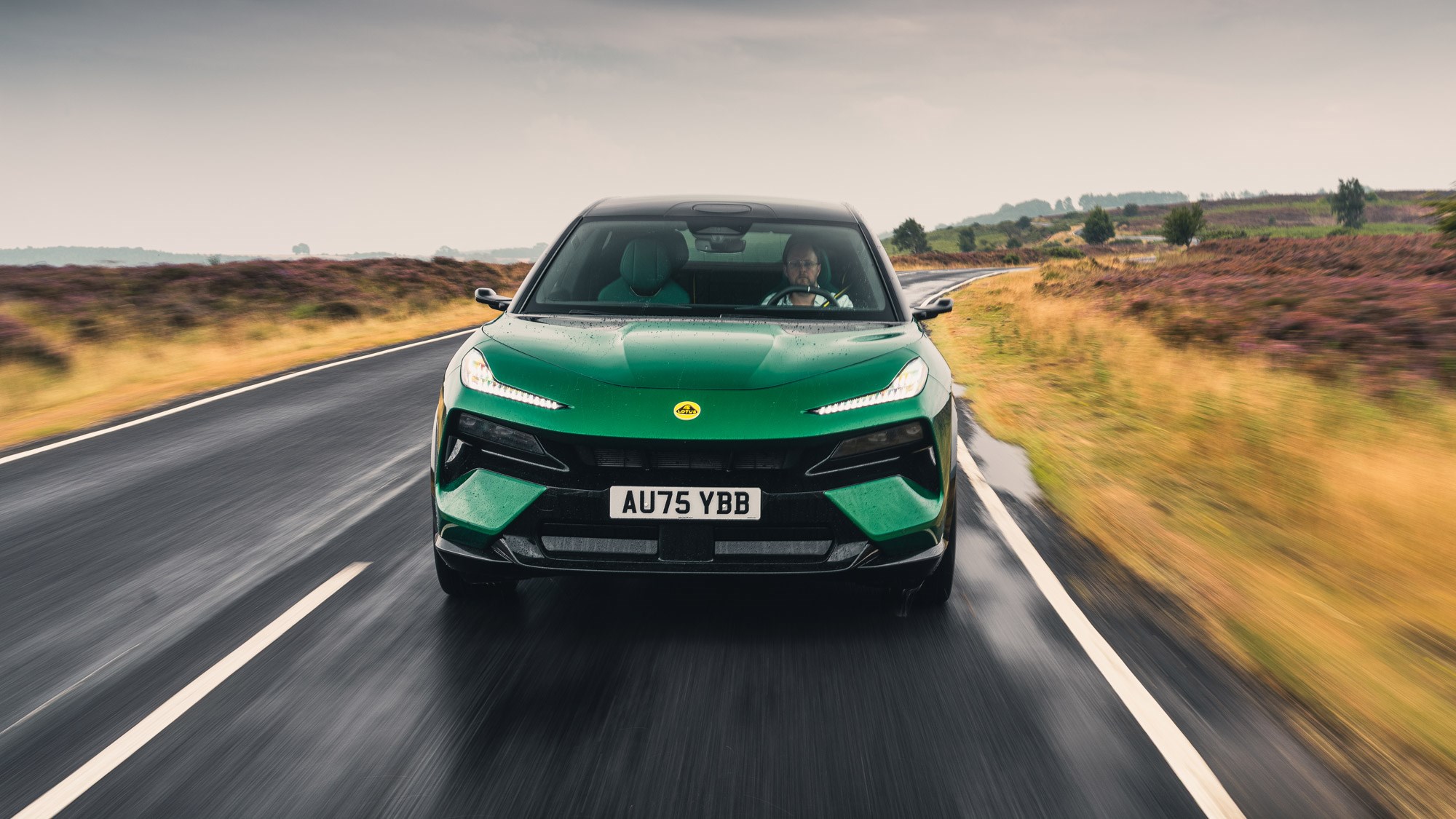
With 939bhp on tap, it’s no surprise the Eletre X H1000 is crushingly, and in many respects unnecessarily, rapid. A full-throttle launch actually rotated my sunglasses off my head. More impressive is how natural it feels to balance throttle, re-gen (particularly in the least aggressive re-gen setting) and braking to flow down the road. The petrol engine is also brilliantly integrated, with a very distant growl when it wakes up, and the extra fizz through the throttle pedal adding some welcome feedback. Mostly I just forgot it was there.
The powertrain remains similarly unobtrusive on the motorway, where the Eletre X is an extremely refined and relaxing long-distance cruiser. There’s also very little wind noise, thanks partly to the double-glazed pillarless windows and, presumably, the digital mirrors.

It handles well for a car so large and heavy. There are double wishbones at the front, a multi-link rear axle, dual-chamber air suspension and dual-valve adaptive dampers. The H1000 also gets a 48V active anti-roll system, capable of generating up to 1,400Nm of roll-stabilising torque, plus active torque management, six-piston Brembo front brakes and bespoke Pirelli P Zero 5 LTS tyres. No rear-wheel steering, though.
It doesn’t really feel like a Lotus in the way you can sense Porsche or Jaguar DNA in a Taycan or i-Pace, but it is mostly effective. The steering offers little genuine feel and could use more on-centre definition, yet its speed, precision and relative agility help hundreds of kilos melt away.

Body control is also exemplary, allowing the Eletre X to carve through corners while the electronics work subtly but perceptibly to contain the front-end push you might expect from a car now carrying an engine over its nose.
Turn in quickly, let the front axle bite, then get back on the power and the H1000 covers ground at a ludicrous rate, with more engagement than the typical point-and-squirt EV experience – and a neutral to rear-biased feel. It stops well too.
The biggest issue is the secondary ride quality, which varies from passable on a motorway to downright unpleasant at low speeds and on trickier B-roads. At one point I assumed I’d picked up a front-left puncture, so poorly isolated were the jolts. If I could change one thing, this would be it.
What about the interior?
The cabin offers a good driving environment, with a firm but comfortable driver’s seat that feels low-set in a high-riding car, a steering wheel that sits nicely in your hands thanks to its slim rim – even if it is oddly contoured – and a sense of space created by the relatively low scuttle and wide cabin.
Wall-to-wall leather adds a suitably premium feel and brings visual interest to a design that is perhaps a little lacking in three-dimensionality. Tactile knurled rotary controllers adjust the climate control, and there are similarly special-feeling electric window switches and steering-wheel-mounted ‘paddleshifters’ that let you quickly scroll through the drive modes or switch between four regen settings, including the option to turn it off altogether.

Rather than a conventional instrument binnacle, driving data is displayed in a slim digital strip visible through the wheel, which works very well, while a super-slim, super-sized landscape-oriented touchscreen controls major functions. I found this easy enough to navigate after a little familiarisation, though buried functions like the fuel-filler release meant my first fuel stop took as long as a battery charge. This being a Chinese-spec test car, not everything was entirely representative.
Standard equipment also includes the punchy 23-speaker KEF stereo system – a welcome addition, not least because of a curious electrical noise in the dash that sounds much like the rhythmic pulsing of distant freight-train horns.

The Eletre X also comes loaded with the usual ADAS lane-keep assist and slightly nervy warnings. I don’t think I will ever acclimatise to the novelty of digital wing mirrors, they’re simply not intuitive.
But as you’d hope from a 5.1-metre-long SUV with a 3.0-metre wheelbase, the Eletre X is practical. The rear seats are comfortable and recline, with more than ample legroom complemented by a flat floor and the added sense of space provided by the full-length panoramic roof.
The boot is generous, but it’s much longer than it is deep – the relatively high floor offering no storage space beneath it.
Before you buy
There are two variants of Lotus Eletre X: the H550 and H1000. Both get all-wheel drive and the same 70kWh battery, fast-charging capability and claimed range, but there’s a big step in performance. The H550 offers 542bhp, and accelerates from 0-62mph in 4.9sec, where the H1000 upgrades to 939bhp and a 3.3sec dash to 62mph. It also gets 48V active anti-roll control and steps up from 20-inch alloys with 4-piston brakes to forged 21s with six-piston front brakes.
Lotus hasn’t confirmed UK pricing yet, but based on its Euro pricelist, we’d expect the H1000 to sit in the £100,000 ballpark. That places it as a direct rival to the Cayenne S Electric, but offering far more performance, far greater combined range and the convenience of never having to charge. It also delivers more performance than a Lamborghini Urus SE at far lower cost – though the Urus is very much a petrol-first kind of proposition.

The regular Eletre also continues on sale. The Eletre 600 (603hp, up to 373 miles range) costs from £84,990, with the 900 Sport (905hp, up to 310 miles range) from £129,990.
Verdict
Aside from some significant question marks over its ride quality, the Lotus Eletre X is a pretty good car. It’s refined, seriously quick, agile and surprisingly natural to drive, while its huge electric range and petrol back-up make it far easier to live with than most high-performance EVs.
It is also an intelligent response to changing market conditions, offering company-car tax incentives without the usual range anxiety. But it remains resolutely an electric experience you can fill with petrol, rather than the kind of high-performance hybrid in which the engine adds real theatre and character.
Perhaps more importantly, a 2.6-tonne SUV measuring 5.1 metres long, with limited steering feel, a massive excess of performance and a particularly disappointing secondary ride does not feel like the fullest expression of Lotus. The Eletre X succeeds as a fast, flexible luxury SUV without the tax bill, but still falls short of delivering enough of that elusive Lotus magic.
Photography by Jordan Butters