
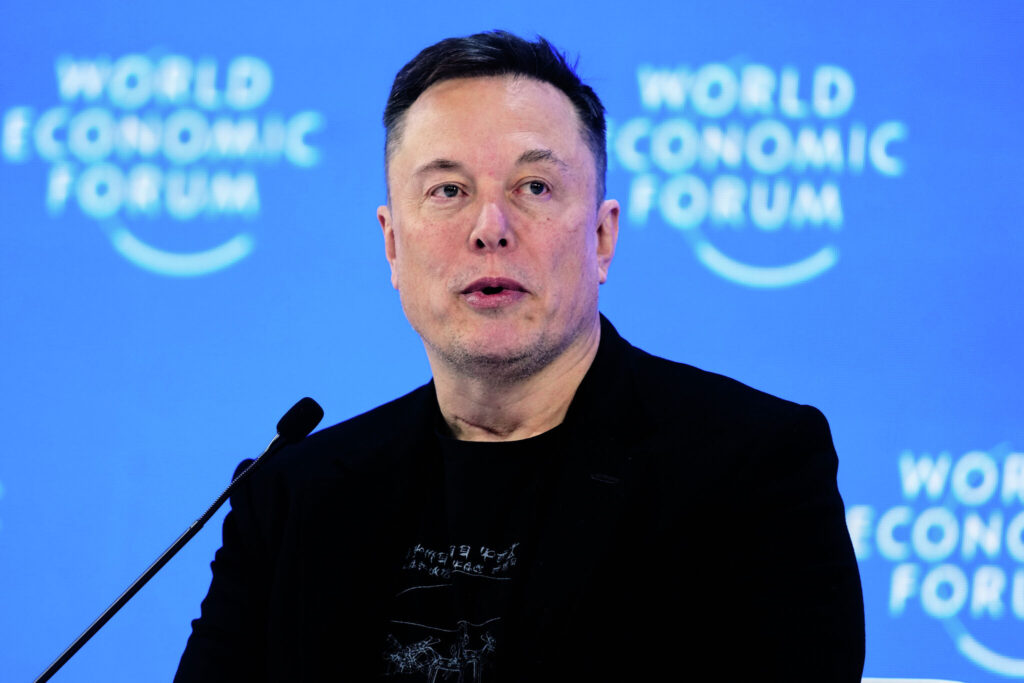
Elon Musk attends the annual meeting of the World Economic Forum in Davos, Switzerland, Jan. 22.
Markus Schreiber/AP Photo/Markus Schreiber
Tesla Inc. is eyeing another multibillion-dollar investment in Texas — this time a proposed $10.1 billion solar cell manufacturing facility in Fort Bend County — while seeking tax breaks to help bring the project to the state.

It’s the latest example of Elon Musk’s companies proposing major new investments in Texas while signaling they could take the projects elsewhere without tax incentives.
Article continues below this ad
In a new filing with the Texas Comptroller’s Office, the Austin company says the facility west of Houston would manufacture components used to convert sunlight into electricity, with a focus on products for utility and commercial installations. The facility would aim to be commercially operable in early 2029.
Tesla is seeking tax breaks from Lamar Consolidated Independent School District through the Texas Jobs, Energy, Technology and Innovation program. Launched in 2024 with bipartisan support, projects approved for the program are given a 10-year reduction in property taxes, which help fund local school districts.
The program, which renewable energy projects don’t qualify for, serves as a replacement for the state’s Chapter 313 abatement program, which was phased out after complaints that it contributed to inequity in public schools.
Tesla’s application comes on the heels of Musk’s Terafab project securing tax breaks from two school districts in Grimes County, after the affected school districts and Gov. Greg Abbott signed off on the deals. On Thursday, in a joint statement from Tesla and SpaceX, the companies announced an initial investment of $16.8 billion.
Article continues below this ad
Tesla is framing its latest application similarly to the one for Terafab, which noted that it had explored sites in other states and that the project would likely be relocated outside of Texas absent the school tax breaks and tax abatement agreements with local jurisdictions.
“Property taxes represent one of the highest operating costs for large-capital intensive developments in Texas, and without such incentives, the projected economics of the Texas site are expected to be less favorable than the competing site, and Tesla would be forced to further evaluate this potential investment outside of the state of Texas,” the application reads.
If Tesla decided to build the solar cell manufacturing facility elsewhere, the application says, “Texas would miss the opportunity to attract billions of dollars in investment, help create thousands of full-time jobs for its residents, and become a hub for domestic solar cell manufacturing in the U.S.”
Those jobs, according to the application, would include 9,712 permanent full-time jobs with an estimated total annual payroll of about $1.3 billion at full operations, and a peak of about 1,147 jobs during construction.
Article continues below this ad
In its application, Tesla notes solar manufacturing facilities of this type typically include industrial buildings housing production lines, supporting utility infrastructure, warehousing for raw materials and finished goods, and related site improvements.
Musk has been plotting this solar cell facility for at least a few months. In January, during an appearance at the World Economic Forum, Musk said his companies are working to build 100 gigawatts a year of solar power in the U.S.
“That’ll probably take us three years or something,” Musk said. “These are pretty big numbers, and I’d encourage others to do the same.”
Article continues below this ad
Tesla declined to comment on the proposed project. Lamar CISD Superintendent Roosevelt Nivens did not immediately respond to a request for comment.