
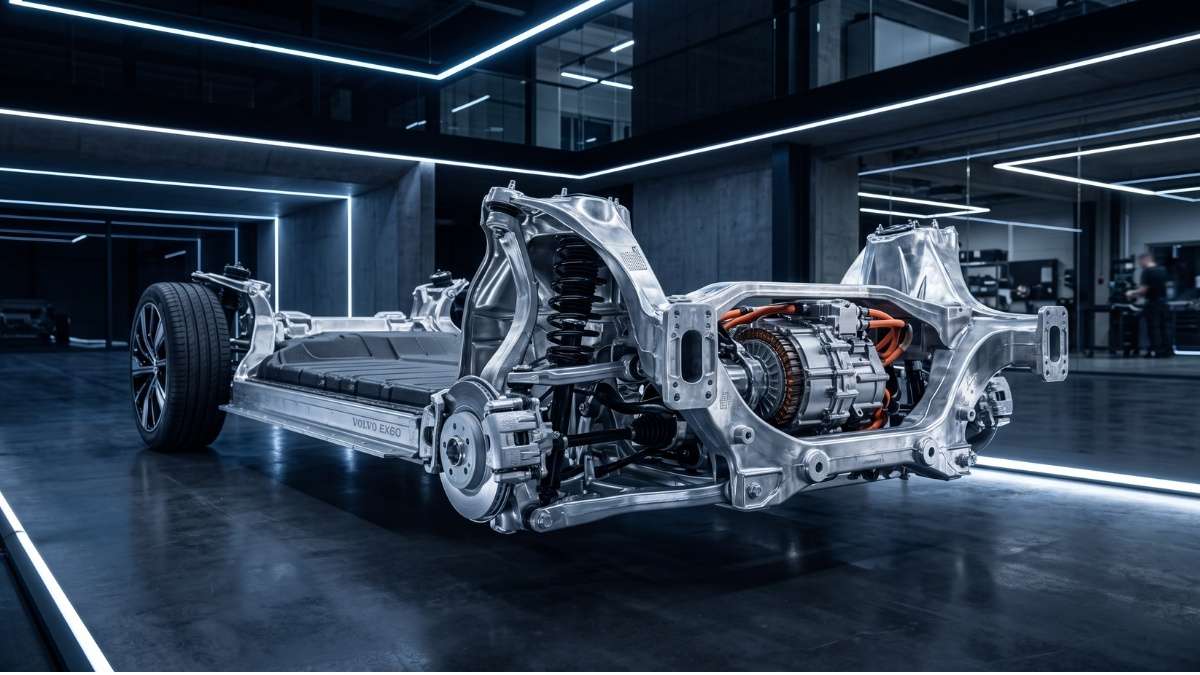
As someone who currently drives a 2021 Volvo XC60 and an Audi E-Tron GT, I watch the evolution of premium electric SUVs with a highly critical eye. The automotive industry is currently at an inflection point. Early adopters accepted compromised ranges and sluggish charging speeds in exchange for zero-emission driving and instant torque. However, the mainstream market demands a no-compromise solution. Buyers want the convenience and long-haul reliability of an internal combustion engine combined with the packaging and performance benefits of a battery electric vehicle. This brings us squarely to the upcoming Volvo EX60, a vehicle I am personally targeting for my next preorder. More specifically, we need to examine the revolutionary EX60 P12 powertrain and the new SPA3 architecture that underpins it, as they represent a massive leap forward for the entire segment.

The Origins and Evolution of the SPA3 Architecture
To understand why the EX60 is such a definitive step forward, we must look at the foundation it sits upon. Volvo’s Scalable Product Architecture (SPA) began as a highly flexible platform designed primarily to accommodate internal combustion engines and plug-in hybrid drivetrains. My own XC60 sits on a variation of this earlier architecture. It was a brilliant engineering feat for its time, allowing Volvo to standardize manufacturing across multiple vehicle sizes while accommodating both gas tanks and small battery packs. However, as the industry pivoted rapidly to pure electrification, adapting a legacy platform meant accepting inherent compromises in weight, packaging, and overall aerodynamic efficiency.
Volvo attempted to bridge this gap with the SPA2 platform, which is currently utilized in their flagship EX90 SUV. While SPA2 is a formidable platform featuring advanced core computing and next-generation safety sensors, it still carries some transitional DNA from its predecessors. Enter SPA3. This is Volvo’s definitive, ground-up, pure electric architecture. SPA3 is not a modification; it is a complete reimagining of how a modern vehicle is constructed, prioritized entirely around battery packaging, structural efficiency, and seamless software integration.
The origins of SPA3 stem from a strict mandate within Volvo to dramatically reduce vehicle weight while simultaneously increasing structural rigidity and maximizing interior cabin volume. To achieve this, Volvo engineers adopted advanced manufacturing techniques, most notably megacasting. By casting massive sections of the vehicle’s underbody as single aluminum pieces, Volvo eliminates hundreds of individual stamped metal parts, complex welds, and heavy fasteners. This fundamentally reduces the vehicle’s mass—which is the absolute mortal enemy of EV range—while stiffening the chassis for better handling and superior crash performance. This intense focus on safety remains the core of Volvo’s brand identity, ensuring that the transition to next-generation EV platforms does not compromise the occupant protection the company is famous for.

Comparing SPA3 to Tesla and the Broader EV Market
When discussing megacasting and ground-up EV platforms, the inevitable comparison is always Tesla. Tesla pioneered the use of “gigapresses” to create massive single-piece front and rear underbodies for the Model Y, and they have pushed the envelope further with their “unboxed” manufacturing process designed for future models. Tesla’s architectural approach is relentlessly focused on reducing manufacturing costs and accelerating assembly line speed.
Advertising
Volvo’s SPA3 shares the overarching megacasting philosophy but applies it through a vastly different lens. Where Tesla optimizes for absolute manufacturing speed, Volvo optimizes for repairability, NVH (noise, vibration, and harshness) reduction, and a premium ride quality. One of the primary criticisms of early megacast vehicles is that a relatively minor collision can lead to a total vehicle write-off if the single-piece casting is bent or cracked. Volvo has engineered specific crush zones and replaceable modules into the extremities of the SPA3 castings to mitigate this exact issue. They are carefully balancing manufacturing efficiency with real-world ownership realities and insurance costs.
Furthermore, the SPA3 platform integrates a localized, high-speed centralized computing architecture that rivals the best in the industry. By utilizing a core computing system rather than dozens of distributed, slow-communicating electronic control units (ECUs) found in legacy platforms, the SPA3 architecture enables a true software-defined vehicle. This allows the EX60 to process massive amounts of data from its advanced sensor suite with near-zero latency. While legacy automakers are still struggling to unify their fragmented software stacks, SPA3 positions Volvo alongside tech-forward companies like Tesla and Rivian in having a cohesive, updateable digital nervous system. As I noted in my previous analysis of TorqNews EX60 software integrations, mastering this centralized computing layer is what will separate the winners from the losers in the current EV shakeout.
Decoding the P12 Powertrain and 400-Mile Range Dynamics
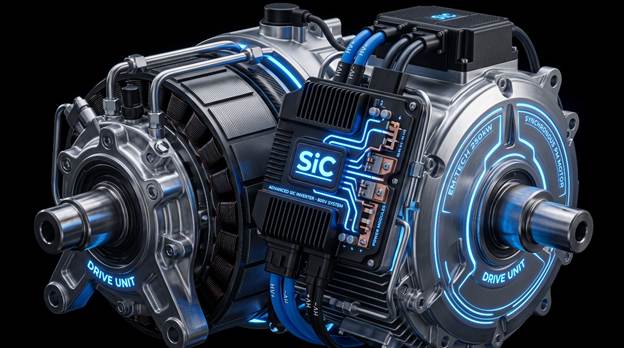
The physical chassis is only half of the engineering equation; the beating heart of the EX60 is the highly anticipated P12 powertrain. The P12 represents a masterclass in thermal management, power density, and motor efficiency. Most current EVs utilize off-the-shelf motor designs or mildly updated iterations of early-generation technology. The P12, however, utilizes an advanced permanent magnet synchronous motor design that is tightly integrated with a cutting-edge silicon carbide (SiC) inverter.
The integration of silicon carbide is a critical engineering detail. Traditional silicon inverters lose a significant amount of energy as heat during the conversion of DC power from the battery to AC power for the drive motors. SiC inverters, by contrast, operate at much higher frequencies with drastically lower thermal losses. This means a much higher percentage of the battery’s stored energy actually makes it to the wheels, improving overall efficiency by up to ten percent in real-world driving conditions. When you are pushing a mid-sized SUV through the air at highway speeds, that efficiency gain is massive.
This relentless focus on powertrain efficiency is exactly what makes the vehicle’s staggering range possible. The industry standard has hovered around the 300-mile mark for premium SUVs, a benchmark I have explicitly set for my own vehicle upgrades. The EX60 absolutely shatters this baseline. According to industry data, the Volvo EX60 delivers an 810-kilometer range and 10-minute fast charging, which fundamentally alters the road trip math for prospective EV owners. While the 810-kilometer figure is based on the highly optimistic European WLTP testing cycle, it translates to an incredibly robust, legitimate 400-plus mile range on the stricter US EPA cycle.
Achieving over 400 miles of real-world range in an SUV format requires not just a massive battery pack, but an aerodynamically optimized body and the hyper-efficient P12 powertrain working in perfect harmony. Furthermore, the 10-minute fast charging capability indicates a shift to a true 800-volt electrical architecture. By doubling the voltage from the traditional 400-volt systems found in older EVs, the SPA3 platform can accept power at substantially higher wattages without overheating the vehicle’s wiring harnesses. This means you can add hundreds of miles of range in the time it takes to grab a coffee, effectively eliminating range anxiety and tedious charging wait times.
Advertising
The Future Evolution of the P12 Powertrain
Perhaps the most exciting aspect of the P12 powertrain running on the SPA3 architecture is that it is not a static hardware product; it is a foundation designed for continuous evolution. Because the vehicle is heavily software-defined, Volvo can and will alter motor output, torque vectoring algorithms, and battery thermal management protocols via over-the-air (OTA) updates. We have seen this update strategy employed successfully across the industry, but Volvo’s deep systemic integration allows for much finer systemic refinements.
Over time, I expect the P12 powertrain to evolve in two distinct, highly impactful ways. First, through ongoing software optimization, we will likely see unlockable performance tiers or highly specific efficiency modes that squeeze even more miles out of the existing hardware. As the onboard AI managing the battery learns the driver’s habits and analyzes the typical climate conditions in the owner’s region, it can dynamically adjust the cooling and heating loops to aggressively preserve energy.
Second, looking further down the product lifecycle, the SPA3 architecture is inherently designed to accommodate solid-state battery technology when it reaches broad commercial viability. Solid-state batteries replace the heavy, volatile liquid electrolyte found in current lithium-ion cells with a solid material, vastly increasing energy density and drastically reducing fire risks. The advanced structural pack design of SPA3 means that when solid-state cells are ready for prime time, Volvo can integrate them without needing a complete multi-billion dollar platform redesign. This could easily push the EX60’s range well past the 500-mile mark in future iterations, while simultaneously making the vehicle lighter and more agile.
Additionally, the evolution of the P12 will see tighter integration with advanced driver assistance systems (ADAS). As vehicles move closer to autonomous capabilities, the powertrain must react instantaneously to inputs from the core computer. The high-speed networking of the SPA3 platform ensures that when the ADAS system requests an evasive maneuver, the P12 motors respond with millisecond precision. In my earlier TorqNews piece detailing Volvo’s hardware trajectory, I pointed out that powertrain responsiveness is the unsung hero of crash avoidance, and the P12 excels here.

Wrapping Up The automotive industry is littered with transitional vehicles that asked consumers to compromise on range, charging speed, or daily utility. The EX60, armed with the advanced SPA3 architecture and the highly efficient P12 powertrain, represents the end of that transitional era. By utilizing intelligent megacasting to reduce weight, implementing a true 800-volt architecture for rapid charging, and leveraging highly efficient silicon carbide inverters, Volvo engineers have systematically solved the core friction points of EV ownership.
For buyers demanding a premium SUV experience—a demographic I firmly place myself in as I look toward my next purchase—the promise of a legitimate 400-mile range fundamentally changes the value proposition. You no longer have to plan your life around charging stops or worry about winter weather drastically reducing your operational radius. The EX60 isn’t just another electric vehicle entering a crowded market; it is a highly calculated, technologically superior statement of intent from Volvo. The P12 powertrain proves that we can finally have the reliability and safety we expect from the brand, paired with the relentless efficiency required to lead the next generation of transportation.
Disclosure: Images rendered by Artlist.io
Rob Enderle is a technology analyst at Torque News who covers automotive technology and battery developments. You can learn more about Rob on Wikipedia and follow his articles on TechNewsWord, TGDaily, and TechSpective.
Follow us today…


