
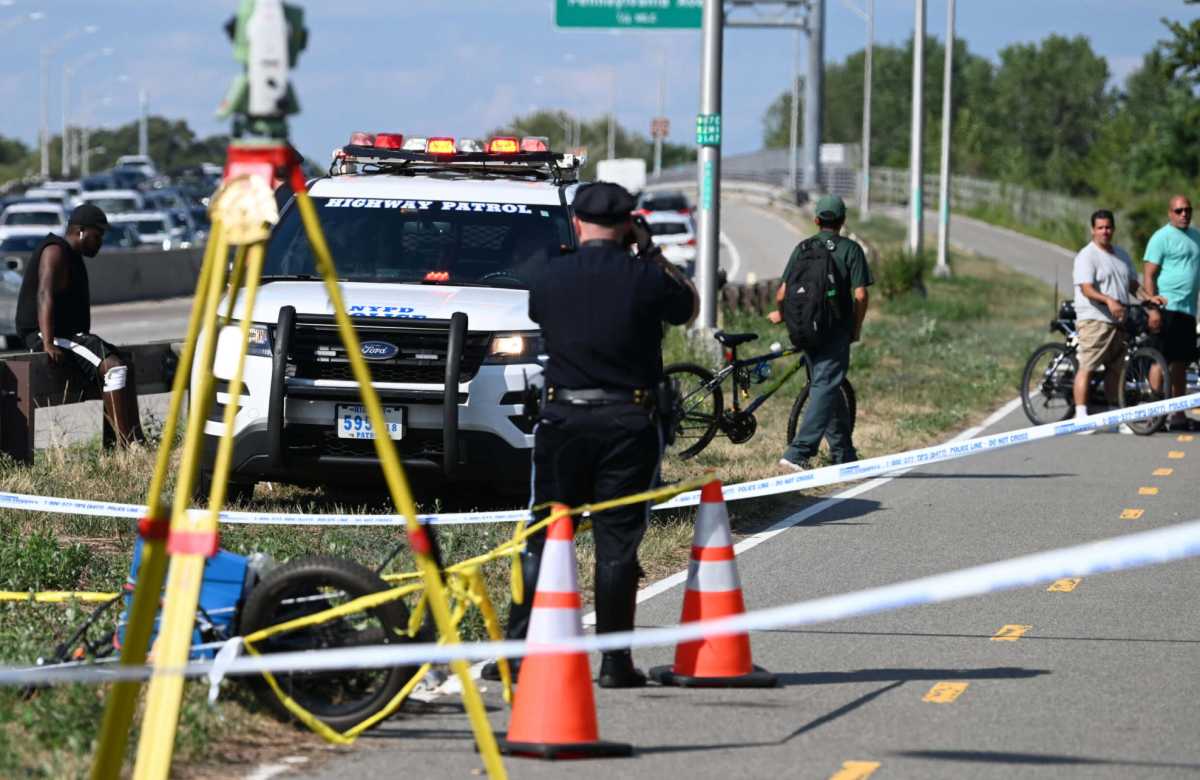
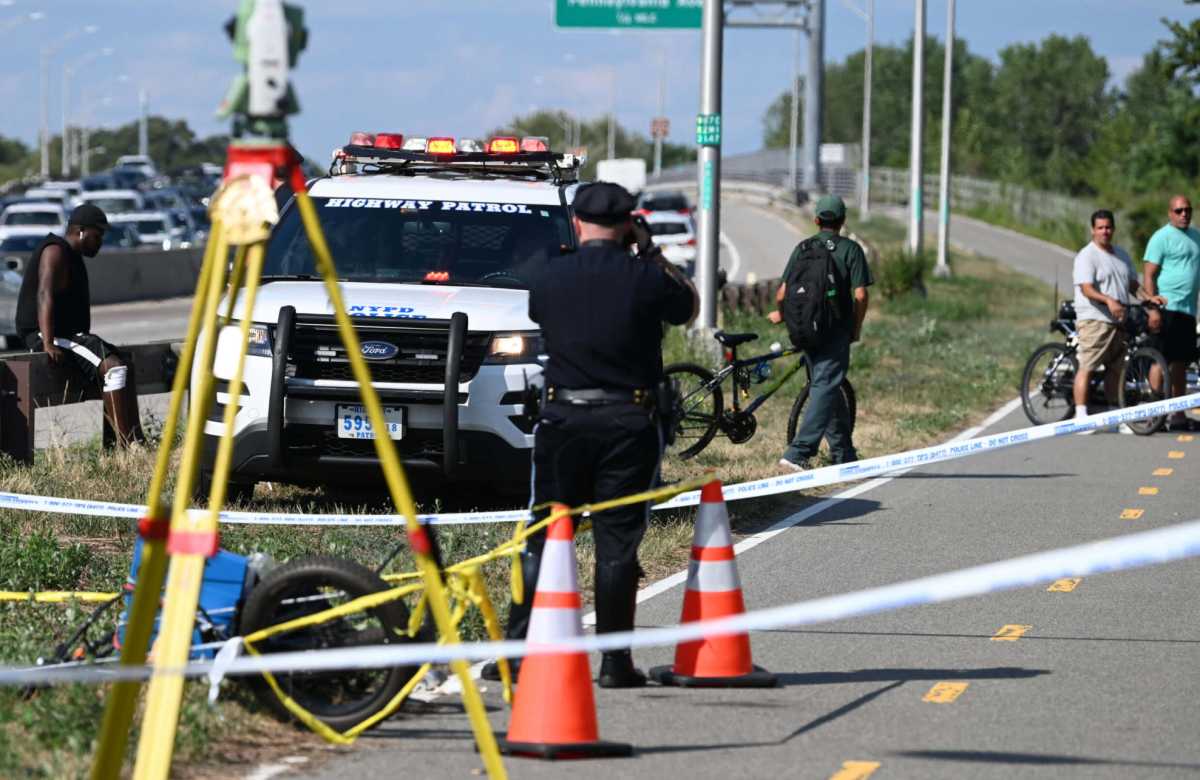
he statistics show that the streets of New York are becoming more dangerous day by day due to barely-regulated e-bike operation. The city has reported 560 crashes involving e-bikes and so far this year, and 795 incidents involving e-scooters through the third week of July. Both marked a 28% increase over the same period last year.
File photo/Lloyd Mitchell
Just steps away from City Hall, a 17-year-old boy riding an e-bike deemed too dangerous to legally own and operate in New York died in a collision with an SUV last week.
The fatal crash at the corner of Centre and Chambers Streets that claimed Gabriel Nacato’s life seemed to be a wake-up call for the City Council, which on Tuesday unveiled a slate of new bills designed to bring order to the chaos of illegal or unlawful e-bike operation on the city’s streets.
This is not merely a knee-jerk reaction by elected officials. The statistics show that the streets of New York are becoming more dangerous day by day due to barely-regulated e-bike operation. The city has reported 560 crashes involving e-bikes and so far this year, and 795 incidents involving e-scooters through the third week of July. Both marked a 28% increase over the same period last year.
To be clear, this isn’t to suggest that e-bike and e-scooter operators are entirely to blame for all these crashes — automobile drivers make costly mistakes, too, after all. Yet the large number of collisions involving e-bikes and e-scooters points to a desperate need to increase regulation and keep operators and other members of the public safe on our streets.
What the City Council is proposing in its 17-bill package is more than reasonable. For example: Requiring delivery apps to secure business licenses from the city Department of Consumer and Worker Protection (DCWP); banning the sale of e-bikes that can reach 25 mph with throttle assistance; and mandating that apps share their drivers’ ID numbers, delivery time, and location.
But the e-bike reform package is missing two key components required of every owner of all other motorized vehicles on the city’s streets: Licensing and registration. City lawmakers said they would rather see the state pass its own license and registration requirements, but should the city really wait on Albany to act?
We understand opponents’ argument that requiring all e-bike/e-scooter operators to be licensed and have their devices registered can be a costly, paperwork-heavy process that causes inconvenience. Few people want to stand in line at a city agency and go through the rigmarole, and in today’s economy, no one wants to shell out more money for anything.
Nevertheless, the city cannot allow unregistered e-bike/e-scooter users to compete with pedestrians and larger vehicular traffic. The city cannot allow the operation of vehicles rigged to travel beyond speed limits that endanger both the operator and anyone in their path.
Surely there must be a way to establish proper e-bike and e-scooter licensing and registration at little to no cost to the owners. Surely there must be a way to make the licensing and registration process fast and efficient in order to ensure compliance.
Surely there must be a way for the City Council to chart that course — for without it, we cannot fully establish order out of the chaos.