
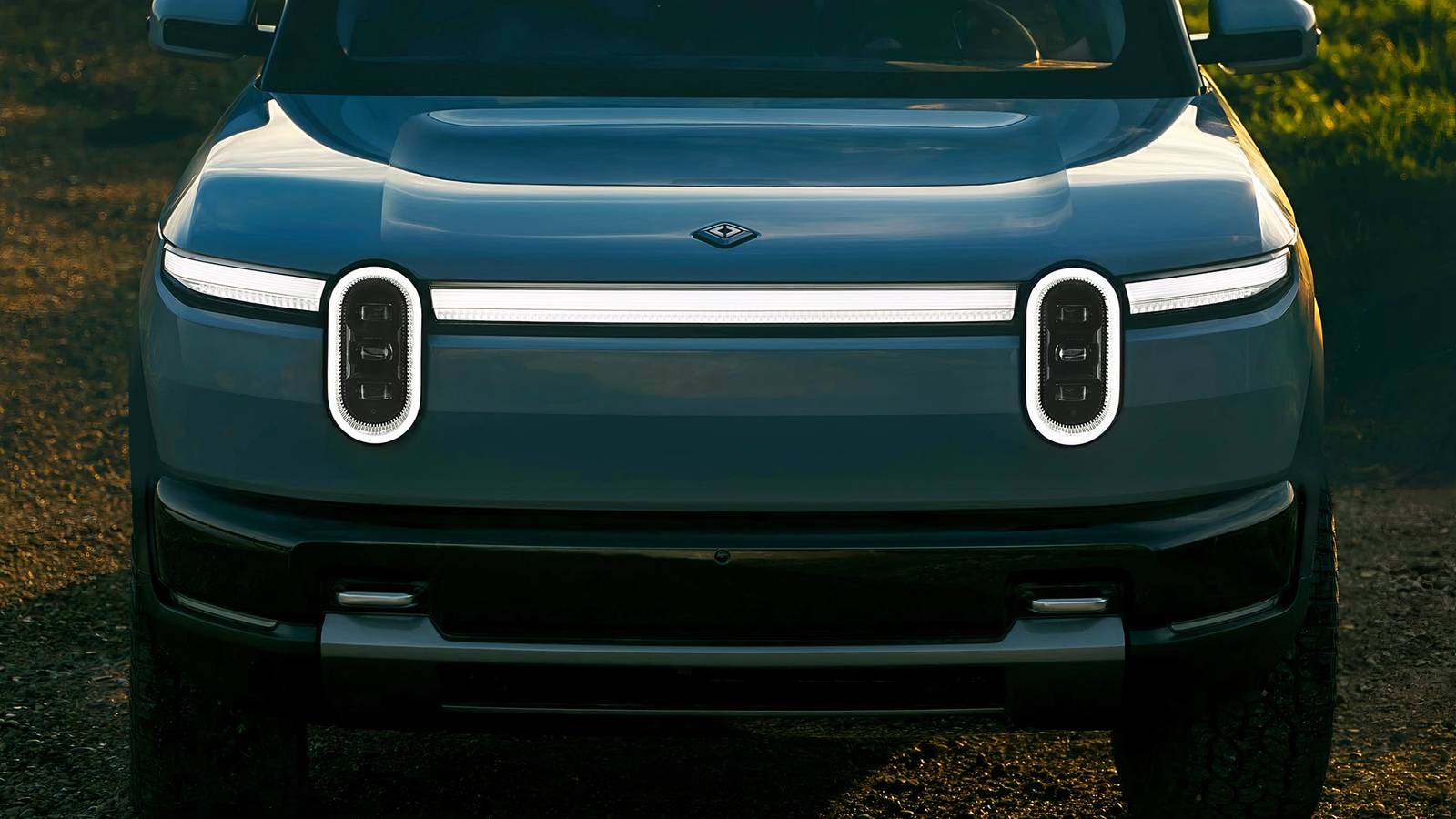
Those in the market for a high-end luxury electric SUV have been made to sit up and take note, as despite being one of the newer names in the automotive space, Rivian’s R1 model has attracted widespread praise. We loved the R1S SUV for its plush and excellent quality cabin, as well as its impressive range and performance for such a large and practical machine.
Alas, the company’s flagship offering is pretty expensive, but that’s where its latest creation comes in. The R2 recently launched at a more palatable $60,000, though an even cheaper model is on the way. While this may sound tempting, bear in mind that you’ll have to miss out on some of the high-end design choices of the R1.
The R2 Standard Is Set To Make A Rivian Affordable

2027 Rivian R2 exteriorRivian
Before the R2 came along, securing yourself a Rivian would mean you had to reach deep into your pockets, since the base R1S Standard demands a cool $83,990. By contrast, the smaller mid-size R2 can be had for $57,990 in even its range-topping Performance form, which comes with a dual-motor powertrain that shares a supercar-threatening 656 horsepower between its four wheels. Its smaller size also makes it less imposing and easier to thread around city streets than its larger sibling, making it a more versatile option for families.
Still, even the Performance sits above the average new car price in the US, ensuring it’s still a pretty expensive machine. The R2 Standard is set to get around this problem when it releases towards the end of 2026, since the single-motor variant is set to feature a base MSRP of just $44,990. This puts it under the current average new vehicle price by nearly $5k, which should help put it right in the crosshairs of many more families than the R1S. Considering the EV tax credit program came to an end in September 2025, the R2 Standard’s low price stands out when compared to other EVs that have seen their base MSRPs essentially grow by up to $7,500 since then.
Before you buy, it’s also worth noting that there are some key reasons why the R2 is on offer so much cheaper than the full-size R1. But at nearly half the price of the R1S, something had to give – and what Rivian cut might surprise you.
The R2 Gets A Less Powerful Electrical Architecture
One of the primary ways Rivian managed to shave some money from the production costs of the R2 is by equipping it with less powerful 400-volt electrical architecture, as opposed to the 800V system found on the R1. The more powerful setup provides some key advantages, with the main one being more effective power delivery. This provides not only sharper throttle response – which helps to make the vehicle feel more responsive – but it also makes the powertrain more efficient.
In practice, this means the R2 charges noticeably slower than many competing EVs – and its throttle response won’t feel as razor-sharp as the R1S. An 800-volt option can run at a reduced current at the same power level, which leads to lower resistive power losses, and therefore helps preserve the car’s battery charge more effectively. Vehicles equipped with it can also charge at up to 350 kW, as long as the powertrain and battery pack are compatible with such speeds. Cars with 400-volt setups can only charge at a maximum of 250 kW.
So while the charging speed gap is narrower than you might expect, the R2 loses out in ways that are much harder to ignore once you’re behind the wheel.
You’ll Also Lose The R1S’ Air Suspension
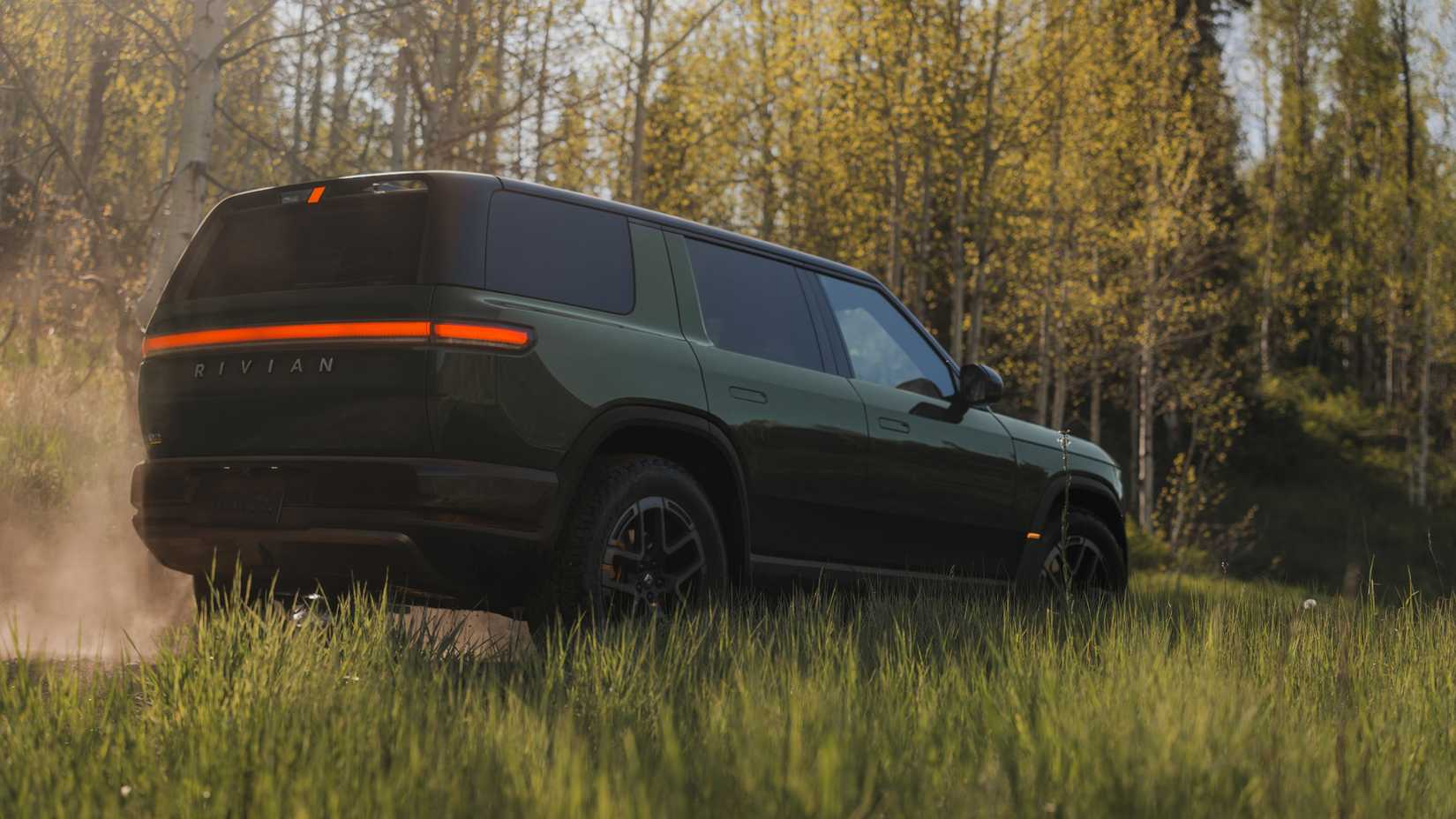
2027 Rivian R2 exteriorRivian
Another important casualty that’s worth noting is the loss of the R1S’ air suspension, as the arrangement adds significantly to the total cost of a vehicle. The R2 Standard will instead get a more conventional MacPherson strut front and multi-link rear suspension setup, which is much simpler and cheaper. Since it’ll lack the airbag and electrical compressors that allow the R1S to provide a Rolls-Royce-like ride, or a sports car-inspired stiff setup at the press of a button, the R2 won’t be as versatile as the R1S on the road.
Plus, since an air suspension system can increase or decrease a vehicle’s ride height when needed, the R1S could feel as at home on a rough off-road trail as it did while tackling a twisty mountain road. The R2 thus isn’t as capable when the going gets tough, since its suspension setup will be geared more toward normal road driving, and it’ll lack the extra ride height that the R1S can utilize.
The higher-end Performance variant will at least get adaptive dampers to help mitigate the loss of the air suspension, but the Standard will get no such luxury. Still, the good news is that, due to ditching the ultra-expensive air suspension componentry, the R2 will be considerably more affordable to repair should any suspension work be needed.
The R2’s Foundations Aren’t As Advanced

2027 Rivian R2 body in whiteTom Murphy / Valnet / CarBuzz
Another area where Rivian managed to cut costs when designing the R2 was by equipping it with a simpler EV platform, as opposed to the Skateboard anatomy used on the R1 series. This consists of a beefy dedicated frame that helps to increase the overall strength of the vehicle, which was a crucial ingredient in ensuring the R1 could be thrown about off-road without being struck down with damage. Alongside being strong, the frame was built to house the vehicle’s battery pack, suspension setup, braking arrangement, as well as drive units below the height of the wheels.
This tighter packaging layout provided two key benefits. Firstly, more space was freed up in the cabin with everything being placed so close to the road. Second, with all these heavy components placed so low in the car, the R1’s center of gravity was lowered significantly, which helped reduce body roll to allow the tires an easier time under heavy cornering.
By contrast, the R2 uses a weaker unibody chassis that also means packaging isn’t quite as neat. Notably, Rivian also managed to save a significant amount of money during development of the R2 by redesigning the wiring that controls all the vehicle’s electrical systems. The firm’s engineers managed to reduce the total length of the wiring by 2.3 miles compared to the R1, which helped save money in materials, but also reduced the weight of the setup by 44 lbs.
The R2’s design is also far more modular, which makes replacing damaged parts more straightforward and considerably cheaper. On a more negative note, the lack of overall strength also means that the R2 won’t be available as a pickup, since its chassis simply isn’t designed to deal with the extra punishment a truck bed suffers.
It may lack the outright muscle and precise packaging of its larger sibling, but the R2 is crucially better-suited to where it’ll spend the majority of its life; the road. Most buyers won’t care that their SUV can’t excel off the beaten track, and are much happier to have a well-built and practical luxury SUV that won’t cost them nearly $80,000.
Rivian’s Cut-Price SUV Still Has Some Claws

2027 Rivian R2 exteriorRivian
Aside from losing some of the high-end features provided by the R1S, you’ll also have to give up a chunk of performance and peak electrical range by opting for the R2 Standard. The single motor kicks out 350 hp and 355 lb-ft of torque, which is nearly 200 hp down on the least-powerful version of the dual-motor R1S. Still, the instant torque allows the R2 Standard to clear the 0-60 mph run in 5.9 seconds, which is impressive for a heavy mid-size SUV such as this. The single powertrain and base battery pack isn’t particularly frugal though, as you’ll only get around 275 miles from a full charge.
If you can wait a little longer, and are prepared to pay a few grand extra, you could always opt for the Standard Long Range RWD version instead. Courtesy of a larger 87.9 kWh battery pack, this model will be able to reach 345 miles before it needs topping up, while retaining the same power output as the base variant. You’ll also have to factor in that the Standard lacks AWD in its base form, which will mean less security and traction, especially in adverse weather conditions.
Despite all these relative setbacks versus the plusher R1S though, we loved the R2 when we got the chance to test the Performance version recently. It was quiet and featured a beautifully finished cabin, performed well on the road, and also went well on rougher terrain despite lacking the more advanced engineering tricks that the R1S enjoys. If you’re after an affordable luxury SUV that stands out from the usual EV options, waiting a little longer for the R2 Standard to arrive could be one of the best decisions you ever make.
Despite its low price, the car will still come loaded with equipment like heated seats and steering wheel, and a Dolby audio system. While this may sound tantalizing, you’ll have to wait a little while longer before you’ll be able to get your own. The first cars may be delivered in late 2026, but unless you got in early, the waiting list means you’ll have to wait until sometime in 2027 to get one should you order now.
Sources: Rivian.