
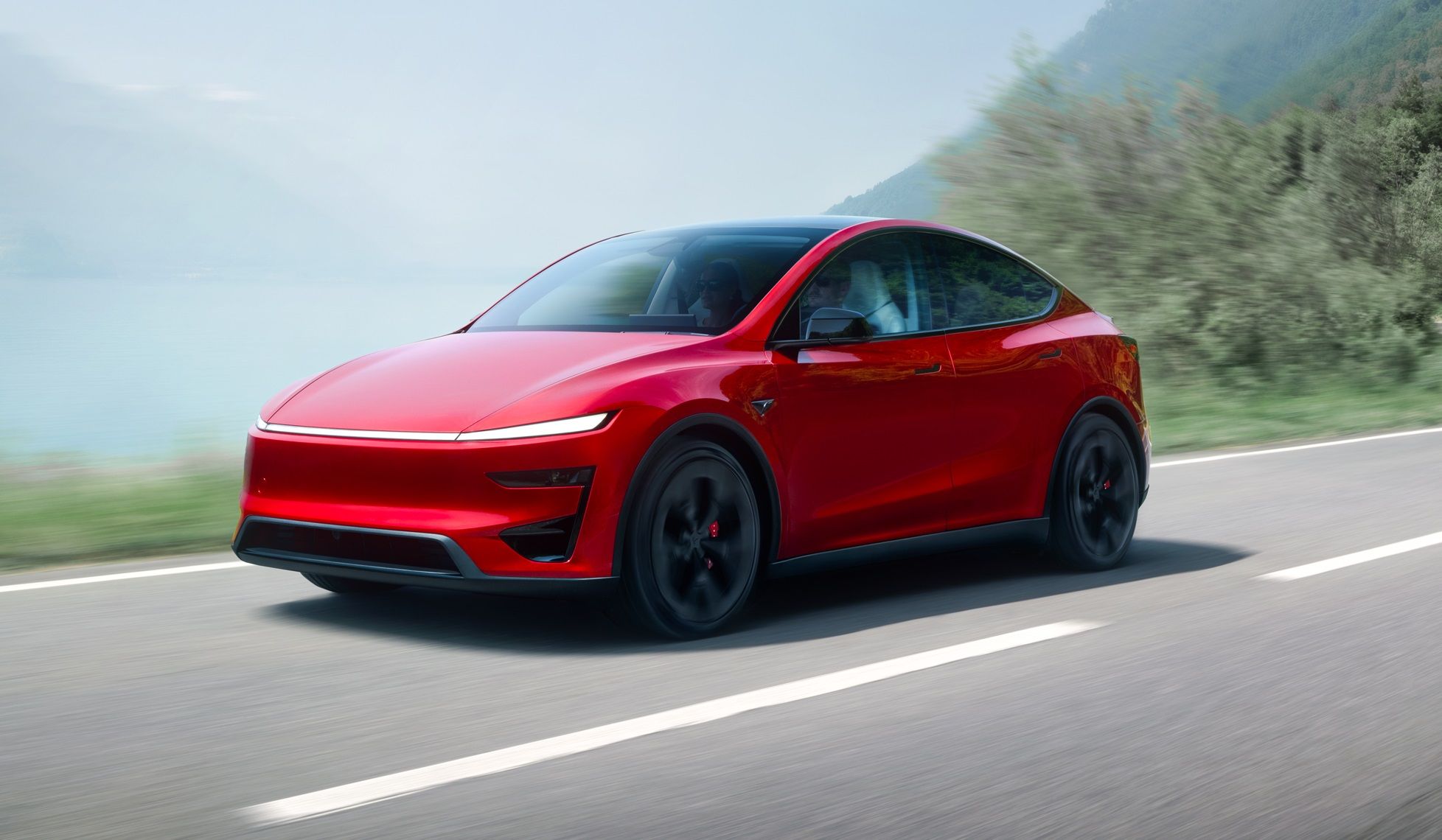
It’s a matchup between the Tesla Model Y and the Hyundai Ioniq 5. Which electric crossover wins?
The Model Y is the best-selling electric vehicle because it ticks all the right boxes. Its closest competitor is probably the Hyundai Ioniq 5. The two cars look very different on the outside. The Model Y is more conventional-looking, whereas the Ioniq 5 has an edgy, futuristic look.
But looks don’t matter in this matchup. Instead, we compare the numbers and declare a winner.
So let’s get started.
10 Most Affordable Electric Cars With 350 Miles of Range or More
10 Most Affordable Electric Cars With 300 Miles of Range or More
10 Most Affordable Electric Cars With 250 Miles of Range or More
Most Affordable 3-Row Electric Crossovers and SUVs
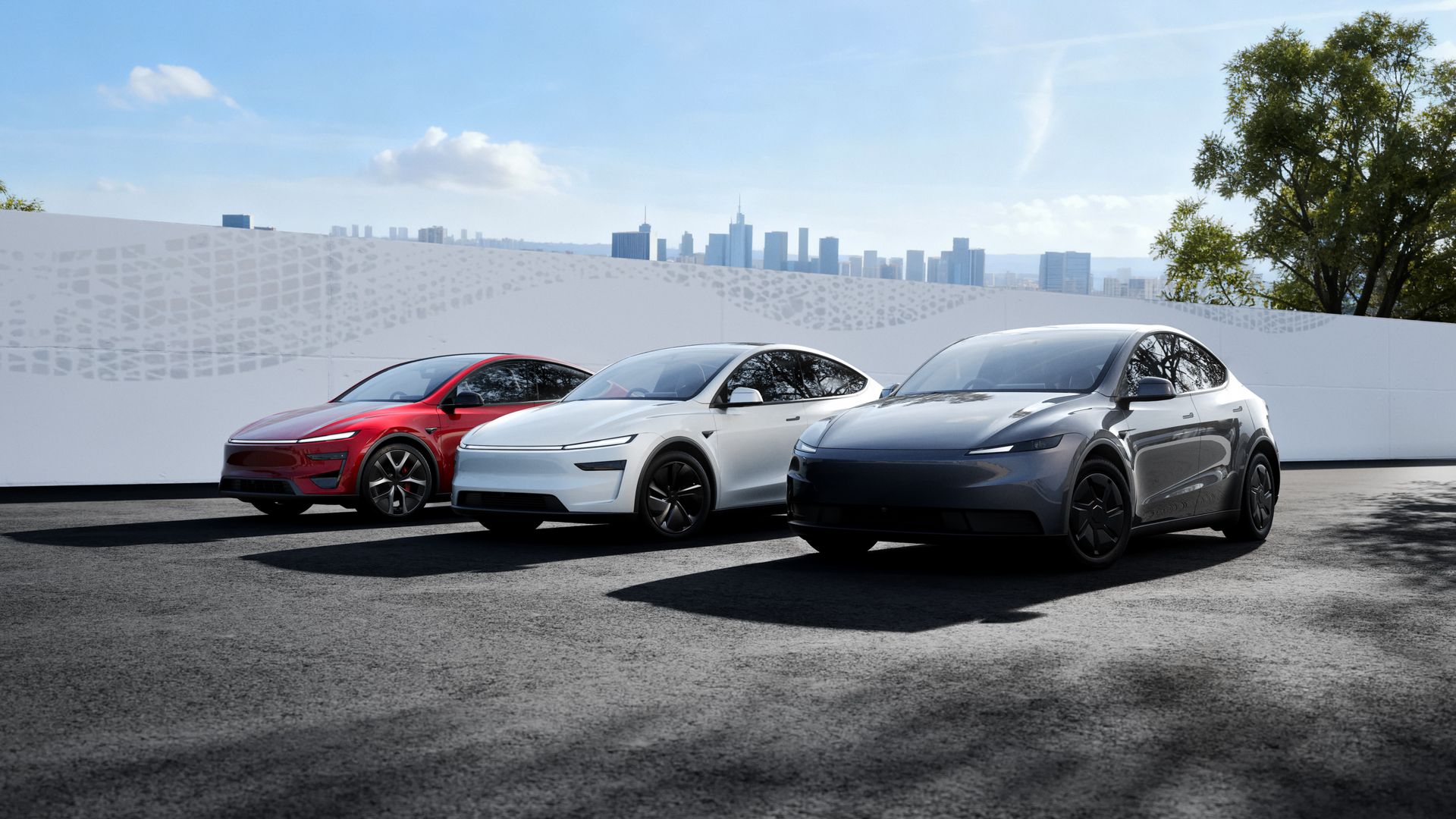
Tesla Model Y. (Image Credit: Tesla)
2026 Tesla Model Y
As of today, there are five versions of the 2026 Tesla Model Y available:
Model Y RWD
Model Y AWD
Model Y Premium RWD
Model Y Premium AWD
Model Y Premium AWD 7-Seat
Model Y Performance
Model Y L Premium LR AWD
The Model Y Premium AWD is the only Model Y offered with a 7-seat option. The Model Y L Premium LR AWD comes with 6 seats. All other versions of the Model Y offer 5 seats.
Let’s take a look at the 2026 Model Y lineup, including driving range, DC fast charging, pricing, and more.
This Is the Most Affordable Tesla Model Y
2026 Tesla Model Y vs 2026 Tesla Model 3: Which One Wins?
Tesla Model Y: Entire Lineup Compared

Hyundai Ioniq 5 vs. Tesla Model Y: EPA range. (Image credit: State Of Charge)
Battery and Range
Tesla does not report battery capacity for its vehicles, but it’s believed that the entry-level RWD and AWD versions have less than 70 kWh of energy storage, while the Premium RWD/AWD and Performance versions have less than 80 kWh.
The 2026 Model Y has an EPA Combined range of up to 357 miles (Premium RWD version), though the exact number varies by trim and wheel size. The lowest-range version of the Model Y is the AWD with 19-inch wheels. It has 283 miles of range.
Model Y RWD – 303 or 321 miles depending on wheel size
Model Y AWD – 283 or 294 miles depending on wheel size
Model Y Premium RWD – 344 or 357 miles depending on wheel size
Model Y Premium AWD – 303 or 327 miles depending on wheel size
Model Y Premium AWD 7-Seat – 303 or 327 miles depending on wheel size
Model Y Performance – 306 miles
Model Y L Premium LR AWD – 320 or 325 miles depending on wheel size

Hyundai Ioniq 5 vs. Tesla Model Y: EPA energy consumption (including charging losses). (Image credit: State Of Charge)
Energy Consumption
Online EPA energy consumption ratings are available for most 2026 Tesla Model Ys. The entry-level Model Y RWD/AWD and the Model Y Premium RWD get roughly 4 miles/kWh (250 Wh/mile), including charging losses.
The Model Y Premium AWD has noticeably higher energy consumption at 3.6 miles/kWh (274 Wh/mile).
The worst results are from the performance-oriented Performance version, which gets 3.1 miles/kWh, or 321 Wh/mile.

2026 Tesla Model Y AWD (Image credit: Tesla)
Charging
The 2026 Tesla Model Y features a NACS charging port for AC and DC fast charging.
AC Charging
The Tesla Model Y features an 11.5 kW onboard charger, so an 11.5 kW (up to 48 amps at 240 volts) home charging station installed on a 60-amp circuit is enough to fully utilize its performance. At full power, the car should be fully recharged in roughly eight hours.

Hyundai Ioniq 5 vs. Tesla Model Y: Range replenishment rate during DC fast charging. (Image credit: State Of Charge)
DC Fast Charging
Model Y RWD/AWD: up to 225 kW
Model Y Premium RWD/AWD and Performance: up to 250 kW
Overall, all Tesla Model Ys can replenish roughly half of their EPA Combined range in 15 minutes.

Hyundai Ioniq 5 vs. Tesla Model Y: Prices and EPA range. (Image credit: State Of Charge)
Pricing
The 2026 Model Y RWD starts at an MSRP of $39,990 ($41,630 including $1,640 in obligatory fees). The new Model Y AWD costs $2,000 more.
The 2026 Model Y Premium RWD starts at an MSRP of $45,990 ($47,630 including obligatory fees), so it’s $6,000 more expensive than the base RWD. The Premium AWD is $8,000 more expensive than the base AWD and $4,000 more expensive than the Premium RWD.
The 2026 Model Y Performance starts at an MSRP of $57,990 ($59,630 total).
The Model Y L Premium LR AWD in the Launch Series edition is currently the most expensive Tesla Model Y, starting at $61,990 ($63,630 after the obligatory $1,640 fee).
Model Y RWD – $41,630 or $43,130 depending on wheel size
Model Y AWD – $43,360 or $45,130 depending on wheel size
Model Y Premium RWD – $47,630 or $49,630 depending on wheel size
Model Y Premium AWD – $51,630 or $53,630 depending on wheel size
Model Y Premium AWD 7-Seat – $54,130 or $56,130 depending on wheel size
Model Y Performance – $59,630
Model Y L Premium LR AWD – $63,630

2026 Hyundai Ioniq 5 (Image credit: Hyundai)
Hyundai Ioniq 5
Pricing
On October 1, 2025, following the end of the $7,500 federal tax credit, Hyundai announced significant price cuts for the new 2026 Hyundai Ioniq 5. The latest model year will be less expensive than the 2025 model year by $7,600 to $9,800.
The 2026 Hyundai Ioniq 5 SE, equipped with a Standard-Range battery (63 kWh) and a single-motor, rear-wheel-drive (RWD) powertrain, will have an MSRP starting at $35,000. Previously, it was $7,600 more, but after the $7,500 federal tax credit, the effective cost was similar.
The one thing that went up is the destination charge — it’s now $1,600, compared to $1,475 when the 2025 model year was introduced.
Prices for the upcoming 2026 Hyundai Ioniq 5 N start at $61,500.
Pricing for all of the other versions of the Ioniq 5 is found in the graphic below:

The 2026 Hyundai Ioniq 5: Prices. (Source: Hyundai)
Battery and Range
The base Ioniq, with a 63-kWh battery, is expected to get 245 miles of EPA Combined range.
The 2026 Hyundai Ioniq 5 SE and SEL versions with a larger battery (84 kWh) offer up to 318 miles of EPA Combined range (estimated) in RWD form or 290 miles in AWD.
The Ioniq 5 XRT AWD has an EPA Combined range of 259 miles.
The Ioniq 5 Limited RWD has an EPA Combined range of 318 miles. In AWD form, the Ioniq 5 Limited has a range of 269 miles.
The Ioniq 5 N has a range of 221 miles.
Charging
The entire 2026 Hyundai Ioniq 5 lineup is equipped with the NACS (SAE J3400) charging port. From the 2026 model year onward, all versions feature NACS and, since March 2025, have been able to access the Tesla Supercharging network.
DC fast charging from 10-80% state of charge at a high-power, high-voltage charger takes 20 minutes (30 minutes at a 150-kW low-voltage charger).
The 2026 Hyundai Ioniq 5 is a carryover model, so there are just a few small changes. Charging-wise, there is a new dual-voltage (AC Level 1/Level 2) charging cable for all versions, rather than a simple Level 1 cable.
Efficiency
The Ioniq SE standard range gets 3.41 miles/kWh. The Ioniq SE RWD gets 3.38 miles/kWh. The Ioniq SE AWD gets 3.14 miles/kWh. The Ioniq SEL RWD gets 3.38 miles/kWh, and the Ioniq SEL AWD gets 3.14 miles/kWh. The Ioniq 5 XRT AWD gets 2.78 miles/kWh. The Ioniq 5 Limited AWD gets 2.91 miles/kWh, and in 3.38 RWD form it gets miles/kWh. The Ioniq 5 N gets 2.3 miles/kWh.
And the Winner Is? Tesla Model Y
Price: The Ioniq 5 is cheaper in base form than the Model Y, so we’ll give it the win in this category.
Range: The longest-range Model Y goes 357 miles on a charge versus 318 for the Ioniq 5. The winner here is the Model Y.
Charging: This category is basically a tie. Both the Model Y and the Ioniq 5 are very strong at DC fast charging.
Energy Consumption: The Model Y is consistently more efficient than any comparable Ioniq 5 model. Model Y wins here.
Interior/Cargo Room: The Model Y has more rear legroom, more cargo space, and a much larger frunk. It wins this category.
We declare the Model Y the winner in this matchup. If the Ioniq 5 improved its efficiency, then its range would be higher, and the result might be different. But for 2026, the Model Y beats the Ioniq 5 in the matchup between electric crossovers.